What to feed a pregnant dog: the short answer
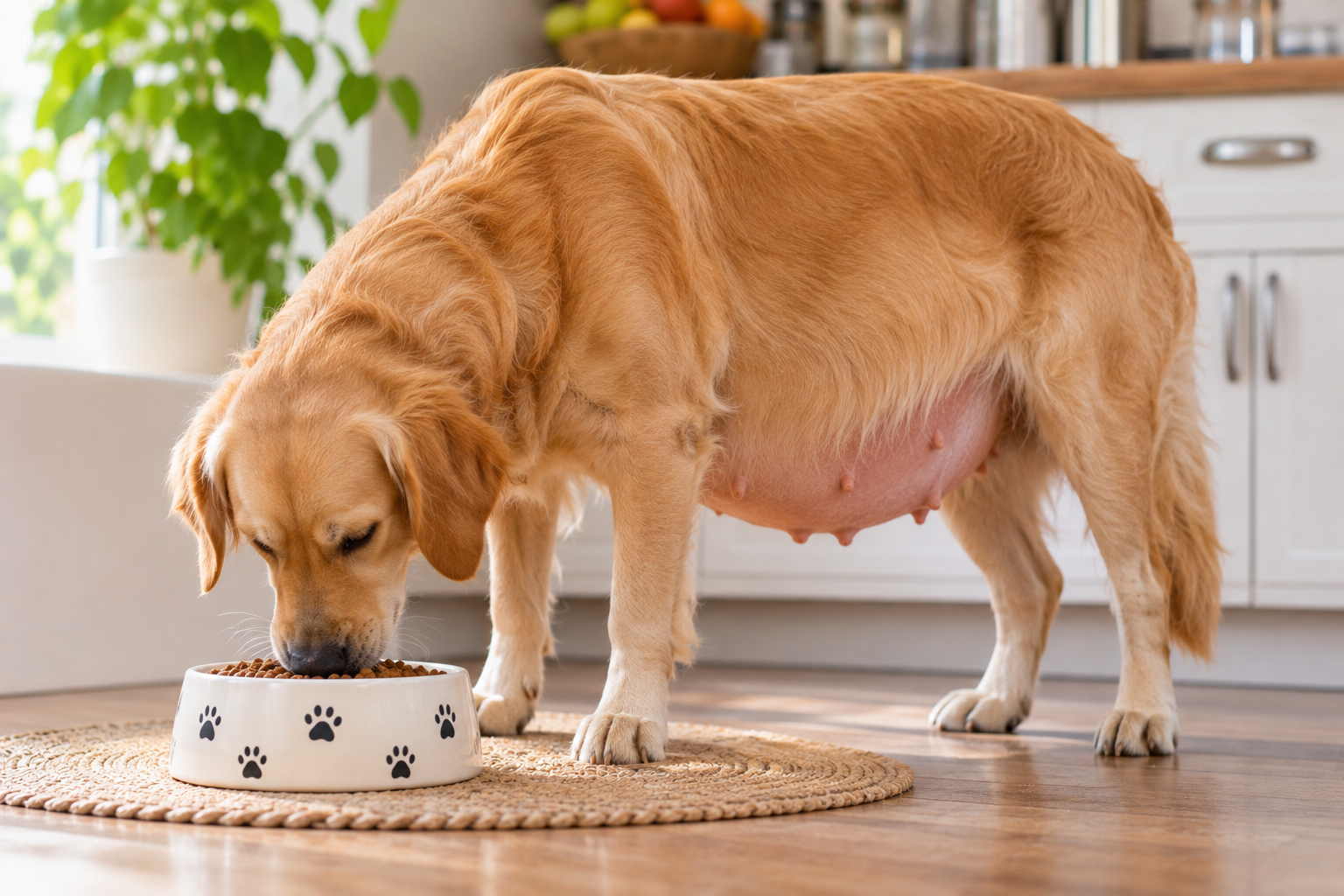
A pregnant dog generally needs her normal, complete and balanced adult dog food during the first half of pregnancy. She does not need extra meals, larger portions, or a collection of supplements as soon as pregnancy begins. The priority in these early weeks is maintaining a healthy body condition without allowing unnecessary weight gain.
The feeding plan changes as the puppies grow. During the final third of pregnancy, usually around weeks 6–9, gradually transition her to a calorie-dense, highly digestible food formulated for growth and reproduction. A suitable puppy food is commonly recommended because it provides more energy and nutrients in a smaller serving. Increase her overall calorie intake gradually, adjusting for her size, litter and body condition.
As her belly expands, divide her food into smaller, more frequent meals. After she gives birth, continue feeding the growth formula while she nurses. Milk production requires considerable energy, so her appetite and food requirements may increase substantially.
The important distinction is that a pregnant dog does not need to eat more simply because she is pregnant. Her nutritional needs change with each stage, and feeding should change accordingly.
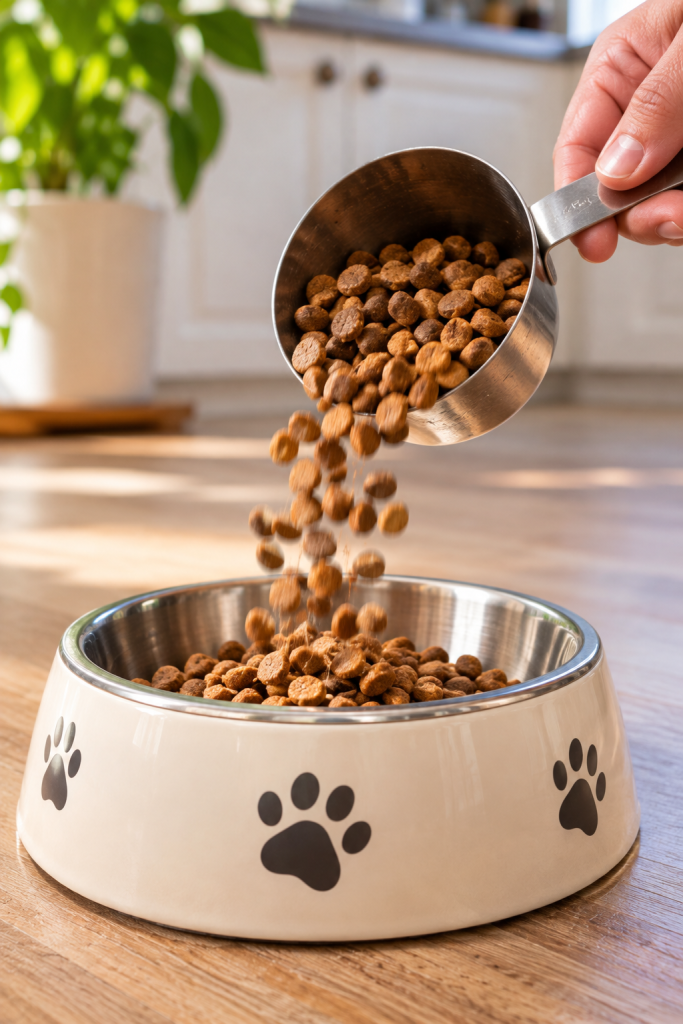
Weeks 1-5: don’t change much
During the first five weeks, most of the puppies’ rapid physical growth has not yet happened. Their development is underway, but the mother’s energy requirements generally remain close to those of a healthy adult dog.
Continue feeding her usual complete and balanced food in her normal measured portions. A good-quality commercial adult maintenance food is usually appropriate when it already meets her nutritional requirements and she entered pregnancy at a healthy weight.
There is no need to start adding puppy food, doubling her meals, or offering extra treats to support the pregnancy. More food at this stage can simply make her gain excess fat rather than provide a useful benefit to the developing litter.
Maintaining an appropriate body condition matters. An overweight dog may face a greater risk of difficult labor, while an underweight dog may struggle to maintain her own condition as pregnancy progresses.
A few practical habits help during these first weeks:
- Keep feeding times and portion sizes consistent.
- Use a complete and balanced commercial food rather than relying on homemade mixtures or meat alone.
- Keep treats modest so they do not displace her regular food.
- Provide clean drinking water throughout the day.
- Monitor her weight and general condition rather than judging her needs by appetite alone.
Some dogs experience mild appetite changes during early pregnancy. However, repeated vomiting, persistent refusal of food, weakness or other unusual symptoms deserve veterinary attention rather than an automatic change in diet.
The first five weeks are mostly about consistency. Avoid turning pregnancy into a reason to overfeed her before her nutritional requirements have actually increased. Veterinary nutrition guidance from UC Davis also recommends maintaining the normal diet during the first half of pregnancy, followed by a gradual dietary adjustment as the puppies develop.
Weeks 6-9: the build-up
This is when feeding becomes more important.
During the final third of pregnancy, puppies grow rapidly, placing greater nutritional demands on their mother. Around day 40 onward, her energy requirements begin to rise, and the increase can be substantial depending on the number of puppies she is carrying.
Should pregnant dogs eat puppy food during this stage? Yes, in most cases.
A highly digestible, calorie-dense puppy or growth formula is commonly recommended for late pregnancy. The purpose is not simply to provide extra calories. A properly formulated growth diet also supplies the nutrients needed to support fetal development and prepare the mother for milk production.
Look for a food with a nutritional adequacy statement indicating that it is complete and balanced for growth and reproduction, or appropriate for all life stages. Do not assume every product labeled puppy food is automatically suitable. Some large-breed puppy formulas have a different calcium-to-phosphorus balance, so ask your veterinarian to help select an appropriate formula.
Make the transition gradually rather than replacing her usual food overnight. A sudden switch can cause digestive upset, and the last few weeks of pregnancy are not a good time to introduce unnecessary food changes.
One practical approach is to mix increasing amounts of the new food with decreasing amounts of her old food over several days, adjusting the transition according to her tolerance and your veterinarian’s advice.
You will also need to adjust how she eats.
As the puppies take up more abdominal space, a pregnant dog may struggle to finish two large meals. Smaller portions offered more frequently can make it easier for her to eat enough without feeling uncomfortably full.
For example, instead of relying on two substantial meals, divide her daily food into three or four smaller servings.
Watch for changes in appetite and body condition. If she is consistently leaving food behind, discuss the amount and feeding schedule with your veterinarian. A more energy-dense formula and smaller meals may help, but prolonged appetite loss should not simply be dismissed as normal pregnancy behavior.
Veterinary guidance identifies the third trimester as the period when nutritional needs rise most sharply and recommends highly digestible growth food with multiple smaller meals as abdominal space becomes limited.
How much to feed a pregnant dog
There is no single portion size that works for every pregnant dog. A Chihuahua carrying a small litter and a large-breed dog carrying several puppies will not have identical nutritional requirements.
The best starting point is to consider how much she normally eats, her current body condition, the calorie density of her new food and the stage of pregnancy.
As a broad framework, published veterinary guidance places late-pregnancy calorie requirements roughly 25–60% above normal adult maintenance levels, depending on the reference used and the individual dog’s needs. VCA notes that some pregnant dogs may require 30–60% more energy during the third trimester, with litter size influencing the increase.
These percentages are general reference points, not feeding prescriptions. They do not mean every dog needs the same increase, and they should not be applied blindly to the number of cups in her bowl. Puppy foods often contain more calories per cup than adult maintenance foods.
Consider these guidelines when planning her portions:
- Start with her normal intake. Use her pre-pregnancy feeding routine as a reference rather than guessing how much extra she needs.
- Increase gradually in late pregnancy. Adjust her daily calories as the puppies grow, rather than making one large increase at the beginning of pregnancy.
- Check her body condition. You should generally be able to feel her ribs without pressing hard, and she should retain a visible waist when viewed from above. A growing abdomen is expected, but excessive fat gain is not the goal.
- Account for food differences. Check the feeding information and calorie content on the new food. A smaller serving of a calorie-dense formula may provide more energy than a larger serving of her previous food.
- Keep fresh water available. Adequate hydration is essential during pregnancy and becomes especially important when she starts producing milk.
Weighing her regularly can help you spot changes that are difficult to notice by appearance alone. Your veterinarian can also assess her body condition and adjust the feeding plan based on the expected litter size and her individual circumstances.
A dog who starts pregnancy overweight, underweight or with an existing medical condition may need a more individualized approach. Avoid using another dog’s feeding chart as a substitute for advice about your own dog’s needs.
Whelping week and nursing: feeding the new mother
Food requirements do not stop changing when the puppies arrive. In fact, nursing is often the most demanding nutritional period of the entire reproductive cycle.
Some dogs show less interest in food shortly before labor. An appetite dip around whelping can happen, but it should not be treated as permission to ignore prolonged refusal to eat, vomiting or other signs of illness.
Keep clean water and suitable food easily accessible near the whelping area. A mother may be reluctant to leave her puppies for long, particularly during the first days after birth.
Once nursing begins, her energy needs rise significantly. Producing milk takes calories, protein, fat, water and other nutrients. Her appetite may increase considerably as the puppies grow and consume more milk.
Continue offering the complete and balanced growth food she was transitioned to during late pregnancy.
For many nursing mothers, particularly those raising more than one or two puppies, allowing access to food throughout the day is a common approach. This lets the mother eat smaller amounts whenever she is hungry instead of trying to finish large scheduled meals.
However, free-choice feeding is not ideal for every dog. A mother nursing only one or two puppies may produce more milk than the litter needs if her food intake is unrestricted. Ask your veterinarian whether scheduled meals or free access is more suitable for her situation.
Keep water close to her feeding area and make sure she can drink whenever she needs it.
As the puppies begin weaning and consume more solid food, the mother’s milk production gradually decreases. Her calorie needs will fall too. At this point, work toward transitioning her back to her usual adult maintenance food and normal portions.
Reduce the growth food gradually rather than making another abrupt switch. Continue monitoring her weight and body condition so that she does not retain unnecessary pregnancy weight after nursing ends.
Feeding mistakes to avoid
Even well-intentioned feeding changes can create problems during pregnancy. A few common mistakes are worth avoiding.
Adding calcium supplements without veterinary advice. This is particularly important. Calcium supplementation during pregnancy may interfere with the mother’s normal calcium regulation and increase the risk of postpartum hypocalcemia, also called eclampsia. This potentially life-threatening condition is associated with low blood calcium, often during nursing. A complete and balanced reproductive or growth diet is generally the better foundation than adding calcium independently. Only supplement when a veterinarian specifically recommends it.
Changing food suddenly. Moving from adult food to puppy food overnight can upset digestion. Introduce the new formula gradually and monitor how she responds.
Overfeeding during the first weeks. Extra food early in pregnancy can lead to unnecessary fat gain. Increase calories when her requirements rise, not simply because she is expecting puppies.
Using supplements to replace a balanced diet. Vitamins, minerals and homemade additions should not be used to compensate for an unsuitable main food without veterinary guidance.
Ignoring prolonged appetite loss. A brief appetite change near labor may occur, but a pregnant dog who repeatedly refuses food should be assessed. Do not let her go without eating for days while trying different foods at home. Contact your veterinarian promptly, especially if she also has vomiting, weakness, pain or abnormal discharge.
Frequently asked questions
Should pregnant dogs eat puppy food?
Yes, most pregnant dogs benefit from an appropriate puppy or growth formula during the final third of pregnancy. It provides concentrated energy and nutrients for rapid puppy development and prepares the mother for lactation. During the first half of pregnancy, her usual complete and balanced adult food is generally sufficient.
How many times a day should a pregnant dog eat?
During the first five weeks, most dogs can continue their usual schedule, often two meals daily. During the final weeks, three or four smaller meals may be more comfortable because the growing puppies leave less room in her abdomen. Nursing mothers may benefit from frequent meals or free access to food, depending on litter size and veterinary guidance.
What should I feed a pregnant dog that won’t eat?
Start by offering a small, fresh serving of her familiar food or her veterinarian-approved growth food. Slightly warming wet food may make it more appealing, but avoid forcing her to eat or repeatedly switching brands. Contact your veterinarian if she refuses repeated meals, particularly if she is vomiting, lethargic or showing other unusual symptoms. Her appetite loss may need investigation rather than another food change.
What should I feed a dog after giving birth?
Continue feeding a complete and balanced puppy or growth formula suitable for reproduction and lactation. Nursing requires substantial energy, so the mother may need considerably more food than before pregnancy. Keep fresh water and food close to her puppies, and adjust portions according to her appetite, litter size and body condition.
Can a pregnant dog eat eggs?
Generally, yes. A plain, fully cooked egg can be an occasional addition for a dog that already tolerates eggs. Avoid raw eggs, seasonings, butter and added salt. Eggs should remain an occasional treat, not replace her complete and balanced pregnancy diet or become a substitute for a properly formulated growth food.
Conclusion
Feeding a pregnant dog is about matching her nutrition to the stage of pregnancy rather than increasing her food from day one. Keep her on a suitable complete adult diet during the first five weeks, then gradually introduce an appropriate puppy or growth formula as the puppies enter their rapid growth phase.
Increase calories carefully, offer smaller meals as her abdomen expands, and continue providing energy-dense food and plenty of water while she nurses. Avoid unnecessary supplements, particularly calcium before birth, and monitor her appetite and body condition throughout the process.
Every pregnancy is different. Her litter size, starting weight, food, and overall health all influence how much she needs. Your veterinarian can help turn these general guidelines into a feeding plan that supports both the mother and her growing puppies.