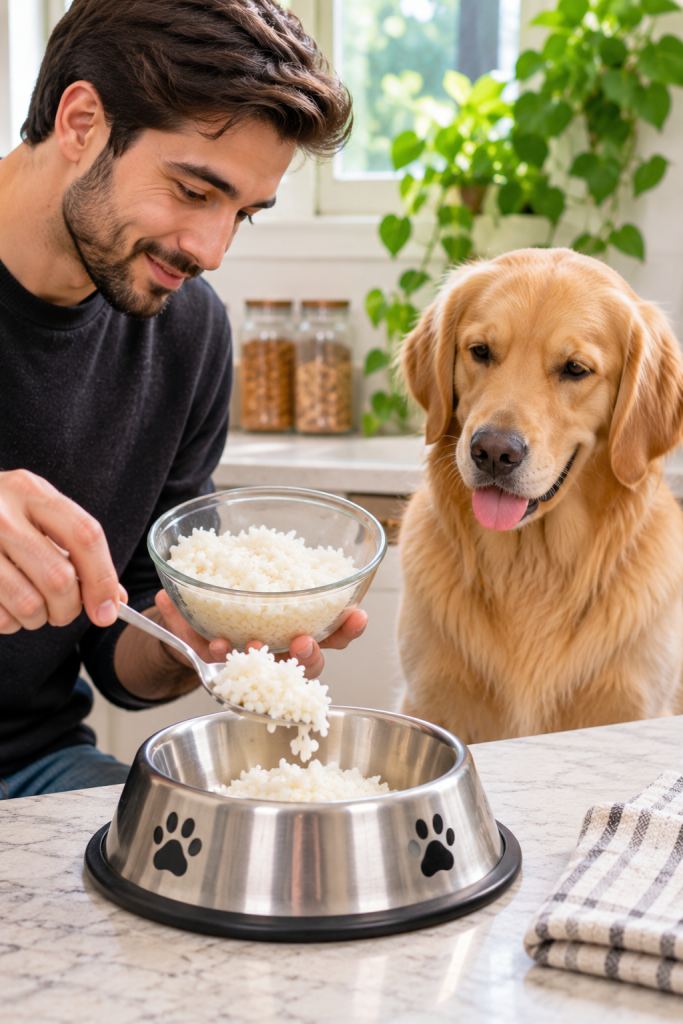
A bland diet for dogs usually means simple, low-fat food made with plain boiled chicken or another lean protein and well-cooked white rice.
The familiar chicken-and-rice combination is easy to prepare, but there is more to feeding it properly than filling a bowl. Portion size, the amount of time it is used, and the move back to normal food all matter.
This guide explains which foods are commonly used, how to prepare a simple recipe, how to think about portions for dogs of different sizes, and when to stop the diet and speak to a veterinarian instead.
Bland diet for dogs: the short answer
A traditional bland diet consists of:
- Plain boiled, skinless, boneless chicken breast.
- Well-cooked white rice.
- Approximately one part cooked protein to two parts cooked rice by volume.
The ingredients should be thoroughly cooked without oil, butter, salt, seasoning, sauces, or other additions.
Instead of serving one large meal, owners generally divide the food into several smaller meals throughout the day. This helps avoid overloading a dog whose digestive system is already unsettled.
A bland diet is a short-term feeding approach, not a cure for digestive problems. It is sometimes used while a mild upset resolves or while a veterinarian monitors a dog. It can provide gentle, easily prepared food while the dog recovers, but it does not address the cause of a digestive problem.
It is also important to understand what the word bland means here. It refers to simple preparation and ingredients, rather than to flavour alone. Nothing fried, buttery, spicy, or heavily processed belongs in this type of feeding plan.
When owners use a bland diet
There are a few situations in which owners may be advised to offer simple food temporarily.
- A mild, short-lived stomach upset: An otherwise bright, comfortable adult dog with a brief change in appetite or loose stools may be offered plain food for a short time while the owner watches for improvement.
- After a dietary indiscretion: Dogs occasionally raid the kitchen bin, steal rich leftovers, or eat something that disagrees with them. When a dog is otherwise bright and only slightly unsettled, owners may decide to offer gentle food while monitoring it closely.
- When a veterinarian recommends gentle food: A veterinarian may suggest a temporary feeding adjustment for a dog whose digestive system is mildly unsettled or while it recovers from an episode of stomach upset.
However, eating a potentially toxic food, a foreign object, or something that could cause an obstruction is a different situation. In those cases, food is not relevant and a veterinarian should be contacted.
There is an important boundary in all three situations: a bland diet is not appropriate simply because a dog seems off-colour. A dog that becomes dull, weak, uncomfortable, stops drinking, or gets progressively worse needs veterinary advice rather than a diet change. The same applies to very young dogs, older dogs, pregnant dogs, or dogs with existing medical conditions.
The classic bland foods
The traditional recipe uses two main ingredients, but a few alternatives are sometimes used when a dog cannot tolerate chicken or needs a small additional source of fibre or protein.
| Food | Why it is used | How to prepare it |
|---|---|---|
| Boiled skinless chicken breast | A familiar, lean protein | Remove skin and bones, boil thoroughly, and shred |
| Plain white rice | A simple carbohydrate that cooks soft | Rinse and cook in water until very tender |
| Lean boiled turkey | An alternative protein | Use skinless, boneless meat and cook without seasoning |
| Very lean beef | Another possible protein option | Boil thoroughly, drain away fat, and serve plain |
| Plain pumpkin purée | Adds fiber in a small amount | Use plain cooked or canned pumpkin, not pie filling |
| Low-fat cottage cheese | An alternative some dogs tolerate | Offer a small amount, if dairy is suitable for that dog |
Chicken breast and white rice remain the classic combination. If you need more detail about preparing the chicken part properly, our guide to boiled chicken for dogs covers the method step by step.
A few points deserve attention:
- Chicken and turkey: Remove skin, visible fat, and every bone before serving.
- Beef: Choose a very lean cut. Even after draining, beef can contain more fat than chicken breast.
- Pumpkin: Use it sparingly as an optional addition, not as a replacement for the main ingredients.
- Cottage cheese: Not every dog handles dairy well. Avoid it if your dog has a known intolerance or if dairy has caused digestive problems before.
Do not introduce several new ingredients together. Keeping the recipe simple makes it easier to know whether the diet agrees with the dog.
A simple bland recipe and portions by dog size
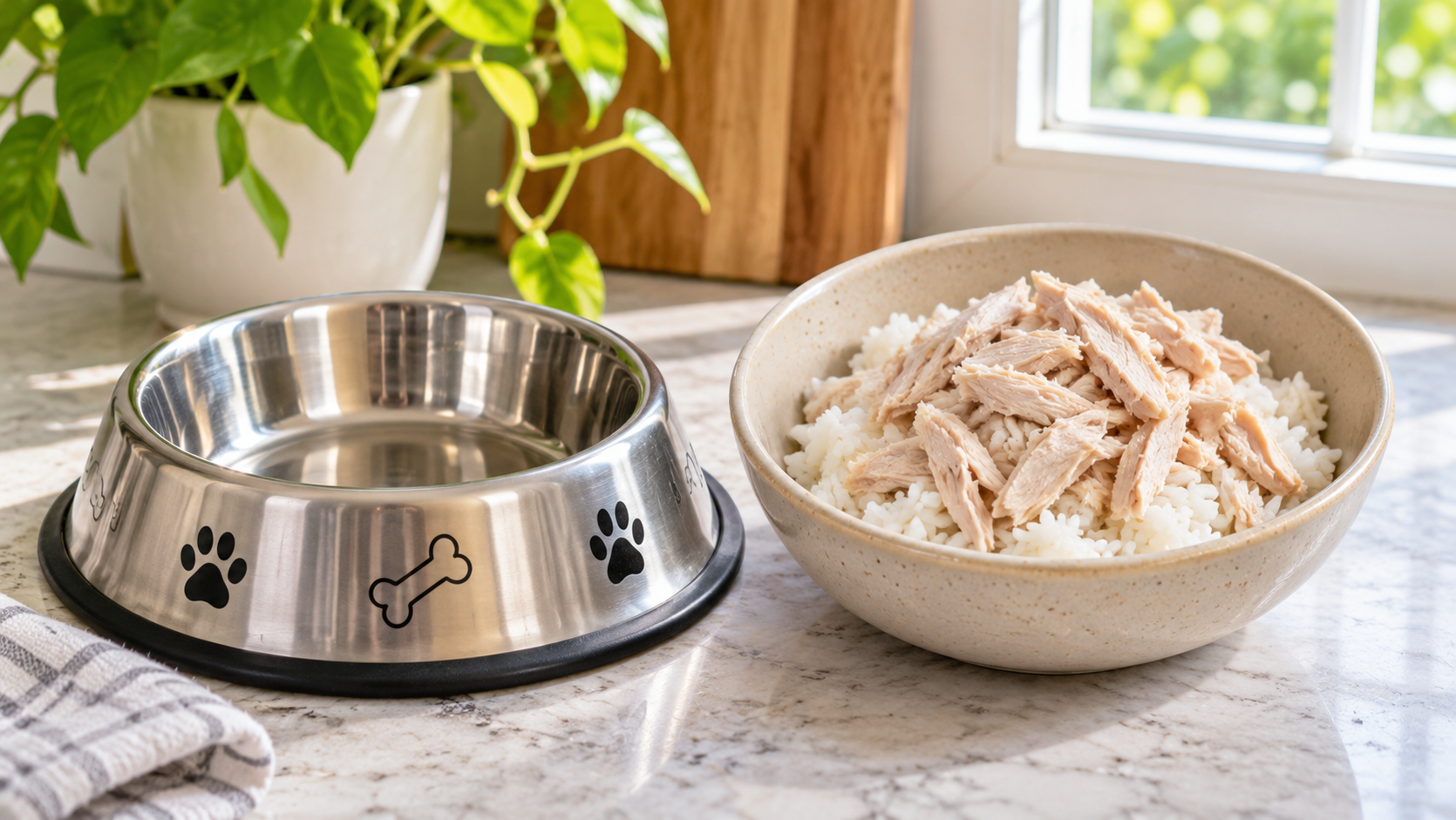
The traditional starting ratio is approximately one part cooked lean protein to two parts cooked white rice by volume.
For example:
- 1 cup cooked, shredded chicken breast
- 2 cups soft-cooked white rice
Mix the ingredients evenly and allow the food to cool to a comfortable serving temperature.
This is a general recipe, not a nutritionally balanced homemade diet. The ratio is a practical starting point, not a prescription.
How much should you serve?
Start with smaller meals rather than filling your dog’s usual bowl. A dog that normally eats twice a day can have its meals split into three or four small portions.
The following table gives a practical way to think about meal size. These are illustrative starting points for a first offering, not veterinary prescriptions.
| Dog size | Example first offering | Feeding pattern |
|---|---|---|
| Toy dogs (under 10 lb) | 1-2 tablespoons | Several tiny meals |
| Small dogs (10-25 lb) | 2-4 tablespoons | Several small meals |
| Medium dogs (25-50 lb) | 1/4-1/2 cup | Smaller, divided meals |
| Large dogs (50-75 lb) | 1/2-3/4 cup | Smaller, divided meals |
| Giant dogs (over 75 lb) | 3/4-1 cup | Smaller, divided meals |
These figures describe an initial offering, not a full day’s food allowance. The amount a dog needs will depend on its size, age, activity level and overall health.
There is no universally reliable cup-based daily ration for homemade bland food. Follow your veterinarian’s portion instructions whenever they provide them. If you are unsure how much your dog should eat, ask a vet for advice.
A few practical feeding tips:
- Cook the ingredients thoroughly.
- Remove all bones, skin, and visible fat.
- Keep the mixture plain.
- Offer a small amount initially.
- Keep fresh drinking water available.
- Record how much your dog eats and whether any food remains.
If your dog refuses food, cannot keep food down, or seems less comfortable after eating, do not keep offering it. Contact your veterinarian for advice.
How long to feed a bland diet
A homemade bland diet is intended for short-term use. For a mild upset that is clearly improving, a few days is a typical period.
It should not become a permanent feeding arrangement.
Chicken and rice do not provide all the essential nutrients dogs need. In particular, the traditional chicken-and-rice combination lacks calcium, essential fatty acids and several vitamins and minerals that a complete diet provides.
Keep these general guidelines in mind:
- First day: Follow your veterinarian’s advice about whether and when to introduce food. If a bland diet is used, offer only small amounts.
- Following days: Monitor appetite, energy, drinking, and stool quality. Improvement should be noticeable within a day or two.
- After a few days: If the dog is clearly improving, ask about transitioning back to its complete regular diet.
- If there is no improvement: Contact your veterinarian rather than extending the homemade diet.
Do not wait several days if your dog develops worrying symptoms. Repeated vomiting, blood, weakness, lethargy or a swollen belly should prompt veterinary attention.
Veterinary gastrointestinal diets are another option. Unlike a homemade chicken-and-rice mixture, appropriate veterinary diets are formulated to be nutritionally complete for short-term use.
Coming off the bland diet
Returning to normal food gradually is an important part of the process.
Once your dog is consistently doing better and your veterinarian agrees that it is appropriate, begin mixing small amounts of regular food into the bland food.
A simple illustrative four-day transition looks like this:
| Transition stage | Regular food | Bland food |
|---|---|---|
| Day 1 | 25% | 75% |
| Day 2 | 50% | 50% |
| Day 3 | 75% | 25% |
| Day 4 | 100% | 0% |
These percentages refer to the proportion of each food in the combined meal, rather than a requirement for an exact daily amount.
Some dogs may need a slower transition, particularly if they have previously struggled with food changes.
If loose stools or other concerning symptoms return during the transition, do not repeatedly restart the bland diet. Contact your veterinarian for advice.
For a more detailed day-by-day approach, see our dog food transition schedule. It explains how to move between foods in gradual increments.
The goal is to return to a complete, appropriate everyday diet rather than keep a dog on chicken and rice.
What never goes in a bland diet
Simple preparation is the whole point. Ingredients that make human food more appealing can introduce fat, salt or substances that are harmful to dogs.
Avoid these additions:
- Oils and butter: Do not fry the meat or add butter to rice. Extra fat makes the recipe richer than intended and harder to digest.
- Seasonings: Leave out salt, pepper, spice mixes, stock cubes, and seasoning blends.
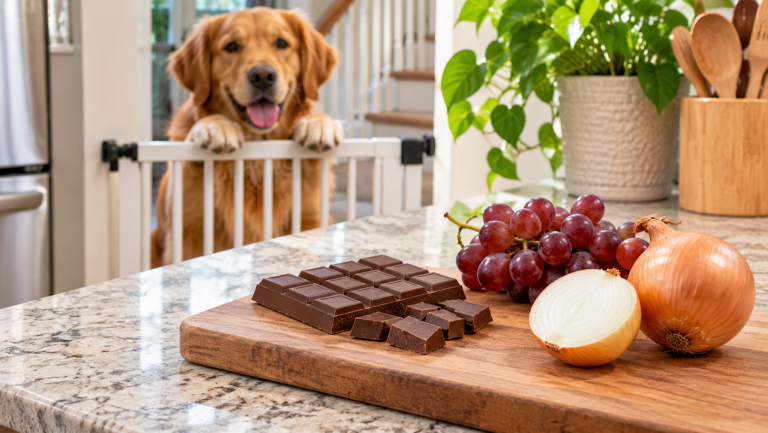
- Garlic and onion: Never add either ingredient, whether fresh, powdered, cooked, or mixed into a seasoning blend.
- Bones: Cooked chicken bones are particularly unsuitable. Remove all bones before preparing the meat.
- Sauces and gravy: These can contain fat, salt, onion, garlic, and other ingredients that do not belong in a bland diet.
Also avoid rich leftovers, fatty meat trimmings, and heavily processed foods.
Plain means plain. Chicken, rice, and water are sufficient for the traditional recipe.
When a bland diet is not enough
Important: veterinary attention may be needed
A bland diet should never delay veterinary care when a dog is showing signs of more serious illness.
Contact a veterinarian promptly if you notice:
- Repeated vomiting or an inability to keep food or water down.
- Fresh blood in vomit or stool.
- Black, tarry stools.
- A swollen, painful, or unusually tense belly.
- Refusal to drink or signs of dehydration.
- Unusual tiredness, weakness, or lethargy.
- A noticeable loss of appetite alongside other symptoms.
- Symptoms that are getting worse rather than improving.
A dog with severe symptoms should be assessed urgently. Do not try to manage repeated vomiting, blood, or a swollen belly at home.
Puppies and elderly dogs need particular caution. Young puppies can become unwell quickly, and older dogs may struggle to recover from dehydration or a loss of appetite.
The same applies to dogs with existing medical conditions or those taking medication.
Time matters, too. If digestive symptoms continue beyond roughly 48 hours, arrange veterinary assessment.
Cornell University’s veterinary guidance identifies vomiting, lethargy, black or bloody stools, and a swollen belly as symptoms to watch for.
A simple feeding change cannot tell you why a dog is unwell. Sometimes a veterinarian may recommend further tests or a different approach.
Frequently asked questions
Can I feed my dog a bland diet long term?
No. A traditional homemade chicken-and-rice diet is not nutritionally complete. It lacks several nutrients that dogs need every day, including calcium and essential fatty acids. It is a short-term approach only.
Is white rice or pasta better for a bland diet?
White rice is the traditional choice because it cooks soft and is easy to prepare without additional fat or seasoning. Pasta is sometimes suggested, but it is generally less useful because it can be harder to digest and is easier to overfeed. Rice is the classic option.
Can puppies have a bland diet?
Puppies should not be put on a homemade bland diet without veterinary advice. They have specific nutritional needs, and they can become unwell quickly. A vet should decide whether gentle food is appropriate for a puppy.
How much bland food should I give my dog per meal?
Start with a small offering based on your dog’s size, then follow your veterinarian’s feeding instructions. The table above gives illustrative first offerings, and several small meals are preferable to one large bowl.
My dog is no better after two days on a bland diet. What should I do?
Contact your veterinarian. Do not keep extending the homemade diet or wait several more days hoping for improvement. A lack of progress after two days is a reason for veterinary advice, not for a longer trial at home.
Conclusion
A bland diet for dogs is best understood as a temporary, simple feeding approach rather than a solution in itself.
Keep the ingredients simple, avoid extending the diet unnecessarily, and gradually reintroduce complete food as your dog improves.
When in doubt, the safest step is to contact your veterinarian. A vet can advise whether gentle food is appropriate in your dog’s case and how long to use it for.