Boiled chicken is a simple way to give your dog plain, cooked protein without extra seasoning, oils, or complicated preparation. When prepared properly, boneless, skinless chicken can be a useful occasional treat or food topper for most dogs.
The key is knowing how to cook it thoroughly, how much to serve, and how to store leftovers safely. Plain chicken is not a complete diet on its own, so it should complement nutritionally balanced dog food unless it is part of a properly formulated homemade diet.
This guide covers everything from choosing the right cut to freezing individual portions, with straightforward instructions you can follow in your own kitchen.
Boiled chicken for dogs: the short answer
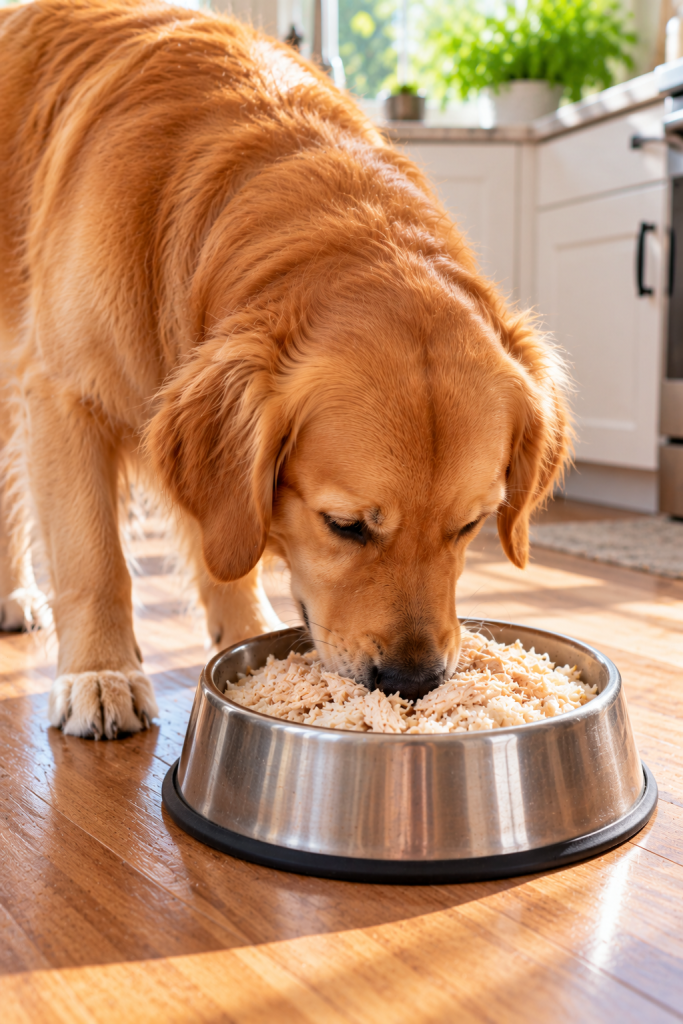
Yes, most dogs can eat plain boiled chicken when it is cooked thoroughly, served boneless and skinless, and prepared without seasonings or added fats.
Boneless, skinless chicken breast is a convenient choice because it is relatively lean and easy to shred. Chicken thighs are another option, although they generally contain more fat.
Keep these basic rules in mind:
- Use plain, fresh chicken without marinades or added seasoning.
- Cook it to an internal temperature of 165°F (74°C).
- Remove all bones, skin, and excess fat before serving.
- Let the chicken cool completely and cut it into appropriately sized pieces.
- Serve it in moderation alongside a complete and balanced diet.
Chicken should never become the only food your dog eats long-term. Meat alone does not supply all the nutrients dogs need in the right proportions, including an appropriate balance of minerals and vitamins. A homemade diet intended to provide all daily nutrition needs careful formulation.
How to boil chicken for dogs, step by step
You do not need special equipment or a complicated recipe to prepare boiled chicken for dogs. A saucepan, clean water, and a food thermometer are enough.
1. Choose boneless, skinless chicken
Start with plain chicken breast or thigh meat. Fresh or properly thawed frozen chicken can work.
Boneless cuts make preparation easier and reduce the chance of accidentally serving a bone. Skinless pieces also make it easier to control the amount of fat in each serving.
2. Prepare the chicken safely
Place the chicken on a clean cutting board and trim away any visible excess fat.
Do not rinse raw chicken under running water. The USDA advises against washing poultry because splashing can spread bacteria around the sink, countertops, and nearby utensils. Proper cooking is what makes the chicken safe. Read the USDA’s raw poultry handling guidance.
Wash your hands after handling raw meat and keep raw chicken and its juices away from cooked food.
3. Add plain water
Place the chicken in a saucepan and add enough water to cover the pieces completely.
Use water only. Do not add salt, stock cubes, commercial broth, oil, butter, or seasonings. Many prepared broths and stocks contain ingredients that do not belong in a dog’s plain chicken serving.
4. Bring the water to a boil, then simmer
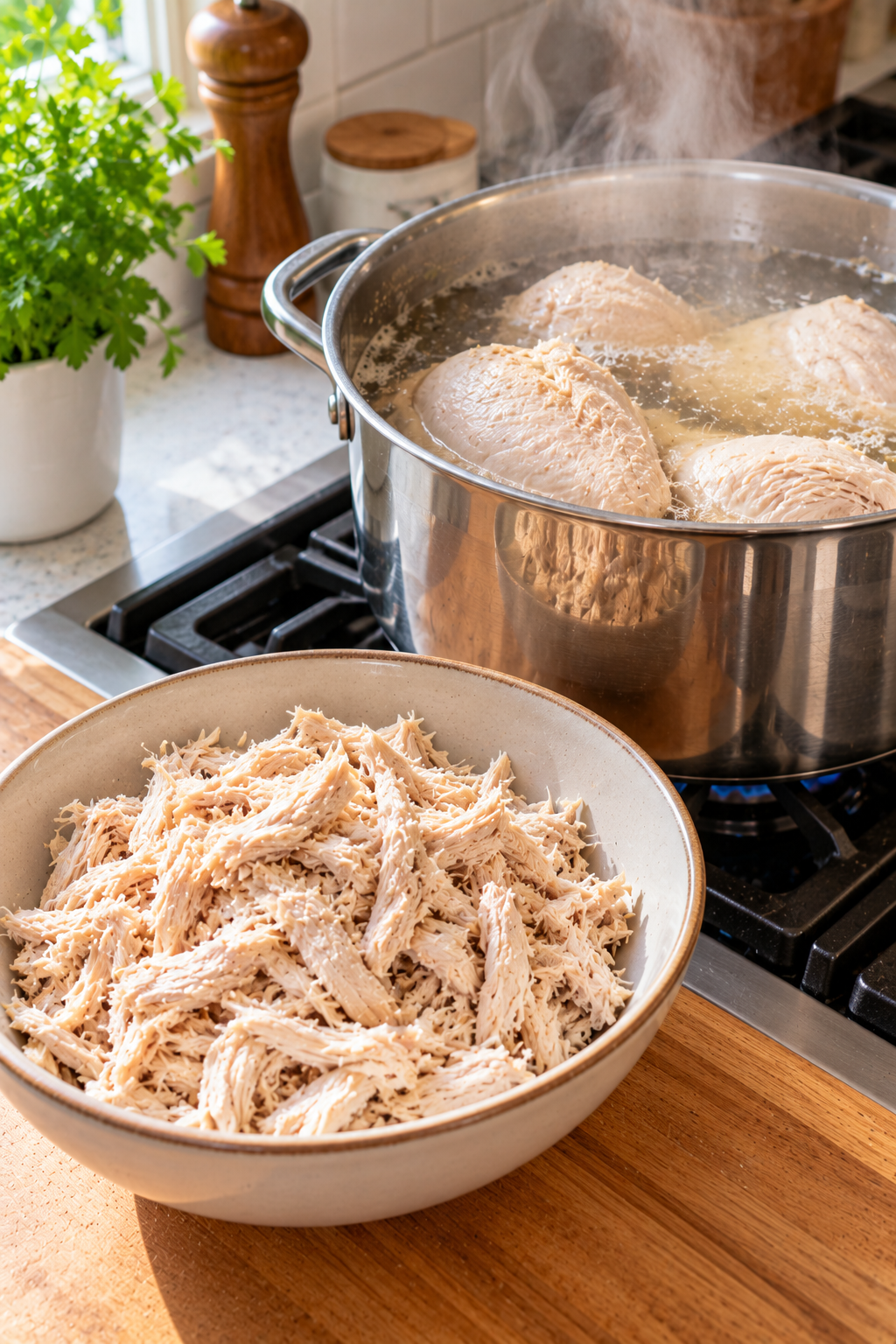
Bring the water to a boil over medium-high heat. Reduce the heat and maintain a gentle simmer until the chicken is thoroughly cooked.
Cooking time depends on the thickness and size of the pieces, so do not rely on a fixed number of minutes.
The safest check is a food thermometer inserted into the thickest part of the meat. Chicken must reach 165°F (74°C) internally, according to the USDA safe minimum temperature chart.
The meat should look cooked throughout, without raw-looking areas. Appearance alone, however, is not a reliable substitute for measuring its temperature.
5. Cool the chicken completely
Remove the chicken from the water and place it on a clean plate or cutting board.
Allow it to cool before serving. Never put hot chicken into your dog’s bowl, as it could burn your dog’s mouth.
Refrigerate any chicken you will not serve promptly rather than leaving it sitting out.
6. Shred or dice it into small pieces
Once cool, use two forks to shred the meat or cut it into small, manageable pieces.
Choose the size based on your dog’s size and eating habits. Smaller pieces are easier to mix into kibble and are generally more practical for training treats.
Check carefully for any overlooked bones, remove the skin and excess fat, and serve the desired portion.
How much boiled chicken can a dog eat?
The right amount depends on your dog’s size, calorie needs, usual food intake, and whether the chicken is a treat or part of a carefully planned diet.
For ordinary treats and toppers, a useful starting point is to keep the chicken portion small.
| Dog size | Approximate starting portion per serving |
|---|---|
| Toy dogs, under 10 lb | 1 teaspoon to 1 tablespoon |
| Small dogs, 10–25 lb | 1–2 tablespoons |
| Medium dogs, 26–50 lb | 1–3 tablespoons |
| Large dogs, 51–90 lb | 2–4 tablespoons |
| Giant dogs, over 90 lb | About ¼ cup |
These are rough starting portions, not fixed daily allowances. A dog’s actual limit may be lower or higher depending on its calorie requirements and the rest of its diet. Shredded chicken portions also vary in weight, so tablespoons are only an estimate.
Follow the 10% treat rule
A widely used veterinary nutrition guideline is to keep treats, snacks, and food toppers to no more than 10% of a dog’s daily calories. The other 90% should come from complete and balanced food. VCA Animal Hospitals explains the guideline here.
Chicken counts toward that extra-calorie allowance, along with biscuits, chews, table scraps, and other toppers.
Chicken as a topper versus a meal component
As a topper: Add a small amount of shredded chicken to your dog’s regular food. Keep the portion modest so it does not crowd out the balanced food that provides essential nutrients.
As part of a homemade meal: The portion should follow a properly formulated recipe that accounts for the dog’s total nutritional requirements. A bowl of boiled chicken alone is not a nutritionally complete long-term meal.
For growing dogs, food portions also change with age and development. See the CanineCalc puppy food chart for more guidance on feeding by age.
Boiled chicken vs grilled, baked and rotisserie chicken
Several cooking methods can produce chicken that dogs may eat, but the ingredients and preparation make a real difference.
| Cooking method | Seasoning risk | Skin and bone risk | Convenience |
|---|---|---|---|
| Plain boiled | Low when cooked in water alone | Easy to remove or avoid | Very convenient |
| Plain grilled | Higher if marinades or rubs are used | Depends on the cut | Convenient outdoors |
| Plain baked | Low if completely unseasoned | Depends on the cut | Easy for larger batches |
| Rotisserie | Often higher because of seasonings | Skin and bones may remain | Convenient but requires careful trimming |
Plain boiled chicken is the simplest option when you want control over every ingredient. You can prepare it without oil, salt, sauces, or spices and easily remove unwanted parts.
Plain baked or grilled chicken can also be suitable if it is thoroughly cooked and served without unsafe additions.
Rotisserie chicken is less straightforward. Store-bought versions may contain substantial seasoning, salt, or added fats, and the skin and bones need careful removal. Check the ingredients and preparation rather than assuming every rotisserie chicken is suitable.
Whatever method you choose, never offer cooked chicken bones.
Storage and freezing
Cooking a batch of chicken at once can save time, provided you cool and store it correctly.
How long does boiled chicken last in the fridge?
Transfer cooled chicken to a clean, airtight container and refrigerate it at 40°F (4°C) or below.
Use it within 3–4 days. This matches the general USDA cold-storage guidance for cooked meat and poultry leftovers. See the FoodSafety.gov cold food storage chart.
Refrigerate cooked chicken within two hours of preparation. If the room temperature is above 90°F (32°C), refrigerate it within one hour.
Can you freeze boiled chicken for dogs?
Yes. Freezing is useful when you prepare more chicken than your dog can eat within a few days.
- Let the chicken cool, then divide it into small portions.
- Place each portion in a freezer-safe, airtight container or bag.
- Label each package with the preparation date.
- Freeze promptly at 0°F (-18°C) or below.
For good texture and easy portioning, aim to use frozen portions within two to three months.
How should you thaw it?
Thaw frozen chicken in the refrigerator, ideally overnight for larger portions. You can also use a microwave’s defrost setting if you will handle and serve the chicken promptly.
Avoid thawing it on the counter. Once thawed, use the chicken within the recommended refrigerated storage period, and discard anything that smells off, feels unusually slimy, or shows other signs of spoilage. When in doubt, throw it away.
Serve the chicken cool or at room temperature. If you warm it, do so without seasoning and check the temperature carefully before feeding it.
What never to add to boiled chicken for dogs
The purpose of this recipe is to keep preparation simple. Extra ingredients can introduce unnecessary salt, fat, or ingredients that are unsafe for dogs.
Avoid adding:
- Salt: Plain water is sufficient. There is no need to season chicken for your dog.
- Butter and oil: These add unnecessary fat to a simple topper.
- Garlic and onion: Both can be harmful to dogs. The ASPCA’s guide to foods to avoid explains why allium ingredients should be kept away from pets.
- Sauces and marinades: These can contain salt, spices, onion, garlic, and other unsuitable ingredients.
- Seasoned stocks and broths: Many contain ingredients that undermine the purpose of plain chicken.
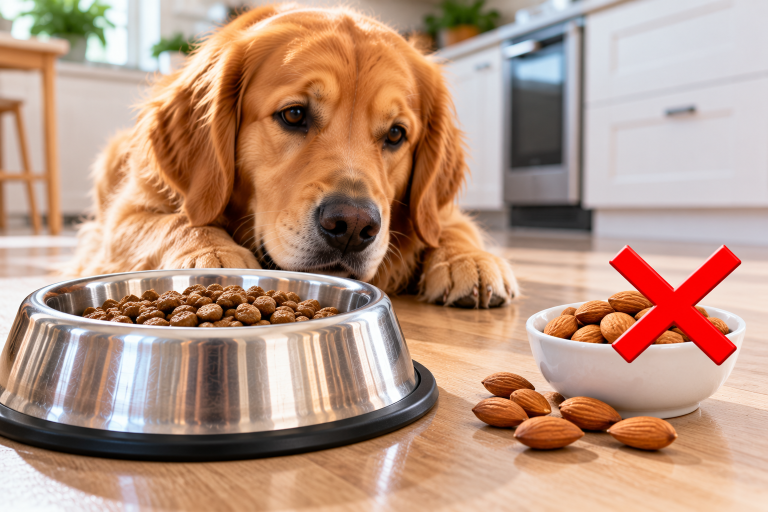
- Chicken bones: Cooked bones can splinter and cause choking, blockages, or internal injury. The American Kennel Club’s chicken-bone safety guide explains the risks.
- Skin and excess fat: Remove them before serving, especially when you want to keep the portion relatively lean.
When cooking chicken for your dog, simpler is better: chicken and water are all you need.
Frequently asked questions
Can dogs eat boiled chicken every day?
Dogs can eat small amounts of plain boiled chicken regularly if it suits their individual needs and fits into a balanced diet. However, chicken used as a topper should remain a modest part of the daily calorie allowance. Feeding only chicken every day is not a nutritionally complete feeding plan.
Can puppies eat boiled chicken?
Yes, puppies can generally eat small amounts of thoroughly cooked, plain, boneless chicken. It should be an occasional extra rather than a replacement for complete food formulated for growth. Keep pieces small enough for the puppy to manage comfortably.
Is boiled chicken breast or thigh better for dogs?
Both can be suitable when cooked thoroughly, skinless, boneless, and unseasoned. Breast is generally leaner and easier to portion, making it a straightforward choice for everyday toppers. Thigh meat is often richer and contains more fat. Choose the cut that fits your dog’s usual diet and portion needs.
How long does boiled chicken last in the fridge?
Store cooked chicken in an airtight container in a refrigerator kept at 40°F (4°C) or below, and use it within three to four days. Freeze portions you will not use in that period.
Can dogs eat boiled chicken bones?
No. Do not feed cooked chicken bones, including bones left over from boiling. Cooking can make bones brittle, and fragments can cause choking or injury. Use boneless chicken and check the meat carefully before serving.
Conclusion
Boiled chicken for dogs is easy to prepare when you keep the method simple: use boneless, skinless meat, cook it to 165°F, cool it completely, and shred it into manageable pieces. Serve modest portions alongside nutritionally complete food, avoid seasonings and bones, and refrigerate or freeze leftovers promptly.
A little preparation makes it easier to provide a convenient chicken topper without turning a simple ingredient into an unbalanced long-term diet.
By Jennifer, Founder of CanineCalc
Jennifer is a dog owner and researcher who develops practical, research-informed guides to help dog owners make more informed feeding and care decisions. She is not a veterinarian, breeder, or certified trainer.