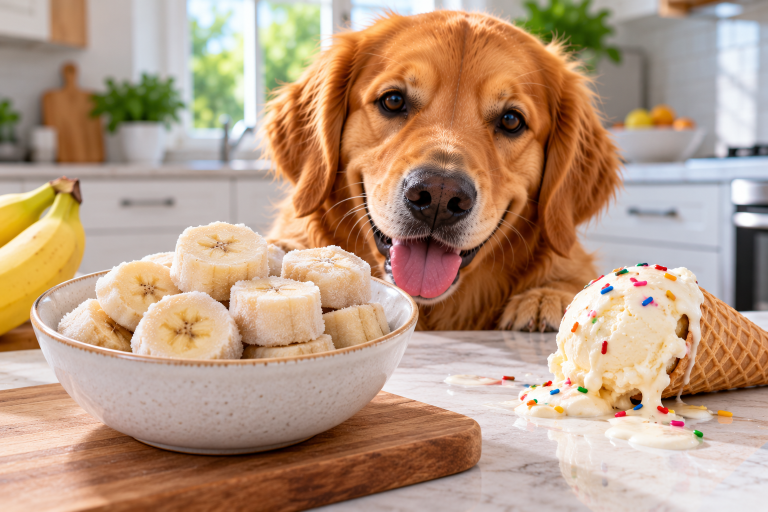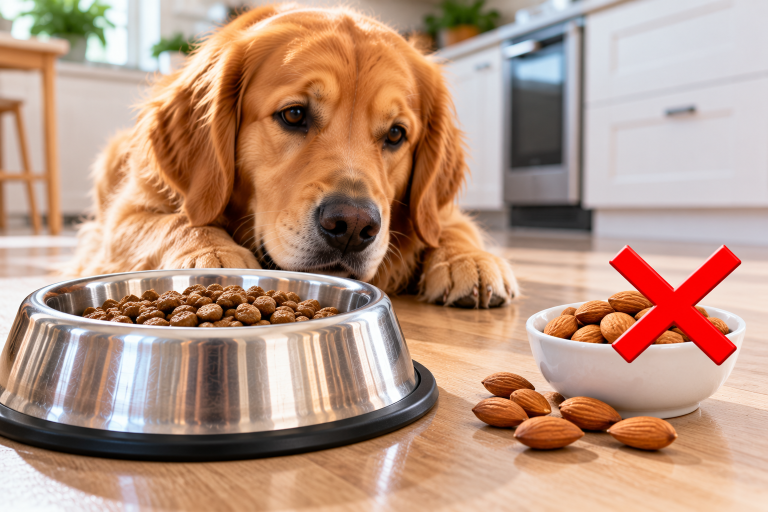
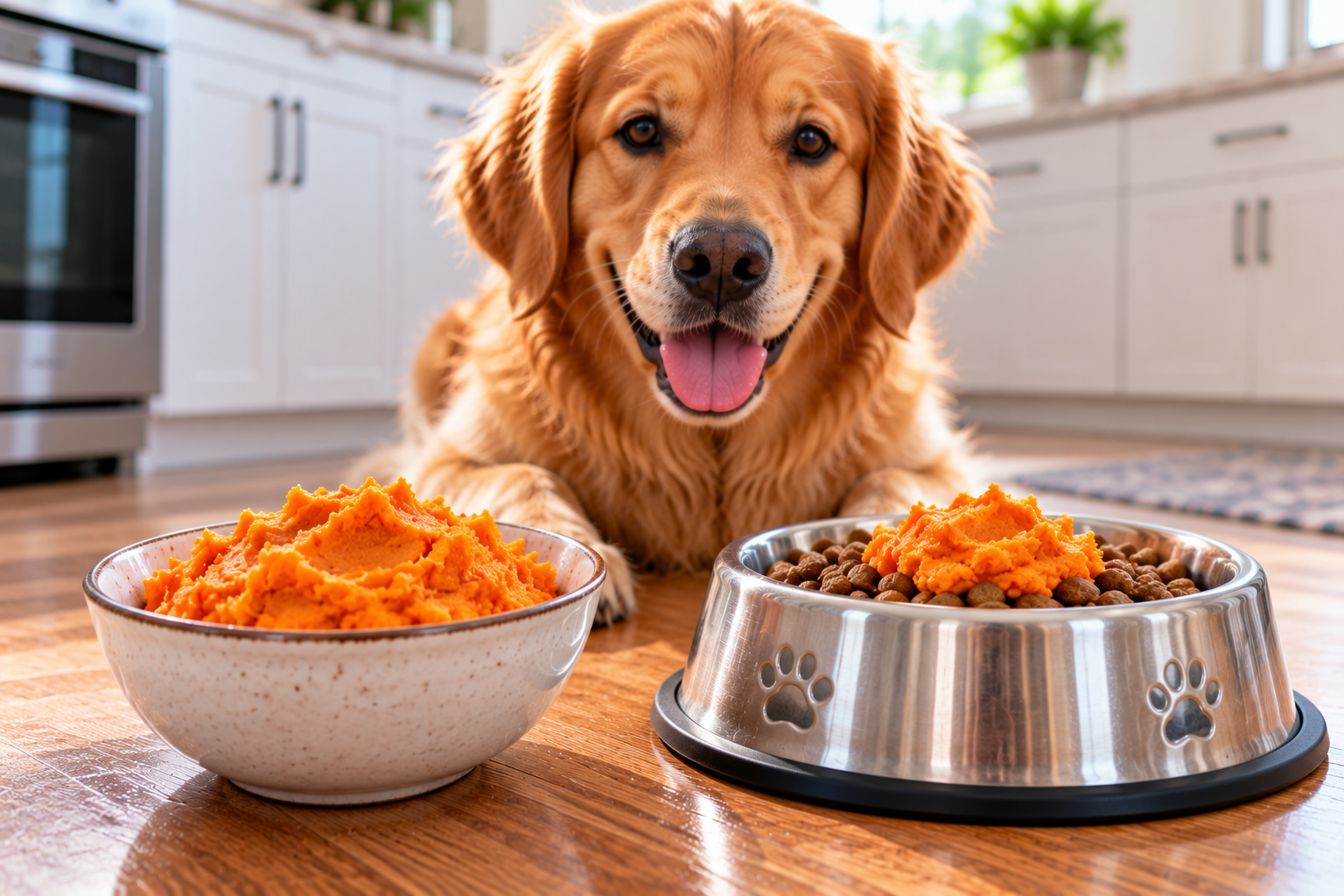
Sweet potatoes are a common ingredient in dog food, homemade treats, and family meals. If your dog is watching you prepare dinner, you may wonder whether sharing a little is safe.
Dogs can generally eat sweet potato when it is fully cooked, plain, and served in small amounts. Raw sweet potato is not recommended because it can be difficult to chew and digest, creating choking and digestive risks. The skin, seasonings, cooking method, and serving size also matter.
Sweet potato is an optional treat, not a necessary part of a dog’s diet. The goal is to offer a little variety without replacing the complete and balanced food your dog needs.
Can dogs eat sweet potato? The short answer
Yes. Most healthy dogs can enjoy a small serving of thoroughly cooked sweet potato without added ingredients. Boiling, steaming, or baking until soft are suitable preparation methods.
Raw sweet potato is best avoided. Its firm texture can make it difficult for dogs to chew properly, especially if they swallow food quickly. Large or hard pieces may create a choking hazard, while the food itself can cause digestive upset.
The safest approach is straightforward:
- Cook the sweet potato until it is soft.
- Remove the skin before serving.
- Mash it or cut it into small, manageable pieces.
- Serve it plain, without butter, oil, salt, sugar, or seasonings.
- Begin with a small amount and treat it as an occasional extra.
These recommendations are consistent with guidance from the American Kennel Club and PetMD, which advise serving sweet potato cooked and in moderation.
Sweet potato deserves extra consideration if your dog has a medical condition, follows a prescription diet, or needs a carefully controlled calorie intake. Ask your veterinarian whether it is appropriate before adding it to your dog’s meals.
Sweet potato vs regular potato
Sweet potatoes and regular potatoes may look similar in the kitchen, but they are different foods. Their nutritional profiles and preparation risks are not identical, so the same rules should not automatically be applied to both.
Sweet potato provides carbohydrates and dietary fiber, along with nutrients such as beta-carotene, which the body can convert into vitamin A. When thoroughly cooked, its flesh becomes soft and easy to mash.
Regular potato also provides carbohydrates and can be served to dogs when thoroughly cooked and plain. However, raw potatoes and green or sprouted areas deserve particular caution because they can contain solanine, a naturally occurring toxin. Cooking and serving a potato properly does not make green or spoiled areas a suitable choice.
For both foods, portion size matters. Large amounts can add unnecessary calories, and a sudden increase in unfamiliar food may upset a dog’s digestion.
Sweet potato is not automatically better for every dog. Its suitability depends on the dog’s overall diet, health, and individual needs. Neither food should replace a complete and balanced dog food.
For the preparation rules and risks specific to regular potatoes, see our guide: Can Dogs Have Potatoes?.
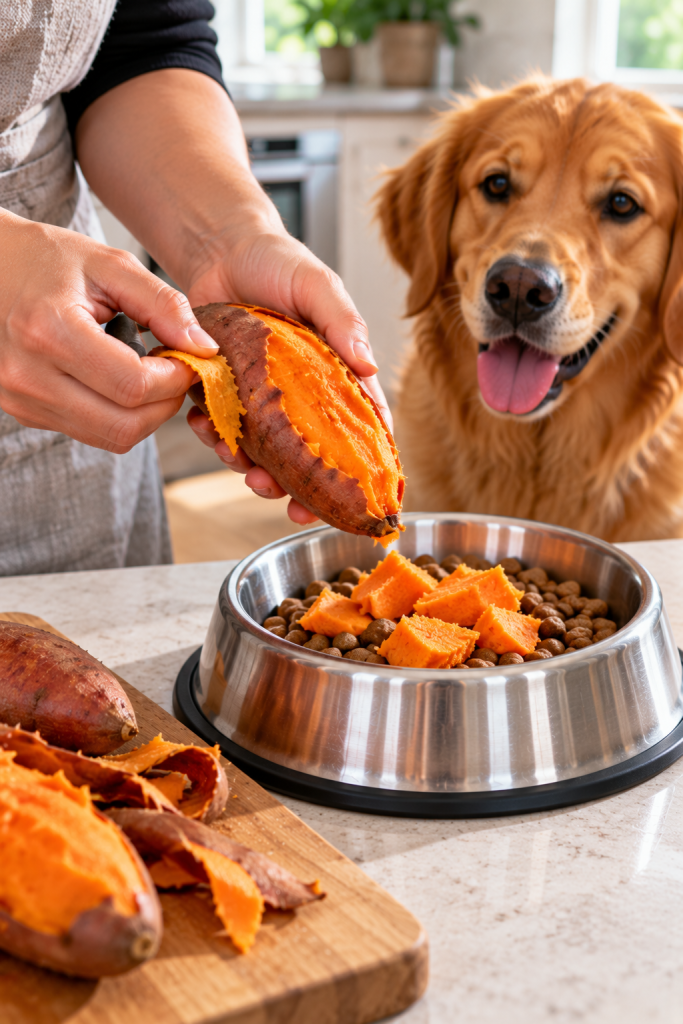
How to prepare sweet potato for dogs
You do not need a special recipe to make sweet potato suitable as an occasional dog treat. Simple cooking methods work well as long as the finished food is soft, plain, and cooled before serving.
1. Boil it until soft
Wash the sweet potato, peel it, and cut it into manageable pieces. Boil the pieces in plain water until they are easily pierced with a fork.
Drain the water and allow the potato to cool completely. Mash it with a fork or cut it into small pieces appropriate for your dog’s size.
Do not add butter, salt, gravy, or other ingredients to improve the flavor.
2. Steam it
Steaming is another straightforward option. Peel and cut the sweet potato, then steam it until the flesh is thoroughly cooked and soft throughout.
Check the center of larger pieces before serving. They should not have a firm or crunchy middle.
After cooling, mash the potato or cut it into small, easy-to-manage pieces. This method is useful when you want to prepare a small amount without using oil.
3. Bake it plain
You can also bake a sweet potato in the oven. Wash it, remove the skin after cooking, and allow the flesh to cool before offering any to your dog.
Avoid oil, butter, seasoning blends, and toppings. Baked sweet potato should be soft rather than dried into hard chunks.
If you prefer to cut it into cubes before baking, make sure the pieces remain soft enough for your dog to chew comfortably.
4. Mash or cube it before serving
The final texture matters just as much as the cooking method. Small dogs may find a soft mash easier to manage, while larger dogs may manage small, soft cubes comfortably.
Do not offer large chunks simply because your dog is big. Dogs that gulp food can still choke on pieces that appear reasonable for their size.
Let the food cool completely before serving. A freshly cooked sweet potato can remain hot inside even when the outside feels cool.
Portions by dog size
There is no single sweet potato serving that is right for every dog. Weight, daily calorie requirements, activity, existing diet, and individual tolerance all affect how much is appropriate.
The following table gives conservative starting examples for a first serving, not a prescribed daily allowance.
| Dog size | Approximate first serving |
|---|---|
| Toy or very small, under 10 lb | 1 teaspoon |
| Small, 10–25 lb | 1–2 teaspoons |
| Medium, 25–50 lb | About 1 tablespoon |
| Large, over 50 lb | 1–2 tablespoons |
Use plain, fully cooked sweet potato for these examples. Start at the lower end, particularly if your dog has never eaten it before. Smaller portions may be appropriate for dogs with low calorie requirements or sensitive digestion.
These amounts are illustrative rather than medically established serving limits. Your dog’s appropriate portion may be smaller, and some dogs may need to avoid additional foods altogether.
Remember the 10% treat rule
The World Small Animal Veterinary Association (WSAVA) recommends that treats make up less than 10% of a dog’s daily calorie intake. The remaining calories should come primarily from a complete and balanced diet.
That allowance covers all treats and extras combined, not just sweet potato. Biscuits, dental treats, table scraps, and other additions count toward the same total.
Sweet potato should not become a large portion of dinner just because your dog enjoys it. If you are unsure how much food your dog needs, ask your veterinarian for guidance based on your dog’s weight and nutritional requirements.
Sweet potato mistakes to avoid
A plain sweet potato can be a reasonable occasional treat, but some preparations are better left off your dog’s menu.
Raw sweet potato: Skip raw slices and chunks. The firm texture makes them more difficult to chew and digest, and hard pieces may pose a choking risk.
Seasoned sweet potato: Avoid recipes containing onion, garlic, or seasoning mixes with potentially harmful ingredients. Butter, salt, and rich sauces are unnecessary additions, too.
Fried sweet potato: Fries and chips often contain added oil and salt. Their preparation can make them a less suitable treat than plain, cooked sweet potato.
Marshmallow-topped sweet potato: Holiday casseroles often include marshmallows, brown sugar, butter, syrups, or other sweet toppings. These additions provide no nutritional reason to share the dish with your dog. Keep your dog’s portion separate before adding toppings to the family recipe.
Large servings: Too much sweet potato can contribute excess calories and digestive upset. A large helping is not necessary to offer a taste of something new.
Hard pieces and unwanted skin: Remove the skin and check the texture before serving. Pieces should be small and soft enough for your dog to manage safely.
If your dog has eaten a preparation containing potentially harmful ingredients, or develops concerning symptoms after eating something unfamiliar, contact your veterinarian for advice. Do not assume the problem is simply an upset stomach caused by the sweet potato.
Can dogs eat sweet potato? Common questions
Can dogs eat sweet potato?
Yes. Most healthy dogs can eat small amounts of fully cooked, plain sweet potato. Remove the skin, allow it to cool, and serve it mashed or in small, soft pieces. Keep it as an occasional treat rather than a replacement for balanced dog food.
Can dogs eat raw sweet potato?
Raw sweet potato is not recommended for dogs. It is firm and can be difficult to chew or digest, potentially increasing the risk of choking and digestive upset. Cook it thoroughly until soft before offering any.
Is sweet potato good for dogs?
Sweet potato contains dietary fiber, carbohydrates, and nutrients such as beta-carotene. These qualities can make plain cooked sweet potato a reasonable treat for some dogs. However, it is not essential to a balanced canine diet, and its nutritional content does not make larger servings better. Dogs with specific health or dietary needs should have their food choices reviewed by a veterinarian.
How much sweet potato can I give my dog?
Start with a small amount based on your dog’s size. A toy-sized dog might begin with a teaspoon, while a large dog might begin with one or two tablespoons. These are cautious starting examples, not universal serving requirements. Count sweet potato alongside all other treats within the recommended daily treat allowance.
Can puppies eat sweet potato?
Puppies can generally have a small amount of fully cooked, plain sweet potato, provided it is appropriate for their individual needs. Introduce it cautiously and do not allow treats or extras to displace their complete puppy food. If you are reviewing how much your puppy should eat, see our puppy food chart. Ask your veterinarian before introducing new foods if your puppy has a health concern or a prescribed diet.
Conclusion
Sweet potato can be a simple, occasional treat for many dogs when it is cooked thoroughly, served plain, and offered in a modest portion. Avoid serving it raw, remove the skin, and skip fried versions and holiday dishes loaded with toppings.
Start small, pay attention to your dog’s individual needs, and keep treats within a sensible calorie budget. Sweet potato is optional, so there is no need to add it if your dog already does well on a complete and balanced diet.
If you have questions about whether it suits your dog’s health or nutritional requirements, your veterinarian is the best person to consult.
About Jennifer
Jennifer is the founder and owner of CanineCalc, a dog owner and researcher who develops accessible, research-informed educational content for dog owners. She is not a veterinarian, breeder, or certified trainer. CanineCalc articles provide general information and are not a substitute for individualized veterinary guidance.