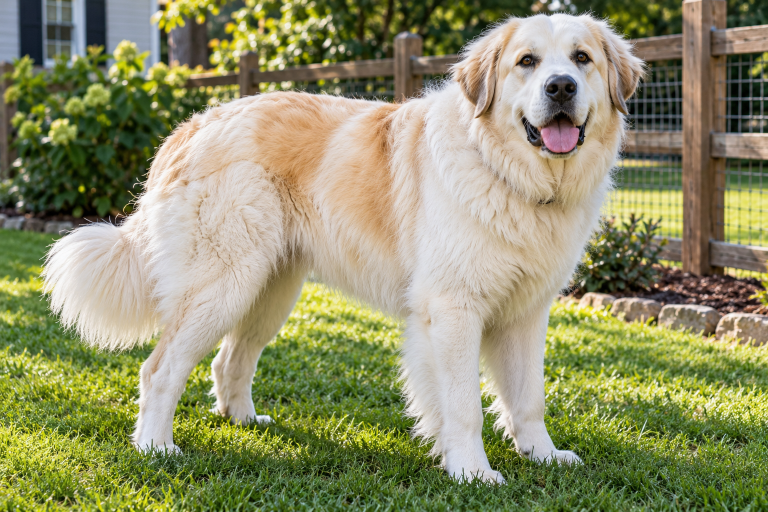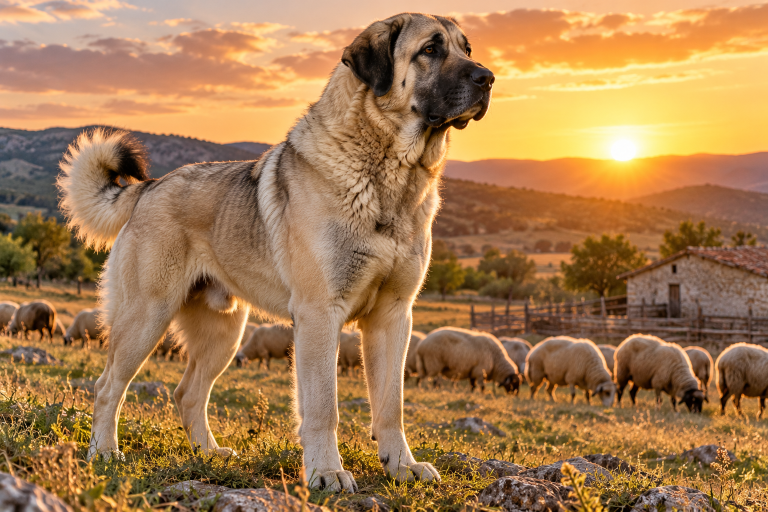
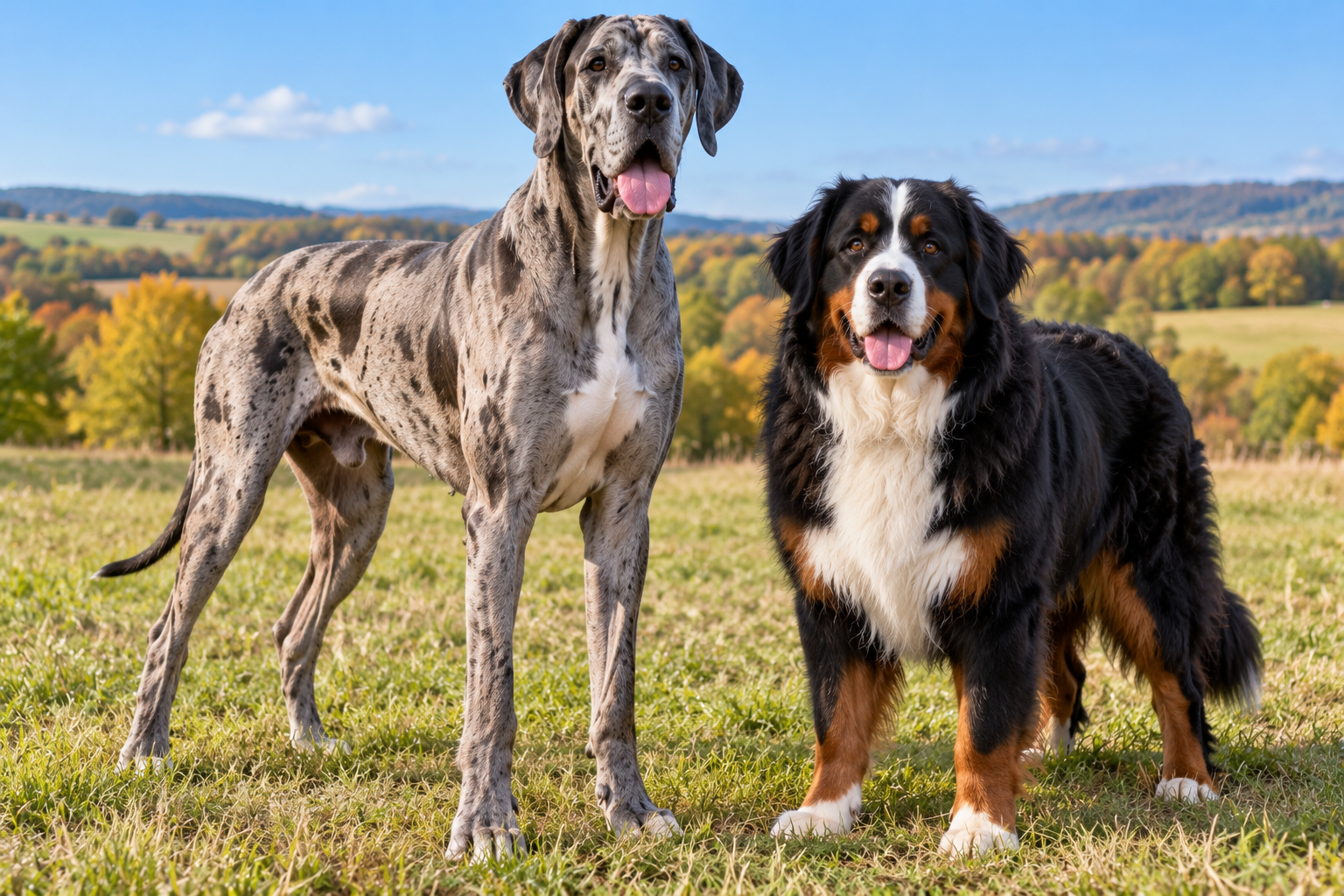
Some dogs are more likely than others to have shorter lives, and giant breeds appear near the top of many lifespan rankings. Great Danes, Bernese Mountain Dogs, Irish Wolfhounds, and Mastiffs are familiar examples, with published estimates often placing their average lifespans below those of smaller dogs.
But there is no universally agreed ranking of the shortest-lived dog breeds. Estimates vary between breed guides, veterinary datasets, and individual dogs. Genetics, overall health, and everyday care also influence how long a dog lives.
This guide compares 10 breeds commonly associated with shorter lifespans, explains why size matters, and looks at what owners can realistically do to support their dogs through every life stage.
Which dog has the shortest lifespan? The short answer
There is no single breed that every source consistently identifies as having the shortest lifespan. The Dogue de Bordeaux, Irish Wolfhound, Saint Bernard, English Mastiff, and Bernese Mountain Dog are frequently found among the shorter-lived breeds, although their published estimates do not always agree.
Giant breeds generally have shorter average lifespans than small breeds. Many are commonly listed around 6 to 10 years, while some smaller breeds are often expected to live well into their teens.
These figures are population averages, not deadlines. Some dogs develop age-related problems much earlier, while others live beyond the usual range for their breed.
The ranked chart below is a practical comparison, not a definitive scientific league table. It draws on commonly published breed-lifespan ranges and broad size patterns. The order should be treated as approximate because different sources measure and report longevity differently. The American Kennel Club’s dog lifespan guide provides a useful starting point for comparing breed estimates.
Dog breeds with the shortest lifespan, ranked
| Rank | Dog breed | Approximate published lifespan | Size class |
|---|---|---|---|
| 1 | Dogue de Bordeaux | Commonly listed around 5–10 years, depending on source | Giant |
| 2 | Irish Wolfhound | Around 6–10 years | Giant |
| 3 | English Mastiff | Around 6–10 years | Giant |
| 4 | Bernese Mountain Dog | Around 7–10 years | Large to giant |
| 5 | Leonberger | Around 7–9 years | Giant |
| 6 | Saint Bernard | Around 8–10 years, with some guides listing longer ranges | Giant |
| 7 | Great Dane | Around 8–10 years | Giant |
| 8 | Rottweiler | Around 9–10 years in many breed profiles | Large |
| 9 | Newfoundland | Around 9–12 years | Giant |
| 10 | Great Pyrenees | Around 10–12 years | Giant |
These are approximate published ranges, not guarantees or exact predictions. Some breed profiles report noticeably different figures, particularly for the Dogue de Bordeaux, Saint Bernard, and other giant breeds. The ranges overlap, so the numbered order should not be interpreted as a precise ranking of mortality risk.
1. Dogue de Bordeaux
The Dogue de Bordeaux is a powerful French mastiff breed that frequently appears in discussions of shorter canine lifespans. Published estimates vary considerably, which makes a single average especially misleading for this breed.
Its large build and breed-specific health considerations are reasons to pay attention to preventive care and changes in mobility or behavior as the dog ages.
2. Irish Wolfhound
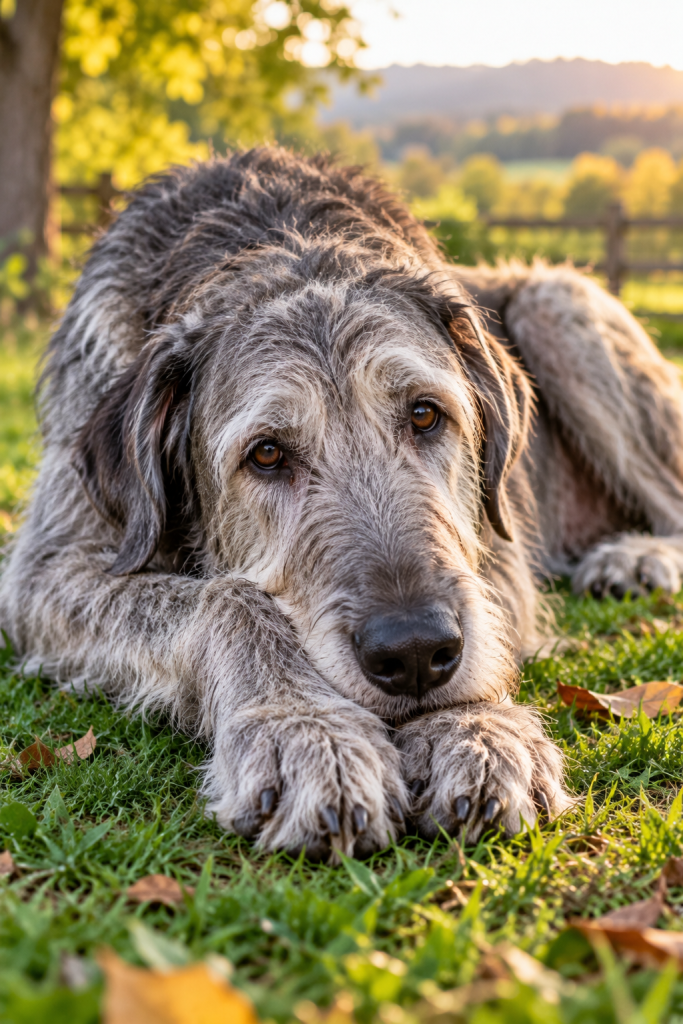
Irish Wolfhounds are among the tallest dog breeds, with a gentle temperament and an enormous frame. Their expected lifespan is commonly listed below that of many medium and small breeds.
Their short average lifespan does not mean every Irish Wolfhound will age at the same rate. Individual health, inherited characteristics, and the care a dog receives all contribute to its outcome.
3. English Mastiff
The English Mastiff is one of the heaviest dog breeds. Breed profiles commonly place its lifespan in a relatively short range, although estimates vary between sources.
Because of their size, comfortable movement, appropriate nutrition, and a home environment that accommodates an aging dog can be especially important throughout their lives.
4. Bernese Mountain Dog
Bernese Mountain Dogs are affectionate working dogs with thick coats and substantial builds. Their commonly published lifespan is relatively short compared with many smaller companion breeds.
This breed is also a reminder that body size is not the only factor involved. Inherited health risks and differences between individual dogs matter when considering longevity.
5. Leonberger
The Leonberger combines a giant frame with a thick coat and a family-oriented temperament. Its lifespan estimates are generally shorter than those associated with many small breeds.
Different surveys and breed profiles do not always produce the same average. That variation is worth remembering when comparing one breed with another.
6. Saint Bernard
Saint Bernards are giant working dogs known for their strength and calm presence. They frequently feature in shorter-lifespan lists, although published estimates vary.
Their size makes comfortable resting areas, sensible activity, weight management, and attentive senior care practical priorities as they grow older.
7. Great Dane
Great Danes are another familiar example of the connection between giant body size and shorter average lifespan. Many published guides place them around 8–10 years.
Great Danes do not have a fixed lifespan, however. A breed estimate cannot predict the exact age a particular dog will reach.
8. Rottweiler
Rottweilers are large, muscular working dogs. Their commonly published lifespan estimates are often shorter than those for small breeds, but they may live beyond the range listed in many breed guides.
Maintaining a suitable body condition and keeping up with routine veterinary visits are sensible ways to support an individual Rottweiler throughout adulthood and its senior years.
9. Newfoundland
Newfoundlands are giant, heavy-coated dogs known for their strength and swimming ability. Their published lifespan estimates often extend somewhat longer than those of several other giant breeds.
That does not remove the need to pay attention to weight, mobility, and age-related changes. It simply shows that giant breeds do not all share the same expected lifespan.
10. Great Pyrenees
The Great Pyrenees is a large livestock guardian with a thick coat and a typically independent nature. Its commonly published lifespan can be longer than that of several other giant breeds.
This is one reason breed size should be treated as a broad pattern rather than a rule that determines the lifespan of every dog.
Why big dogs age faster
The relationship between body size and lifespan is one of the unusual features of domestic dogs. Across breeds, smaller dogs generally live longer than larger dogs. That pattern is the opposite of what people might expect from comparing many wild mammals, where larger species often live longer.
One important explanation involves growth. Giant dogs grow rapidly and reach enormous adult sizes within a relatively short period. Researchers have proposed that the biological processes associated with rapid growth may also influence how ageing unfolds later in life.
The exact mechanism is not fully settled. Research has explored growth rate, age-related changes, cancer, and differences in how breeds evolved. These factors may help explain the pattern, but no single explanation accounts for every breed’s lifespan.
Cancer is also an important consideration in discussions of longevity among large dogs. However, risk varies by breed and by individual. It would be inaccurate to assume that every giant dog will develop cancer or that size alone determines its health.
A useful distinction is that a population-level pattern does not tell you exactly what will happen to one dog. It can help owners understand broad expectations, but it cannot provide a reliable countdown to an individual pet’s final years.
Does size always decide lifespan?
No. Size is one factor associated with lifespan, but it is not the only one.
Some medium-sized dogs also have shorter average lifespans than people might expect. Certain breeds have inherited health risks that affect their overall longevity, while other breeds benefit from genetic variation and different patterns of age-related disease.
Even within a single breed, dogs differ. Two dogs raised in similar homes may have different lifespans because they do not have identical genetics, health histories, or life experiences.
The available evidence also depends on how lifespan is measured. Some sources summarize breed-club surveys, others use veterinary records, and others draw on owner-reported information. A study of dogs that have already died may produce different results from a dataset that follows living dogs over time.
A 2026 study using the Dog Aging Project found a strong association between larger size and shorter lifespan, while also identifying substantial variation within size groups. A separate study of giant breeds in UK veterinary practices illustrates why breed estimates can differ from familiar online charts.
In other words, a breed’s published average is a useful starting point, not an individual prognosis.
What owners of short-lived breeds can actually do
Owners cannot control every genetic factor, and no routine guarantees a longer life. Still, sensible daily care can help support a dog’s comfort and general wellbeing.
Maintain a healthy body condition. Ask your veterinarian what an appropriate weight and body condition look like for your dog’s breed, age, and build. Monitor changes rather than relying on appearance alone. A very large dog should not automatically be expected to carry extra weight simply because of its size.
Keep routine veterinary visits. Regular checkups give you a chance to discuss your dog’s changing needs, preventive care, mobility, appetite, and behavior. Your veterinarian can help determine an appropriate checkup schedule and advise you about concerns specific to your dog’s breed and history.
Choose joint-friendly activity. Dogs need activity suited to their age, fitness, and physical condition. Regular, manageable walks and opportunities for gentle movement are generally more practical than pushing a dog into strenuous exercise it is not prepared for. Adjust activities as your dog ages or its needs change.
Make the home easier to navigate. Comfortable bedding, nonslip surfaces, easy access to water, and sensible arrangements around steps can help an older or less-mobile dog manage everyday routines. Small changes can make a meaningful difference to comfort.
Start senior care earlier than you might expect. Giant dogs can enter their senior years earlier than many small dogs. Rather than waiting for obvious signs of ageing, ask your veterinarian when to begin discussing senior-care needs for your particular breed.
Pay attention to changes. Notice shifts in energy, appetite, movement, sleep, or usual behavior. These changes do not automatically mean a dog is seriously ill, but discussing persistent or concerning changes with a veterinarian is more useful than assuming they are simply part of getting older.
The goal is not to promise a particular number of years. It is to give your dog suitable care, respond to changing needs, and make the time you share as comfortable as possible.
The other end of the scale
Small breeds often occupy the opposite end of lifespan comparisons. Chihuahuas, Chinese Cresteds, and Pomeranians are commonly listed among the longer-lived breeds, with published estimates often reaching the mid-teens.
That does not mean every small dog will outlive every giant dog. Breed, genetics, and individual health still matter, and a small dog can develop serious health problems at a young age.
For a broader overview of typical lifespans across different sizes and breeds, read our guide to how long do dogs live. To put your own dog’s age into context, try the CanineCalc dog age calculator.
Frequently asked questions
Which dog breed has the shortest lifespan?
There is no universally agreed single answer. The Dogue de Bordeaux, Irish Wolfhound, English Mastiff, Saint Bernard, and Bernese Mountain Dog are often included among shorter-lived breeds. Rankings depend on the source and how lifespan is measured.
Why do big dogs not live as long?
Larger dog breeds tend to have shorter average lifespans, and rapid growth may help explain part of the difference. Researchers are still investigating the biological mechanisms, including the roles of ageing and cancer. Size alone does not determine an individual dog’s lifespan.
What is the average lifespan of a Great Dane?
Great Danes are commonly listed around 8–10 years in published lifespan guides. That is an approximate breed-level range, not a prediction for every Great Dane. Some dogs live shorter lives, while others outlive the usual estimate.
Can a dog live longer than its breed average?
Yes. Breed averages describe groups of dogs, not a maximum age for an individual. Genetics, health, life experiences, and routine care all contribute to individual outcomes. A dog living beyond its breed’s commonly published range is entirely possible.
Which dog breed lives the longest?
Small breeds such as Chihuahuas and Chinese Cresteds are frequently listed among the longest-lived. Their commonly published lifespan ranges often extend into the mid-teens, although no breed or individual dog is guaranteed to reach a particular age.
Conclusion
The shortest-lived dog breeds are often giant breeds, including Irish Wolfhounds, Mastiffs, Saint Bernards, and Bernese Mountain Dogs. Their commonly published lifespan ranges can provide useful context, but differences between sources make a definitive ranking difficult.
Size matters, but it is not the whole story. Genetics, individual health, and everyday care all shape a dog’s life. Rather than treating a breed average as a countdown, use it as a reason to understand your dog’s needs, keep up with routine veterinary care, and make thoughtful adjustments as your companion grows older.
Every dog is an individual, and a shorter breed average does not make the time you have together any less valuable.
By Jennifer, founder and owner of CanineCalc. Jennifer is a dog owner and researcher who writes about canine care and breed information. She is not a veterinarian, breeder, or certified trainer.