
Dogs become part of our families, so it is natural to wonder how many years you might have together. If you are asking how long can dogs live, the general answer is around 10 to 13 years for many pet dogs, although some live well beyond that range. Size, breed, genetics, health conditions, and everyday care all influence a dog’s lifespan.
Small dogs generally live longer than large and giant breeds. Understanding those differences, recognizing the signs of aging, and providing consistent preventive care can help you make informed decisions throughout your dog’s life. The averages below are useful estimates, not a countdown for any individual dog.
How long do dogs live on average?
Most dogs live roughly 10 to 13 years, although individual lifespans vary considerably. A large study published in Frontiers in Veterinary Science in 2023 estimated dogs’ average life expectancy at birth at 12.69 years across the size groups studied. Its results ranged from approximately 9.5 years for giant dogs to 13.5 years for small dogs.
Those figures describe populations, not individual pets. Some dogs develop serious illnesses relatively young, while others remain active well into their teens. Genetics, inherited conditions, body size, nutrition, and access to veterinary care all contribute to the outcome.
Breed also matters. Two dogs of similar weight can have different average lifespans because their inherited health risks differ. A lifespan estimate is best used as a general guide for planning care, not as a prediction of how long your own dog will live. Read the published research on canine life expectancy.
Dog lifespan by size
As a broad guide, smaller dogs tend to have longer lifespans, while giant breeds generally have shorter ones. The following ranges summarize common expectations across size groups. Individual breeds and dogs can fall outside them.
| Size class | Typical lifespan range |
|---|---|
| Small dogs (under 20 lb) | 12–16 years |
| Medium dogs (20–50 lb) | 10–14 years |
| Large dogs (50–90 lb) | 9–13 years |
| Giant dogs (over 90 lb) | 7–10 years |
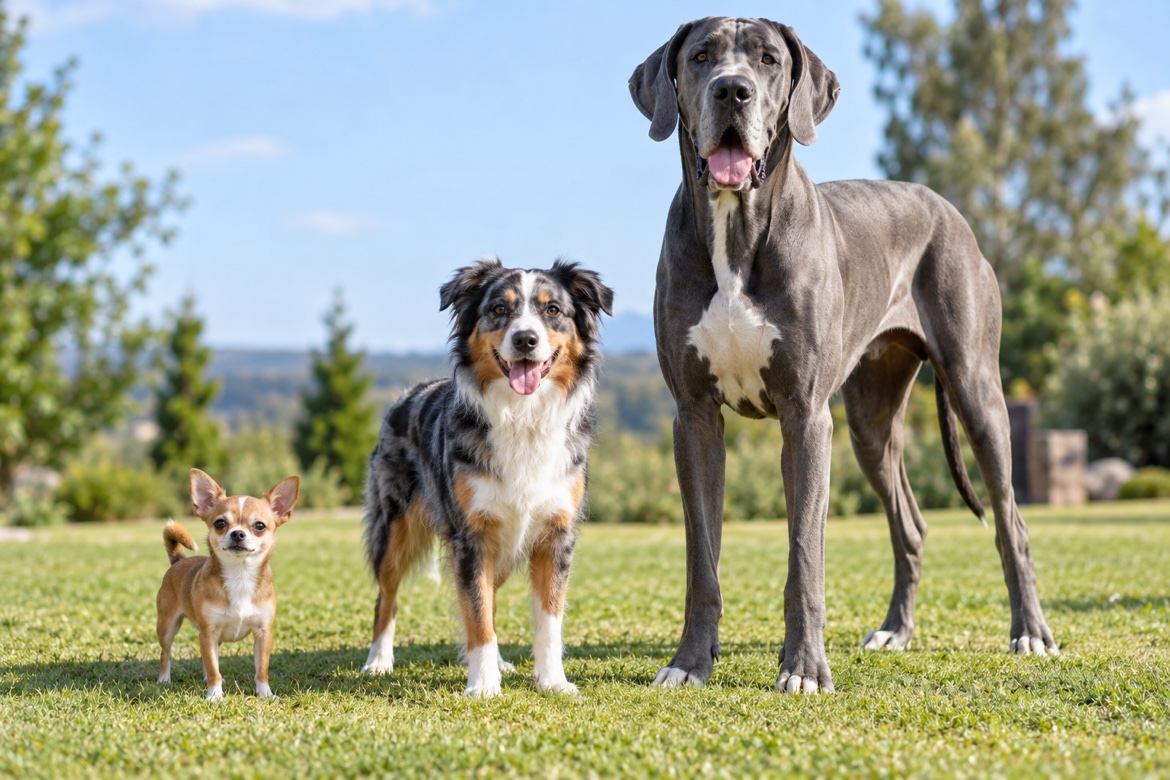
Remember: These are broad reference ranges, not guarantees or precise predictions from a single study. Breed, individual health, and the dog’s circumstances can make a substantial difference. A healthy large-breed dog may outlive the usual range, while a small dog can develop a life-limiting condition earlier than expected.
Why do small dogs live longer than big dogs?
It is an unusual pattern. Across mammals generally, larger species tend to live longer than smaller ones. Within domestic dogs, however, larger breeds usually have shorter lifespans than smaller breeds. Selective breeding has created an unusually wide range of body sizes within one species, making dogs especially useful for studying the relationship between size and aging.
Research published in The American Naturalist in 2013 examined mortality data from 74 dog breeds. The researchers found that the shorter lifespans of larger dogs were strongly associated with a faster rate of aging, rather than simply an earlier onset of old age.
New research published in Science in October 2026 offers more clues. Researchers analyzed DNA methylation patterns in 894 dogs and found that larger dogs showed faster molecular aging in particular parts of the genome. These chemical markers help regulate how genes function, and changes in them can provide information about biological aging.
Rapid growth and the selective breeding used to produce very large dogs may contribute to this lifespan trade-off, but there is no single explanation that accounts for every breed. Inherited disease risks and other biological differences matter, too. Researchers are still investigating how these processes fit together. Read the 2013 size-and-lifespan study and the 2026 study of epigenetic aging in dogs.
The longest-living dogs on record
Some dogs live far beyond the usual lifespan for their breed, but verified longevity records represent exceptional cases rather than realistic expectations for most pets.
Bluey, the Australian Cattle Dog, is widely recognized by Guinness World Records as the oldest reliably documented dog. Bluey lived for 29 years and 5 months, from 1910 to 1939. That is extraordinarily old compared with the typical lifespan of even a long-lived breed.
You may also see reports about Bobi, a Portuguese dog whose age was announced as more than 30 years. Guinness World Records reviewed the claim after Bobi’s death and, in February 2024, concluded that it no longer had sufficient evidence to support his record. The organization therefore withdrew the title.
These cases are fascinating, but they should not set expectations for your own dog. Reaching an unusually advanced age depends on many factors, and no diet, supplement, or care routine can guarantee a record-breaking lifespan. Read Guinness World Records’ account of Bluey and its review of Bobi’s record.
Can you help your dog live longer?
You cannot control every part of aging, but several practical habits support better health and may improve the chances of a longer, more comfortable life.
Keep your dog at a healthy weight. Extra body fat can contribute to health problems and put more strain on joints. In a well-known lifetime study of 48 Labrador Retrievers, dogs fed a controlled, restricted diet lived a median of 1.8 years longer than their paired counterparts. The study supports avoiding excess weight; it does not mean owners should arbitrarily cut their dog’s food by 25%. Ask your veterinarian about an appropriate body condition and feeding plan. Read the Labrador longevity research.
Care for their teeth. Brushing daily with dog-specific toothpaste helps control plaque. Dental chews and professional examinations can also form part of a dental-care plan. Watch for bad breath, red gums, damaged teeth, or difficulty eating, and arrange an examination if you notice them. The American Animal Hospital Association’s dental-care guidance explains why home care and professional treatment both matter.
Keep up with veterinary visits and parasite prevention. Regular wellness examinations can help identify problems before obvious symptoms appear. Follow your veterinarian’s advice on vaccinations, heartworm prevention, flea and tick control, screening tests, and age-appropriate monitoring. Preventive care should be tailored to your dog’s health, lifestyle, and location.
Provide appropriate exercise and mental stimulation. Daily walks, play, sniffing opportunities, training, and food puzzles help support physical fitness and engagement. Match activity to your dog’s age, breed, mobility, and medical needs. An older dog may do better with shorter walks and gentle play than with strenuous exercise.
These measures can shift the odds in your dog’s favor, but they cannot eliminate genetic risk or guarantee additional years. Their value lies in supporting health and quality of life over time.
Signs your dog may be entering their senior years
Dogs do not all become seniors at the same age in human years. Large and giant breeds generally reach this stage earlier than small dogs, so size and breed are important context. Common changes can include a graying muzzle, slower movement, stiffness after resting, reduced stamina, changes in hearing or vision, and different sleeping habits.
Changes in appetite, thirst, weight, behavior, or bathroom habits should not automatically be dismissed as normal aging. They can signal a treatable medical problem. Arrange a veterinary examination if you notice persistent or significant changes. Senior dogs may benefit from more frequent checkups and screening based on their individual needs. The AAHA senior-care guidelines discuss what to monitor as dogs grow older.
Common questions about dog lifespan
What dog breed lives the longest?
There is no single breed that lives the longest in every study. Smaller breeds, including Jack Russell Terriers and Chihuahuas, often appear among longer-lived dogs. In a Royal Veterinary College study of 18 breeds and crossbreeds in the United Kingdom, Jack Russell Terriers had an estimated life expectancy at birth of 12.7 years. Results differ by population, breed, and research method.
Do mixed-breed dogs live longer than purebred dogs?
Not necessarily. Mixed-breed dogs can benefit from a wider mix of inherited traits, but their health and longevity still depend on their genetics, size, ancestry, and individual circumstances. Published lifespan estimates vary, and a mixed-breed dog is not automatically longer-lived than a purebred dog. Breed-specific health risks and responsible care are more useful considerations than assuming one group always lives longer.
How can I tell my dog’s age if I don’t know it?
A veterinarian can estimate age by examining teeth, eyes, coat, muscle condition, and overall health. Teeth are particularly useful when assessing puppies, but estimating the exact age of an adult dog is much less reliable. Shelter records or previous veterinary records may provide additional clues. Treat an age estimate as an approximation, not a confirmed birth date.
Does spaying or neutering affect a dog’s lifespan?
Some observational studies have found that sterilized dogs live longer on average than dogs that have not been sterilized. However, those studies do not prove that the procedure alone causes the difference, and reproductive status can be associated with other health and lifestyle factors. The potential benefits and risks can vary by sex, breed, and age at surgery. Discuss appropriate timing with your veterinarian rather than relying on lifespan averages alone.
How old is the oldest dog ever?
The oldest reliably documented dog is Bluey, an Australian Cattle Dog who lived for 29 years and 5 months. Bobi’s previously announced record was withdrawn by Guinness World Records in 2024 because the organization no longer had sufficient evidence to verify his age. Other extraordinary age claims should be treated cautiously unless independently documented.
Conclusion: Focus on the years you can share
So, how long can dogs live? Many live around 10 to 13 years, with small dogs often living longer than giant breeds. But the average is only part of the picture. A dog’s inherited traits, health, and everyday care all influence their individual journey.
Keep your dog at a healthy weight, maintain their dental and preventive care, offer suitable activity, and pay attention to changes as they age. You cannot promise your dog a certain number of years, but you can help make the years you share as healthy and comfortable as possible.
About Jennifer: Jennifer is the founder and owner of CanineCalc, a dog owner and researcher who explores canine health and pet-care topics. She is not a veterinarian or a dog breeder. Her work aims to help owners understand research and make informed decisions about their pets.