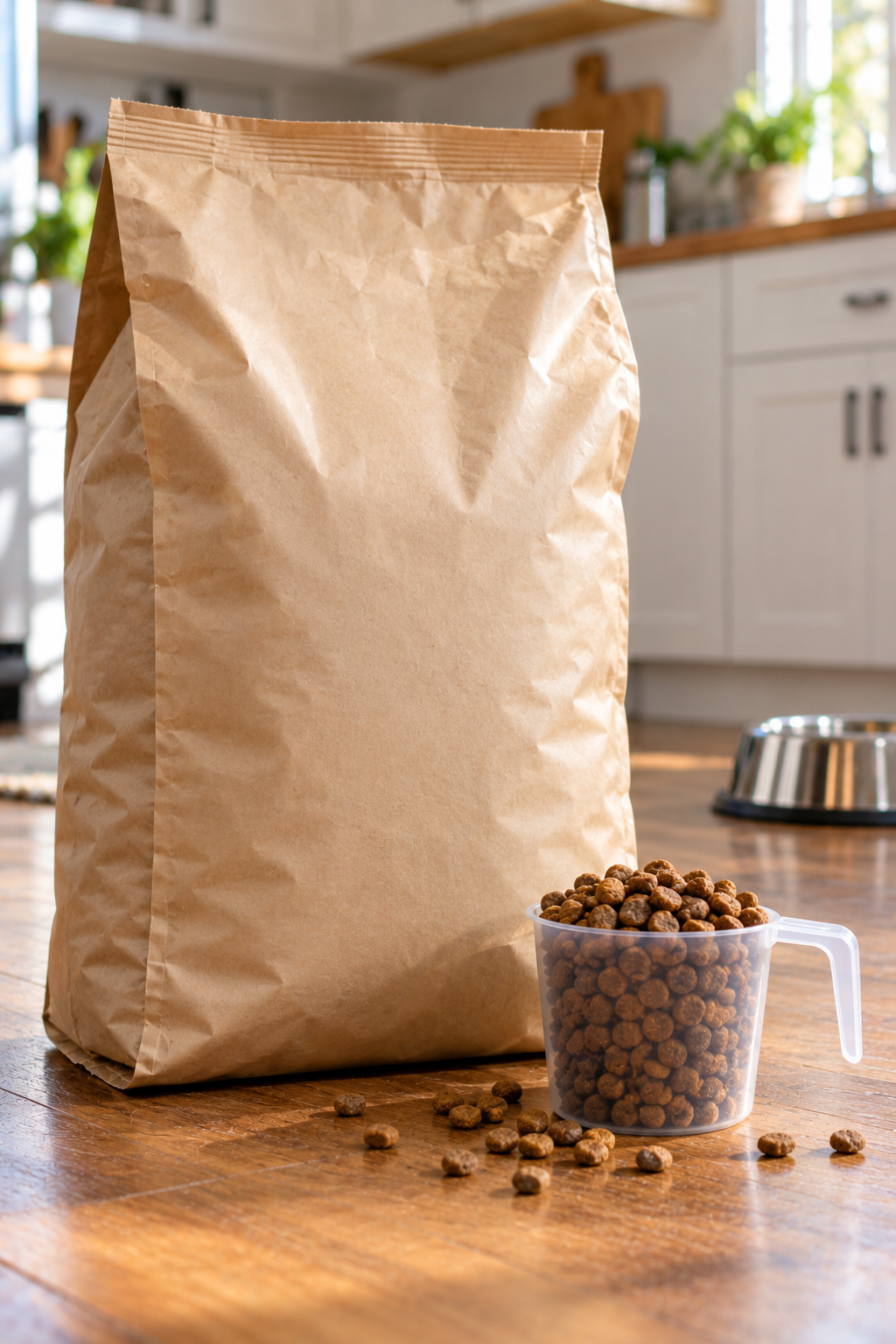
A 30 lb bag of dog food holds about 120 cups of dry kibble if one cup weighs roughly 4 ounces. The actual amount can range from about 96 to 160 cups because kibble varies in size, shape, and density.
That estimate is useful for planning purchases and figuring out how long a bag will last. For a more accurate answer, weigh one cup of your dog’s food and use the calculation below.
The quick answer: about 120 cups
A 30-pound bag contains 480 ounces by weight. If a standard measuring cup of your kibble weighs about 4 ounces, the math is simple:
30 lb × 16 oz = 480 oz
480 oz ÷ 4 oz per cup = 120 cups
Estimated total: about 120 cups per 30 lb bag
However, 4 ounces per cup is only an average estimate, not a universal rule.
| Weight of one cup of kibble | Cups in a 30 lb bag |
|---|---|
| 3 oz per cup | 480 ÷ 3 = 160 cups |
| 4 oz per cup | 480 ÷ 4 = 120 cups |
| 5 oz per cup | 480 ÷ 5 = 96 cups |
Small, lightweight pieces may give you more cups per bag, while larger or denser pieces may give you fewer.
Use 120 cups as a starting estimate for meal planning. Weighing your own kibble is the only reliable way to calculate a more exact cup count for your particular food.
How to get YOUR exact number
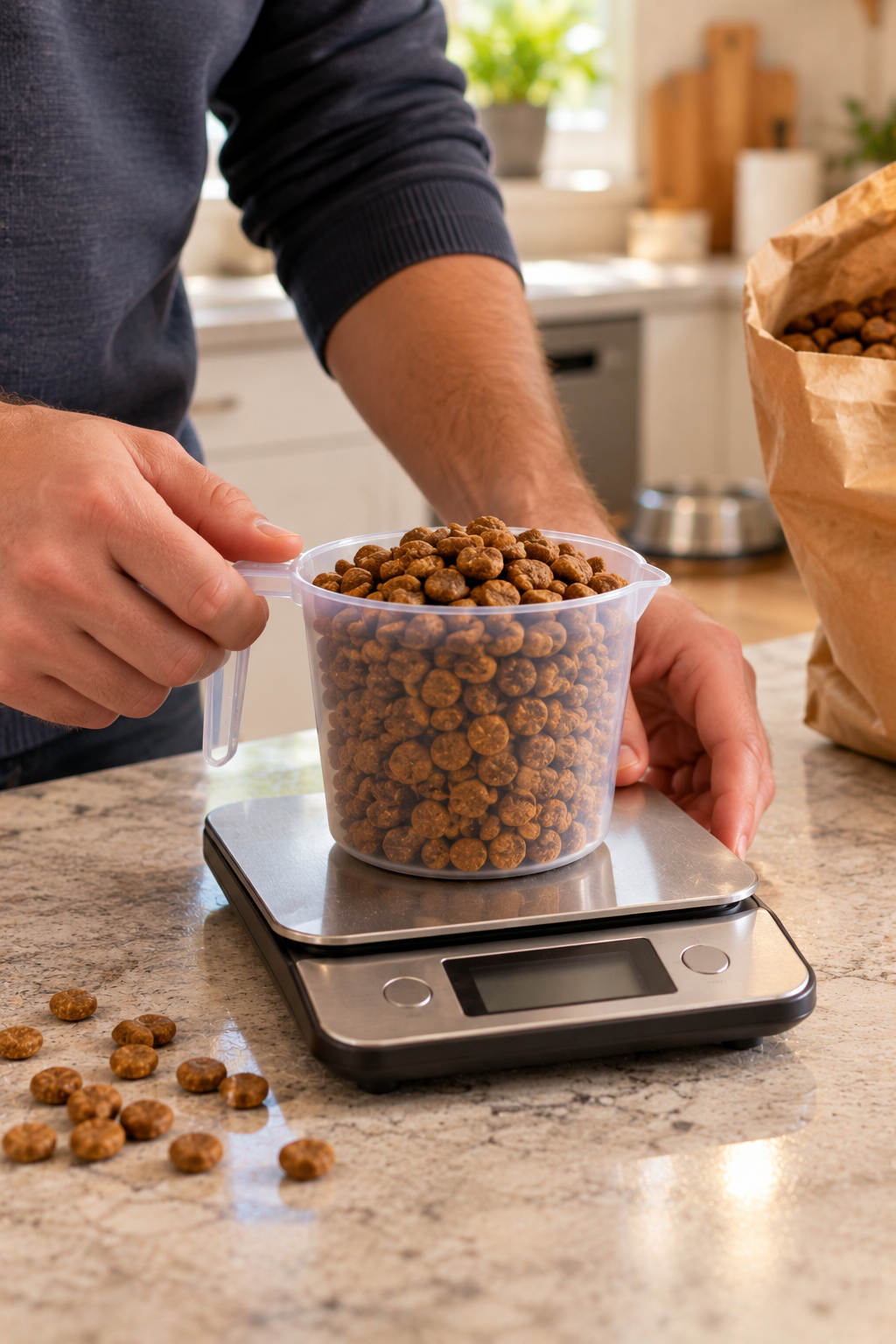
You do not need to weigh the entire bag or count every scoop. A kitchen scale and your usual measuring cup are enough.
Weigh the empty cup. Put your dry measuring cup on the kitchen scale and record its weight. Use the scale’s ounce setting.
Weigh the full cup. Fill the cup the way you normally measure your dog’s food, level it off, and record the new weight.
Subtract the empty cup’s weight. The difference is the weight of one cup of kibble.
For example, suppose your empty cup weighs 3.2 ounces and the filled cup weighs 7.6 ounces.
7.6 oz – 3.2 oz = 4.4 oz of kibble per cup
Now calculate the number of cups:
480 oz ÷ 4.4 oz per cup = approximately 109 cups
Your 30 lb bag would hold about 109 cups by that measurement, rather than the average estimate of 120.
For consistency, use the same measuring cup and filling method each time. Do not pack the kibble down unless that is specifically how you measure every portion. If you need accurate feeding portions, weighing the food directly in grams is often more consistent than relying on volume.
How long does a 30 lb bag last?
Using the 120-cup estimate, divide 120 by the number of cups your dog eats each day. The result is the approximate number of days one bag lasts.
| Dog size | Typical cups per day | A 120-cup bag lasts |
|---|---|---|
| Small, around 20 lb | 1-1.5 cups | 80-120 days |
| Medium, around 40 lb | 2-2.5 cups | 48-60 days |
| Large, around 70 lb | 3-4 cups | 30-40 days |
| Giant, around 100+ lb | 4.5-6 cups | 20-27 days |
These are planning examples, not feeding recommendations for every dog in that weight class. The right amount depends on the food’s calorie density, your dog’s age, activity, body condition, and individual energy needs.
For example, a dog eating 2.5 cups per day would use an estimated 120-cup bag in 120 ÷ 2.5 = 48 days.
Use the actual daily portion recommended for your dog and food, rather than choosing a serving size based on weight alone. The CanineCalc dog calorie calculator can help you estimate daily calorie needs and translate them into a more appropriate feeding plan.
For a growing Labrador, see our Labrador feeding chart by age for age-specific feeding guidance.
What does that cost per day?
Knowing the number of cups in a bag also helps you compare feeding costs. Here is a simple example using an illustrative bag price of $60.
Bag price: $60
Estimated bag size: 120 cups
Cost per cup: $60 ÷ 120 = $0.50
Daily portion for a large dog: 3.5 cups
Estimated daily food cost: 3.5 × $0.50 = $1.75 per day
At that rate, a 30 lb bag would last approximately 120 ÷ 3.5 = 34 days.
This is an example, not a current price quote. Your result will change with the actual bag price, the number of cups in your food, and your dog’s daily portion. Treats, toppers, and other foods can also add to the total.
To estimate your own daily and monthly spending, use the dog food cost calculator.
Storing a 30 lb bag so it stays fresh
A large bag can last several weeks or months, depending on your dog’s portion. Proper storage helps preserve freshness throughout that time.
Aim to finish the opened bag within about six weeks. This is a practical freshness target, not a universal expiration rule. Follow the food manufacturer’s storage instructions, and pay attention to the best-by date.
Keep the kibble in its original bag. Place the whole bag inside an airtight container when possible. The original packaging provides a barrier against the food’s oils and preserves important product details, including the lot number, if a recall occurs.
Choose a cool, dry place. Keep the bag away from direct sunlight, damp areas, heat sources, and excessive humidity.
Wash and dry the container between bags. Oil residue and crumbs from an older batch can remain on the container and become stale or rancid. Let it dry completely before adding new food.
Do not mix old and new batches. Finish or properly discard the older food before opening the next bag. Keeping batches separate makes it easier to track freshness and identify a problem.
If the food develops an unusual smell, visible mold, signs of moisture, or other unexpected changes, do not feed it.
Cups are volume, but calories are what count
Two dog foods can provide very different amounts of energy in the same volume. For illustration, one food might contain 300 calories per cup while another contains 500 calories per cup.
At two cups per day, those foods would provide:
Food A: 2 × 300 = 600 calories
Food B: 2 × 500 = 1,000 calories
That is a difference of 400 calories per day, despite feeding the same number of cups.
This is why the 120-cup estimate is useful for tracking how much food you have, but it cannot tell you how much your dog should eat. Always check the calorie information on the food label and account for treats and other food when estimating daily intake.
Start with the dog’s estimated calorie needs, then use the food’s stated calories per cup or per gram to calculate an appropriate portion. The CanineCalc dog calorie calculator can help with this.
If your dog gains or loses weight despite apparently receiving the right number of cups, recheck the food’s calorie density and measure portions more consistently. Persistent or unexplained weight changes are a good reason to discuss the feeding plan with your veterinarian.
Frequently asked questions
How many cups are in a 30 lb bag of dog food?
A 30 lb bag contains about 120 cups when one cup weighs 4 ounces. Since kibble density varies, a realistic estimate is about 96-160 cups if a cup weighs between 5 and 3 ounces. Weighing your own kibble gives you a more accurate result.
How many cups are in a 15 lb or 40 lb bag?
Using the same estimate of 4 ounces per cup:
15 lb bag: 15 × 16 = 240 oz; 240 ÷ 4 = about 60 cups.
40 lb bag: 40 × 16 = 640 oz; 640 ÷ 4 = about 160 cups.
Actual totals vary with the kibble’s density.
How long should a 30 lb bag last a 50 lb dog?
If your dog eats 2.5 cups per day and the bag contains about 120 cups, the calculation is 120 ÷ 2.5 = 48 days. Your dog’s actual daily portion may differ depending on the food’s calories and individual needs.
Does the cup size matter?
Yes. These estimates assume a standard US measuring cup that holds 8 fluid ounces by volume. Fluid ounces measure volume, while the ounces on a kitchen scale measure weight. A food scoop may hold more or less than one standard measuring cup, so do not assume a scoop equals a cup.
Can I store kibble in a plastic bin without the original bag?
It is not ideal when you can keep the original bag. Food oils can cling to plastic surfaces, and residue left behind may become stale or rancid. Keeping the food in its original bag inside an airtight bin helps preserve the packaging barrier and keeps the lot number available.
The bottom line
A 30 lb bag of dog food holds approximately 120 cups when each cup weighs around 4 ounces, but the actual amount can be closer to 96 or 160 cups depending on the kibble. Weighing one level cup gives you a much more useful estimate for your own bag.
Use that number to plan how long the food will last and what it costs per day. For feeding decisions, though, check calories rather than cups alone.
By Jennifer
Jennifer is the founder and owner of CanineCalc, a dog owner, and a researcher who creates practical tools and informational resources for dog owners. Her work focuses on making everyday pet-care calculations easier to understand. CanineCalc’s estimates are intended as planning aids, not a substitute for individualized veterinary advice.