Can dogs have potatoes? The short answer
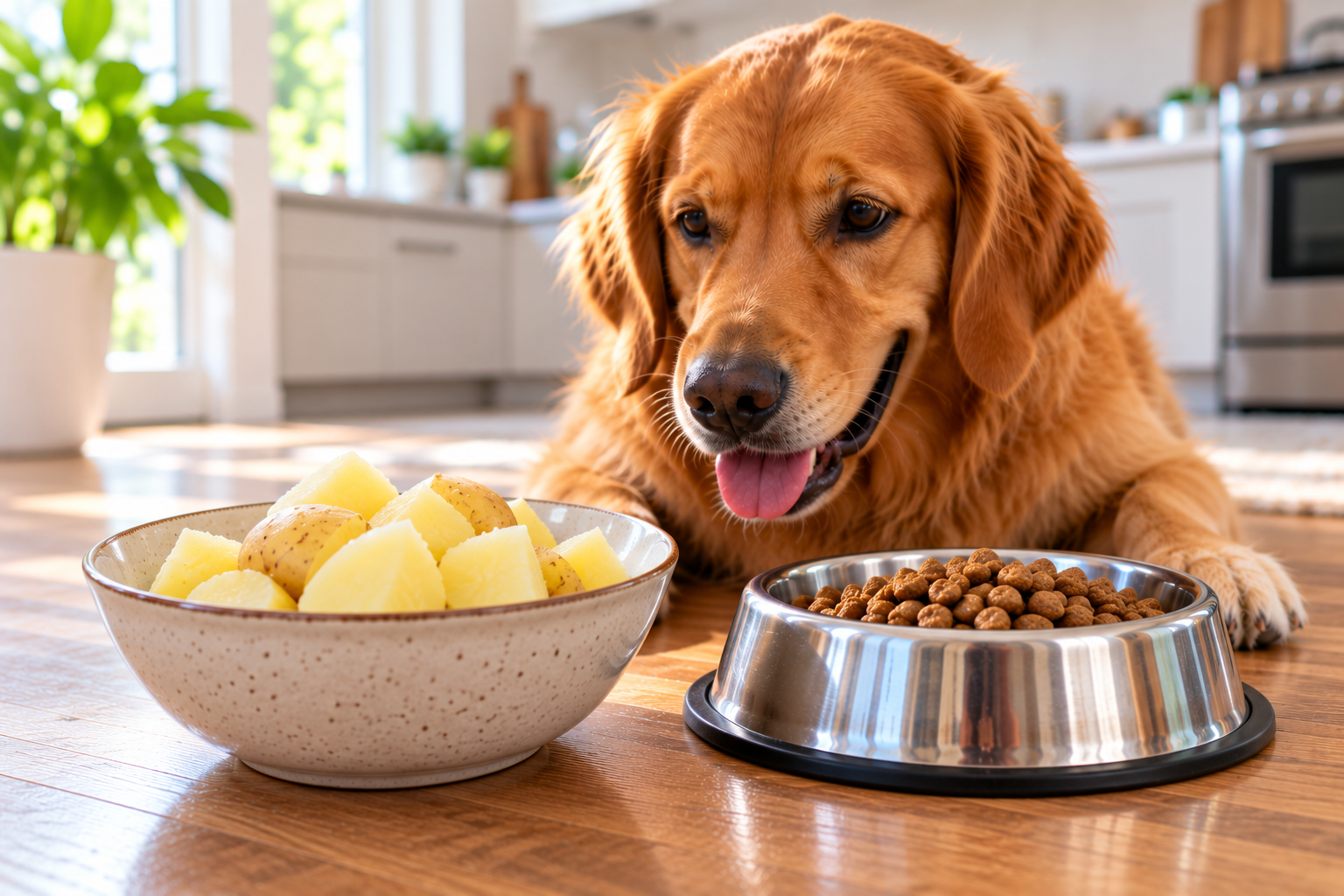
Yes, dogs can have potatoes when they are fully cooked, plain, and served in small amounts. Boiled or baked white potatoes can be an occasional treat for a healthy dog, provided they contain no added salt, butter, oil, or seasoning.
The important distinction is how the potato is prepared. Raw potatoes, green potato skins, and sprouted potatoes should be avoided. Green and sprouted parts can contain elevated amounts of solanine, a naturally occurring toxin that may cause illness. Cooking a green or sprouted potato does not reliably make it safe, so do not serve those potatoes to your dog.
Even a properly cooked potato should remain an occasional extra rather than a replacement for your dog’s regular food. Potatoes contain carbohydrates and provide energy, but they do not supply the complete balance of nutrients a dog needs from its everyday diet.
Before sharing a potato from your dinner plate, check three things:
- Cooked: Boiled or baked until completely soft, never raw or undercooked.
- Plain: No butter, cream, gravy, garlic, onion, salt, or seasoning.
- Small portion: A few appropriate bites, with all treats and extra foods kept within the usual 10% daily-calorie guideline.
If your dog eats a green or sprouted potato, contact your veterinarian for advice rather than assuming cooking or a small bite makes it harmless.
Cooked vs raw vs green potatoes
Not every potato belongs in your dog’s bowl. Use this table to distinguish an occasional safe treat from preparations and plant parts that should be avoided.
| Potato form | Safe or not? | Why |
|---|---|---|
| Plain boiled white potato | Generally safe in small amounts | Fully cooked, unseasoned flesh is suitable as an occasional treat for many healthy dogs. |
| Plain baked white potato | Generally safe in small amounts | Baking cooks the potato without requiring added fats or seasonings. Remove any green or sprouted portions before cooking. |
| Raw white potato | Avoid | Raw potato is harder to digest and may cause digestive upset. Raw potatoes with green areas, sprouts, or suspicious discoloration present additional concerns. |
| Green potato | Unsafe; do not feed | Green areas can indicate elevated glycoalkaloids, including solanine. |
| Sprouted potato or potato eyes | Avoid | Sprouts and eyes can contain elevated concentrations of natural potato toxins. |
| Plain, cooked potato skin | Small amounts may be tolerated, but peeling is preferable | Skin can be harder to digest. Never serve green or sprouted skin. |
| French fries or hash browns | Avoid as a dog treat | Added oil, salt, and other ingredients make these unsuitable choices. |
| Mashed potatoes with butter or cream | Avoid the rich, seasoned version | Added fats and dairy can upset the stomach and contribute unnecessary calories. |
Why is solanine a concern?
Solanine belongs to a group of natural compounds called glycoalkaloids found in potatoes and other plants in the nightshade family. Green coloration can indicate increased levels of these compounds, while sprouts, eyes, and green skin are particularly concerning.
The green color itself comes from chlorophyll, which is not the toxin. However, greening may occur alongside increased glycoalkaloid levels, so a green potato is not something to serve to a dog.
Boiling, baking, or frying does not reliably eliminate the toxins in a green or sprouted potato. Peeling may reduce some of the glycoalkaloid content, but it is not a reason to salvage a potato that is extensively green or sprouted. Discard questionable potatoes instead.
Potential signs of potato toxin exposure include vomiting, diarrhea, weakness, unusual tiredness, and, in more serious cases, neurological symptoms. If your dog eats a green or sprouted potato, contact a veterinarian promptly and explain what was eaten, approximately how much, and when. Do not wait for symptoms or try to induce vomiting unless a veterinary professional instructs you to do so.
How to cook potatoes for dogs
Preparing potatoes for your dog does not require a special recipe. The goal is to cook ordinary white potato thoroughly while leaving out the ingredients that can turn a simple bite into an unsuitable treat.
- Choose a fresh, firm potato. Avoid potatoes with extensive green areas, sprouts, or signs of spoilage. If the potato is green or heavily sprouted, discard it rather than trying to make it safe through cooking.
- Wash and peel it. Rinse the potato under running water and remove the skin. Peeling makes it easier to avoid questionable skin and gives you plain potato flesh to serve.
- Boil or bake it thoroughly. Cut the potato into manageable pieces before boiling, or bake it until the flesh is soft throughout. Do not add salt, butter, oil, garlic, onion, or spice blends. Avoid broth or gravy unless you have checked every ingredient and confirmed that it is suitable for your dog.
- Let it cool completely. Hot potato can burn your dog’s mouth. Once cooked, allow it to cool before cutting it into small, manageable pieces.
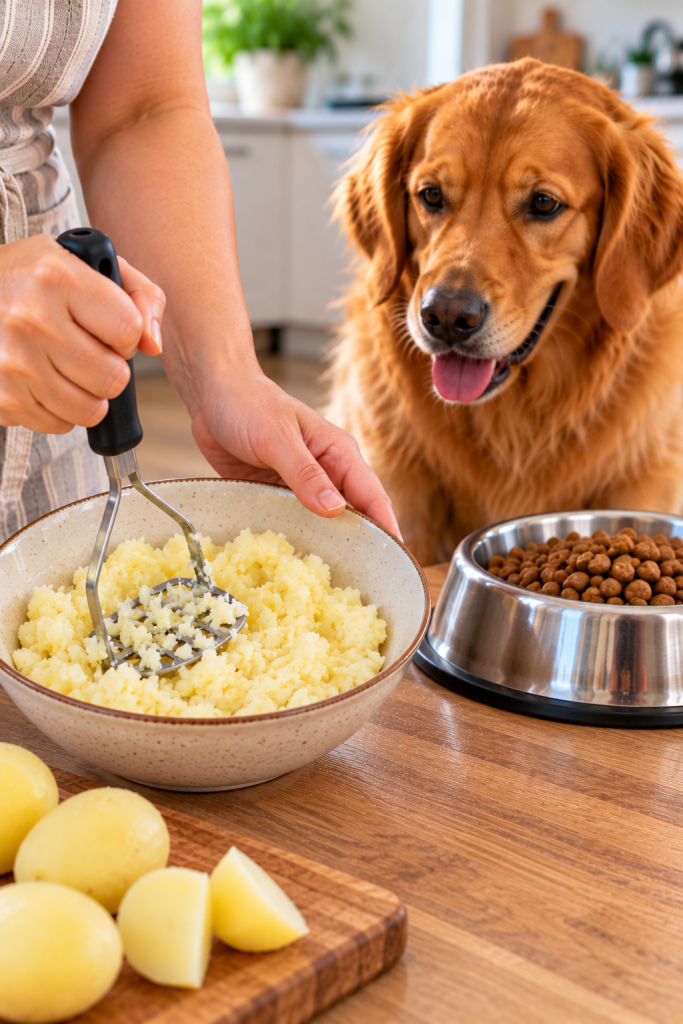
- Serve a small amount. Offer a few bite-sized pieces appropriate for your dog’s size. You can mash a little plain potato with a fork if your dog finds soft food easier to eat, but there is no need to add milk, cream, butter, or other ingredients.
For a simple homemade meal addition, plain boiled chicken may also be an option for many healthy dogs. See our guide to boiled chicken for dogs for preparation guidance. Remember that chicken and potatoes together still do not make a complete, balanced long-term homemade diet.
How much potato can a dog eat?
There is no single potato portion that suits every dog. A Chihuahua and a Great Dane have different energy requirements, and a dog’s age, body condition, activity level, and medical history also matter.
For a healthy dog trying potato for the first time, start with a very small amount of plain, cooked potato. One or two tiny bites may be enough for a small dog, while a larger dog may tolerate several small cubes. These are illustrative starting portions, not established serving requirements. There is no need to feed potato every day.
Watch how your dog responds after trying a new food. If vomiting, diarrhea, or other unusual symptoms develop, stop offering the potato and contact your veterinarian when appropriate.
Follow the 10% treat rule
A useful general nutrition guideline is to keep treats and other extra foods to no more than 10% of your dog’s total daily calories. At least 90% should come from a nutritionally complete and balanced diet appropriate for the dog’s life stage and needs. The World Small Animal Veterinary Association’s feeding-treats guidance explains this approach.
That 10% allowance includes all treats, table scraps, and other extras combined. It is not a separate 10% allowance for potatoes.
For example, if your dog already receives training treats, dental chews, or pieces of other human foods during the day, potato needs to fit within the remaining treat allowance. A large helping of potato can add unnecessary calories even when the potato itself is plain.
Puppies need particular care because their nutritional requirements change as they grow. Keep their complete puppy food as the foundation of their diet, and do not let potato displace a meaningful part of their regular meals. Our puppy food chart provides additional guidance on puppy feeding.
Dogs with diabetes, weight-management needs, digestive sensitivities, or veterinary-prescribed diets may need different advice. Ask your veterinarian before adding potatoes if your dog has a medical condition or a restricted diet.
Potato mistakes to avoid
Plain cooked potato is relatively straightforward to prepare, but common kitchen habits can make it a poor choice for dogs.
Sharing mashed potatoes from the dinner table. Mashed potatoes may contain butter, cream, milk, salt, garlic, onion, or gravy. These additions can cause digestive problems, and garlic and onion are particularly concerning because they are toxic to dogs. If you want to share mashed potato, set aside a small portion before adding anything else.
Offering fries or fried potato pieces. Fried foods often contain substantial amounts of fat and salt. Rich, fatty foods can contribute to gastrointestinal upset and may increase the risk of pancreatitis in susceptible dogs. Plain, boiled or baked potato is the better option.
Seasoning potato skins. Baked potato skins may look like a convenient snack, but toppings, oils, and seasonings change the picture. Green or sprouted skins should never be fed, and peeling the potato is the simpler choice.
Trying to rescue a green or sprouted potato. Cutting away a green patch or cooking the potato does not guarantee that the remaining potato is safe. When a potato is extensively green, sprouted, or questionable, discard it. Keep raw potatoes and vegetable scraps out of your dog’s reach.
Giving too much at once. Even plain potato can cause digestive discomfort when a dog eats more than it tolerates. Treats also add calories without replacing the nutritional value of a complete diet. Keep portions small and infrequent.
Assuming a food is appropriate for every dog. A food that suits one healthy adult dog may not suit a puppy or a dog with a health condition. Ask your veterinary team before introducing potato to a dog on a therapeutic diet or one with specific nutritional restrictions.
If your dog has eaten a substantial amount of raw potato, a green or sprouted potato, or a potato dish containing potentially harmful ingredients, seek veterinary advice. Be ready to describe the food, the estimated amount, and the time of ingestion. Prompt guidance is especially important if symptoms appear.
Can dogs have potatoes? Common questions
Can dogs have potatoes?
Yes. Healthy dogs can generally have small amounts of plain, fully cooked white potato as an occasional treat. Avoid raw, green, and sprouted potatoes, and do not add butter, salt, seasonings, or rich toppings.
Can dogs eat raw potatoes?
No. Raw potatoes are best avoided because they can be difficult to digest and may cause gastrointestinal upset. Green areas, sprouts, and potato eyes raise additional concerns because they can contain elevated levels of solanine and related glycoalkaloids. Choose thoroughly cooked, plain potato instead.
Can dogs eat mashed potatoes?
Plain mashed potatoes can be suitable in small amounts if they are made from fully cooked potato without added ingredients. Mashed potatoes containing butter, cream, garlic, onion, gravy, or heavy seasoning are not appropriate treats. Prepare a separate plain portion if you plan to share any.
Can dogs eat potato skins?
Small amounts of cooked, non-green potato skin may be tolerated by some dogs, but skins can be harder to digest. Green or sprouted skins should be avoided. Peeling the potato and serving only the cooked flesh is the simpler option.
Are sweet potatoes different?
Yes. Sweet potatoes are a different plant from ordinary white potatoes and are not part of the nightshade family, so their solanine concern is different. They still need to be prepared appropriately, cooked thoroughly, and served plain in moderation. See a dedicated sweet potato feeding guide for more information about their preparation and portions.
The simple potato rule to remember
Dogs can enjoy a little potato when it is properly prepared. Choose a fresh white potato, cook it thoroughly, remove the skin, let it cool, and offer only a small plain portion. Keep all treats and extra foods within the general 10% daily-calorie guideline.
Avoid raw, green, and sprouted potatoes, and do not assume that cooking can remove the risks from a questionable potato. Skip rich mashed potatoes, fries, and seasoned leftovers, too.
Potatoes are optional. Your dog’s main diet should remain complete and balanced for their life stage, with any extra foods chosen to suit their individual needs. When there is uncertainty about a food exposure or your dog’s dietary restrictions, your veterinarian is the best source of individualized guidance.
About the author: Jennifer is the founder and owner of CanineCalc, a dog owner and researcher who develops accessible guides to canine nutrition, care, and everyday dog-related questions. Her articles are intended for general educational purposes and are not a substitute for advice from a qualified veterinarian.