Are carrots ok for dogs? The short answer
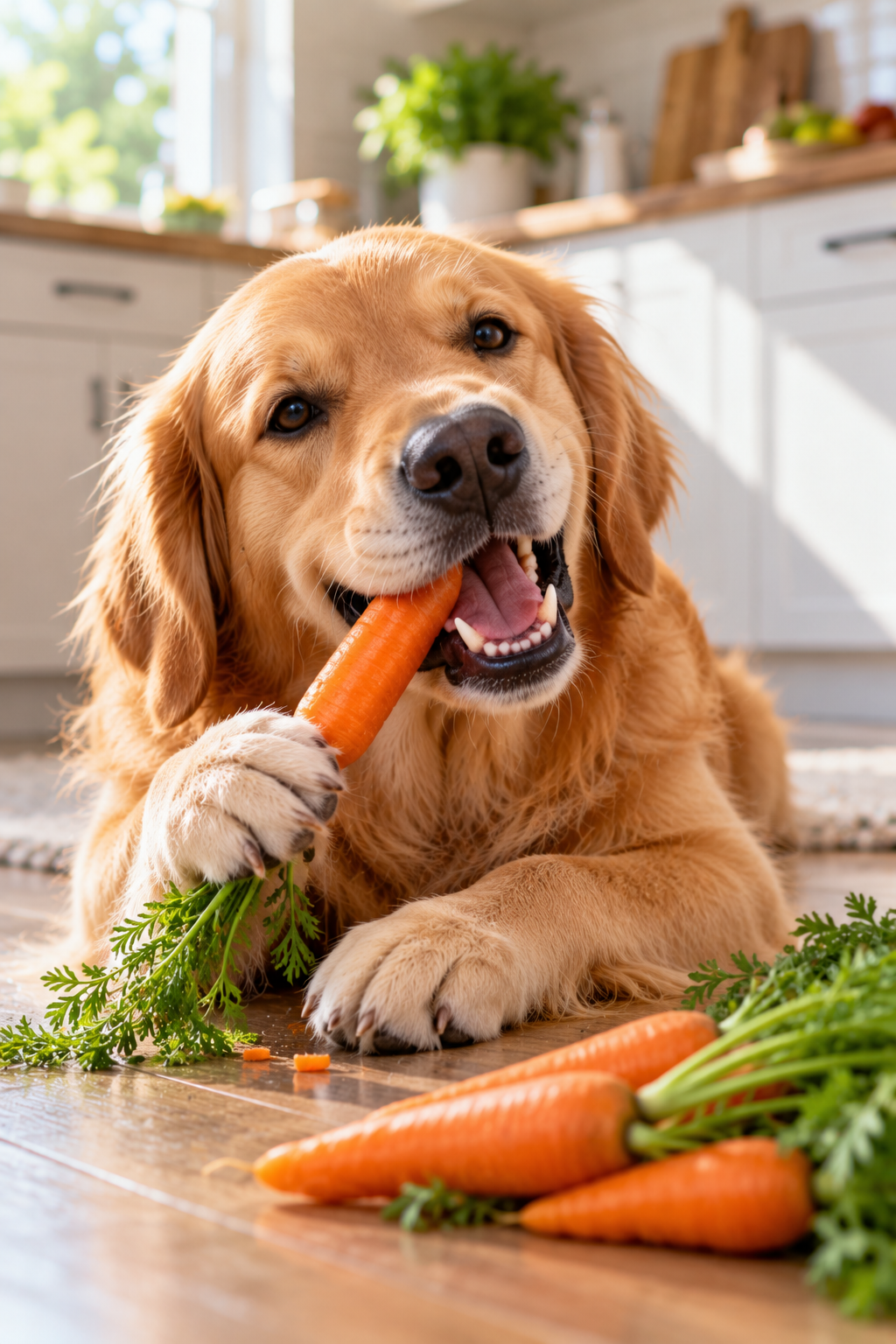
Yes, carrots are safe for most dogs in moderation. They are a low-calorie vegetable that offers a satisfying crunch, some fiber, and nutrients such as beta-carotene, which the body can convert into vitamin A. Both raw and cooked carrots can make a simple treat for dogs when served properly.
Before offering a carrot, wash it thoroughly, remove any spoiled parts, and cut it into pieces appropriate for your dog’s size and chewing habits. Serve carrots plain, without salt, butter, sauces, or seasoning.
The most important safety consideration is how your dog eats. A small dog, enthusiastic gulper, or puppy may struggle with large pieces of raw carrot. Bite-sized pieces are generally a safer choice than handing over a whole carrot.
Carrots are treats, not meal replacements. Your dog should still receive most of their nutrition from a complete and balanced dog food.
Benefits of carrots for dogs
Carrots are inexpensive, easy to find, and simple to prepare. Although they are not a nutritional requirement for dogs, they offer several useful qualities as an occasional snack.
A low-calorie treat option
Plain carrots are relatively low in calories compared with many commercial treats. That makes them a convenient option for owners who want to offer a little variety without regularly adding calorie-dense snacks.
Portion size still matters. A dog receiving carrots, training rewards, dental chews, and table scraps throughout the day can accumulate more calories than expected.
Crunch and chewing interest
Raw carrots provide a firm texture that some dogs enjoy crunching. Offering a suitable piece can add variety to treat time and give curious dogs something different to explore.
However, carrots should not be considered a substitute for toothbrushing or veterinary dental care. Crunching a vegetable does not reliably remove dental buildup.
Vitamin A and fiber
Carrots contain beta-carotene, a nutrient that can be converted into vitamin A. Vitamin A has important roles in normal vision, immune function, and other body processes.
Carrots also contain dietary fiber. In modest amounts, fiber contributes to the overall composition of a dog’s diet. Too much carrot, however, may cause digestive changes in some dogs.
Affordable and convenient
You do not need a special recipe or expensive ingredients. Fresh carrots can be washed, chopped, and served raw, or cooked until soft. Baby carrots can also work well after being cut into appropriately sized pieces.
For everyday feeding, simple preparation is best.
Raw vs cooked carrots
Both raw and cooked carrots are suitable for most dogs when served plain. The best option depends on your dog’s size, chewing style, and preference.
| Feature | Raw carrots | Cooked carrots |
|---|---|---|
| Texture | Firm and crunchy | Softer and easier to chew |
| Chewing interest | More crunch for dogs that enjoy chewing | Less crunch, but suitable for dogs preferring soft food |
| Preparation | Wash and cut into small pieces | Steam or boil until appropriately soft, then cool |
| Digestion | May be harder for some dogs to break down | Soft texture may be easier for some dogs to handle |
| Main caution | Large pieces can be a choking hazard | Hot pieces and added ingredients should be avoided |
Choose raw carrots when your dog chews carefully and enjoys a crunchy snack. Cut them into thin coins, small sticks, or finely chopped pieces based on your dog’s mouth size.
Choose cooked carrots if your dog prefers softer textures. Steam or boil them until soft, allow them to cool, and serve without added butter, salt, oils, or seasonings.
Neither preparation method is automatically better for every dog. The key is to provide a manageable texture and keep the serving small.
How many carrots can a dog eat?
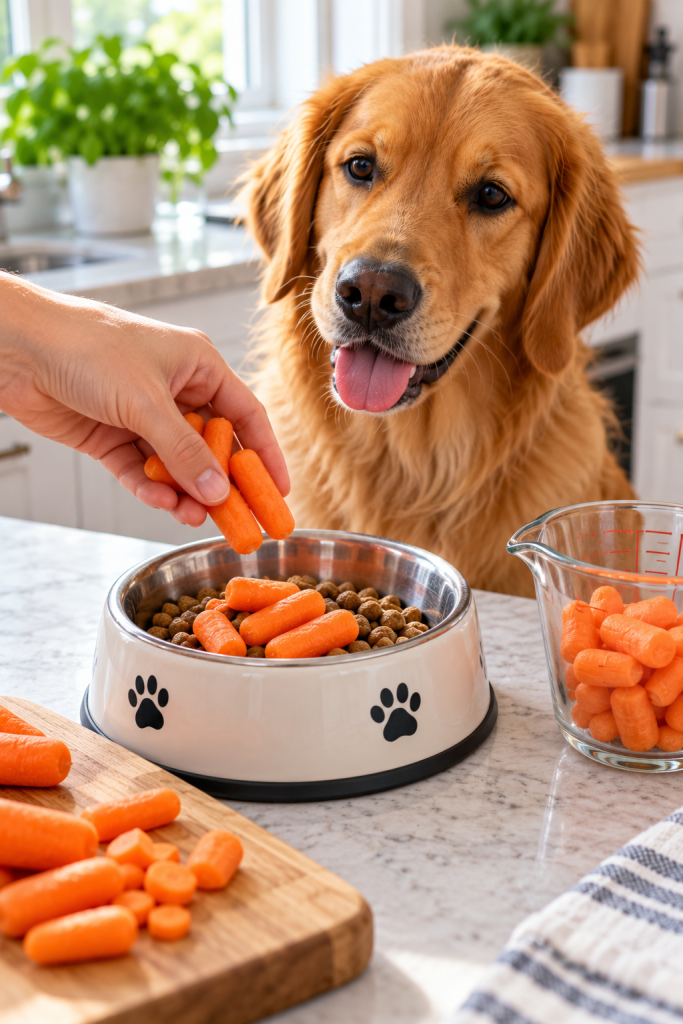
There is no single carrot portion that suits every dog. The appropriate amount depends on body size, daily calorie needs, other treats, and how well your dog tolerates the vegetable.
A widely used general feeding guideline is to keep all treats combined to about 10% or less of a dog’s daily calories, with the remaining calories coming from a complete and balanced diet. Carrots count toward that treat allowance, along with biscuits, chews, and training rewards. See the guidance from VCA Animal Hospitals.
The table below offers a conservative starting point for a snack, rather than a prescribed daily allowance.
| Dog size | Example starting portion | How to serve |
|---|---|---|
| Toy dogs (under 10 lb) | 1–2 tiny pieces | Finely chopped or thinly sliced |
| Small dogs (10–25 lb) | 2–3 small pieces | Small coins or short sticks |
| Medium dogs (25–50 lb) | A few bite-sized pieces | Sliced or chopped |
| Large dogs (over 50 lb) | A small handful of pieces | Chopped into manageable sizes |
These are practical examples, not limits that override your dog’s calorie needs. Even a large dog may need smaller servings if carrots are only one of several treats offered that day.
Follow these simple rules when introducing carrots:
- Start small. Offer one or two appropriately sized pieces the first time, then see how your dog responds.
- Cut for safety. Avoid long, thick chunks that your dog could swallow whole. Small dogs and gulpers need particularly careful preparation.
- Count every treat. Carrots should fit within your dog’s overall treat allowance rather than being added on top of an already treat-heavy day.
- Keep portions sensible. More carrots do not automatically mean more benefit.
Never assume a whole carrot is safe just because your dog is big. Some dogs chew carefully, while others try to swallow large pieces. Tailor the serving to the individual dog.
Carrots for puppies and teething
Puppies can eat carrots in small amounts when the texture and size are appropriate for their age and chewing ability.
A few finely chopped pieces or soft-cooked carrot can be a simple introduction to this vegetable. Introduce new foods gradually, and keep the puppy’s main meals appropriate for growth.
Carrots can also offer a cool chewing experience during teething. Some owners use refrigerated carrot sticks or carefully prepared chilled carrot pieces as an occasional supervised chew.
A few precautions matter:
- Choose a piece that is appropriate for your puppy’s size and cannot easily be swallowed whole.
- Stay with your puppy throughout chewing, and remove pieces that become small enough to gulp.
- Avoid very hard, solid frozen carrots, especially for forceful chewers, because hard objects can pose a risk to teeth.
- Do not leave a puppy alone with a large carrot stick or use one as an unsupervised chew toy.
A chilled carrot may be enough to provide a refreshing texture without making the chew excessively hard.
Puppies also have specific nutritional needs during growth. Carrots should remain an occasional extra, not displace their regular food. For help understanding age-related feeding amounts, see our puppy food chart.
When to be careful
Carrots are generally well tolerated, but a few situations call for extra care.
Too many carrots
Large servings can add unnecessary calories and fiber. Some dogs may experience gas or loose stools after eating more than they tolerate comfortably. Start with a small amount and avoid making a sudden, substantial change to your dog’s usual diet.
Carrot cake and seasoned carrots
Carrot cake is not equivalent to plain carrots. It can contain substantial sugar and fat, and some recipes may include ingredients unsuitable for dogs. Sugar-free baked goods may contain xylitol, which is dangerous to dogs.
Likewise, skip carrots prepared with butter, heavy sauces, excess salt, onion, garlic, or other seasonings. Plain is the safest choice.
Dogs with dietary restrictions
If your dog follows a prescription diet, has a medical condition requiring dietary limits, or has been advised to avoid certain foods, check with your veterinarian before introducing carrots or other extras.
If your dog eats a large amount of an unfamiliar food or develops concerning symptoms after eating it, contact your veterinarian for advice rather than assuming the carrots are responsible or harmless.
Common questions about carrots and dogs
Can dogs eat carrots every day?
Many dogs can enjoy a small amount of plain carrot daily, provided it fits within their treat allowance and their usual food remains nutritionally complete. Daily feeding is not necessary, though. Variety in treats and appropriate portions can help keep snacks balanced.
Can dogs eat raw carrots?
Yes. Wash raw carrots thoroughly and cut them into pieces your dog can chew safely. Avoid giving whole carrots or large chunks to small dogs and dogs that tend to gulp their food.
Are baby carrots OK for dogs?
Yes. Plain baby carrots are generally safe for dogs when served in suitable portions. Despite their smaller size, whole baby carrots can still be too large for some dogs to swallow safely, so cut them into smaller pieces when needed.
Can puppies eat carrots?
Yes, puppies can have small amounts of carrot. Offer soft-cooked or carefully cut pieces that match their chewing ability. Supervise them while eating, and keep their regular puppy food as the foundation of their diet.
Can dogs eat carrot tops?
Carrot tops, or the leafy green parts of the carrot plant, are not a common dog food, and individual tolerance may vary. If you offer them, wash them well and use only a small amount of plain greens. Avoid plants that may have pesticide residues or other contamination, and check with your veterinarian if your dog has dietary restrictions.
Conclusion: Are carrots OK for dogs?
Yes, carrots can be an easy, affordable treat for most dogs. They offer a low-calorie alternative to many packaged snacks, some useful nutrients, and a crunchy or soft texture depending on how you prepare them.
The safest approach is straightforward: wash carrots, serve them plain, cut them to a suitable size, and keep portions modest. Raw and cooked carrots can both work well, while puppies and dogs that gulp food need extra supervision.
Treat carrots as a small addition to a balanced diet rather than a nutritional necessity. When your dog’s individual dietary needs are uncertain, your veterinarian can help determine which treats are appropriate.
About Jennifer
Jennifer is the founder and owner of CanineCalc, a dog owner and researcher who develops practical dog-care guides by reviewing reliable information. She is not a veterinarian, breeder, or certified trainer. Her goal is to help dog owners make informed everyday care decisions.