Last updated: October 2026
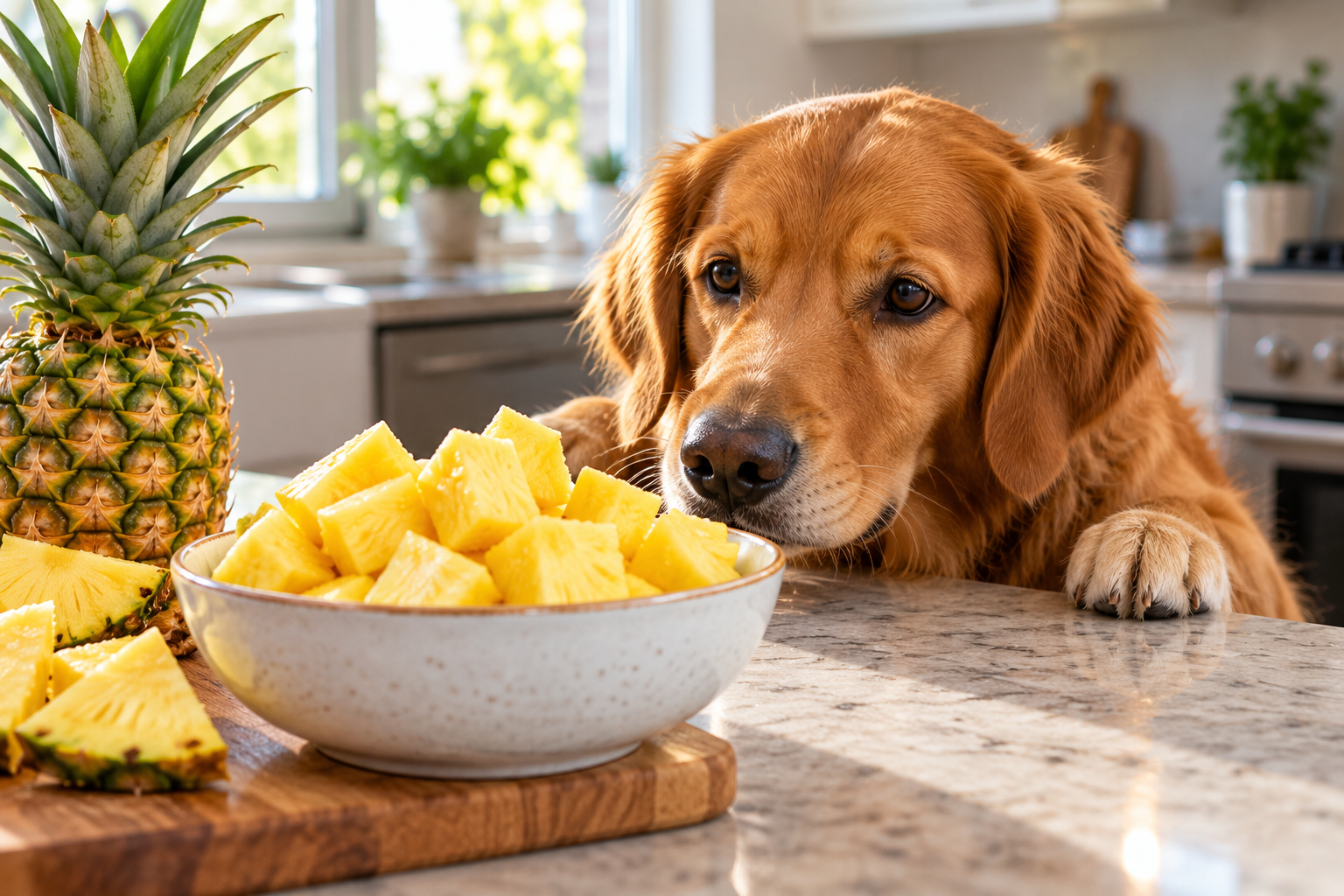
Yes, dogs can eat fresh pineapple in small amounts. The soft, ripe flesh is generally safe for healthy dogs when you remove the tough outer skin and core, cut the fruit into small pieces, and serve it as an occasional treat.
The bigger concern is how the pineapple is prepared. Canned pineapple packed in syrup and sweetened dried pineapple can add unnecessary sugar, while large or poorly prepared pieces create choking or digestive risks.
You don’t need to share much. A few small pieces are plenty for most dogs.
Can dogs eat pineapple? The short answer
Can dogs eat pineapple? Yes. Fresh, plain pineapple flesh is a dog-friendly treat when served in moderation. Remove the rind, leafy crown, stem, and hard core before offering it, and keep the pieces small enough for your dog to chew comfortably.
According to the American Kennel Club (AKC), dogs can enjoy a few chunks of raw pineapple as an occasional snack. However, the fruit’s natural sugar and fiber mean that larger servings aren’t automatically better.
Pineapple also contains water, vitamins, minerals, and fiber. Those nutrients can contribute to a varied treat, but pineapple isn’t a nutritional requirement for dogs, and it shouldn’t replace a complete and balanced diet.
Fresh pineapple is the preferred option. Choose plain fruit rather than syrup-packed, sweetened, or heavily processed versions. The goal is to share a small taste, not turn a fruit snack into a substantial part of your dog’s meal.
Most people assume fruit barely counts toward a dog’s treat allowance. Veterinary nutrition guidance says otherwise: treats and other extras should generally make up no more than 10% of daily calories, with the remaining calories coming from complete and balanced food. The World Small Animal Veterinary Association (WSAVA) explains this limit in its guidance for feeding dogs.
If your dog has a medical condition or follows a veterinary-prescribed diet, ask your veterinary team before adding pineapple or other human foods.
Fresh vs canned vs dried pineapple
The form of pineapple matters almost as much as the serving size. Fresh fruit is easy to prepare without added ingredients, while canned and dried versions may contain extra sugar or have a more concentrated sweetness.
Fresh vs canned vs dried pineapple: Fresh, plain pineapple is the best default for dogs because you control the ingredients and portion. Canned pineapple in syrup should be skipped, and sweetened dried pineapple isn’t a good everyday treat. Plain, unsweetened alternatives may be possible in tiny amounts, but fresh fruit is simpler.
According to the AKC’s pineapple guidance, raw pineapple is suitable in moderation, while syrup-packed canned fruit is best avoided because of its sugar content. Dried fruit deserves similar caution when sugar has been added or the product is easy to overfeed.
Quick Comparison
| Option (form) | Safe? | Key benefit | Limitation / why |
|---|---|---|---|
| Fresh, plain pineapple | Yes, in moderation | Simple, with no added sugar | Remove rind and core; natural sugar and fiber still count |
| Canned pineapple in syrup | Avoid | Convenient | Syrup adds unnecessary sugar and calories |
| Canned pineapple in water, with no added sugar | Potentially, in a tiny amount | Convenient when fresh isn’t available | Check ingredients; drain well and prefer fresh |
| Sweetened dried pineapple | Avoid | Easy to store | Added sugar and concentrated fruit make portions easy to overdo |
| Unsweetened dried pineapple | Not the best choice; limit carefully | Shelf-stable | Natural sugars are concentrated, and pieces can be chewy |
| Pineapple juice | Better to skip | Easy to pour | Less satisfying than whole fruit and easy to serve too much |
A useful rule: check the ingredient list, not just the picture on the package. Products marketed as natural or fruit-only can still contain sweeteners or other ingredients that make them a less suitable choice for dogs.
Some guidance allows small amounts of homemade, unsweetened dried pineapple. That’s a reasonable distinction from heavily sweetened commercial products, but fresh pineapple remains the easier option for routine treat portions.
How much pineapple can a dog eat?
The right serving depends on your dog’s size, calorie needs, health, and tolerance for new foods. Start with less than the table suggests if pineapple is new to your dog.
The portions below are conservative starting points for fresh pineapple flesh only. Count them as one small snack, not a daily allowance or a substitute for your dog’s regular food.
| Dog size | Starting portion | Practical guidance |
|---|---|---|
| Small dogs (up to about 20 lb) | 1–2 tiny pieces | Keep pieces especially small for toy breeds |
| Medium dogs (about 21–50 lb) | 2–4 small pieces | Begin with one or two if it’s a new food |
| Large dogs (over about 50 lb) | 4–6 small pieces | Offer a modest snack rather than a bowlful |
These are general examples, not scientifically established maximums for every dog. Veterinary sources use somewhat different portion categories, and a piece of pineapple can vary considerably in size. Your dog’s calorie budget matters more than the number of chunks alone.
For extra-small dogs, puppies, or dogs that tend to swallow food without chewing, make the pieces smaller and offer only a tiny taste at first.
Remember the 10% treat rule
Treats, fruit, table scraps, and other food extras should generally account for no more than 10% of your dog’s daily calories. The other 90% should come from complete and balanced food appropriate for the dog’s needs. This is the general recommendation from WSAVA’s treat-feeding guidance.
That 10% is a ceiling, not a goal. A dog with a low daily calorie requirement may have very little room for extras, especially if it already receives training treats.
For a more individualized estimate, use the CanineCalc dog calorie calculator as a starting point. Remember that calorie estimates are not a substitute for veterinary advice when your dog has specific dietary needs.
Puppies need extra care because treats can displace the balanced nutrition they need for growth. Check the puppy food chart for feeding guidance, and keep new foods occasional and small.
How to serve pineapple safely
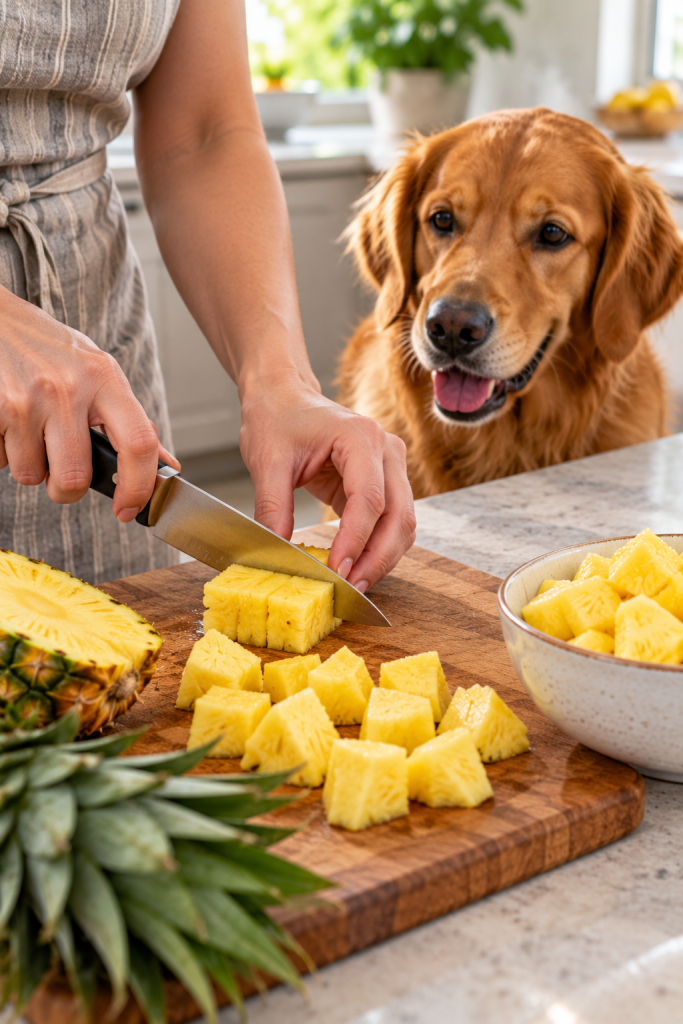
Preparing pineapple for a dog takes only a few minutes. The important part is to offer the soft flesh, not the tough pieces around it.
- Remove the rind and crown. Cut away the prickly outer skin and leafy top, along with any tough stem material.
- Remove the core. The firm central portion is harder to chew and digest than the soft flesh.
- Cut the fruit into small chunks. Make pieces appropriately sized for your dog, with smaller pieces for small breeds and dogs that gulp food.
- Start with one piece. Introduce pineapple slowly instead of giving your dog several new foods at once.
- Watch how your dog responds. Monitor for digestive discomfort, loose stools, vomiting, or other changes after trying it.
Keep it plain. Don’t add sugar, syrup, whipped cream, or sweetened toppings, and don’t mix pineapple with ingredients that may be unsafe for dogs.
A little chilled pineapple can be refreshing, too. If you freeze it, let the pieces soften before serving rather than giving your dog rock-hard chunks that may be difficult to chew.
Quick note: Your dog doesn’t need pineapple to get its essential nutrients. Think of it as an optional snack, not a supplement or a treatment for a health problem.
What many quick food lists skip is the importance of texture. Even food that is safe to eat can become a choking hazard when it’s served in a large, firm piece. Preparation and portion size belong together.
When to skip pineapple
Pineapple is not the right snack for every dog. Its natural sugar, acidity, and fiber may be unwelcome for some dogs, even when the fruit is fresh and properly prepared.
Consider skipping it or checking with your veterinarian first in these situations:
- Sensitive stomach: If your dog regularly struggles with digestive upset or reacts poorly to new foods, pineapple may not be worth introducing.
- Weight management: Extra calories can accumulate quickly. If your dog needs to lose weight or maintain a specific body condition, ask your veterinary team how treats fit into its daily plan.
- Diabetes or a condition requiring sugar management: Natural fruit sugar still contributes to dietary intake. Ask your veterinarian whether pineapple is appropriate for your dog’s individual needs.
- A veterinary-prescribed diet: Extra foods can interfere with a carefully controlled feeding plan, even when the food itself is not toxic.
- Previous digestive trouble with pineapple: Don’t keep offering it if it repeatedly causes an upset stomach.
If you share pineapple for the first time, keep the amount small and avoid introducing other unfamiliar foods at the same time. That makes it easier to recognize which food might be responsible if your dog develops a problem.
If your dog swallows a substantial piece of core or rind, or develops significant or persistent symptoms after eating pineapple, contact a veterinarian promptly. Seek veterinary advice rather than trying to manage a potentially serious reaction at home.
This guide covers ordinary feeding choices for generally healthy dogs. It does not diagnose digestive problems or replace individual dietary advice from a veterinarian.
Quick questions about pineapple and dogs
Can dogs eat pineapple?
Yes. Dogs can eat fresh, plain pineapple in moderation. Remove the rind, leafy crown, and core, then cut the soft flesh into small pieces. Start with a tiny portion and keep all treats within your dog’s daily calorie allowance.
Can dogs eat pineapple core?
No. The tough, fibrous core can be difficult to chew and may pose a choking or intestinal blockage risk. Offer only the soft flesh. If your dog swallows a large piece of core, contact your veterinarian for advice.
Can dogs eat canned pineapple?
It’s best to avoid canned pineapple packed in syrup because it adds unnecessary sugar. Canned pineapple without added sugar may be an option in a tiny amount, but fresh fruit is the simpler choice. Always check the ingredients.
How much pineapple can I give my dog?
Start with one or two tiny pieces for a small dog, two to four for a medium dog, or four to six for a large dog. These are general starting portions, not fixed limits. Keep treats within 10% of daily calories.
Is pineapple good for dogs?
Fresh pineapple offers water, fiber, and nutrients, but dogs don’t need it to maintain a balanced diet. It can be an occasional treat for many healthy dogs. Too much may cause digestive upset or add unnecessary calories.
The bottom line is simple: fresh, plain pineapple is generally safe for dogs when served in small amounts. Skip syrup-packed canned fruit, be cautious with dried varieties, remove the tough parts, and tailor portions to your dog’s size and dietary needs.
A small, carefully prepared piece is enough to let your dog try something new without turning a treat into a meal.
By Jennifer
Founder and owner of CanineCalc
Jennifer is a dog owner and researcher who develops practical, research-informed resources to help dog owners make better-informed care and feeding decisions. She is not a veterinarian, breeder, or certified trainer. This article provides general information and is not a substitute for veterinary guidance.