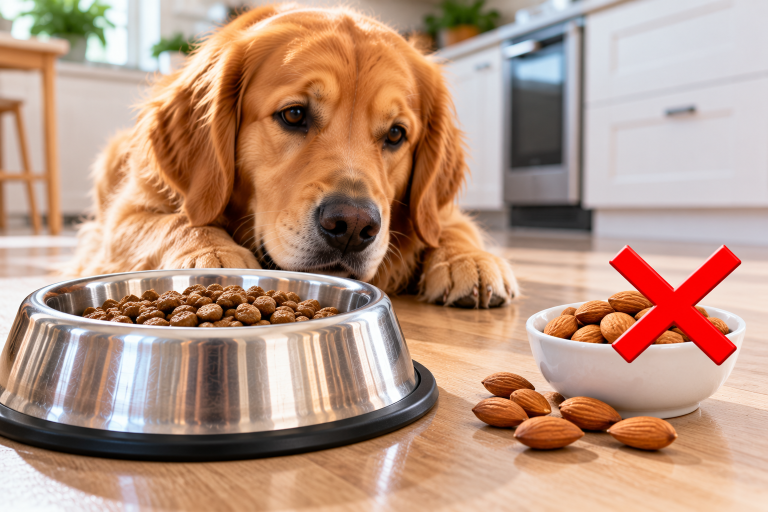
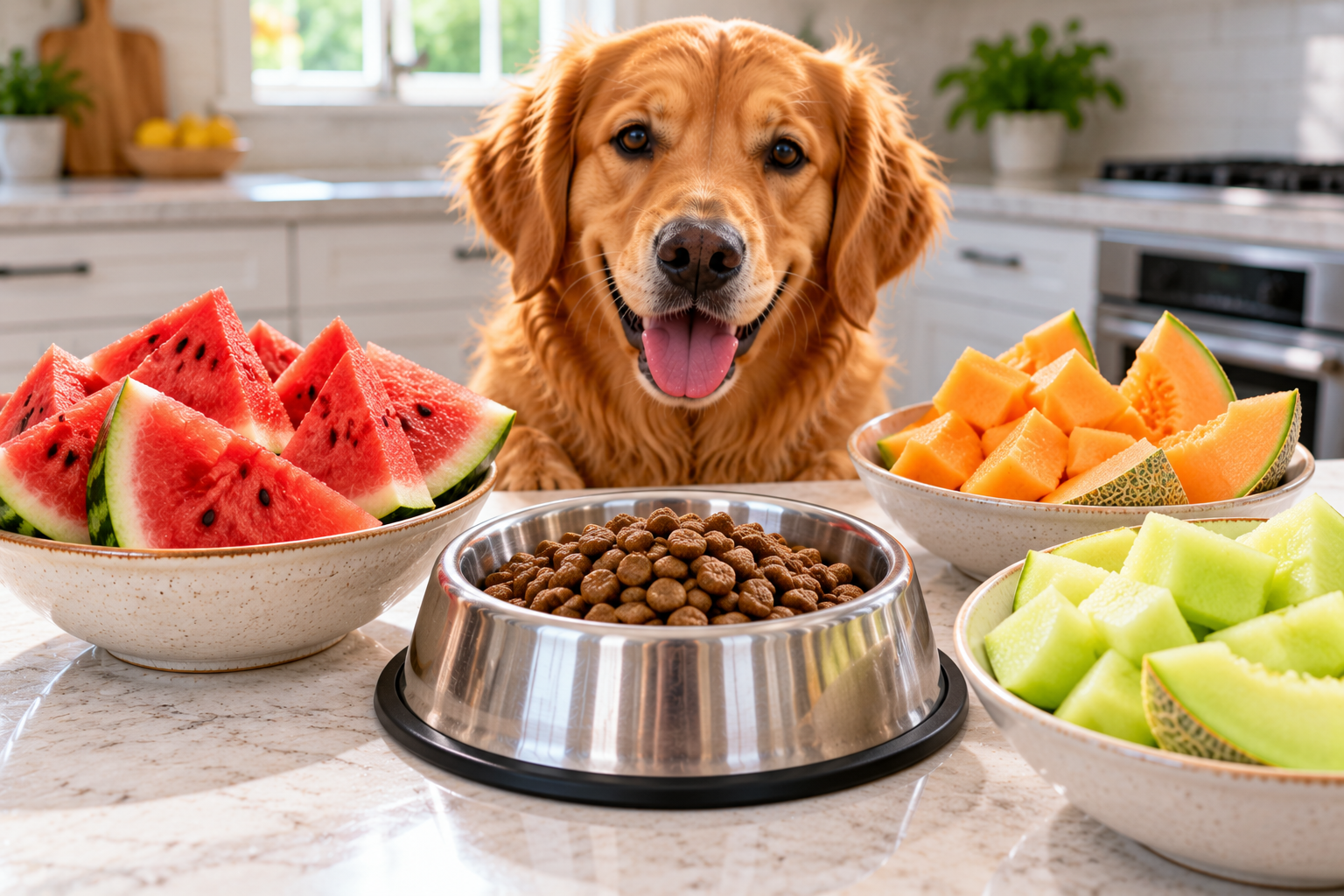
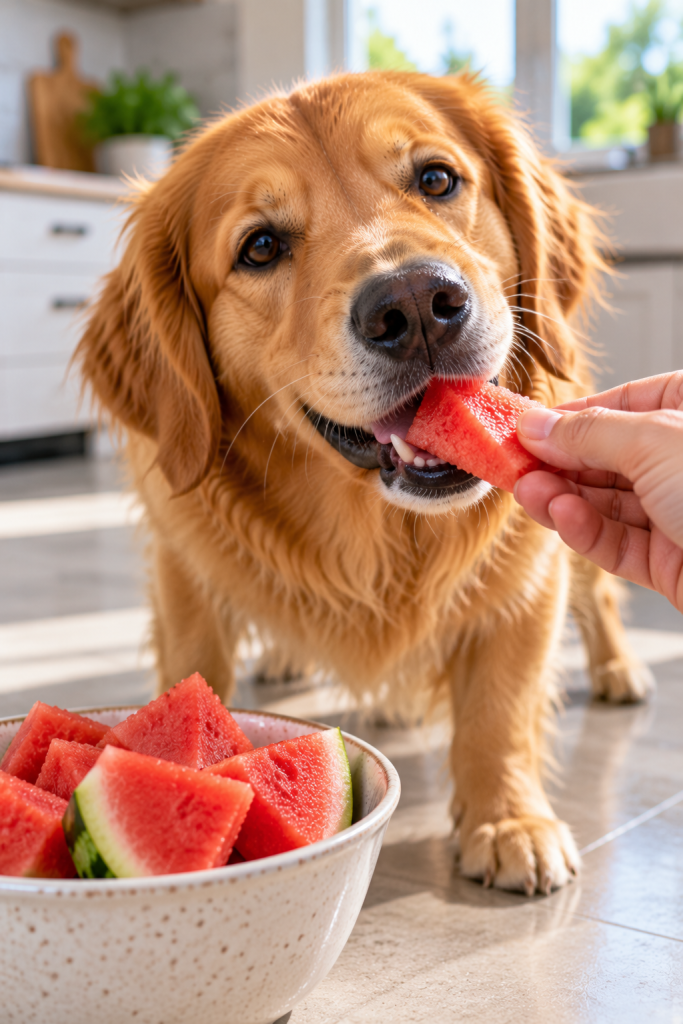
When you cut into a juicy melon on a warm afternoon, your dog may be right beside you, hoping for a taste. The good news is that dogs can generally eat the flesh of watermelon, cantaloupe, and honeydew in small amounts, provided the fruit is prepared properly.
The important part is knowing what to remove and how much to offer. Melon rinds are tough to digest, seeds can pose choking risks, and eating too much fruit may upset your dog’s stomach. Melons also contain natural sugars, so even a refreshing summer snack should stay occasional.
Whether you’re sharing a slice of watermelon at a picnic or cutting up fresh cantaloupe for the family, a few simple precautions can help you make a safer choice for your dog.
Can dogs have melon? The short answer
Yes, most healthy dogs can have small amounts of plain melon flesh as an occasional treat. Watermelon, cantaloupe, and honeydew are generally considered safe when the seeds and rind are removed and the fruit is cut into appropriately sized pieces.
Each variety has slightly different characteristics, but the basic feeding rules are the same:
– Watermelon: Offer the flesh only, with the seeds and rind removed.
– Cantaloupe: Remove the seeds and outer rind before serving the soft orange flesh.
– Honeydew: Remove the seeds and green rind, then cut the flesh into small pieces.
Melon contains water, fiber, and naturally occurring vitamins and minerals. Its moisture content can make it a refreshing snack during warm weather, but it should never replace your dog’s regular, nutritionally complete food.
Remember that safe for dogs does not mean unlimited. Melon contains natural sugar, and a large serving can cause digestive upset. Dogs that have diabetes, weight-management concerns, or a prescribed diet may need different treat choices. Ask your veterinarian whether melon is appropriate for your individual dog.
For a broader guide to fruit safety, see our article on what fruit can dogs eat.
Watermelon rules
Watermelon is a popular summer treat for people and dogs alike. Its juicy flesh contains plenty of water, making a few small pieces a refreshing option when the weather is warm.
The safest way to share watermelon is to remove every piece of rind and as many seeds as possible before offering the flesh.
Start by washing the outside of the watermelon before cutting it. This helps reduce the chance of transferring dirt or surface residue from the skin to the edible flesh. Cut away the thick green rind and inspect each piece for visible black or white seeds.
Next, cut the flesh into small, manageable pieces. A large, slippery chunk may be difficult for a small dog to chew safely, while a smaller piece is easier to manage. Choose a size appropriate for your dog’s mouth and eating habits.
A few practical tips can make watermelon easier to serve:
– Start small. Offer one or two small pieces initially, particularly if your dog has never tried watermelon.
– Keep it plain. Fresh watermelon does not need sugar, syrup, seasoning, or other additions.
– Try it chilled. Refrigerated watermelon can be refreshing without introducing extra ingredients.
– Watch the overall portion. Several family members offering a few pieces each can add up quickly.
Seedless watermelon can simplify preparation, but still check the flesh before serving. The tough rind should not be offered as a chew, even if your dog seems interested in gnawing on it.
Watermelon is a treat, not a substitute for drinking water. Keep fresh water available throughout the day, especially during hot weather and outdoor activities.
Cantaloupe and honeydew
Cantaloupe and honeydew can also be suitable occasional treats for most healthy dogs. Both have soft, sweet flesh and high water content, but their natural sugar content means portion control still matters.
Can dogs eat cantaloupe?
Yes, dogs can generally eat fresh cantaloupe flesh in moderation.
Cantaloupe has soft orange flesh that is easy to cut into small pieces. Remove the outer rind and scoop out the seed cavity before offering it to your dog. Check the remaining flesh carefully so no large or slippery chunks are left.
Cantaloupe’s sweetness can make it appealing to dogs, but that is not a reason to offer a large serving. A few small cubes are a sensible starting point. If your dog tolerates the fruit well, you can occasionally offer a similarly modest portion as part of the day’s treats.
For dogs that are overweight or have a condition affected by dietary sugar, ask your veterinarian before adding cantaloupe to their routine.
Can dogs eat honeydew?
Yes, most healthy dogs can have a little plain honeydew flesh, too.
Honeydew is usually pale green inside, with a firm outer rind and a central seed cavity. Remove both the rind and seeds, then cut the flesh into small pieces.
Because honeydew is naturally sweet, keep portions modest. Its softer texture does not eliminate choking risks, particularly when pieces are too large or a dog tends to gulp food.
You can serve honeydew straight from the refrigerator or mash a small amount and offer it as an occasional topper. Avoid adding sweeteners, flavored syrups, or other ingredients that may be unsuitable for dogs.
Which melon is best for dogs?
There is no single best choice for every dog. Watermelon, cantaloupe, and honeydew can all be reasonable options when served properly.
Choose whichever plain melon your dog tolerates well, prepare it carefully, and keep the portion small. Rotating among different fruits is not necessary, and melon does not provide a nutritional advantage that makes it essential to a dog’s diet.
Rind and seeds: why they matter
The flesh is generally the safest part of these common melons to share. The rind and seeds introduce avoidable risks.
Melon rind is tough and difficult for dogs to digest. A dog that chews or swallows pieces of rind may experience digestive discomfort. Larger pieces can also create choking concerns or contribute to an intestinal blockage.
Watermelon, cantaloupe, and honeydew rinds should therefore be discarded rather than offered as chew toys or snacks. Even a dog that enjoys chewing firm foods should not be given melon skin to gnaw on.
Seeds require care for a different reason. They can be a choking hazard, particularly for small dogs, and consuming many seeds may create additional digestive concerns. Removing seeds before serving is the simplest precaution.
If your dog accidentally swallows a small seed, do not automatically assume a serious problem will occur. The concern depends on factors such as what was swallowed, how much was eaten, and your dog’s size. Contact your veterinarian if you are concerned about the amount consumed.
If your dog swallows a substantial piece of rind, contact your veterinarian for guidance. Seek prompt veterinary attention if you notice concerning symptoms such as repeated vomiting, marked abdominal discomfort, unusual weakness, or difficulty passing stool.
These signs should not be dismissed as ordinary stomach upset, and this article cannot determine whether a blockage or another problem is present.
Portions by dog size
How much melon can you give your dog? The answer depends on your dog’s size, normal food intake, health, and tolerance for new foods.
The following table offers a cautious starting point, not a fixed daily allowance. These are small, bite-sized pieces of melon flesh, with all seeds and rind removed.
| Dog size | Suggested starting amount |
|---|---|
| Toy dogs | 1 small bite-sized piece |
| Small dogs | 1-2 small pieces |
| Medium dogs | 2-3 small pieces |
| Large dogs | 3-4 small pieces |
| Extra-large dogs | A few small pieces, adjusted to individual needs |
Begin at the lower end, especially when introducing melon for the first time. A small dog may need a piece smaller than what you would comfortably feed a large dog. Dogs that gulp food may need even smaller pieces to reduce choking risks.
These suggestions are intentionally conservative and do not account for every dog’s nutritional needs. They are not targets your dog needs to reach.
Remember the 10% treat rule
A commonly used feeding guideline is that treats should make up no more than 10% of a dog’s daily calorie intake, with the remaining 90% coming from a complete and balanced diet.
That limit includes all treats, not melon alone. Biscuits, dental chews, training rewards, table scraps, and other extras count toward the same allowance.
Melon should occupy only a small part of that treat budget. A calorie-based limit also does not guarantee that a particular food or portion is appropriate for every dog.
Puppies need particular attention to balanced nutrition while they grow. Keep fruit as a minor extra rather than allowing it to displace their regular food. Our puppy food chart provides a starting point for understanding puppy feeding needs.
Melon mistakes to avoid
Melon is straightforward to prepare, but a few common mistakes can turn an otherwise suitable treat into an unnecessary risk.
Giving your dog the rind to chew. The tough skin is not a safe substitute for a chew toy. Remove it completely and discard it out of reach.
Serving large, seeded chunks. Big pieces may be difficult to chew, while seeds can create choking concerns. Prepare small portions and check them before serving.
Offering too much at once. Even though the flesh is generally safe, a large serving can upset your dog’s digestive system. Natural sugar and fiber are additional reasons to keep portions modest.
Sharing sweetened melon products. Canned fruit in syrup, sweetened melon cups, and desserts may contain added sugars or other ingredients that are unsuitable for dogs. Fresh, plain melon is the simpler option. Avoid any product containing an ingredient known to be toxic to dogs, including xylitol.
Assuming frozen pieces are automatically safer. Frozen melon can be a cooling treat, but hard or oversized chunks may be difficult to chew. Consider your dog’s size and chewing style, and avoid serving pieces that are too hard or large for them to manage safely.
Ignoring an existing dietary restriction. A fruit that is suitable for many healthy dogs may not fit the needs of a dog with diabetes, a sensitive digestive system, or a veterinarian-directed diet. Check with your veterinarian when you are unsure.
Frequently asked questions
Can dogs have melon?
Yes. Most healthy dogs can eat small amounts of watermelon, cantaloupe, or honeydew flesh when the seeds and rind have been removed. Serve it plain, cut it into small pieces, and treat it as an occasional snack rather than a meal replacement.
Can dogs eat watermelon?
Yes, most dogs can enjoy a little fresh watermelon flesh. Remove the rind and seeds, cut the fruit into appropriately sized pieces, and keep the portion small. Too much watermelon may cause digestive upset.
Can dogs eat cantaloupe?
Yes. Cantaloupe flesh is generally safe for dogs in moderation. Remove the outer rind and seeds first, and serve only a few small pieces. Dogs with health conditions affected by sugar may need to avoid it.
Can dogs eat melon rind?
No. It is best to keep watermelon, cantaloupe, and honeydew rind away from dogs because it is difficult to digest and may cause choking or intestinal blockage. If your dog swallows a substantial piece, contact your veterinarian for guidance.
How much melon can I give my dog?
Start with one small bite-sized piece for a toy dog and a few small pieces for a larger dog. Adjust for your dog’s individual needs and include melon within the total treat allowance. Treats should generally account for no more than 10% of daily calories.
Conclusion: Share melon in small, safe portions
So, can dogs have melon? For most healthy dogs, the answer is yes, provided you serve the flesh of watermelon, cantaloupe, or honeydew without the seeds and rind.
Prepare the fruit carefully, begin with a small amount, and keep it as an occasional treat. Avoid sweetened melon products, and remember that the familiar 10% treat guideline applies to everything your dog eats outside their regular balanced diet.
Most importantly, consider your individual dog’s needs. If your dog has a medical condition, follows a special diet, or experiences concerning symptoms after eating melon, consult your veterinarian rather than relying on general feeding guidance.
A little prepared melon can be a pleasant summer snack. There is no need to share a large portion to make it enjoyable.
By Jennifer, Founder and Owner of CanineCalc
Jennifer is a dog owner and researcher who develops practical, research-informed resources to help people better understand dog care and nutrition. She is not a veterinarian, breeder, or certified trainer. CanineCalc’s informational content is intended to support general understanding, not replace individualized veterinary advice.