
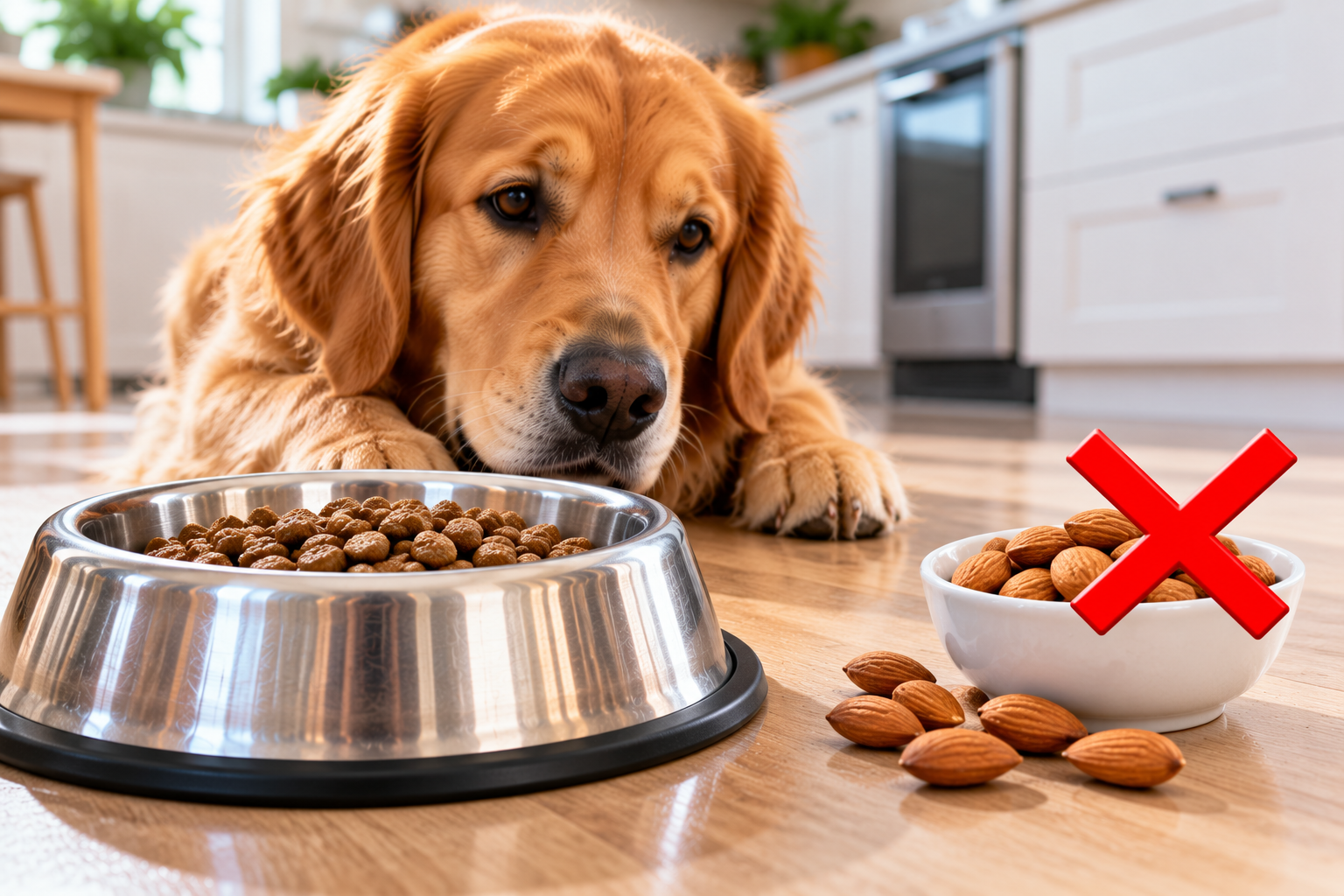
Almonds are a popular human snack, but sharing them with your dog is not as simple as it might seem. A whole almond, a spoonful of almond butter, and a splash of almond milk have different risks, even though they all come from the same nut.
The main concerns are choking, digestive upset, excess fat, added salt, and ingredients that may be harmful to dogs. Almonds are not generally considered a classic dog toxin, but that does not make every almond product a safe treat.
This guide explains the differences between whole almonds, almond butter, and almond milk, what to look for on ingredient labels, and what to do if your dog gets into an almond snack.
Are almonds OK for dogs? The short answer
Almonds are not recommended as a regular treat for dogs. Plain, store-bought sweet almonds are not generally considered highly toxic to dogs, but their shape, texture, and fat content make them a less suitable choice than many other snacks.
An occasional tiny piece of plain almond may not cause a problem for some dogs. However, the risk depends on your dog’s size, the amount eaten, the product’s ingredients, and whether your dog has any underlying health concerns. A whole almond can pose a choking risk, particularly for a small dog, and nuts may cause digestive upset.
The type of almond product matters, too.
- Whole almonds: Best avoided because of choking risk, difficult digestion, and the potential effects of their fat content.
- Almond butter: A tiny amount of plain, unsalted almond butter without xylitol or other concerning ingredients may be tolerated, but it is not an ideal everyday treat.
- Almond milk: A small accidental taste of plain, unsweetened almond milk is generally less concerning than eating whole almonds, but it is not a necessary part of a dog’s diet.
The safest choice is to skip almonds when choosing treats for your dog. Plain, dog-appropriate snacks offer a simpler way to reward good behavior without the extra risks.
Whole almonds
Whole almonds are the least appealing option of the three because of their size, firmness, and shape.
Can whole almonds cause choking?
Yes. A whole almond can become lodged in a dog’s throat or digestive tract. The risk can be especially concerning for small dogs and dogs that gulp food without chewing it thoroughly.
Even if your dog seems comfortable after swallowing an almond, that does not automatically mean there is no risk. Possible problems depend on the size of the almond, the dog, and the circumstances of ingestion.
For this reason, it is better not to offer whole almonds as a snack.
Are almonds difficult for dogs to digest?
Almonds are not an especially useful food for dogs, and some dogs may experience digestive upset after eating them. Depending on the individual dog and the amount consumed, concerns may include vomiting, loose stools, gas, or general stomach discomfort.
Almonds also contain substantial fat for a small snack. Foods high in fat can be problematic for some dogs, particularly when they eat a large amount or have relevant health concerns.
An almond might seem small to you, but a few nuts can represent a more substantial snack for a small dog than for a much larger one.
What about salted or flavored almonds?
Avoid sharing salted and flavored almonds with your dog.
Salted varieties add unnecessary sodium. Heavily seasoned nuts may also contain garlic, onion, or other ingredients that are unsuitable for dogs. Flavors such as barbecue, chili, honey-roasted, and chocolate-coated can introduce additional ingredients that make the product a poor choice.
The label matters because recipes differ between brands. Even if the almonds themselves are plain, their coatings and seasonings can change the risk.
The practical rule: Keep whole almonds, mixed nuts, and seasoned nut snacks out of your dog’s treat bowl. Store them somewhere your dog cannot reach.
Almond butter
Almond butter is different from a whole almond because it does not present the same whole-nut choking hazard. However, that does not mean every jar is appropriate for dogs.
A tiny lick of almond butter made from plain almonds, with no added salt, sweeteners, or other concerning ingredients, may be tolerated by many dogs. Still, almond butter is calorie-dense and high in fat, so it is best treated as an occasional exception rather than a regular reward.
Check the ingredient label first
Before considering any almond butter, check the complete ingredient list. Ideally, choose a product made only from almonds, without added salt or sweeteners.
Avoid varieties containing chocolate, heavily salted ingredients, or flavorings that are not suitable for dogs. Sweetened spreads are not automatically safe just because their main ingredient is a nut.
Pay special attention to xylitol, a sweetener that is toxic to dogs. It may appear in sugar-free products and some nut butters. The U.S. Food and Drug Administration warns that xylitol can cause serious poisoning in dogs. Read the FDA’s xylitol safety guidance.
If a product contains xylitol, do not give it to your dog. If your dog has eaten almond butter containing xylitol, contact your veterinarian or an emergency veterinary clinic immediately. Do not wait for symptoms to appear.
Is almond butter better than whole almonds?
It avoids the specific hazard of swallowing an intact almond, but its fat content and added ingredients remain concerns. It is not necessarily a healthier choice overall.
If you are looking for a small treat to use during training or to make a food toy more interesting, ask your veterinarian about suitable options for your dog’s needs. There is no nutritional requirement to include almond butter in a dog’s diet.
Almond milk
Can dogs drink almond milk? A small accidental taste of plain, unsweetened almond milk is generally less concerning than eating whole almonds, but almond milk is not something dogs need in their diet.
Unlike a whole almond, almond milk is a liquid, so it does not carry the same whole-nut choking concern. However, its ingredients and nutritional content still matter. Some varieties contain added sugar, oils, flavorings, or other ingredients that make them unsuitable for dogs.
Which almond milk should you avoid?
Avoid giving your dog sweetened or flavored almond milk, including chocolate varieties. Added sugar provides little benefit, while chocolate ingredients can introduce a separate safety concern.
Also, check the label for any potentially harmful sweeteners, including xylitol. Ingredients can vary considerably between brands, so do not assume that every product labeled almond milk has the same composition.
Even plain, unsweetened almond milk is better treated as something to keep for human consumption rather than a regular dog treat. Water remains the appropriate everyday drink for dogs.
If your dog laps a little almond milk that has spilled on the floor, the level of concern will depend on the ingredients and the amount consumed. Contact your veterinarian if the product contains a potentially harmful ingredient or you are unsure about the exposure.
Safer alternatives
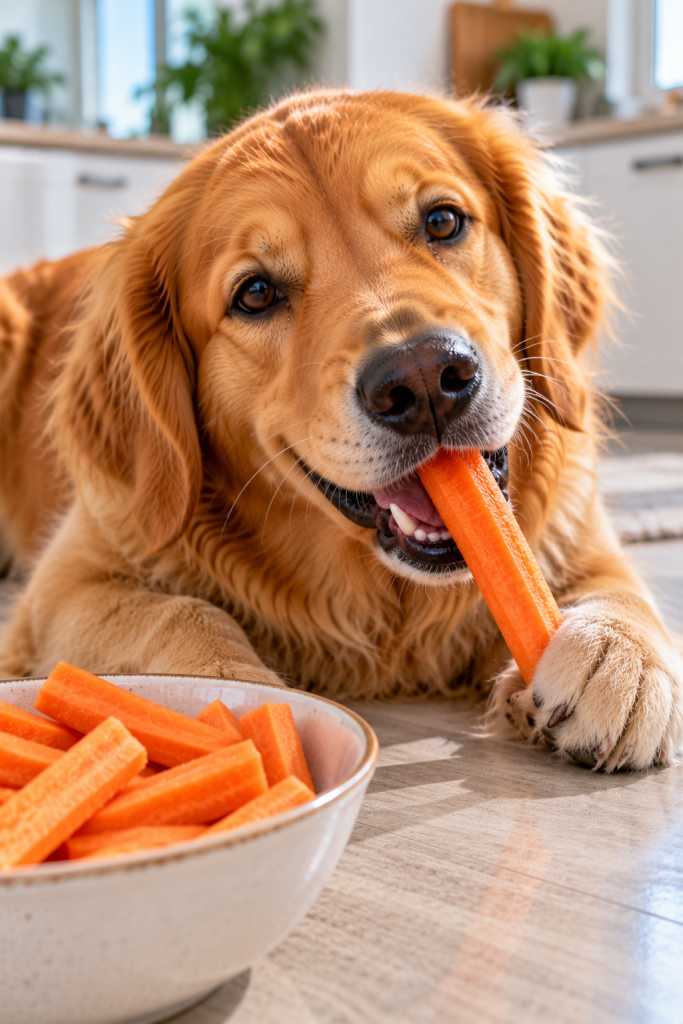
You do not need to share nuts or nut-based products to give your dog an enjoyable snack. Several simpler options can make suitable treats, provided they are prepared appropriately and fit your dog’s individual dietary needs.
Consider these alternatives:
- Carrots: Plain carrots cut into appropriately sized pieces can make a crunchy snack. You can find more guidance in our guide to are carrots OK for dogs?.
- Plain cucumber: Small, appropriately sized pieces offer a crunchy option without the added salt and seasonings found in many packaged snacks.
- Apple pieces: Remove the seeds and core, then cut the apple into pieces suitable for your dog.
- Your dog’s regular food: Some dogs are perfectly happy receiving a few pieces of their usual kibble as rewards throughout the day.
Preparation and portion size matter. Choose pieces your dog can comfortably manage, supervise treats, and introduce new foods cautiously.
Keep treats as a small part of your dog’s overall diet rather than allowing snacks to replace balanced meals. For growing dogs, maintaining suitable nutrition is especially important. Our puppy food chart provides a related resource for understanding puppy feeding needs.
Dogs with food sensitivities or other dietary restrictions may need different options. Your veterinarian can help you choose treats that fit your dog’s circumstances.
What if my dog ate almonds?
Finding an empty almond packet or discovering that your dog has eaten a nut from the floor can be worrying. The next step depends on what was eaten, how much was consumed, and how your dog is behaving.
A single plain almond is a different situation from a dog eating a large quantity of salted almonds or an entire jar of flavored almond butter.
Pay attention to the product’s ingredients, particularly added seasonings and sweeteners. Almonds contain fat that may contribute to digestive problems, and large amounts of nuts can be more concerning than a small accidental exposure.
Possible warning signs after eating nuts include vomiting, diarrhea, gagging, or visible discomfort. Choking or difficulty breathing requires emergency veterinary attention.
Contact your veterinarian for advice if your dog has eaten a large amount, swallowed whole almonds and you are concerned about choking or obstruction, or develops concerning symptoms. Seek immediate veterinary guidance if xylitol may have been ingested. Do not rely on your dog appearing normal as proof that every exposure is harmless.
If possible, keep the original packaging available so you can tell the veterinary team exactly which product your dog ate. This is particularly useful when the product contains multiple ingredients.
The goal is not to assume that every almond causes an emergency, but to recognize the difference between a small accidental taste and a potentially serious exposure.
Common questions about almonds and dogs
Are almonds OK for dogs?
Almonds are not recommended as a regular treat for dogs. Plain sweet almonds are not generally classified as a classic dog toxin, but whole nuts can pose a choking risk and their fat content may cause digestive problems. Safer treats are a better everyday choice.
Can dogs eat almond butter?
A tiny amount of plain almond butter without xylitol, added salt, or unsuitable ingredients may be tolerated by many dogs. However, it is high in fat and should not become a routine treat. Always check the entire ingredient label before considering any nut butter.
Can dogs drink almond milk?
A small accidental taste of plain, unsweetened almond milk is generally less concerning than eating whole almonds. However, almond milk is unnecessary in a dog’s diet. Avoid sweetened and flavored varieties, and check carefully for potentially harmful ingredients.
Are almonds toxic to dogs?
Ordinary store-bought sweet almonds are not generally considered a classic toxin in the same way as foods such as grapes or raisins. However, they can still cause choking, digestive upset, or other problems. Almond products may also contain ingredients that are harmful to dogs, including xylitol in some spreads.
What nuts can dogs eat?
Nuts are generally poor choices for routine dog treats because many are high in fat, and whole nuts can pose choking risks. Macadamia nuts are toxic to dogs, while other nuts can present their own concerns depending on the type, quantity, preparation, and added ingredients. Rather than looking for a nut to share, choose a dog-appropriate treat.
Conclusion: Should you share almonds with your dog?
The safest approach is to keep whole almonds off your dog’s snack list. Almond butter and almond milk have different risks, but neither is necessary for a healthy canine diet. Plain almond butter without harmful additives may be tolerated in a tiny amount, while a little unsweetened almond milk is generally less concerning than whole nuts. Neither is a better everyday choice than a suitable dog treat.
When it comes to human foods, the ingredients, preparation, and portion all matter. Choosing a simple alternative, such as appropriately prepared carrots, is an easy way to offer variety without the unnecessary risks associated with almonds.
Written by Jennifer, founder and owner of CanineCalc. Jennifer is a dog owner and researcher who creates practical, research-informed resources to help dog owners better understand canine nutrition and everyday care. This article provides general information and is not a substitute for veterinary advice.