Is peanut butter good for dogs? The short answer
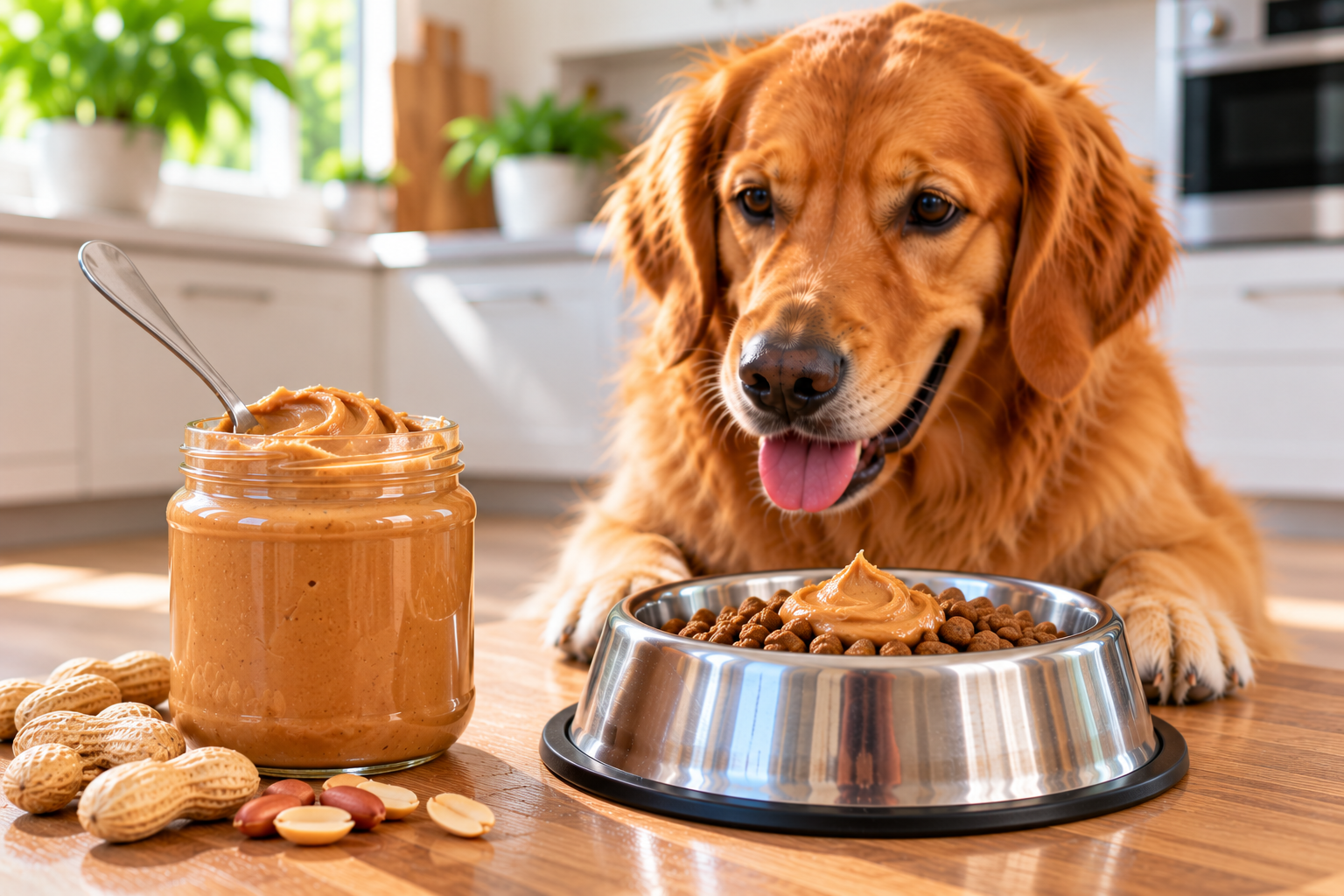
Yes, peanut butter can be a safe, enjoyable treat for most dogs when it is plain, free from xylitol, and served in small amounts. It works particularly well for training rewards, lick mats, and food-dispensing toys. The important detail is not simply whether a jar says “natural” or “sugar-free.” It is what the ingredient list actually contains.
Peanut butter provides fat and some protein, but it is also calorie-dense. Dogs do not need it in their diet, and generous spoonfuls can add more calories than you might expect from such a small snack. For some dogs, a tiny smear is plenty.
There is one ingredient you should never overlook: xylitol. This sweetener is toxic to dogs and can cause a dangerous drop in blood sugar, along with potentially serious liver injury. It may appear in certain sugar-free products, including some nut butters.
The simplest rule is to choose peanut butter with a short, understandable ingredient list, check the label for xylitol every time, and keep portions small. When in doubt about a product’s ingredients, choose a different one rather than taking a chance.
The xylitol label check
Before offering peanut butter to your dog, turn the jar around and read the ingredient list. Do not rely on the brand name, the packaging color, or claims such as “natural,” “low sugar,” or “no added sugar.” Marketing terms do not tell you everything you need to know about a product’s safety.
Xylitol is a sugar substitute that may also be identified as birch sugar, wood sugar, or birch bark extract. The U.S. Food and Drug Administration explains that these names can refer to xylitol, so it is worth recognizing more than one label term.
Also pay attention to the words “sugar alcohols.” Xylitol belongs to this ingredient category, but the term itself does not tell you which specific sweetener a product contains. Check the actual ingredients rather than assuming all sugar alcohols are the same.
Your quick safe-or-unsafe checklist
- Safer choice: The ingredients list contains peanuts only, or peanuts with a small amount of salt.
- Also worth considering: A dog-specific peanut butter with clearly listed ingredients and no xylitol.
- Do not feed: Any peanut butter that lists xylitol, birch sugar, or another name identifying xylitol.
- Be cautious: Products marketed as sugar-free, reduced-sugar, or specially sweetened. Read the complete ingredient list before sharing.
- Cannot confirm the ingredients? Leave that jar for human use and choose a product with a clear label instead.
It is worth checking even if you have bought the same product for years. Manufacturers can change recipes, and different varieties of the same brand may use different ingredients. A label check takes seconds and should happen before the first serving from every new jar.
If your dog eats peanut butter that contains xylitol, contact your veterinarian or an emergency veterinary clinic immediately. Do not wait for symptoms to appear. Xylitol poisoning can develop quickly. Signs may include vomiting, weakness, difficulty walking, collapse, or seizures. You can also contact Pet Poison Helpline for urgent guidance. Keep the packaging available so you can identify the product.
How much peanut butter can a dog eat?
There is no single portion that suits every dog. A sensible amount depends on your dog’s size, daily calorie needs, health, activity level, and what else they eat. Because peanut butter is rich in fat and calories, it is best treated as an occasional addition rather than a regular part of every meal.
For a general starting point, think in terms of a smear rather than a spoonful:
- Toy and small dogs: A lick or a pea-sized smear may be enough to reward a behavior or introduce a lick mat.
- Medium dogs: Around 1/4 teaspoon can be a reasonable small serving to start with.
- Large dogs: Up to about 1 teaspoon may be enough for a single occasion.
These are conservative examples, not prescribed serving sizes or daily allowances. A dog with a low calorie requirement may need less, and a lick mat or toy does not need to be coated in peanut butter to be useful. Spread a thin layer over a larger surface to make a little go further.
Remember the 10% treat rule
A common feeding guideline is to keep treats and other extras to no more than about 10% of a dog’s total daily calories. The remaining calories should come primarily from a complete and balanced diet appropriate for the dog’s life stage. The 10% guideline includes every treat, training reward, table scrap, and food topper your dog receives, not peanut butter alone.
This matters because peanut butter can add up fast. A small lick may seem insignificant, but several servings during training or a thick layer inside an enrichment toy can become a meaningful portion of the day’s calories. The exact amount varies by product, so check its nutrition label rather than assuming all jars are alike.
For a growing puppy, keep the main diet appropriate for growth instead of letting treats displace balanced food. Our puppy food chart can help you review feeding amounts as part of your puppy’s daily routine.
Dogs with a history of pancreatitis, weight concerns, diabetes, or food sensitivities may need a more individualized approach. Ask your veterinarian whether peanut butter is appropriate for your dog and what portion makes sense.
Best ways to use peanut butter
When the ingredient list is safe and the portion is small, peanut butter can be useful because it encourages a dog to engage with a reward. You do not have to serve it straight from a spoon. A thin coating often works better and makes it easier to control the amount.
1. Training rewards
Use a tiny taste to reward a behavior when a longer-lasting lick is more practical than a conventional treat. For quick repetitions, small, low-calorie dog treats are often easier to portion. Peanut butter can be more useful when you want to reward a brief pause, settle, or sustained attention.
For example, when practicing loose-leash skills, prepare your rewards before heading outside and keep your dog focused on the exercise. Our guide to teaching your dog to heel offers more help with building that walking behavior.
2. Lick mats
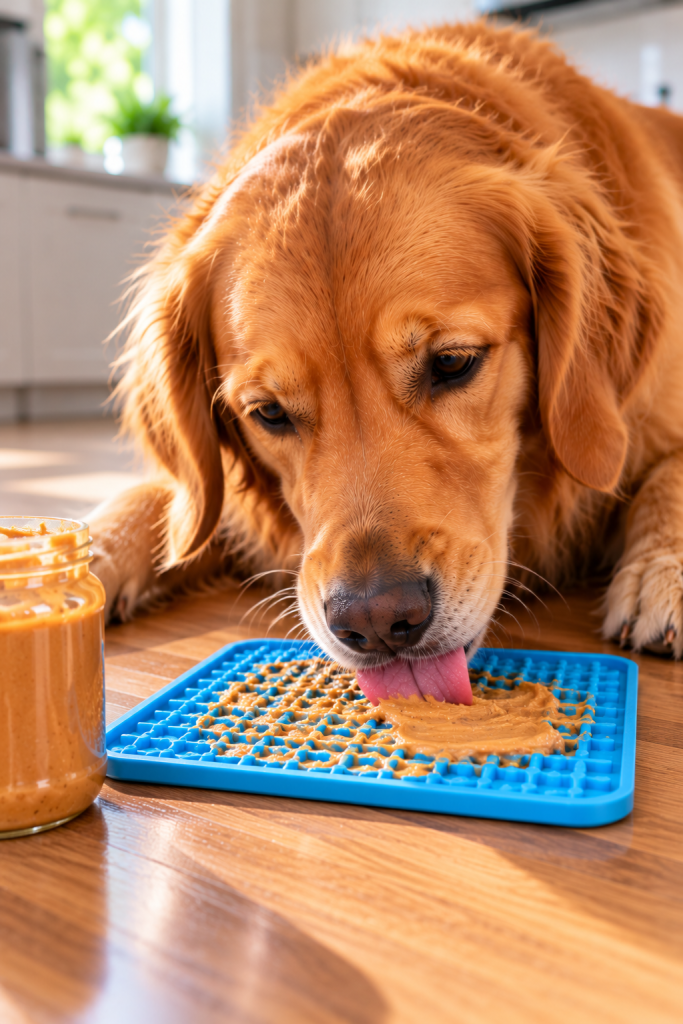
Spread a thin layer over a lick mat to give your dog something to investigate. You can use a small amount on its own or combine it with another dog-safe food that agrees with your pet. Supervise your dog, particularly the first time, and remove the mat if your dog starts chewing pieces off it.
3. Food-dispensing and enrichment toys
A little peanut butter inside an appropriate hollow toy can make an enrichment activity more interesting. Start with less than you think you need, and follow the toy manufacturer’s instructions for cleaning and use. If you freeze a filled toy, make sure the toy is designed for that purpose and remains intact.
4. Hiding medication
Some dogs will accept medication more readily when it is hidden in a small amount of food. However, ask your veterinarian or pharmacist before using peanut butter for this purpose. Certain medications should not be crushed, mixed with food, or given alongside particular ingredients. Follow the medication’s specific instructions rather than assuming peanut butter is always suitable.
Peanut butter mistakes to avoid
A few common choices can turn a convenient treat into an unnecessary risk:
- Choosing a sweetened or flavored spread without checking it: Chocolate-flavored products, dessert spreads, and sugar-free varieties may contain ingredients that are unsuitable for dogs. Choose plain peanut butter with a simple ingredient list.
- Assuming a familiar brand is automatically safe: The recipe can vary between products and change over time. Read the current label, especially when buying a new variety.
- Offering too much: Large spoonfuls, repeated licking sessions, and heavily filled toys can add substantial calories. Measure a small amount and count it as part of the day’s treats.
- Sharing chocolate peanut butter: Chocolate contains compounds that can be toxic to dogs. Do not use chocolate-containing spreads as a substitute for plain peanut butter.
- Ignoring added oils and other extras: Added oils are not the same as xylitol, but they may increase the calorie and fat content. Rich, fatty foods can also be unsuitable for some dogs. A simple spread without unnecessary extras is an easier choice.
- Leaving the jar within reach: Dogs may lick a jar clean or chew through its packaging. Store it securely, and never let your dog chew or swallow the container.
Finally, introduce any new treat in a small amount. Stop offering it if your dog develops digestive upset or another concerning reaction, and contact your veterinarian if symptoms persist or are severe.
Common questions about peanut butter for dogs
Is peanut butter good for dogs?
Yes, plain peanut butter without xylitol can be a suitable occasional treat for many dogs. Its main benefit is that it can make training and enrichment activities more appealing. Because it is calorie-dense, it should not replace balanced dog food or become a large part of your dog’s diet.
What peanut butter is safe for dogs?
Look for plain peanut butter made primarily from peanuts, with no xylitol. A product with a short ingredient list is generally easier to assess. Avoid chocolate-containing spreads, and do not rely on a “natural” or “sugar-free” claim without checking the actual ingredients.
Can dogs eat peanut butter every day?
Some dogs may tolerate a tiny amount regularly, but daily peanut butter is not necessary. Repeated servings can add calories and fat, particularly when combined with other treats. If you use it frequently for training or enrichment, account for every serving within your dog’s overall calorie allowance and discuss regular use with your veterinarian if your dog has dietary or health concerns.
How much peanut butter can I give my dog?
Start with a lick or a very small smear, then consider your dog’s size, calorie needs, and health. A toy dog may need only a pea-sized amount, while a larger dog may tolerate a little more. Keep all treats combined to about 10% or less of daily calories, and remember that these examples are starting points rather than universal serving limits.
Is xylitol in peanut butter dangerous?
Yes. Xylitol is toxic to dogs and can cause a rapid, dangerous drop in blood sugar. More serious complications, including liver injury, can also occur. Never feed a product containing xylitol, even in a small amount. If your dog may have eaten it, contact a veterinarian or emergency veterinary clinic immediately rather than waiting for symptoms.
The bottom line
Peanut butter can be a handy dog treat when you choose the right jar and control the portion. The most important habit is reading the label before every new purchase or variety. Look for a simple ingredient list, avoid xylitol and chocolate-containing products, and remember that a thin smear is often all you need for training or enrichment. Peanut butter should complement your dog’s balanced diet, not compete with it.
About Jennifer: Jennifer is the founder and owner of CanineCalc, a dog owner and researcher who creates practical resources to help people make informed decisions about caring for their dogs. Her work focuses on making canine-related information easier for everyday dog owners to understand.