Can dogs have turkey? The short answer
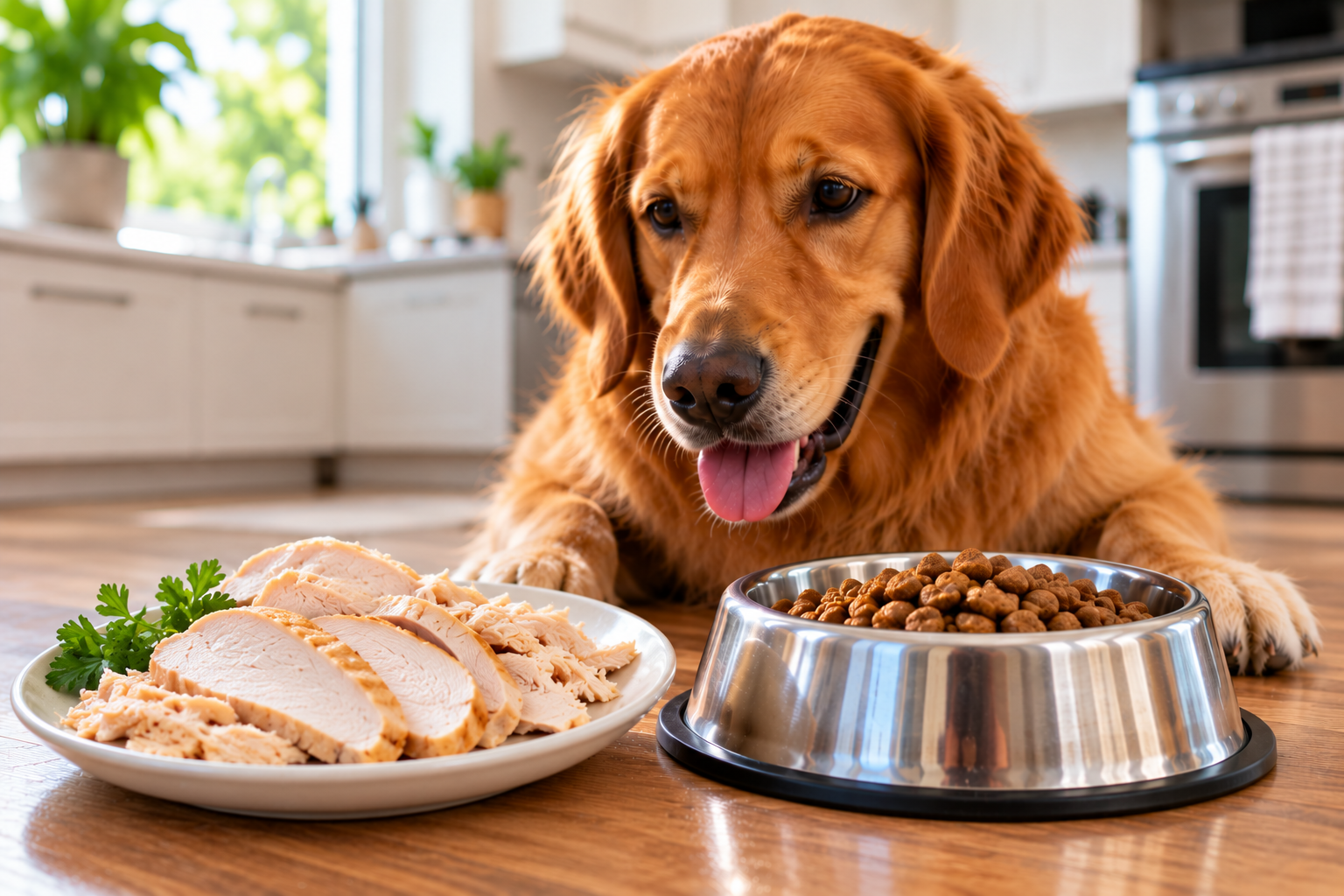
Yes, dogs can have turkey, provided it is fully cooked, plain, boneless, and served without skin or added seasonings. Plain turkey meat can be an occasional treat or a small topper for your dog’s regular food. The trouble usually comes from how people prepare turkey for themselves, especially during Thanksgiving and other holiday meals.
A slice of unseasoned turkey breast is very different from a piece covered in gravy or cooked with butter, garlic, and onions. Those extra ingredients can make an otherwise suitable food risky for dogs. Turkey bones are another concern because they can cause choking, intestinal blockages, or internal injuries.
If you’re deciding whether to share some holiday leftovers, keep the rule simple: plain cooked meat only, with the skin, bones, and seasoning removed.
Turkey provides protein and is commonly used in commercial dog foods. However, adding turkey to your dog’s bowl does not automatically make a meal balanced. Treat it as an occasional extra rather than a replacement for complete and balanced dog food.
What part of the turkey is safe
Not every part of a turkey dinner belongs in your dog’s bowl. The cut of meat matters, but preparation matters just as much.
| Turkey part | Safe or not? | Why |
|---|---|---|
| Plain white meat | Yes, in moderation | Leaner meat without skin, bones, or seasoning is a suitable occasional treat. |
| Plain dark meat | Yes, with care | Thigh and leg meat can be fattier than breast meat. Remove skin and visible fat, and keep portions small. |
| Turkey skin | Avoid | Skin and cooking fats can upset digestion and may contribute to pancreatitis. |
| Turkey bones | No | Bones can cause choking, blockages, or injuries to the digestive tract. Cooked bones can splinter. |
| Turkey gravy | Avoid | Gravy can contain substantial fat, salt, onion, garlic, or other unsuitable ingredients. |
| Stuffing | Avoid | Recipes may include onion, garlic, excess fat, and other ingredients that are unsafe for dogs. |
These recommendations reflect guidance from veterinary-reviewed PetMD information, the American Kennel Club, and the American Veterinary Medical Association.
White meat is usually the easiest option. Remove the skin and check carefully for small bones before cutting it into bite-sized pieces. Plain dark meat can also be shared in a small amount, but it deserves extra care if your dog needs a lower-fat diet.
Remember that meat can look plain while still carrying seasonings from the cooking process. Turkey roasted with onions or garlic, rubbed with seasoned butter, or basted in rich drippings is not the same as a separate piece prepared specifically for your dog.
If you cannot tell what went into the turkey, skip it and choose a safer treat.
Ground turkey portion rule
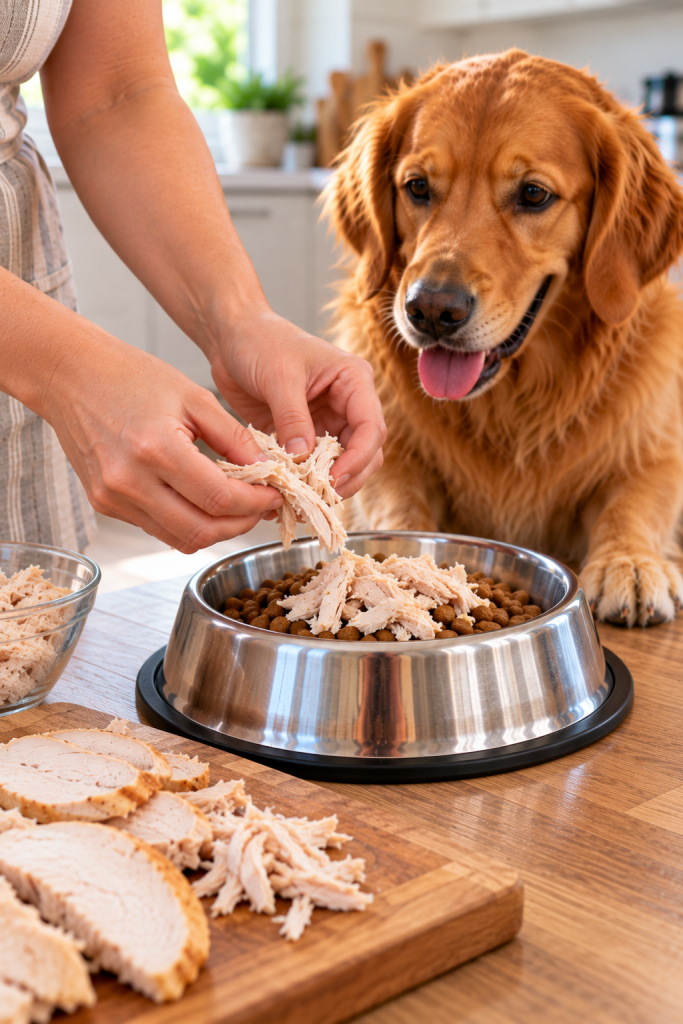
Ground turkey can be a convenient way to add a little extra protein to your dog’s meal. It is easy to cook thoroughly, measure, and mix with regular kibble. The main rules are to choose plain ground turkey, cook it completely, and avoid added ingredients.
Keep turkey and all other treats or extras below 10% of your dog’s daily calorie intake in general. The remaining calories should come primarily from a complete and balanced dog food appropriate for your dog’s life stage. This is a general treat guideline, not a personalized feeding prescription.
The right amount depends on your dog’s size, age, activity, usual food, and health. A small dog has less room for extras than a large dog, and a dog already receiving several treats throughout the day has less room for additional turkey.
Here is a simple way to use ground turkey:
- Cook the turkey thoroughly in a plain skillet, without oil, butter, salt, or seasoning.
- Drain excess fat after cooking, particularly if you bought a higher-fat variety.
- Let it cool, then crumble it into small pieces.
- Mix a modest amount into your dog’s normal food rather than replacing the meal with a bowl of meat.
- Count it toward the day’s total treats and extras.
For puppies, keep additions especially modest and make sure their main diet continues to meet their growth needs. Our puppy food chart can help you understand feeding amounts as your puppy grows.
Turkey is not a complete substitute for a balanced diet, even when it is rich in protein. If you plan to feed homemade meals regularly, or your dog has a medical condition or a prescribed diet, ask your veterinarian about appropriate ingredients and portions.
How to serve turkey safely
Preparing a dog-safe portion does not require a special recipe. It simply means setting aside suitable meat before the rich sauces, seasonings, and holiday extras are added.
Follow these steps when preparing turkey for your dog:
- Cook it fully. Do not serve raw or undercooked turkey. Raw poultry can carry harmful bacteria.
- Keep it plain. Skip salt, pepper, garlic, onion, spice rubs, butter, oil, marinades, and other seasonings.
- Remove all bones. Check the meat carefully, including around joints and near the edges of carved pieces. Never give your dog the carcass or cooked turkey bones.
- Remove the skin and excess fat. This helps avoid the unnecessary fat found in many roasted or fried turkey portions.
- Let it cool. Hot meat can burn your dog’s mouth. Allow the turkey to reach a comfortable temperature before serving.
- Cut it into small pieces. Bite-sized pieces are easier to portion and can reduce the risk of choking, especially for small dogs.
You can offer a few small pieces as a treat or mix them into your dog’s regular meal. If your dog already tolerates plain boiled chicken, turkey may be another occasional option. See our boiled chicken guide for dogs for another simple, unseasoned protein choice.
Introduce unfamiliar foods gradually and watch for digestive changes. Dogs can react differently to the same food, even when it is prepared correctly.
Turkey mistakes to avoid
Holiday leftovers are where good intentions can go wrong. You may see a plate of meat that looks harmless, but the turkey could have absorbed seasoning, cooking fat, or juices from other ingredients.
Avoid seasoned leftovers. Meat rubbed with garlic, cooked alongside onions, or covered in rich drippings is not a safe choice. Onion and garlic can damage dogs’ red blood cells, and the risk depends partly on the amount consumed and the dog’s circumstances. Do not deliberately feed either ingredient.
Keep cooked bones out of reach. A turkey carcass left on the counter or in an accessible trash can may tempt a curious dog. Cooked bones can splinter and lead to choking, digestive tract injuries, or blockages.
Skip fatty skin and gravy. Rich leftovers may trigger vomiting, diarrhea, and, in some cases, pancreatitis. This can be a particular concern for dogs that are prone to digestive problems or must follow a restricted diet.
Do not assume deli turkey is equivalent to freshly cooked meat. Sliced lunch meat and smoked, seasoned, or injected turkey products may contain extra sodium, flavorings, or other additives. Plain cooked meat is the better choice.
If your dog eats a turkey bone, stuffing containing onion or garlic, or a large amount of fatty leftovers, contact your veterinarian promptly for advice. Do not wait for symptoms if you know your dog swallowed a bone or potentially harmful ingredient. Difficulty breathing, choking, repeated vomiting, marked abdominal pain, or unusual weakness warrants urgent veterinary attention.
Frequently asked questions
Can dogs have turkey?
Yes. Most dogs can have small amounts of fully cooked, plain turkey meat without skin, bones, or seasoning. Keep it occasional and make sure it does not displace your dog’s complete and balanced food.
Can dogs eat turkey skin?
It is best to avoid turkey skin. It is often fatty and may contain butter, oil, salt, or seasonings from cooking. Fatty scraps can cause digestive upset and may contribute to pancreatitis in susceptible dogs.
Can dogs eat turkey bones?
No. Do not give dogs turkey bones, particularly cooked bones, which can splinter. Bones can cause choking, internal injuries, and intestinal blockages. Contact a veterinarian promptly if your dog swallows one.
Can dogs eat deli turkey?
It is better to skip deli turkey as a regular treat. Processed slices may contain excess sodium, preservatives, seasonings, or ingredients such as onion and garlic. Choose freshly cooked, plain turkey instead.
How much turkey can I give my dog?
There is no single portion that fits every dog. Start with a small amount of plain meat, and keep turkey and other treats combined below 10% of daily calories as a general guideline. Your dog’s size, normal diet, and health all matter. Ask your veterinarian for individualized guidance if your dog has dietary restrictions or a health condition.
Dogs can have turkey, but the safest version is simple: fully cooked meat without skin, bones, gravy, stuffing, or seasoning. White meat is often the easiest choice, while plain dark meat and ground turkey can also be suitable in modest portions when excess fat is removed.
Keep extras below 10% of daily calories in general, serve turkey alongside a balanced diet rather than as a meal replacement, and be especially careful with holiday leftovers. When you’re unsure what a turkey dish contains, it is safer to leave it off your dog’s menu.
By Jennifer, Founder and Owner of CanineCalc
Jennifer is a dog owner and researcher who develops practical educational resources for dog owners. She is not a veterinarian, breeder, or certified trainer. This article provides general information and is not a substitute for veterinary advice tailored to your dog.