Why does my dog eat grass? The short answer
Most dogs eat grass because they enjoy it. The taste, texture, smell, or simple habit can make a patch of grass a snack on a walk. Most do not appear ill before grabbing a mouthful, and most have no problems afterwards.
A smaller group of dogs seem to eat grass when their stomach is unsettled. They may graze more intently or quickly than usual. That pattern is the origin of the idea that dogs eat grass to make themselves sick, but it is only one possible explanation for one situation. Most dogs who eat grass are not unwell, and the behaviour is rarely an emergency.
Is it normal for dogs to eat grass?
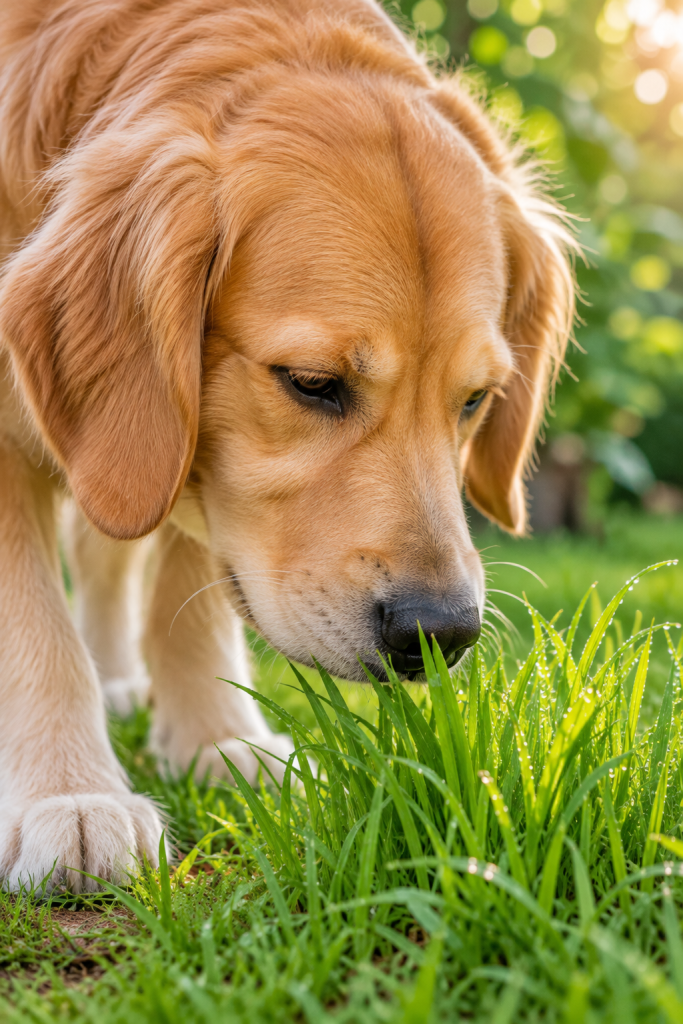
Yes — grazing calmly is a normal and common dog behaviour. Wild canids eat plant matter too, and many domestic dogs do the same. It is a behaviour owners often notice during walks and in the garden. What matters is the pattern of the behaviour, not the grass itself.
The patterns below describe what owners often see:
| Pattern | What it usually looks like | Reason to pay attention |
|---|---|---|
| Casual grazing | Your dog occasionally takes a few bites while exploring outside. | No — this is usually a relaxed, normal pattern. |
| Habitual grazing | The dog visits the same tuft of grass every walk, or grazes a particular area in the garden. | No, unless another issue appears alongside the behaviour. |
| Frantic grazing | The dog drops their nose and eats the grass quickly, almost urgently. | Some — especially if it happens after something unusual, like a change in the dog’s food or the weather. |
Dog owners commonly report this behaviour while travelling to the vet, for example when their dog eats the grass near the front door. If your dog never normally eats grass but begins to eat it urgently or frantically before, during, or after eating, that pattern takes more attention. Consistent behaviour can be part of the picture, but alone it does not diagnose anything, and the pattern should be discussed with your vet if it is repeated.
The common reasons dogs eat grass
Dogs can eat grass for different reasons. There is no single cause, and often there is no cause at all:
- They like the taste: Grass appeals to some dogs because of its fresh taste, texture and smell. Dogs do not taste like humans; you may notice your dog picking certain types of grass over others.
- Boredom or routine: Some dogs will eat grass when bored or as a habit when the owners are not playing with them, or they have missed a treat. If a particular type of grass has become a habit on a walk, the dog may automatically eat it every time.
- Learned behaviour: Dogs may learn from other dogs, such as the one who lives next door or another dog at the park. If they are watching another dog, they may copy the behaviour and eat grass too.
- They need more fibre: Dog owners are increasingly asking about fibre in dog food; grass may offer the additional fibre they’re looking for, but their dog’s nutritional requirements should be assessed by veterinary professionals first.
- Their stomach is upset: a theory, not a fact: One idea is that dogs eat grass to improve their digestive system, perhaps to help them feel calmer. However, this is a theory and not an established fact — it may be true for some dogs that grass can soothe the stomach, but many dogs eat grass and do not vomit or show signs of feeling ill.
Why dogs sometimes vomit after eating grass
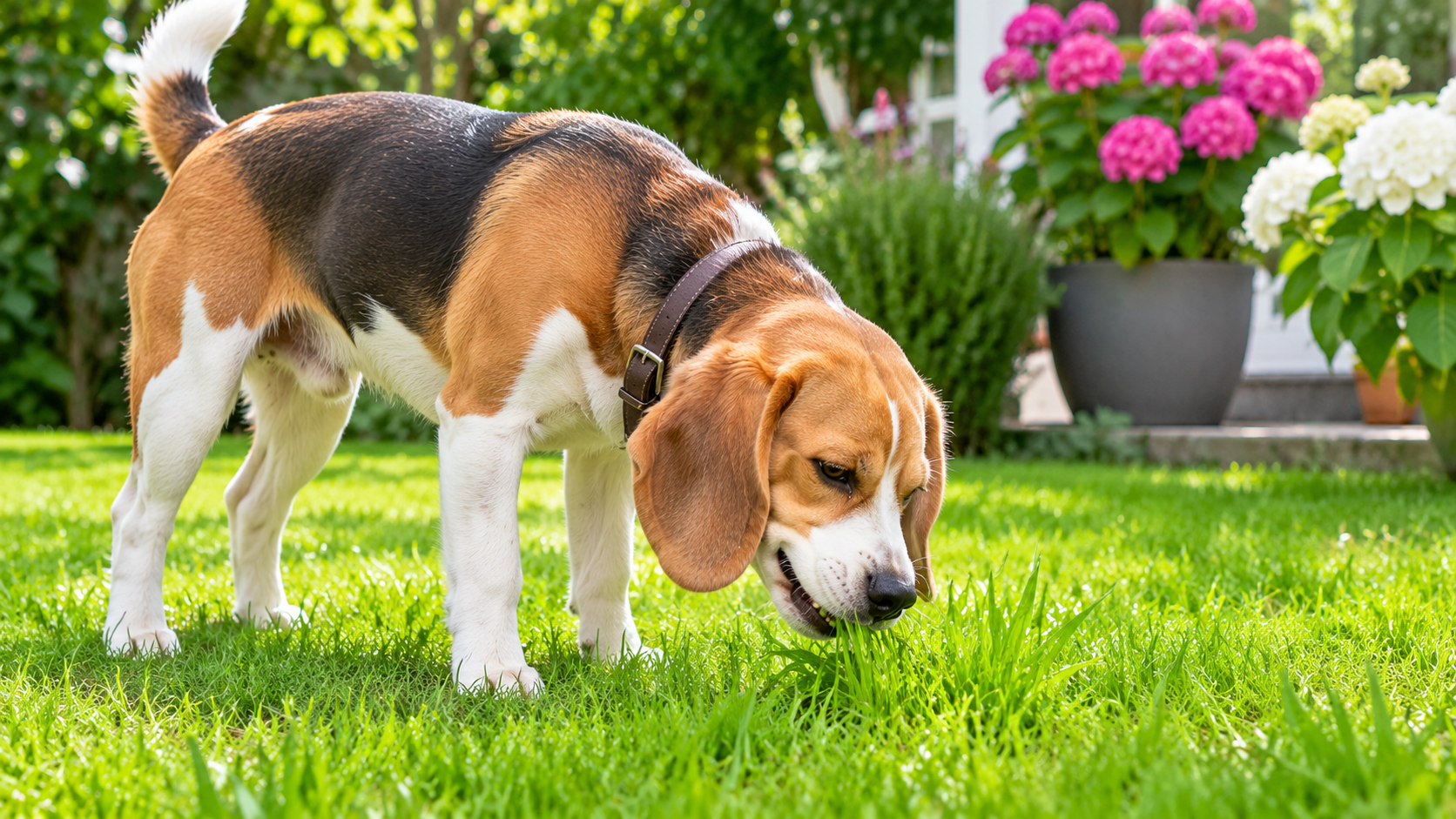
Dogs may vomit after eating grass because the blades can irritate the throat and stomach. Blades of grass have sharp edges that can tickle the throat, and swallowed grass can irritate the stomach lining after it reaches the stomach. This is more common when dogs eat grass quickly and in large quantities than when they take small mouthfuls, and may happen because of gulping rather than grazing.
Most dogs who eat grass do not vomit. If you notice a white, foamy vomit or undigested food, this may suggest your dog is experiencing an empty stomach or is unwell. It does not automatically mean they have eaten grass to make themselves sick. It is most likely to be a passing inconvenience, and vomiting can be caused by different things.
Occasional one-off vomiting after eating grass — in an otherwise bright and active dog — is usually just unfortunate timing. Instead, recurring vomiting, vomiting out of proportion to the amount of grass eaten, or other signs of illness can suggest that grass may not be the cause at all, and a vet check may be appropriate.
The risks that actually matter
Grass itself from an untreated lawn is low risk for most dogs. The risks are what can be on the grass and in the garden, not the grass itself.
- Lawn chemicals and weed killers: These are the real danger, and dogs should never be allowed to graze grass that has been treated with weed killer or other products. Some weed killers can be harmful if ingested, and owners should check labels and keep dogs off treated grass until it is safe to graze.
- Rakes and chemical products: Lawn rakes and other products with antifreeze, fertiliser, or weed killer have a danger that cannot be ignored. Dogs and cats can be exposed to these products by licking them off their paws.
- Fertiliser: Fertiliser can be poisonous if it is eaten. This includes bone meal, which is a type of fertiliser and can cause digestive upset if it is eaten, though it is unlikely to be consumed in large amounts.
- Lawn mushroom: Some garden plants can be toxic to dogs. Mushrooms can be poisonous if eaten; some types can cause a range of symptoms, from digestive upset to more serious problems. If you have mushrooms growing in your garden, make sure you remove them and keep your dog away.
When grass-eating means the vet
Use your instincts — if your dog seems unwell, or if this is a change from their usual behaviour, speak to your vet, as they can offer reassurance and personalised guidance. Your vet will also be able to examine your dog and rule out anything that might be making them ill. The following signs are worth discussing with your vet:
- Repeated vomiting: Your dog has vomited several times, or vomiting has been going on for a couple of days.
- Frantic or frequent grass eating: Your dog is eating grass more urgently or more often than usual.
- Appetite or energy changes: Your dog’s interest in food has changed, or they seem less energetic.
- Weight loss: Your dog is losing weight for no obvious reason.
- Blood: You notice blood in vomit or stool, or any unexplained bleeding.
How to reduce grass-eating if it bothers you
If grass eating has become part of every walk — or if they are taking large mouthfuls that make them sick — supervision helps. A short lead and a clear instruction can stop a mouthful before it happens, while a mouthful of a safe, healthy treat can reward them for following that instruction.
Work on the reason:
- If boredom is part of the cause, keep your dog’s day interesting with a mixture of physical activity and mental work. Ideas include:
- Short games of fetch or tug.
- Sniffing games that let them search for hidden treats.
- Food puzzles that make mealtimes more engaging.
- Safe chew activities suited to their size and chewing habits.
- Walks that include time to explore and investigate new smells.
A complete, balanced diet that suits your dog’s age and activity level usually leaves them comfortably full after meals. That full feeling matters, because a dog who is still hungry is more likely to look for extras — grass among them.
If you have a puppy, remember that puppies and adult dogs have different nutritional requirements. Our guide to puppy food vs adult food explains the differences and why life-stage nutrition matters.
If you want to offer food alternatives, fresh fruit can be a good option — provided it is a safe choice, given in moderation and handled hygienically. To confirm what is safe and how much to give, take a look at what fruit can dogs eat.
If the grass eating is severe, food might be part of the picture, but so can boredom or habit. Above all, this is one of those behaviours that usually can be managed and tolerated as a regular part of dog ownership. If you are unsure about your dog’s behaviour, talk to your vet for personalised advice on your dog’s individual needs.
Frequently asked questions
Should I stop my dog from eating grass?
Untreated grass is usually fine to allow in moderation. If sprays have been used, the answer is different — keep your dog off until it is fully dry, or longer if unsure.
Does eating grass mean my dog is sick?
Usually not. Most dogs who eat grass are not ill, and there is often no cause for concern.
Can grass make a dog throw up?
Sometimes. If a dog eats a lot of grass quickly, the blades may irritate the stomach lining and the throat, causing gagging, vomiting, or retching. It is preventable if your dog eats grass slowly.
Is it safe for my dog to eat grass after the lawn is sprayed?
No. Keep your dog off treated grass until it is completely dry. Follow the product guidance for how long it should be kept off. If you are unsure, keep your dog off for longer — lawn chemicals are a genuine risk, unlike the grass itself.
What can I offer instead of grass?
Safe alternatives include fresh fruit in moderation, safe chews suited to your dog’s size, and activities such as sniff games or food puzzles. Interactive toys can also reduce your dog’s interest in grass by keeping them mentally engaged.
Conclusion
Grass eating is rarely a sign of disease in dogs. Most dogs enjoy grass and chew it because of its taste, texture, and the habit rather than because they are ill.
Dogs may eat grass for a variety of reasons, but most dogs who eat grass are not sick and have no problems. If your dog has recently begun to eat grass, it may be that they simply like it, that they are bored, or that they have developed a habit. It is important to know what to look out for on the lawn, and to get personalised advice from your vet if you think something is wrong.
If your dog eats grass often, or eats it very quickly, talk to your vet so they can discuss any concerns with you and help you understand how to deal with it. Be reassured that this behaviour alone is not usually a concern.