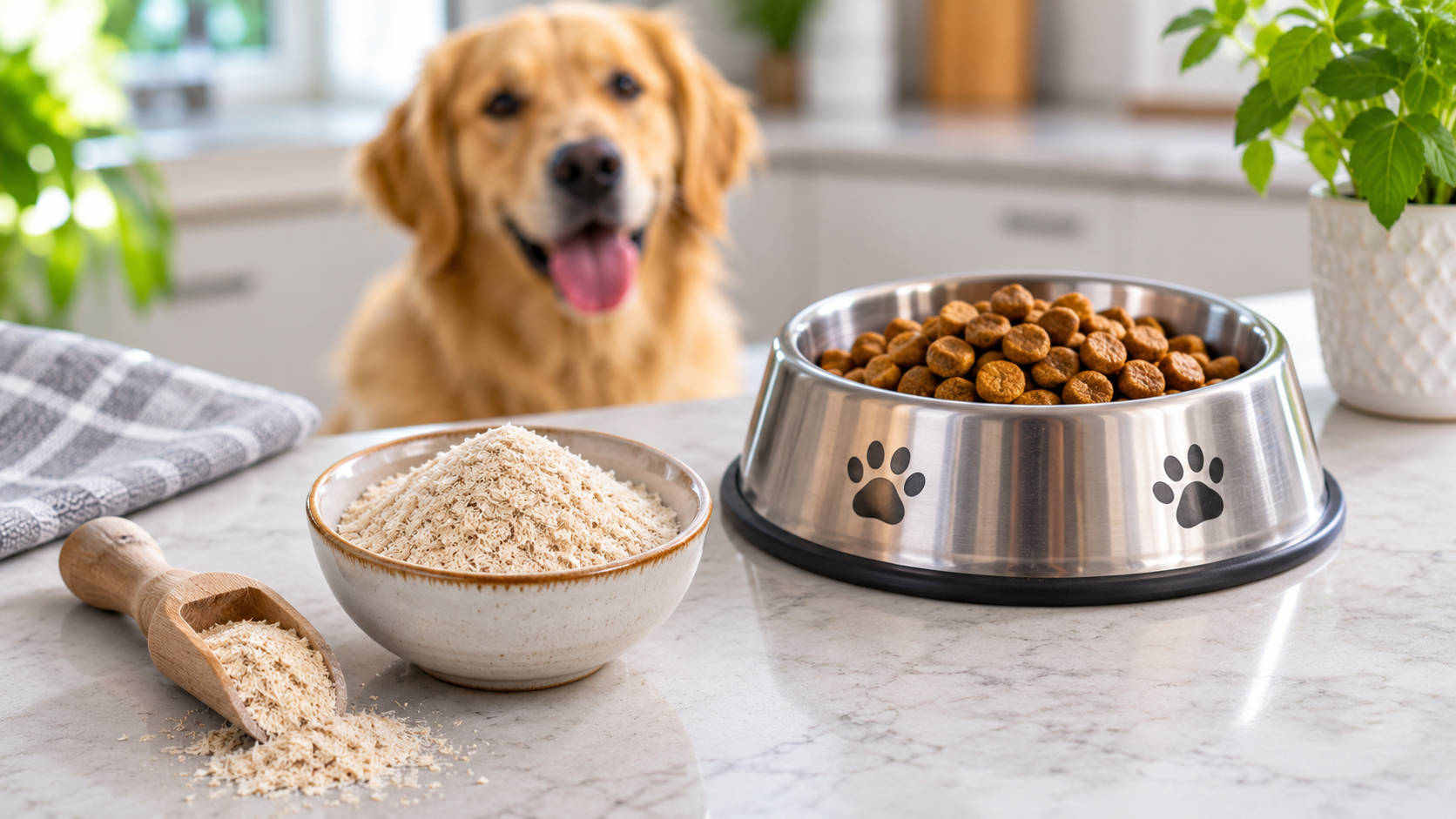
Psyllium husk is a soluble-fiber supplement that can help support more consistent stools. It holds water in the gut, helping loose stool gain shape and hard stool retain moisture.
Psyllium husk for dogs: the short answer
Plain psyllium is a soluble fiber that may firm loose stools and keep hard stools softer. Introduce it gradually.
Choose unflavored, unsweetened psyllium with no extras. Mix it into food with added water, start below the vet-approved target, and monitor stool. Confirm the amount and schedule with your vet.
What psyllium husk is and how it works
Psyllium comes from the outer husk of seeds from the Plantago ovata plant. The dried husks are ground into powder that forms a soft gel when mixed with liquid.
That gel can help in two ways. With loose stool, it absorbs some water and adds bulk, which may help the stool hold its shape. With hard stool, it holds moisture and adds bulk that may make bowel movements easier to pass.
The result varies with a dog’s diet, hydration, gut function, and the amount used. Veterinary nutrition guidance also notes that there is no single standardized psyllium dose for every dog, so gradual introduction and enough water matter. Today’s Veterinary Practice explains the role of fiber and gradual supplementation.
What owners use it for
Psyllium is discussed as digestive support, not as a cure. Owners may ask about it for four everyday reasons:
- On-and-off loose stools: Soluble fiber may help occasional soft stool hold its shape. Repeated diarrhea, watery stool, blood, vomiting, or a dog that seems unwell needs a vet check.
- Occasional constipation: The gel may help keep stool from becoming overly dry. It is not suitable if a blockage is possible or a dog cannot pass stool.
- Anal-gland support: More stool bulk may help some dogs pass a firmer bowel movement. Psyllium is not a guaranteed fix for recurring scooting, swelling, or pain.
- Weight-control feeding: Fiber can add bulk and may help a meal feel more filling. It belongs in a vet-guided weight plan, not as a shortcut or substitute for a balanced diet.
A new or recurring stool change deserves a vet check before supplementation.
The one rule that matters: plain and unsweetened only
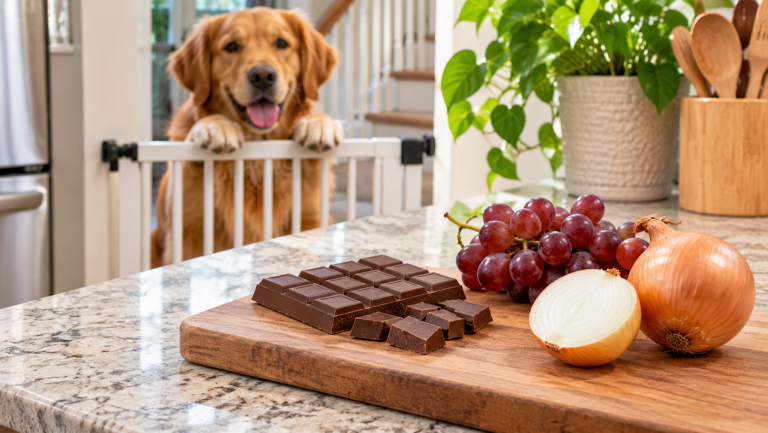
Never give a dog a sweetened or flavored human fiber drink just because the label says “fiber” or “sugar-free.” Some products contain xylitol, which may also be listed as birch sugar or wood sugar. Xylitol is extremely toxic to dogs and can cause a dangerous drop in blood sugar; severe cases can also involve liver injury. See the FDA’s xylitol safety guidance.
Read the full ingredient list every time because formulas and flavors can differ. Avoid sweeteners, flavors, colors, or added active ingredients.
If your dog may have eaten a product containing xylitol, do not wait for symptoms. Contact your veterinarian or an emergency animal hospital immediately and keep the package available.
How much psyllium husk to give a dog
The amounts below are cautious, general starting examples for discussion, not a prescription. Size-based owner guidance commonly lists about ¼ teaspoon for dogs under 10 lb, ½ teaspoon for 10–20 lb, 1 teaspoon for 21–50 lb, 1–2 teaspoons for 51–90 lb, and 1 tablespoon above 90 lb. The ranges below show a gradual starting point, not a target. Veterinary references still describe different schedules, and no single dose fits every dog. Confirm the amount and frequency with your vet; puppies, seniors, dogs with ongoing symptoms, and dogs taking medication need individual advice. A size-based owner reference illustrates the commonly shared weight bands, while Today’s Veterinary Practice discusses why individual dosing and gradual introduction matter.
| Dog size | Typical weight | Cautious general starting example per day* |
|---|---|---|
| Toy | Under 10 lb (under 4.5 kg) | ⅛–¼ teaspoon |
| Small | 10–20 lb (4.5–9 kg) | ¼–½ teaspoon |
| Medium | 21–50 lb (9.5–22.7 kg) | ½–1 teaspoon |
| Large | 51–90 lb (23–41 kg) | 1–2 teaspoons |
| Giant | Over 90 lb (over 41 kg) | 2 teaspoons or more only with a vet-set amount |
These are low-start discussion ranges, not a target to work up to on your own. Some clinical references describe higher schedules for selected dogs, while veterinary nutrition sources note that a universal dose has not been established. Teaspoons are approximate because powder density differs. Use the exact product and amount your vet approves; do not increase it simply because your dog is larger.
A 20 kg dog weighs about 44 lb and falls in the medium-size row. This is only a general reference; your vet may choose a different amount, frequency, or fiber source.
How to serve it
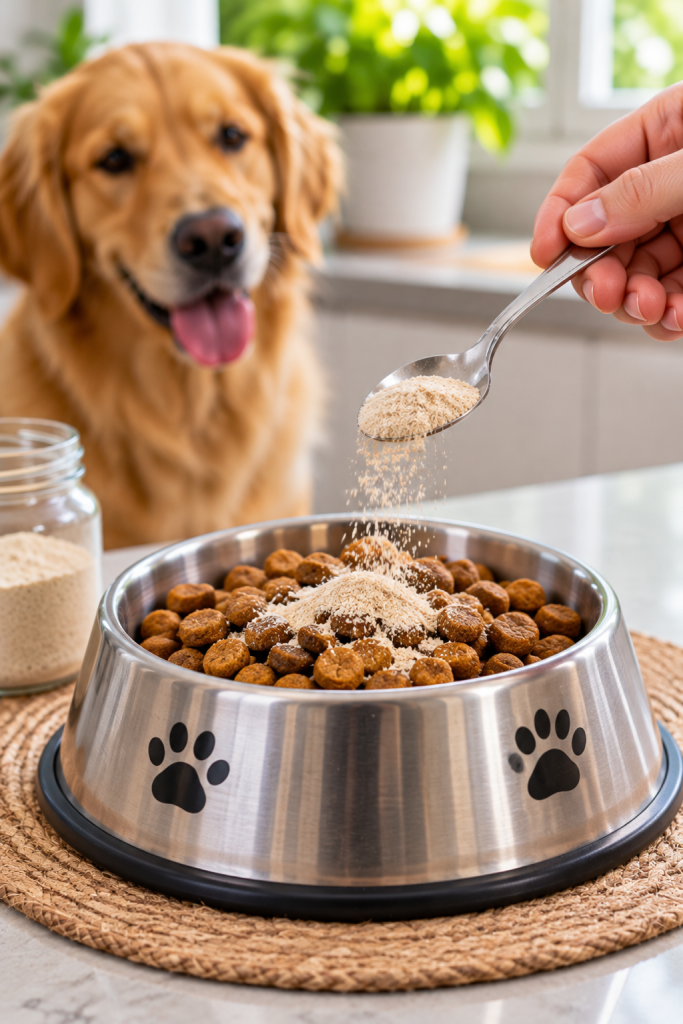
Stir psyllium into wet food or into a meal moistened with extra water. Do not sprinkle dry powder over food and leave it that way, and never offer a spoonful of dry husk for your dog to swallow. Psyllium swells after absorbing liquid. One veterinary nutrition reference recommends mixing fiber with at least three parts water and keeping fresh drinking water available.
After confirming the product and target amount, begin at about half that target for 2–3 days unless your vet says otherwise. Mix it into a moist meal, keep fresh water available, and monitor stool and comfort. Increase only as agreed with your vet.
Avoid changing several things in the bowl at once. If you are also switching foods, transition gradually rather than introducing a new food and fiber supplement on the same day. See the dog food transition schedule for a step-by-step approach. For growing dogs, use an age-appropriate feeding plan such as the puppy food chart rather than adjusting a puppy’s diet with supplements on your own.
Side effects and when to skip it
Too much psyllium, or increasing it too quickly, can cause gas, more frequent bowel movements, or looser stools. Some dogs do not tolerate a new fiber source well. If your dog’s stool gets worse or you notice vomiting, abdominal discomfort, reduced appetite, or another unusual change, stop and contact your veterinarian.
Do not give psyllium dry by the spoonful. Because it expands when wet, swallowing it without enough liquid can create a choking or blockage concern. Get veterinary advice first if your dog has trouble swallowing, a suspected or known intestinal blockage, or a condition that affects gut movement.
Check with your vet before using psyllium if your dog takes medication. Fiber can affect how some medicines are handled, and veterinary references flag extra caution with certain drugs, including some diabetes medicines, aspirin, digoxin, and nitrofurantoin. Your vet can decide whether timing needs adjustment or a different option is safer. VCA Animal Hospitals lists these precautions and risk factors.
Call your vet rather than trying fiber if your dog repeatedly strains without producing stool, has a swollen or painful abdomen, vomits, has blood in the stool, or seems weak or unusually quiet.
Psyllium husk vs pumpkin for dogs
Pumpkin and psyllium both provide fiber, but are not interchangeable scoop for scoop. Plain canned pumpkin is a food with water and a mix of nutrients and fibers. It is easy to stir into a meal, but choose plain pumpkin, not sweetened pie filling.
Psyllium is more concentrated as a fiber source, so a smaller measured amount can provide a meaningful addition. It is also a dry pantry ingredient that stores easily. That concentration is a reason to measure carefully, not proof that it is better. Choose based on your dog’s diet, stool pattern, and tolerance.
Common questions about psyllium husk for dogs
How much psyllium husk should I give a 20 kg dog?
A 20 kg dog is about 44 lb, which puts it in the medium-size row above. The table gives ½–1 teaspoon per day as a cautious discussion range, not a personal dose. Confirm the amount and frequency with your vet, especially if your dog has ongoing symptoms or takes medication.
Can I give my dog psyllium husk every day?
Some dogs may use psyllium regularly as part of a veterinary nutrition plan, but daily use is not right for every dog. Ask your vet how long to use it and when to review whether it is still needed.
Is the human fiber drink from the pharmacy safe for dogs?
Only plain, unsweetened psyllium with no added ingredients should even be considered, and your vet should approve it first. Some flavored or sugar-free products contain xylitol (birch sugar), which is dangerous to dogs. Check the full ingredient list every time. If xylitol ingestion is possible, contact a veterinarian or emergency clinic immediately.
How quickly does psyllium husk work for dogs?
It is not instant. Some dogs show a stool change within a day or two, while others take longer or do not respond as expected. VCA notes that effects may take 1–2 days to become noticeable. Do not keep adding more because you do not see an immediate change; ask your vet about the next step.
Can puppies have psyllium husk?
Do not start a puppy on psyllium without veterinary guidance. Puppies are growing, and loose stool or constipation may need a different response than an adult dog’s occasional stool change. Your vet can decide whether extra fiber is appropriate and how to introduce it safely.
Conclusion
Psyllium husk can be a practical source of soluble fiber for some dogs, but the safest approach is simple: use plain, unsweetened powder, measure conservatively, mix it into food with plenty of water, and introduce it gradually. Never use a flavored human fiber drink without checking every ingredient, and treat possible xylitol exposure as an emergency.
The table is a discussion point, not a prescription. Dogs differ in health, diet, and response to fiber, so confirm the amount and duration with your veterinarian. Jennifer is a researcher, not a veterinarian; this guide does not replace your dog’s veterinary advice.