Knowing which foods are toxic to dogs can help prevent an accidental poisoning and make it easier to recognize that something is wrong before it becomes serious. Most everyday foods are harmless, but a small group poses a genuine risk, and some of them can cause problems at doses that are easy to underestimate.
The important distinction is that not every dangerous food affects dogs in the same way. Some contain compounds that interfere with the nervous system, while others damage the liver, kidneys or blood cells. A few are difficult to digest in their whole form, even if they are not toxic in the same way as a chemical poison.
This guide covers the foods that genuinely deserve attention, why they are dangerous, which unexpected foods owners often overlook, and what to do in the first few minutes if your dog eats something harmful.
Toxic foods for dogs: the short answer
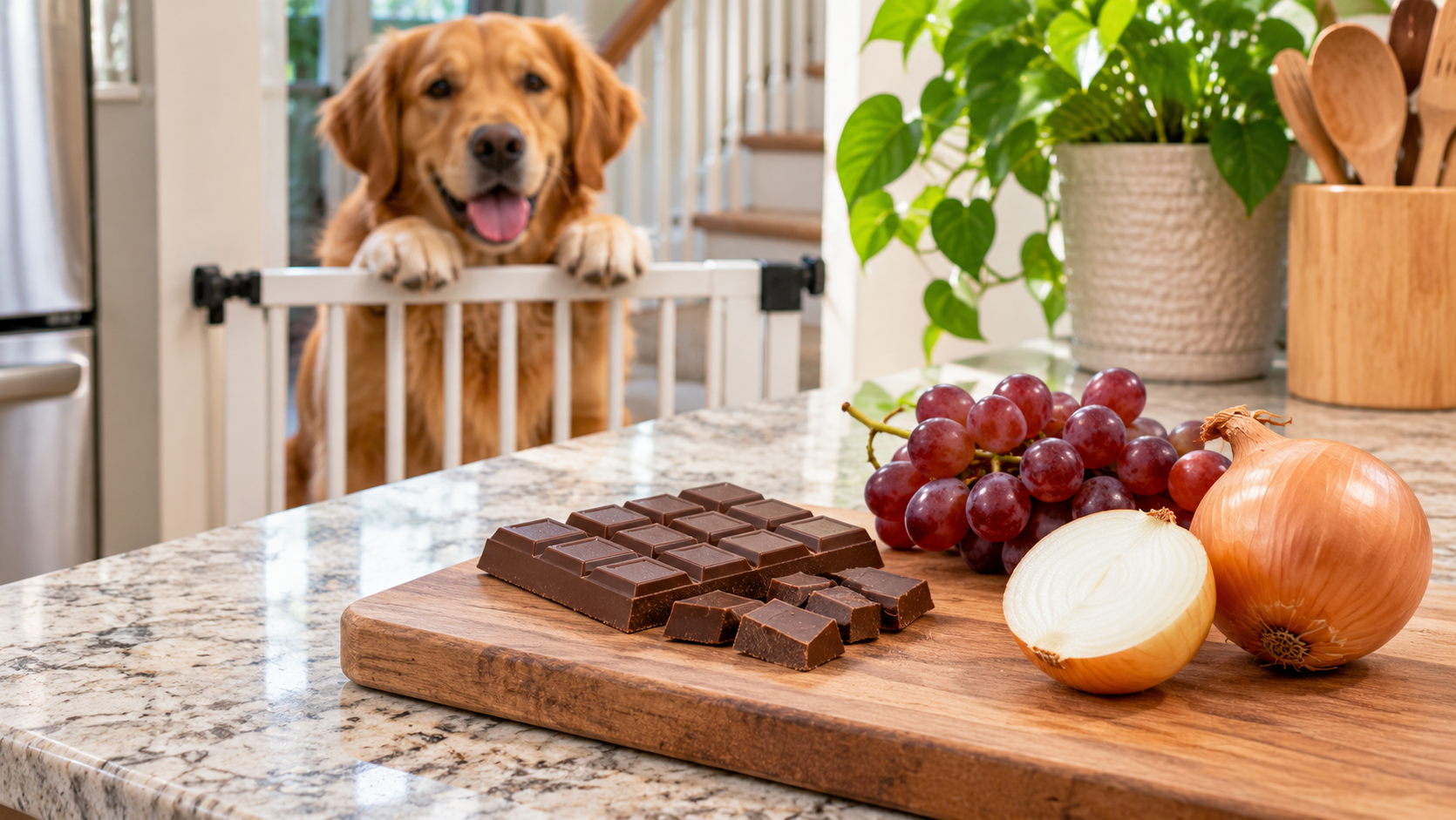
The main foods and substances that are toxic to dogs include:
- Chocolate: Contains theobromine, a stimulant that dogs cannot process efficiently.
- Xylitol (birch sugar): A sweetener found in some sugar-free products that can trigger a dangerous release of insulin.
- Grapes and raisins: Can cause kidney injury, with reactions that are difficult to predict.
- Onions and garlic: Contain compounds that can damage red blood cells.
- Macadamia nuts: Can cause weakness and other signs of poisoning.
- Alcohol: Can depress the nervous system and cause serious complications.
- Caffeine: Contains stimulants that can affect the heart and nervous system.
The risk depends on the particular food, the amount eaten and the dog’s size. Some substances can be harmful even in small quantities, while others become more dangerous as the dose increases.
If you suspect your dog has eaten something toxic, call your veterinarian or an animal poison line immediately. Do not wait for symptoms to develop before seeking advice.
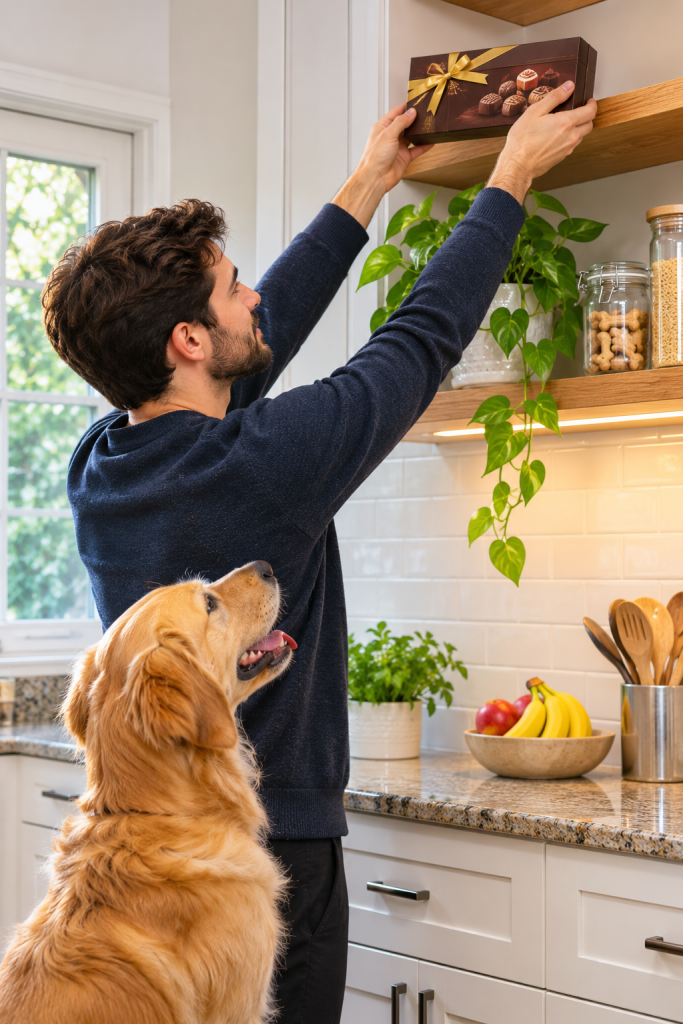
The most dangerous foods for dogs
These are the foods worth treating most seriously. Some are obvious hazards, while others appear in sugar-free products, baked goods and everyday kitchen ingredients.
| Food | Why it is dangerous | How urgent is it? |
|---|---|---|
| Chocolate | Contains theobromine and caffeine. Dark chocolate, baking chocolate and cocoa powder contain higher concentrations than milk chocolate. | Call a vet immediately after suspected ingestion. |
| Xylitol (birch sugar) | Can trigger a rapid insulin release, causing dangerously low blood sugar. It can also damage the liver. | Immediate emergency call. Even small amounts matter. |
| Grapes, raisins, sultanas and Zante currants | Can cause acute kidney injury. Individual dogs respond unpredictably, and the harmful amount cannot be reliably predicted. | Always urgent, regardless of the amount. |
| Onions, garlic, leeks and chives | Contain compounds that damage red blood cells and can lead to anemia. Problems may become apparent days later. | Contact a vet immediately. |
| Macadamia nuts | Can cause weakness, vomiting, poor coordination, tremors and an increased body temperature. | Prompt veterinary advice is necessary. |
| Alcohol | Depresses the nervous system and can affect breathing, coordination and blood sugar. | Immediate veterinary advice. |
| Coffee and other caffeine products | Caffeine stimulates the heart and nervous system. Coffee grounds, beans, energy drinks and concentrated products can all cause poisoning. | Immediate veterinary advice. |
These dangers are supported by veterinary toxicology guidance from Cornell University, the ASPCA and the FDA.
Chocolate
Chocolate contains theobromine, a stimulant that dogs process much more slowly than people do. It also contains caffeine, which adds to the risk.
The type of chocolate matters. Baking chocolate, cocoa powder and dark chocolate are generally more concentrated, while milk chocolate and white chocolate are less dangerous in the same quantity, although they can still cause stomach upset.
Chocolate poisoning can affect the digestive system, heart and nervous system. Never assume a piece is too small to matter unless a veterinarian advises otherwise.
Xylitol (birch sugar)
Xylitol deserves special attention because it can be hidden in products that do not look like traditional sweets.
Look for it in:
- Sugar-free chewing gum and mints
- Some sugar-free peanut butters
- Sugar-free sweets and baked goods
- Certain oral-care products
- Some specialty food products
In dogs, xylitol can cause the pancreas to release a large amount of insulin. This can make blood sugar drop rapidly and cause weakness, shaking, collapse or seizures. With some products, liver damage can also develop.
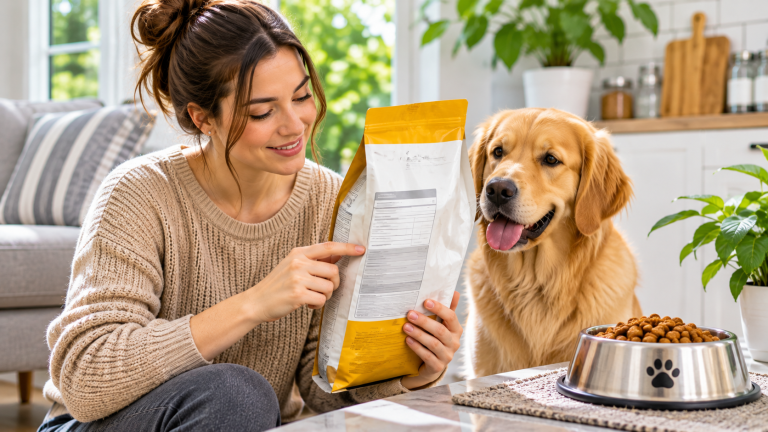
Check ingredient labels rather than relying on packaging descriptions such as natural, low sugar or sugar-free.
Grapes and raisins
Grapes, raisins, sultanas and Zante currants are particularly concerning because their effects are unpredictable.
Some dogs develop serious kidney injury after eating these fruits, while others may not show obvious signs at first. The exact cause of the damage is still not fully understood, and it is also not possible to predict a harmless amount for an individual dog.
Do not wait to see whether your dog develops vomiting, tiredness or changes in urination. Even one grape or raisin should prompt immediate veterinary advice.
Remember that raisins can also be hidden in baked goods, breakfast foods, trail mixes and desserts.
Onions and garlic
Onions, garlic, leeks and chives belong to the Allium family. They contain compounds that can damage red blood cells, potentially leading to anemia.
The danger is not limited to raw vegetables. Cooked onions, dried onion flakes, garlic powder and ingredients mixed into a meal can also be harmful, depending on the amount eaten and the dog’s size.
One reason these foods are easy to overlook is that the effects may be delayed. A dog might appear normal straight after eating onion, only to become unwell several days later.
Check the ingredients in soups, sauces, gravies and leftovers before sharing any food with your dog.
Macadamia nuts
Macadamia nuts are specifically toxic to dogs. They can cause weakness, difficulty walking, vomiting, tremors and a raised body temperature.
They are sometimes found in cookies, chocolates, snack mixes and baked treats. Check mixed foods carefully if you are unsure of the ingredients.
Other nuts can also cause problems because of their high fat content, but macadamia nuts deserve separate attention because of their direct toxic effects.
Alcohol and raw bread dough
Alcoholic drinks, liquor-containing desserts and foods prepared with alcohol can poison dogs. Alcohol can depress the nervous system, and small dogs are particularly vulnerable.
Raw yeast dough presents an additional danger. Once swallowed, it can expand in the stomach while fermentation continues, releasing ethanol and causing bloating and discomfort.
Keep rising bread dough somewhere your dog cannot reach, even while it is covered and left to proof.
Coffee and caffeine
Coffee is not the only caffeine hazard. Tea, energy drinks, caffeine tablets, coffee beans and used coffee grounds all contain caffeine or related stimulants.
Caffeine overstimulates the heart and nervous system. Depending on the exposure, it can cause restlessness, an increased heart rate, vomiting, tremors or more serious complications.
Keep coffee supplies, tea bags and energy drinks away from curious dogs. Do not assume that a small amount is harmless based on whether there are immediate symptoms.
Risky foods owners do not expect
Not every dangerous food belongs on a strict list of toxic substances. Some foods cause harm through physical injury, high fat content or contamination, rather than a single toxic compound.
Cooked bones
Cooked chicken, pork and other bones can splinter into sharp pieces. These fragments may injure the mouth, throat or digestive tract.
Cooked bones are dangerous rather than poisonous. Avoid giving them to dogs, including leftover bones from a roast dinner.
Avocado
Avocado is a more complicated case than chocolate or grapes. It contains persin, a natural compound that affects some animals more than others. Dogs tend to be less sensitive than birds or large animals, but avocado is still not an ideal treat.
However, the high fat content can upset a dog’s digestive system, and the large central stone can cause a blockage or a choking risk. The leaves and skin contain more persin and should also be kept away.
The safest approach is not to let your dog investigate an unattended avocado or its discarded parts.
Cherry and stone-fruit pits
Cherry, peach, plum and apricot pits deserve caution. Their seeds contain compounds that can release cyanide if they are crushed or chewed.
Whole pits also present a separate choking and intestinal blockage risk. The danger is particularly relevant for smaller dogs and puppies.
Keep fruit waste out of accessible bins and do not leave stones on kitchen counters or outdoor tables.
Nutmeg
Nutmeg contains myristicin, a naturally occurring compound that can cause problems if a dog consumes a large amount.
It is most likely to become an issue when dogs get into spice containers, baking ingredients or foods made with a generous amount of nutmeg.
Mouldy food and compost
Spoiled food is not necessarily harmless just because it came from a natural ingredient. Certain moulds produce toxins that can affect dogs.
Compost heaps, discarded leftovers and rubbish bags can contain mouldy food that attracts curious dogs.
Keep compost covered and do not allow dogs to investigate decomposing kitchen waste.
Very salty and fatty foods
Large amounts of salt can disturb the body’s fluid and electrolyte balance. Extremely salty snacks, cured meats and foods cooked with lots of added salt should not be shared with dogs in any significant amount.
Very fatty foods create a different concern. Greasy meat scraps, rich sauces, bacon fat and heavily fried foods can upset the stomach and cause vomiting or diarrhoea.
These foods are not all toxic in the same way as xylitol or grapes. Nevertheless, a significant accidental intake could make your dog unwell and warrant advice from a vet.
Human foods that are actually fine
A list of dangerous foods can make it sound as though dogs cannot enjoy anything from the kitchen. Fortunately, many plain foods are safe for dogs in sensible portions.
Many plain fruits and vegetables can be suitable occasional treats when prepared appropriately and offered in sensible amounts.
For a more positive list, see our guide to what fruit can dogs eat. It covers fruit options that owners can consider, along with preparation and serving considerations.
The important distinction is between a plain, suitable ingredient and a prepared food containing potentially unsafe additives.
Puppy owners should also consider how treats fit into their dog’s overall daily food intake. Our puppy food chart provides additional feeding guidance.
If your dog eats something toxic: the first 10 minutes
A suspected poisoning can be frightening, especially when you do not know how much your dog swallowed.
Follow these steps:
- Stay calm and move the food away. Prevent your dog from eating any more. Keep other pets away from the food.
- Identify what your dog ate. Write down the food or product name. If it was a packaged product, check for xylitol, birch sugar, chocolate content and other ingredients.
- Estimate the amount and time. Note approximately how much may be missing and when your dog could have eaten it.
- Call your veterinarian or an animal poison line immediately. Explain what happened and provide your dog’s approximate weight, breed and age if you can.
- Keep the packaging. Save the wrapper, ingredient label, container or any remaining food so the veterinary team can assess the level of risk.
Do not make your dog vomit unless a veterinarian specifically instructs you to do so. Do not try home remedies, milk, salt, hydrogen peroxide or activated charcoal without professional guidance.
Do not wait for symptoms before making the call. Some toxins cause delayed problems, and early veterinary input is more valuable than monitoring and hoping for the best at home.
Keeping a dog-safe kitchen
Preventing accidental poisoning is easier when potentially dangerous foods have a consistent storage routine.
A few everyday habits make a difference:
- Store chocolate securely. Keep chocolate bars, baking chocolate, cocoa powder and chocolate-containing foods out of reach.
- Put chewing gum away. Sugar-free gum is a common source of xylitol exposure. Store it in closed drawers or high cabinets.
- Secure rubbish bins. Use bins with fitted lids, particularly for food scraps, fruit pits, spoiled food and packaging.
- Check guests’ belongings. Handbags, backpacks and coat pockets can contain chewing gum, sweets and other chewable items.
- Keep baking ingredients out of reach. Store cocoa powder, raisins, nutmeg, yeast and other potentially dangerous ingredients behind closed cupboards.
- Watch food preparation areas. Do not leave unattended plates, baking trays or ingredients where a dog can reach them.
- Teach children the rules. Explain that chocolate, grapes, raisins, chewing gum and other dangerous foods should not be given to dogs.
- Be careful with leftovers. Check ingredients before sharing human food, particularly sauces, soups and other dishes that may contain hidden onions, garlic, grapes or xylitol.
These habits are particularly useful in busy households where several people prepare food or give their dog a snack in passing.
Frequently asked questions
How much chocolate is dangerous for a dog?
There is no single amount that applies to every dog. The risk depends on the dog’s weight, the type of chocolate eaten, the cocoa content and how much was consumed.
Any amount beyond a trivial taste warrants a call to your veterinarian for an individual assessment. Do not try to estimate the risk based on a general amount, especially with dark or baking chocolate.
Is xylitol in peanut butter?
Sometimes. Some sugar-free peanut butter brands and specialty nut butters contain xylitol, also called birch sugar. Regular peanut butter does not usually contain it.
Always check the ingredient label before giving peanut butter to your dog. If your dog eats a product containing xylitol, contact your veterinarian immediately.
My dog ate one grape. What do I do?
Call your veterinarian or an animal poison line immediately. Do not wait for symptoms or assume one grape must be harmless.
Grape toxicity is unpredictable, and the amount needed to cause kidney injury cannot be reliably estimated. Early veterinary advice is much more useful than observing your dog at home for signs.
Can onions really kill a dog?
Yes, onion poisoning can become life-threatening in serious cases. Onions contain compounds that damage red blood cells, which can lead to anemia and related complications.
The effects may be delayed, so a dog appearing normal immediately after eating onion does not mean there is no risk. Contact a veterinarian as soon as you realise it has happened.
Are raisins worse than grapes?
Both deserve the same level of caution. Raisins are dried grapes, and both can cause kidney injury in some dogs.
Treat suspected ingestion of either as urgent and contact your veterinarian immediately.
Conclusion
Knowing which foods are toxic to dogs is an important part of responsible dog ownership. Chocolate, xylitol, grapes, onions, garlic, macadamia nuts, alcohol and caffeine are the main hazards to remember, and each one can be dangerous for a different reason.
Other kitchen hazards, including cooked bones, mouldy food, fruit pits and very fatty leftovers, can cause injury or stomach problems even when they are not conventionally described as toxic.
You do not need to memorize every ingredient in every human food. Focus on keeping the major hazards out of reach, reading the ingredients where possible, and making an early call to a vet or animal poison line if something goes wrong.
Most importantly, if your dog eats something potentially toxic, call your veterinarian or an animal poison line immediately. They can advise you based on the specific food, amount and dog involved.