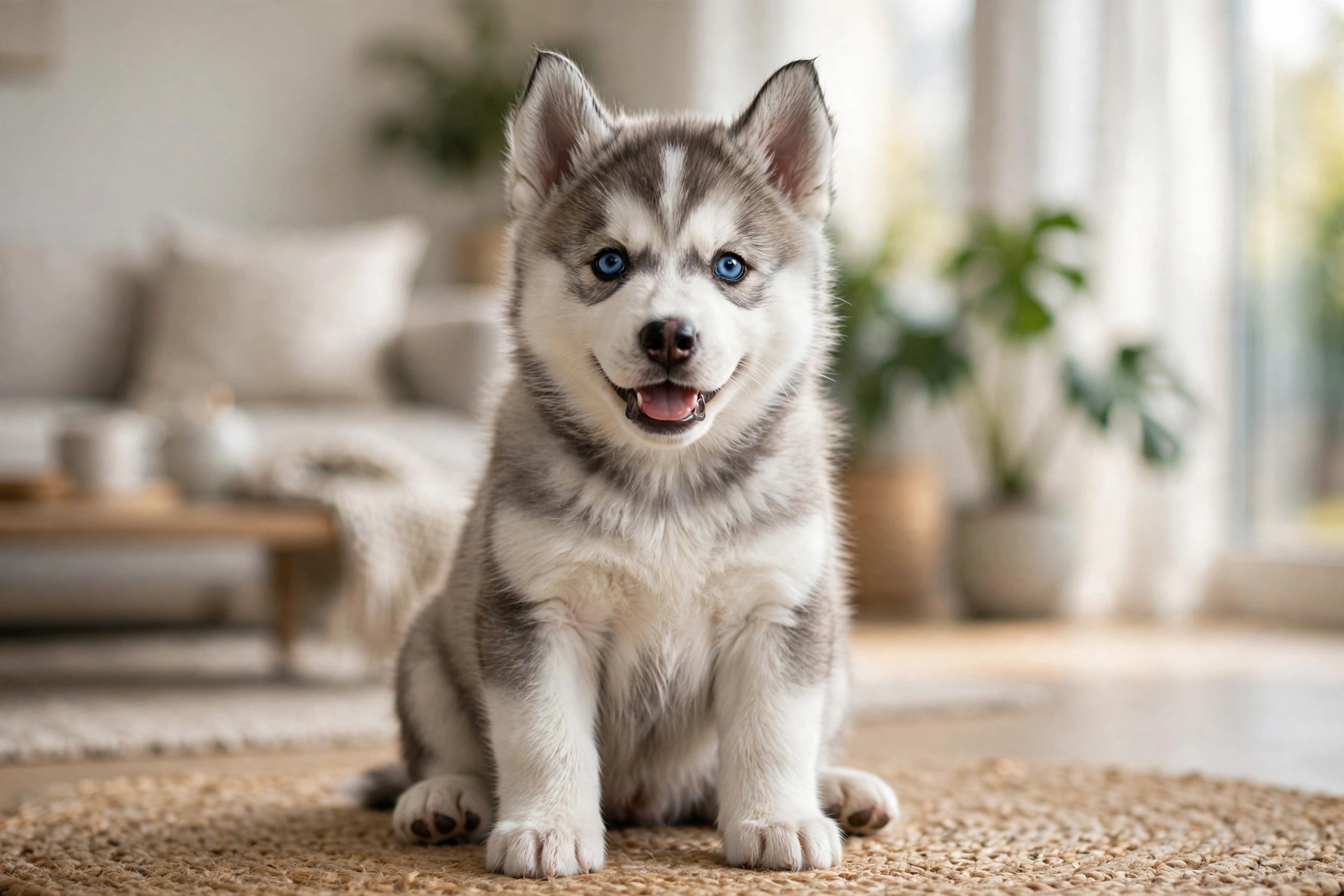
Watching a Siberian Husky puppy grow can feel like a weekly surprise. One month, your puppy looks small and fluffy; the next, those legs seem twice as long. It is natural to wonder whether their weight is on track, especially when other puppies of the same age look completely different.
This husky weight chart gives you typical male and female weight ranges from 2 months through adulthood, with measurements in pounds and kilograms. You will also learn when Huskies usually stop growing, why a healthy Husky can look surprisingly lean, and how to check body condition at home.
Remember that growth charts are reference points, not pass-or-fail tests. Genetics, sex, activity, and individual development all affect a dog’s size.
Siberian Husky weight chart by age
The American Kennel Club’s breed information lists adult male Siberian Huskies at 45–60 pounds and females at 35–50 pounds. The puppy estimates below combine those adult benchmarks with publicly available growth references, including Canine Journal’s Siberian Husky growth chart.
Published puppy charts differ, so treat the monthly figures as broad, typical ranges rather than exact targets. Your Husky may fall outside a range and still be growing appropriately.
| Age | Male (lb) | Male (kg) | Female (lb) | Female (kg) |
|---|---|---|---|---|
| 2 months | 7–15 | 3.2–6.8 | 6–12 | 2.7–5.4 |
| 3 months | 12–23 | 5.4–10.4 | 10–19 | 4.5–8.6 |
| 4 months | 19–30 | 8.6–13.6 | 15–25 | 6.8–11.3 |
| 5 months | 26–38 | 11.8–17.2 | 21–32 | 9.5–14.5 |
| 6 months | 30–44 | 13.6–20.0 | 25–36 | 11.3–16.3 |
| 7 months | 34–47 | 15.4–21.3 | 28–39 | 12.7–17.7 |
| 8 months | 38–50 | 17.2–22.7 | 30–41 | 13.6–18.6 |
| 9 months | 40–52 | 18.1–23.6 | 32–43 | 14.5–19.5 |
| 10 months | 41–53 | 18.6–24.0 | 33–44 | 15.0–20.0 |
| 11 months | 42–56 | 19.1–25.4 | 34–47 | 15.4–21.3 |
| 12 months | 43–59 | 19.5–26.8 | 34–49 | 15.4–22.2 |
| Adult | 45–60 | 20.4–27.2 | 35–50 | 15.9–22.7 |
How to use the chart: Weigh your puppy consistently, record their age and weight, and compare several measurements over time. A steady upward trend is generally more informative than one isolated reading. If growth stalls, weight drops unexpectedly, or your puppy seems unwell, ask your veterinarian about the change.
For breed context, see the AKC’s Siberian Husky breed information.
Why Huskies look thinner than other breeds
Siberian Huskies are medium-sized working dogs developed for endurance. Their traditional build is compact, athletic, and designed for efficient movement rather than a bulky appearance. A healthy Husky may therefore look slimmer than a Labrador or another breed with a broader frame, even when both dogs are at suitable weights.
Their thick double coat adds another complication. Fluffy fur can make the body look rounder than it really is, while shedding can suddenly make the same dog appear much narrower. Looking at the outline alone can be misleading in either direction.
Instead, gently feel your dog’s ribcage. You should generally be able to feel the ribs beneath a thin layer of fat without pressing hard. Viewed from above, a healthy dog usually has a visible waist behind the ribs; from the side, the abdomen typically rises toward the hind legs.
These are general body-condition observations, not a diagnosis. The VCA guide to body condition scores explains how veterinarians assess a dog’s shape and fat coverage.
When do Huskies stop growing?
Huskies do not all reach maturity at exactly the same age. As a general guide, much of their height growth happens during the first year, and many are close to their adult height around 12 months. Their weight may continue to change after that as muscle develops and their adult build becomes more established.
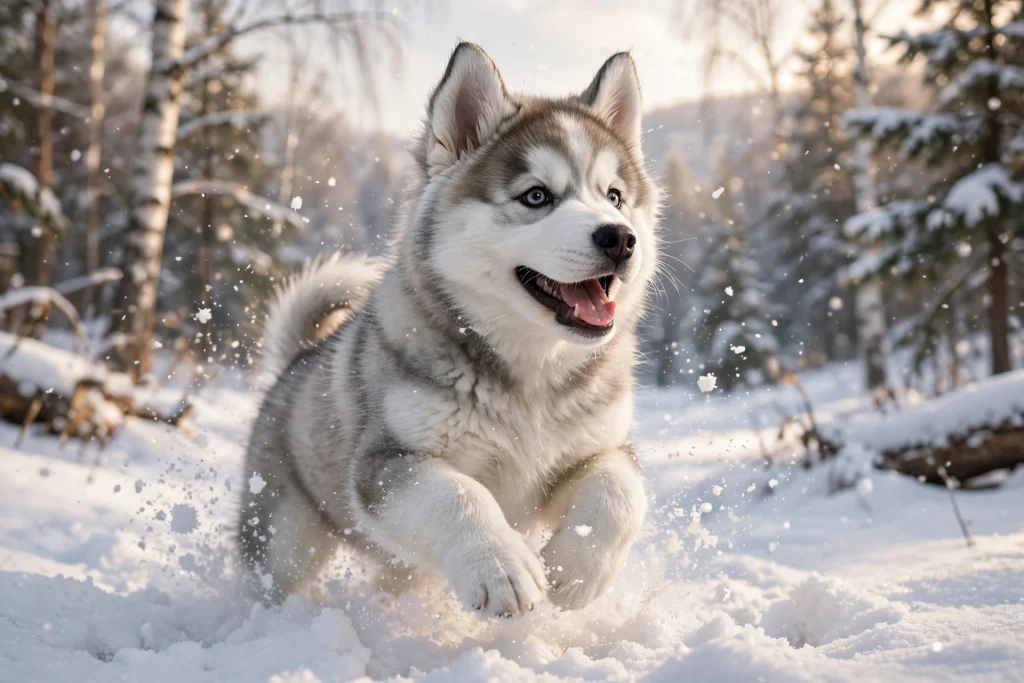
Many Huskies are close to their adult weight by about 12–15 months, but some continue filling out into the 18–24-month period. Other published guides give slightly different timelines, which is why a single birthday should not be treated as a strict cutoff.
Males generally grow into a larger adult weight range than females. Individual dogs can still be smaller or larger than the usual breed benchmarks.
Is my Husky underweight or overweight?
A scale cannot tell the whole story. Two Huskies weighing the same amount can have different healthy weights depending on their frame, muscle, and body condition.
Try these simple observations at home:
- Feel the ribs: They should be easy to feel under a light fat covering. Ribs that are sharply prominent, or ribs that are difficult to feel beneath heavy padding, are reasons to seek a professional assessment.
- Look for a waist: From above, the body should usually narrow behind the ribcage.
- Check the side profile: The abdomen generally slopes upward behind the ribs rather than hanging level or bulging downward.
- Watch the trend: Regular weigh-ins can help you notice a change over time.
Contact your veterinarian if your Husky is losing weight unexpectedly, is persistently far outside the typical growth range, stops gaining weight during active growth, or has a noticeable change in appetite, energy, or general behavior.
Husky weight chart: common questions
What is the average adult Husky weight?
The AKC lists adult males at 45–60 pounds (20.4–27.2 kg) and females at 35–50 pounds (15.9–22.7 kg). These are breed-standard ranges, not mandatory targets for every individual.
Why is my Husky so small?
A Husky may be naturally smaller because of genetics, sex, or individual build. Compare your dog’s growth over time and discuss persistent concerns with your veterinarian.
How fast do Husky puppies grow?
Growth is usually fastest during early puppyhood and gradually slows as the dog approaches adult size.
When should I switch my Husky from puppy food to adult food?
The timing depends on maturity, expected adult size, activity, and individual nutritional needs. Ask your veterinarian when to change your Husky’s food and how to transition gradually.
Should I worry if my Husky’s ribs are visible?
Visible ribs can be a reason to check body condition, but appearance alone does not tell the full story. Gently feel the ribcage and seek a veterinary assessment if the ribs are prominent or your dog is losing weight.
Conclusion
A useful Husky weight chart helps you understand the broad pattern of growth, not judge your dog by a single number. Males typically finish in a higher weight range than females, most height growth occurs during the first year, and some Huskies continue filling out well into young adulthood.
Keep a record of your dog’s weight, pay attention to their waist and ribs beneath the thick coat, and bring concerns about growth or body condition to your veterinarian.
By Jennifer, Founder of CanineCalc
Jennifer is the founder of CanineCalc, a dog owner and researcher who creates practical reference resources for pet owners. She is not a veterinarian or breeder.