Why do dogs eat poop? The short answer
Dogs eat poop for several reasons. Some like the smell or taste, some learn the habit as puppies, and others do it because they are bored, hungry, or have learned that it gets a reaction from their owner. Stool with more undigested food can also be appealing.
The veterinary term is coprophagia. It is common, particularly in puppies, and does not automatically mean your dog is sick or being fed badly. A mother dog naturally cleans up after her litter, and puppies may copy what they see.
For most dogs, prompt cleanup, supervision, and reward-based training help manage the habit. It is rarely an emergency on its own, but a sudden change in an adult dog or other health changes deserve a veterinary conversation.
Is eating poop dangerous for my dog?
The main concern is exposure to parasites and infectious organisms in contaminated stool. Feces from another dog or animal can carry organisms your dog may swallow. Dogs can also pick up some infections from contaminated soil, paws, or surfaces, so eating stool is one avoidable route of exposure.
An episode does not mean your dog will become ill. Many dogs show no obvious signs afterward, and the immediate issue is often an unpleasant habit rather than an emergency. Still, repeated access increases exposure, and puppies can be more vulnerable to some intestinal infections.
Keep fecal testing and routine veterinary checks up to date, and follow your vet’s advice about parasite prevention and deworming. If your dog develops diarrhea, vomiting, unusual tiredness, or other signs of illness, call your vet. Do not try to treat a suspected infection based on the behaviour alone.
7 common reasons dogs eat poop
There is rarely one explanation that fits every dog. Look at when it happens, what kind of stool your dog seeks out, and what happens immediately before and after.
| Reason | Clues that may fit | First step |
|---|---|---|
| 1. Learned from the litter | Your dog started as a puppy or watched their mother clean up after the litter. | Supervise toilet breaks and pick up promptly. |
| 2. Stool smells like food | Your dog targets fresh stool, or it looks unusually soft or poorly digested. | Review the food and ask your vet about ongoing stool changes. |
| 3. Boredom or confinement | It happens during long stretches in a yard, crate, or pen with little to do. | Add walks, sniffing, play, and enrichment; remove access to stool. |
| 4. Attention | Grabbing stool triggers a dramatic reaction or a chase. | Stay calm, call your dog away, reward them, and clean up. |
| 5. Stress or anxiety | It appears around routine changes, isolation, or unsettled situations. | Keep routines predictable; discuss ongoing anxiety with your vet. |
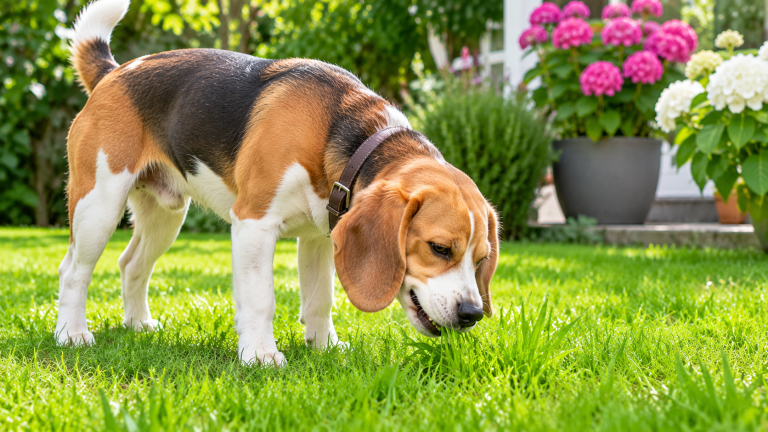
| 6. Taste and scavenging | Your dog samples food scraps and other finds outdoors. | Manage access and practise a reliable “leave it.” |
| 7. Possible absorption problem | The habit is new or persistent and occurs with weight loss, appetite changes, or abnormal stool. | Arrange a vet check; only a vet can assess medical causes. |
These clues guide your first steps, but they cannot identify a medical cause. More than one factor may be involved.
First, check the food and feeding routine
Do not assume poop eating means your dog has a nutrient deficiency; many dogs with this habit eat a balanced diet. Check whether the amount suits your dog’s age, size, activity, and body condition. Package feeding amounts are starting points, so ask your vet if you are unsure. For an age-based food refresher, see puppy food vs. adult food.
Digestibility matters: food your dog digests well generally leaves less undigested material in the stool, although a diet change is not a guaranteed fix. Avoid adding supplements or switching foods repeatedly to chase the habit. When a change is needed, transition gradually with our dog food transition schedule.
Consistent meal times can make cleanup easier because toilet breaks become more predictable. Free-feeding can make timing harder in some households. A flexible routine is enough; the aim is to know when to supervise.
The stop-it plan that works
Combine management with training. Prevent your dog from practising the habit while rewarding a better choice.
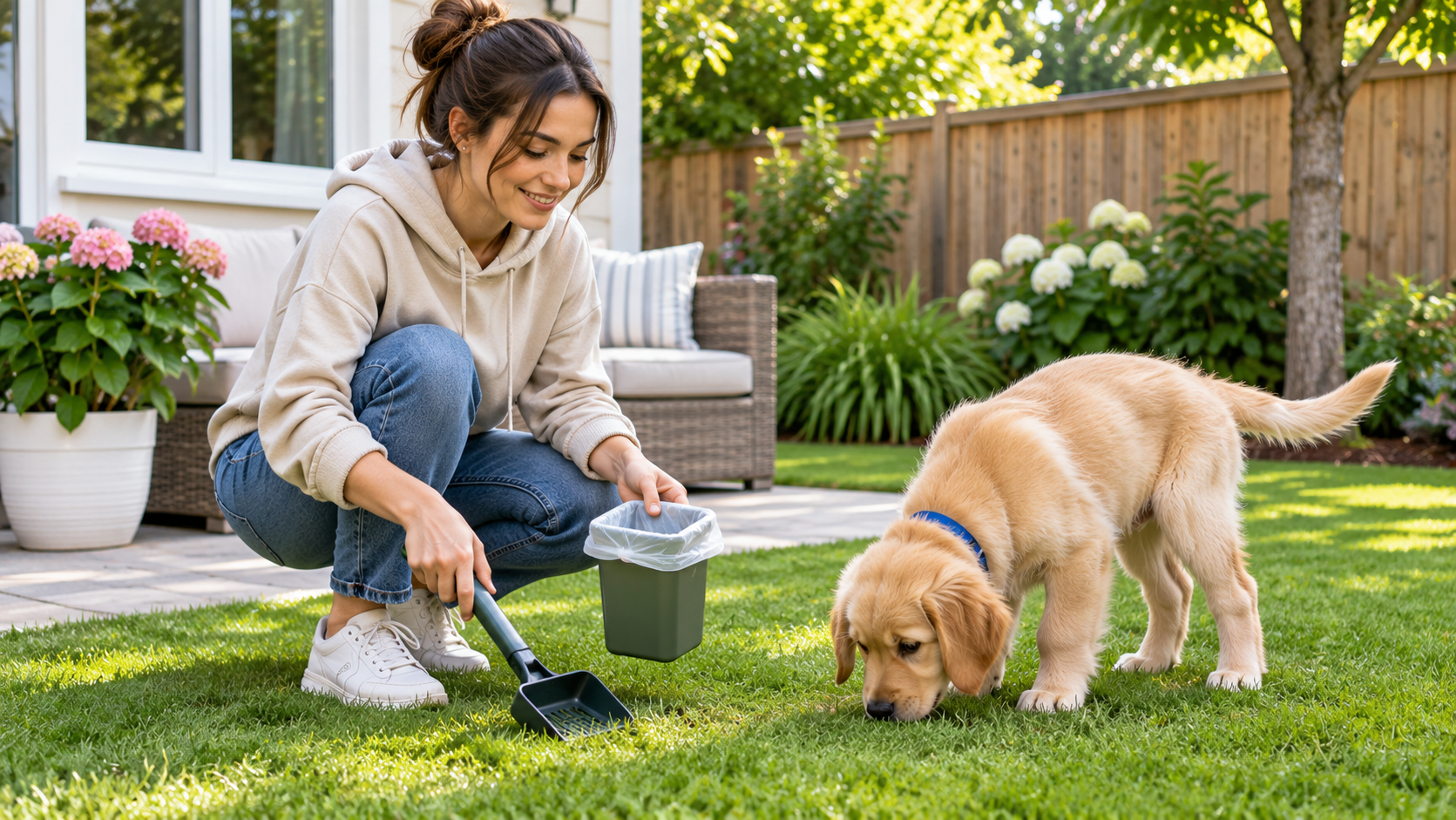
- Pick up immediately. Remove stool as soon as your dog finishes, and clear older deposits from the yard.
- Supervise yard time. Go outside with your dog. After they finish, call them to you, reward them, and clean up before they can turn back.
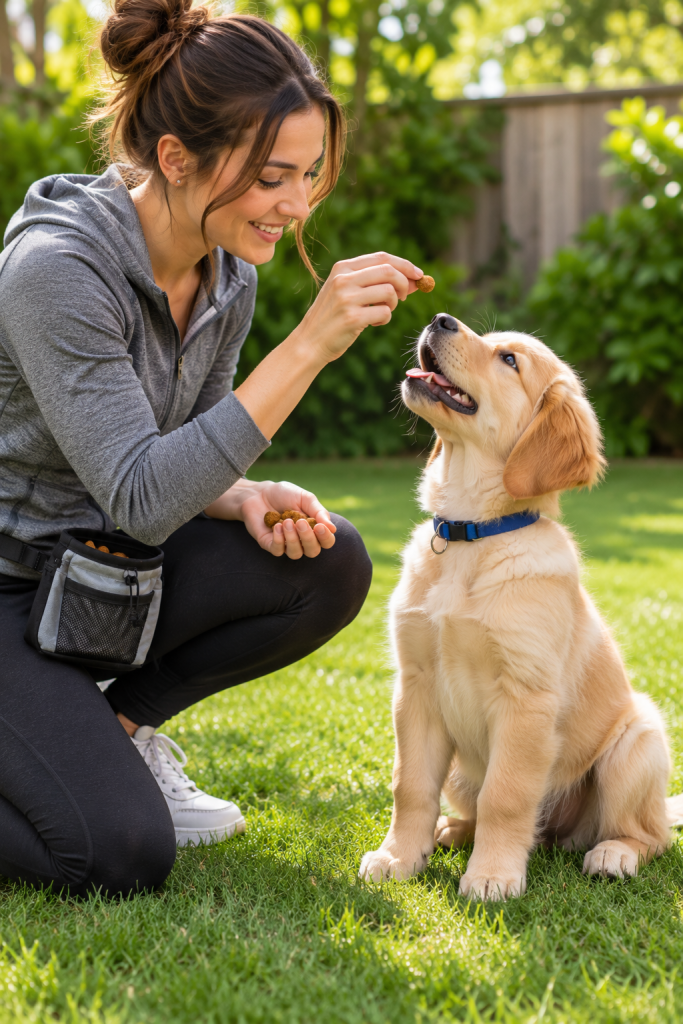
- Practise recall. Start indoors or in a quiet area. Reward your dog for coming, then gradually practise in the yard. Do not use the cue only when taking something away.
- Teach “leave it” as a trade. Begin with a low-value item. Reward your dog for turning away and looking back at you, then build up gradually. Moving away should pay better than grabbing the item.
- Use a leash on walks. Guide your dog past other dogs’ waste, wildlife droppings, and litter. Scan ahead and reward them for walking on with you.
- Discuss taste deterrents with your vet. Some oral or food-based products are intended to make stool less appealing, but results are inconsistent. They cannot replace cleanup and training.
Stay consistent rather than expecting one session to solve it. If your dog slips up, return to the plan at the next opportunity.
What not to do
Do not punish your dog after the fact. They are unlikely to connect a scolding with the earlier act; punishment may teach them to swallow stool quickly or hide when they poop. Avoid rubbing their nose in it, shouting, or using harsh deterrents. Chasing can also turn the moment into a game, making your reaction part of the reward.
Stay neutral, call your dog away, trade for a reward, and remove the stool. The goal is to teach a different response, not to frighten them.
When eating poop means a vet visit
Arrange a vet visit if an adult dog suddenly starts eating poop, especially if the change persists. Also call if it comes with weight loss, ongoing loose stools, vomiting, increased appetite, or another change in normal behaviour.
A puppy that repeatedly eats littermates’ stool and seems unable to disengage should be mentioned to the vet too. Puppies explore with their mouths, but persistent behaviour is worth raising during routine care.
Your vet may ask what stool your dog seeks out, how often it happens, what they eat, and whether weight, appetite, or bowel movements have changed. A fecal test or other checks may be appropriate. Digestive or absorption problems are possibilities for a vet to assess, not conclusions you can draw from the habit alone. Mention it if the stool came from an animal taking medication.
Common questions about dogs eating poop
Why does my puppy eat his poop?
Puppies explore with their mouths and may copy their mother cleaning the litter. Supervise toilet breaks, pick up promptly, and reward your puppy for coming to you. Mention persistent behaviour to your vet, especially with diarrhea, poor growth, or appetite changes.
Is eating poop a sign my dog is missing nutrients?
Usually not. A deficiency is possible, but poop eating alone does not prove one. Check that your dog gets an appropriate complete diet and amount. Ask your vet about weight loss, unusual hunger, or abnormal stool.
Can dogs get sick from eating poop?
Yes. Contaminated stool can expose dogs to parasites and infectious organisms, although one episode does not mean illness will follow. Prevent further access, keep fecal checks current, and call your vet if symptoms appear.
Do taste deterrent products work?
Not reliably. Ask your vet whether one is appropriate, but keep cleanup, supervision, and training as the foundation.
Will my dog grow out of eating poop?
Some puppies stop as they mature, but others continue into adulthood. Start cleanup and training now, and involve your vet if the habit is frequent, newly appearing, or paired with other changes.
The bottom line
Dogs eat poop for ordinary behavioural reasons, learned habits, and sometimes medical issues that need a vet’s assessment. Make stool unavailable, supervise outdoor time, reward your dog for coming away, and review the food and routine. If the habit starts suddenly or comes with weight loss or digestive changes, involve your veterinarian. Calm consistency beats punishment.