Changing your dog’s food seems simple enough. Buy the new bag, fill the bowl, and let your dog enjoy something different. But switching foods too quickly can leave you dealing with loose stools, gas, an upset stomach, or a dog that suddenly refuses dinner.
A progressive dog food changeover timetable is the simplest strategy to prevent an unneeded digestive disturbance. You gradually introduce the new formula while lowering the quantity of the old food rather than replacing it entirely at once.
For most dogs, a seven-day schedule is a practical starting point. Some dogs need more time, particularly those with sensitive stomachs, puppies adjusting to a new life-stage formula, or older dogs with established eating routines.
Below, you’ll find a straightforward seven-day chart, a slower 10-14 day alternative, and the signs that tell you when to slow down.
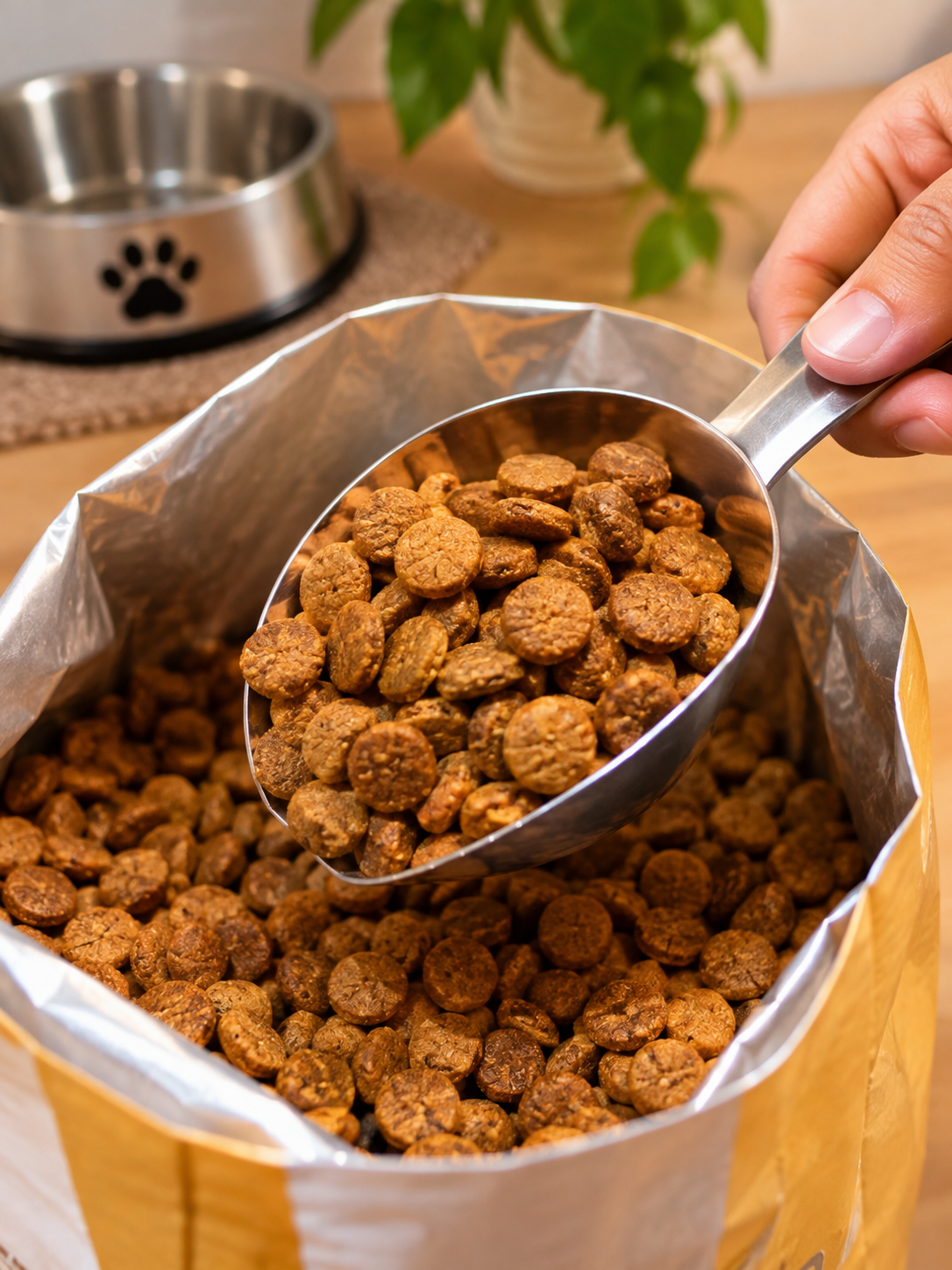
Dog food transition schedule: the short answer
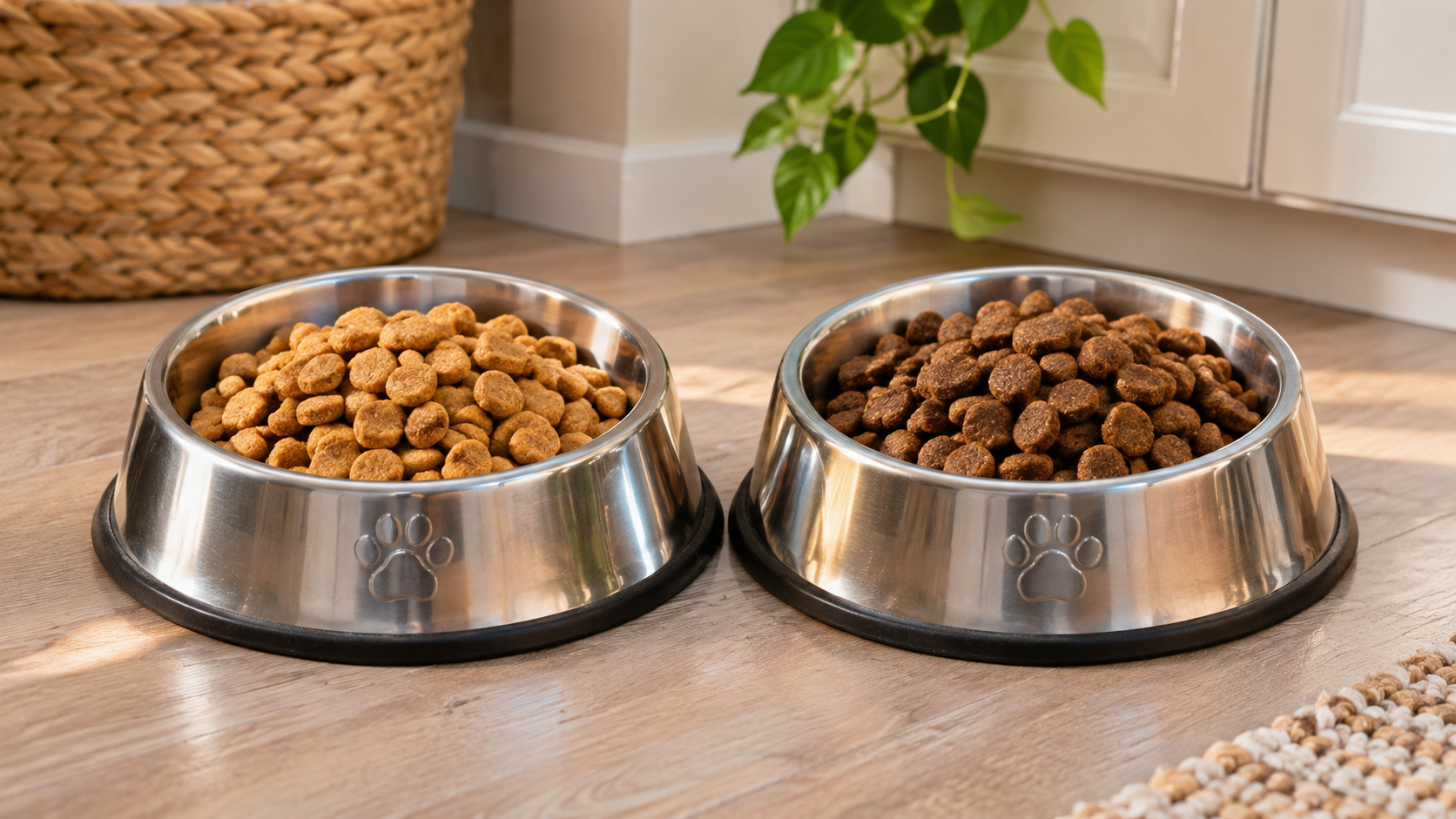
Rather than implementing an entirely new food all at once, this method allows your dog’s digestive system time to get used to the new formula.
- Mix a small amount of new food into the old food on the first day.
- Increase the amount of new food and reduce the old food every two days.
- Let your dog settle at each step before moving on.
- Complete the transition in about seven days, or up to 14 days for sensitive dogs.
The 7-day dog food transition schedule
The following chart offers a standard starting point. You can adjust it based on your dog’s tolerance, but the general idea stays the same: increase the new food gradually while decreasing the old food.
| Day(s) | Old Food | New Food | What to watch for |
|---|---|---|---|
| Days 1-2 | 75% | 25% | Normal appetite and firm stools |
| Days 3-4 | 50% | 50% | Mild gas or slight stool changes may appear |
| Days 5-6 | 25% | 75% | Stools should be stabilizing |
| Day 7 | 0% | 100% | Comfortable eating and regular digestion |
Keep treats, supplements, and other extras consistent during this period. Changing too many things at once makes it harder to know whether the new food is the issue if your dog has digestive changes.
When to use a slower 10-14 day transition
Different dogs react differently to a change in food. While some dogs require minor changes over an extended period of time, others go through a seven-day regimen without any apparent issues.
A slower schedule is especially helpful for:
- Puppies moving to a different formula
- Senior dogs with more sensitive digestion
- Dogs that have had digestive issues in the past
- Large changes, such as switching from a low-fiber diet to a high-fiber diet, or from a grain-based formula to a grain-free formula
| Day(s) | Old Food | New Food | What to watch for |
|---|---|---|---|
| Days 1-3 | 75% | 25% | Watch for early changes in stools |
| Days 4-6 | 50% | 50% | Monitor appetite and energy |
| Days 7-10 | 25% | 75% | Wait for more stable stools before moving on |
| Days 11-14 | 0% | 100% | Transition complete once digestion is stable |
If your dog’s stools stay loose or your dog loses appetite, you can stay at the current step for another day or two before continuing. This is normal, and it doesn’t mean the new food is unsuitable.
This cautious approach matches advice from Cornell University College of Veterinary Medicine to ease dietary changes gradually, particularly when a dog is sensitive to new ingredients or formula types.
Signs the switch is going too fast
Although your dog can’t tell you that the new meal is hard for them to get used to, changes in their regular behaviour and digestion might give you helpful hints.
- Soft or loose stools
- More gas than usual
- Reduced interest in food
- Mild stomach discomfort or restlessness after meals
If you notice these signs, go back one step — for example, from 50/50 to 75% old food and 25% new food — and hold that ratio for a few extra days. Moving more slowly often allows digestion to settle.
If digestive problems continue, worsen, or come with vomiting, blood in the stool, or your dog refuses to eat for more than a day, speak to your veterinarian. These signs may need professional attention and are beyond what a general feeding guide can address.
Transitioning at different life stages
Food changes often happen at life-stage milestones, and the transition approach remains similar in each case.
- Puppy to adult food: Most dogs move to adult food between 12 and 18 months, although larger breeds may stay on puppy food longer. Use a gradual transition over 7-14 days, and follow the guidance on the new food’s packaging for appropriate daily amounts.
- Adult to senior food: Senior diets may have different calorie levels and nutrients to support older dogs. A slower transition is often better, especially if your dog is used to the same food for many years.
Our puppy food chart provides more guidance on feeding by age. VCA’s guidance on timing the switch from puppy food to adult food is helpful reading when planning a change based on breed size and age.
Common transition mistakes
Even a good transition schedule can become difficult if a few common errors creep in.
- Switching cold turkey: Replacing all of the old food at once is the most common cause of digestive upset.
- Changing food and treats at the same time: Introducing new treats, chews, and food together makes it harder to identify what caused a problem.
- Giving up at the first soft stool: A single loose stool doesn’t mean the new food has failed. Slow down instead of abandoning the transition entirely.
- Switching too often: Changing food frequently doesn’t give your dog’s digestion time to settle and can create ongoing sensitivity.
If you are changing formulas and need help planning cost, the dog food cost calculator can help you see what a new food may cost over time.
Frequently asked questions
How long should you transition dog food?
Most dogs do well with a transition of about seven days. Sensitive dogs, puppies, seniors, and dogs with digestive problems may need 10-14 days instead. Stay at each step until your dog’s digestion stabilizes before moving on.
Can you switch dog food without transitioning?
You can, but it is more likely to cause digestive upset. A sudden switch gives your dog’s digestive system no time to adjust to different ingredients, protein sources, or fiber levels. A gradual transition is safer and more comfortable.
What happens if you switch dog food too fast?
A fast switch can cause soft stools, gas, reduced appetite, and general stomach discomfort. In most cases, going back one step and slowing the transition is enough. If symptoms persist or worsen, contact your veterinarian.
How do I transition a puppy to adult food?
Follow the same gradual process: start with 75% puppy food and 25% adult food, then increase the adult food every two days. Most puppies move to adult food between 12 and 18 months, with larger breeds often transitioning later. Use a 10-14 day schedule if your puppy has a sensitive stomach.
Should I transition if my dog refuses the new food?
Yes — refusal is often a sign that the new food was introduced too quickly or that the flavor or texture is very different. Try mixing a smaller amount of new food with the old food and increasing it very slowly. Warming the food slightly or adding a small amount of water can also make it more appealing. If refusal continues for more than a day or two, speak to your veterinarian to rule out other issues.
Conclusion: Give your dog time to adjust
It doesn’t have to be difficult to make a successful eating switch. Aim to finish the switch in roughly seven days by starting with 75% old food and 25% new food, then progressively increasing the new formula.
If your dog needs a slower schedule, use a 10-14 day transition instead. That extra time can make a big difference, especially for puppies, seniors, and dogs with sensitive stomachs.
With a little patience and a clear schedule, you can help your dog adjust comfortably — and avoid the loose stools and mealtime stress that come from switching too quickly.