What to feed a puppy to gain weight: the short answer
Feed a complete and balanced puppy food, check its calorie content, and make any portion increase gradually. If your puppy needs a little more fuel, a slightly larger measured daily amount divided across an extra small meal may help. The goal is steady growth that fits the puppy’s age and expected adult size, not fast fattening.
First, check whether your puppy is truly underweight or simply lean. One weigh-in cannot show a growth pattern. Weigh once a week on the same scale and record the result. If weight is falling, growth has stalled, or your puppy looks very thin, arrange a veterinary check before trying to fix the problem with extra food.
Start with a complete puppy food, not extras
The main diet does the important work. A food labeled complete and balanced for growth is designed to provide the energy, protein, fat, vitamins, and minerals puppies need as they develop. Adult maintenance food, plain meat, and homemade mixtures are not reliable substitutes. Check the package’s nutritional adequacy statement: it should say the food is formulated for growth or all life stages. For a large-breed puppy, choose a food whose statement also covers growth of large-size dogs.
Next, look at calorie density. Under “Calorie Content,” the label lists kilocalories (kcal), often per cup, can, or kilogram. Kcal per cup helps compare dry foods when the serving size is measured the same way. A higher-calorie puppy formula may provide more energy in a similar volume, which can help a puppy that struggles to eat larger portions. Do not compare dry food’s kcal per cup directly with wet food; moisture and serving sizes differ. Compare the calories in the amount you actually feed.
“Calorie-dense” does not automatically mean “better.” The food still needs to be balanced for puppy growth. Too much energy can encourage an unnecessarily fast growth rate and excess body fat, especially in large-breed puppies. Aim for steady development, not the fastest possible increase on the scale.
The gradual increase plan
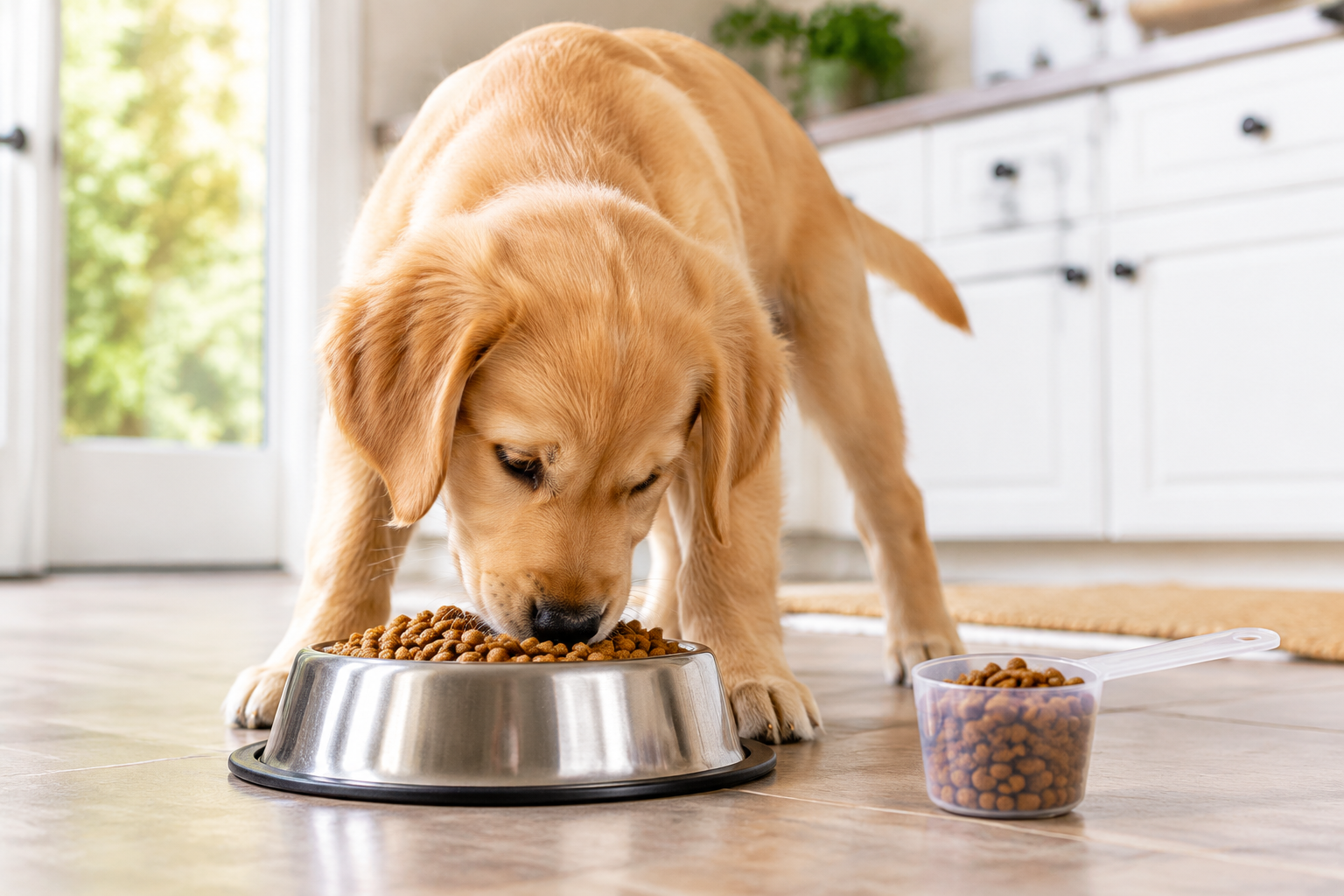
Before changing anything, record the food, the amount offered each day, how much is actually eaten, and your puppy’s weight. Measure meals instead of guessing, and make sure everyone in the household follows the same daily allowance.
Use this as a cautious starting framework, not a prescription for every puppy:
| Step | Change | How long to hold |
|---|---|---|
| 1. Baseline | Measure the current daily amount, note leftovers, and record weight. | 3–4 days |
| 2. Small increase | If your puppy is otherwise well and the food is suitable for growth, increase the measured daily total by a small amount. Avoid a large jump. | 3–4 days |
| 3. Divide meals | Split the adjusted total into one additional small meal, if appropriate for your puppy’s age and routine. | Continue consistently |
| 4. Check progress | Weigh weekly on the same scale and compare the trend with an age- and size-appropriate growth chart or your vet’s expected range. | Review weekly |
| 5. Reassess | If growth is still not on track, do not keep adding food indefinitely. Review the diet, records, body condition, and possible health causes with your vet. | At the next review |
Change one thing at a time. Increasing portions, changing foods, and adding several extras together makes it hard to tell what helped or caused digestive trouble. Hold a small adjustment for several days while watching appetite and stool quality; use the weekly weigh-in to judge the trend rather than reacting to daily fluctuations.
Meal frequency depends on age and size. Many young puppies do better with several small meals. An extra meal should divide the daily amount into manageable portions, not add a full serving on top of an already generous ration. Package feeding directions are a starting point and may need individual adjustment.
Healthy extras that add calories
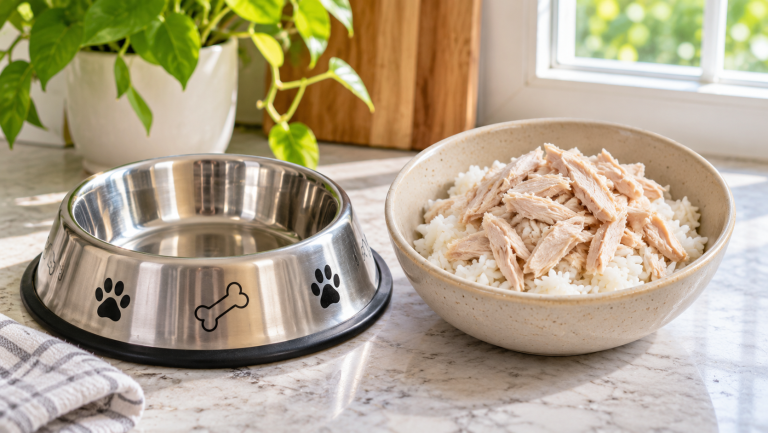
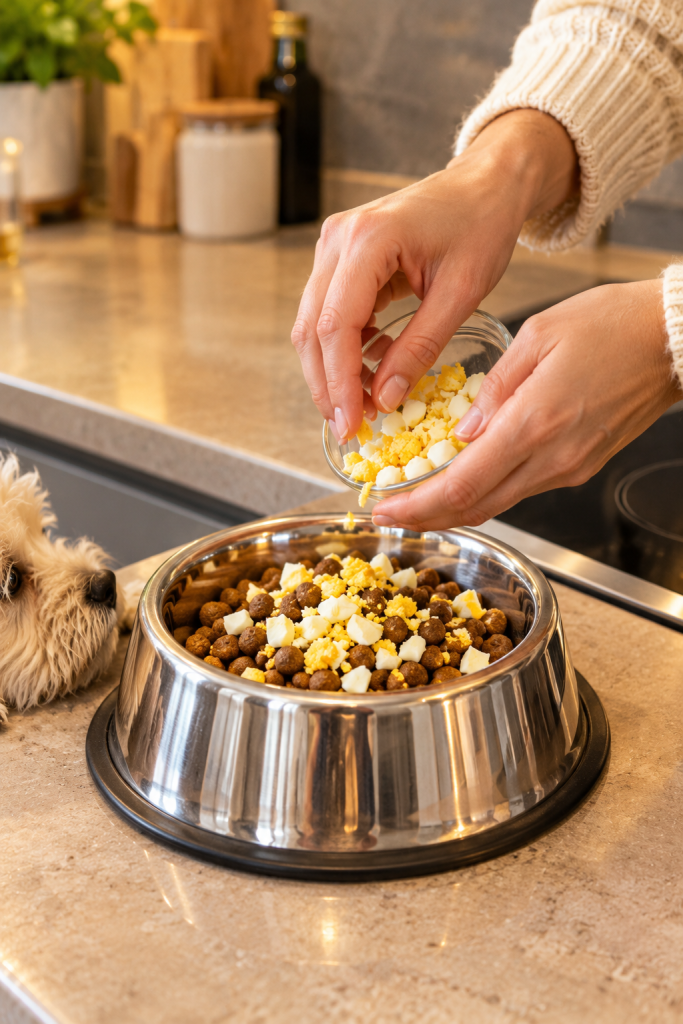
If your puppy is eating a balanced growth food and your veterinarian is comfortable with a small topper, you can add a little plain cooked egg, unseasoned cooked meat, or complete wet puppy food. Keep portions small. These are additions, not the foundation of a weight-gain plan, and they should not crowd out the balanced puppy food.
Complete wet puppy food is often the simplest topper because it is made for the same life stage. With egg or meat, keep it plain and cooked through, without butter, oil, salt, sauces, onion, garlic, or seasoning. Introduce one new item at a time and stop if it causes digestive upset.
For growing puppies, extras should remain a small share of daily calories. A common general limit for treats and other foods is around 10%, with most calories coming from complete and balanced food. Very young or small puppies may need an even simpler diet, so ask your vet before adding human foods.
What not to feed for weight gain
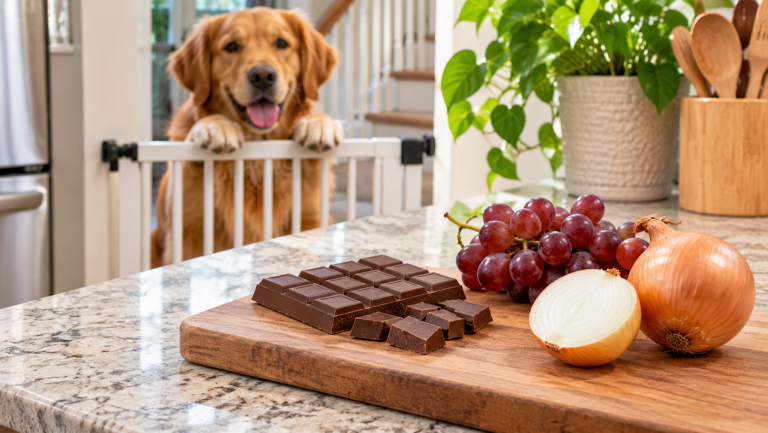
Fatty table scraps, fried food, processed meat, and calorie-heavy leftovers are not safe shortcuts. They can upset a puppy’s stomach and displace balanced food. Growth depends on the right overall nutrient balance, not simply extra fat or protein.
Cow’s milk is not a dependable weight-gain supplement. Many puppies do not tolerate it well, and it can cause loose stools or digestive discomfort. Adding milk may create another problem rather than solve poor growth.
Avoid suddenly doubling the portion. A sharp increase can cause vomiting, diarrhea, or discomfort, and may encourage excessive growth instead of healthy development. This is especially important for large- and giant-breed puppies. Increase portions in measured steps and monitor body condition as well as weight.
Do not use adult “weight gainer” powders, high-calorie supplements, or vitamin-and-mineral products unless your veterinarian recommends them. Adult products may not have the nutrient balance a growing puppy needs. Extra calcium or other minerals can also unbalance a complete puppy diet. Review the growth food and daily amount rather than improvising with supplements.
Switching foods? Do it gradually
If the current food is not suitable for growth or you and your veterinarian decide to try a richer puppy formula, transition gradually. A sudden switch can upset digestion. A seven-day change is a common starting approach:
| Days | Old food | New food |
|---|---|---|
| 1–2 | 75% | 25% |
| 3–4 | 50% | 50% |
| 5–6 | 25% | 75% |
| 7 | 0% | 100% |
Percentages refer to the food portion, not an extra serving on top. Keep the total amount appropriate while the mix changes. If your puppy has a sensitive stomach or develops loose stools or vomiting, slow the transition and ask your veterinarian for guidance. Some dogs need longer than a week.
Frequently asked questions
What puppy food helps gain weight?
Choose a complete and balanced food formulated for growth, then compare its calorie content per cup or serving with other suitable puppy foods. A calorie-dense puppy formula may help when a puppy needs more energy in a manageable volume. The right choice depends on age, expected adult size, and health. Large-breed puppies need food appropriate for growth of large-size dogs.
How fast should a puppy gain on this plan?
There is no one weekly number for every puppy. Expected gain changes with age, breed, adult size, and development. Look for a consistent upward trend that follows an appropriate growth curve, alongside healthy body condition. Weigh weekly and ask your veterinarian what range is reasonable. The aim is modest, steady gain rather than rapid growth.
Can I feed my puppy more than the bag says?
Possibly, but make measured adjustments rather than treating the chart as an exact rule or a target to exceed. Package directions are estimates. Track the amount eaten, treats, weight, and body condition. If your puppy is underweight or not growing as expected, discuss the reason with your vet before making repeated increases.
Will puppy food put weight on an adult dog?
It may add calories, but puppy food is formulated for growth, not every adult dog’s needs. It is not a general-purpose weight-gain diet. An adult dog that is too thin should have the cause checked and receive food suited to their age and health.
What if my puppy still won’t gain?
Confirm the food is complete for growth, check the measured daily amount, note leftovers, and review weekly weights. If the trend remains flat or your puppy loses weight despite eating, book a veterinary examination. Parasites and digestive or other health problems can interfere with growth, so simply adding food may miss the cause. Seek prompt advice if poor gain comes with vomiting, diarrhea, low energy, reduced appetite, or a visibly thin body.
A steady plan is safer than fast weight gain
When deciding what to feed a puppy to gain weight, start with complete puppy food suited to the puppy’s life stage and expected adult size. Check the calorie information, measure meals, and make only small, gradual changes. A modest extra meal can make the daily ration easier to manage, while a little complete wet puppy food can add variety without replacing the balanced base diet.
Keep extras limited, transition to a new food over about seven days, and weigh weekly to judge the trend. Do not try to fatten a puppy quickly. If careful feeding does not lead to steady growth, or your puppy seems unwell, a veterinary check is the next step. Healthy development is the goal, not the fastest possible gain.