
Puppy food vs adult food: the short answer
Puppy food and adult dog food are formulated for two different jobs. Puppy food supports growth, while adult food provides the nutrients a fully grown dog needs to maintain a healthy body.
In general, puppy food contains more protein, fat, calories, and growth-related minerals per amount of food. It may also include DHA, an omega-3 fatty acid that supports developing brains and eyes. Adult food is formulated around maintenance rather than rapid growth, so it does not need to provide the same nutrient profile.
What happens if your dog eats the wrong type? An adult dog eating puppy food for a few days is generally not a concern. A puppy accidentally eating adult food once or twice is usually not a disaster either. The concern is making the wrong food a regular diet over months, especially during a puppy’s development.
The goal is simple: feed a complete and balanced food that matches your dog’s current life stage and expected adult size.
The differences, side by side
The differences are not just marketing words on the front of a bag. Puppy and adult formulas have different nutritional targets, particularly for protein, fat, energy, and minerals.
| Nutrient or feature | Puppy food | Adult food |
|---|---|---|
| Protein | Higher minimum to support growing muscles and tissues. AAFCO growth profile minimum: 22.5% on a dry-matter basis | Lower minimum for maintenance. AAFCO adult profile minimum: 18% on a dry-matter basis |
| Fat and calories | Generally higher fat and more calories per cup to support growth and energy needs. Growth profile fat minimum: 8.5% | Generally lower fat and calorie density. Adult maintenance fat minimum: 5.5% |
| Calcium | Higher growth requirement, with controlled minimums and maximums. AAFCO range: 1.2–1.8% on a dry-matter basis | Different maintenance range. AAFCO range: 0.5–2.5% |
| Phosphorus | Growth profile range: 1.0–1.6% to support developing bones and normal body functions | Maintenance profile range: 0.4–1.6% |
| DHA | Commonly included to support brain and retinal development | Not a defining requirement of ordinary adult maintenance food |
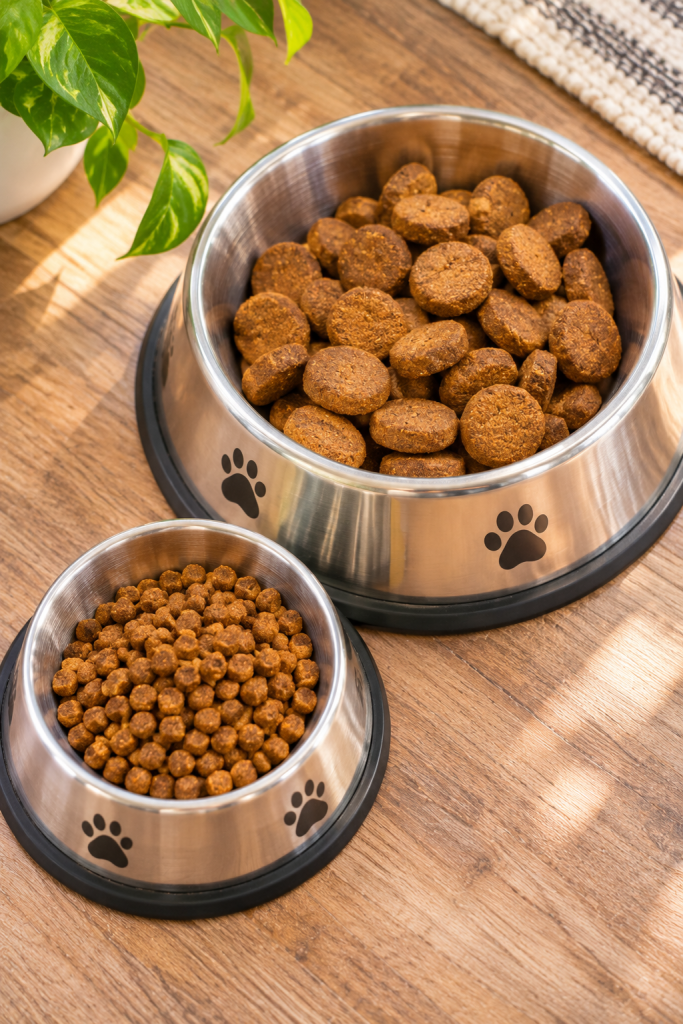
| Kibble size | Often smaller and easier for young puppies to manage | Usually designed for adult mouths, although sizes vary considerably |
The percentages above are AAFCO nutrient-profile levels on a dry-matter basis, not guaranteed-analysis figures for every bag. Individual recipes can contain more than the minimums.
There is an important detail when comparing labels. The guaranteed analysis on a food package reports nutrients on an as-fed basis, which includes moisture. AAFCO profiles use a dry-matter basis. This means you cannot always compare two protein or fat percentages directly, especially when comparing wet food with dry kibble.
Calorie density also varies between recipes. Check the calories per cup or kilogram rather than assuming every puppy food contains the same amount of energy.
The overall pattern is what matters: puppy food is designed to deliver the nutrients a growing dog needs in an appropriate balance, while adult food is designed to maintain an already-developed body.
Why puppies need puppy food
A puppy is not simply a smaller adult dog. During the first months of life, its muscles, bones, organs, nervous system, and other tissues are developing rapidly. That creates nutritional demands that are different from those of a mature dog.
Protein supports growing tissues. Puppies need adequate high-quality protein to build and maintain muscles and other body tissues. Their nutritional requirements are higher than those of adult dogs, which is reflected in the growth nutrient profile.
Fat supplies concentrated energy. Growing puppies generally need more energy relative to their body size than mature dogs. Fat provides concentrated calories and supplies essential fatty acids that contribute to normal development.
Calcium and phosphorus support bones. These minerals are essential for skeletal development. However, more is not automatically better. Puppies need appropriate amounts and a suitable balance between calcium and phosphorus, not unlimited mineral intake.
DHA supports brain and eye development. DHA is a long-chain omega-3 fatty acid involved in the development of the brain and retina. Puppy diets commonly account for this developmental need.
Choosing a complete and balanced puppy food helps bring these nutrients together in the right proportions. Adding separate vitamin or mineral supplements without professional guidance can disturb that balance.
Why large-breed puppies need special attention
Large and giant-breed puppies have an additional nutritional consideration: their skeletons need to develop at a controlled pace.
A puppy expected to weigh around 70 pounds or more as an adult may need a food specifically formulated for large-breed growth. These diets pay particular attention to calcium levels and calorie intake.
Too much food can encourage excessively rapid growth, and excessive calcium can interfere with normal skeletal development. Faster growth is not necessarily healthier growth. Maintaining a suitable body condition and following appropriate feeding amounts are important parts of supporting developing joints and bones.
When checking a package, look for an AAFCO nutritional adequacy statement that specifically includes growth of large-size dogs, generally those expected to weigh 70 pounds or more as adults.
A regular puppy formula is not automatically suitable for every large-breed puppy. The size-specific statement matters.
Can an adult dog eat puppy food?
Yes. Most healthy adult dogs can eat puppy food occasionally or for a short period without suffering harm. Eating a bowl that belongs to the puppy in the household is not usually a reason to panic.
The bigger issue is what happens when puppy food becomes the adult dog’s everyday diet.
Puppy formulas are generally more calorie-dense. An adult dog that receives the same amount of puppy food it previously received in adult food may take in more calories than it needs. Over time, this can lead to unwanted weight gain.
Extra calories can be particularly problematic for dogs that are less active, have been spayed or neutered, or already have difficulty maintaining a healthy weight.
There are situations where a growth-and-reproduction formula may be appropriate for an adult dog:
- An underweight adult dog may need a more energy-dense diet under veterinary guidance.
- A pregnant or nursing female has increased nutritional demands and may benefit from a complete growth-and-reproduction diet.
- An adult dog with a particular medical or nutritional need may require a different feeding plan recommended by a veterinarian.
These exceptions do not mean puppy food is a better everyday choice for ordinary adult dogs. It is the dog’s actual nutritional needs, rather than the word “puppy” on the package, that should guide the decision.
Can a puppy eat adult food?
This is generally the more important mistake to avoid.
An occasional meal of adult food is unlikely to cause a nutritional problem in an otherwise healthy puppy. Puppies can also accidentally eat from an adult dog’s bowl without that single incident becoming an emergency.
However, adult maintenance food is not necessarily formulated to supply everything a growing puppy needs. It may provide less protein, fat, energy, and certain growth-related nutrients than a complete puppy diet.
If adult food becomes the puppy’s main diet for an extended period, the puppy may not receive the appropriate nutritional support for normal development. This is especially important during the months when bones, muscles, and other tissues are developing quickly.
The risk is not that one adult-food meal will suddenly harm a puppy. It is the possibility of a nutritional shortfall when an unsuitable food replaces a balanced growth diet over time.
If your puppy has eaten adult food for a day or two, return to an appropriate growth formula and continue its normal feeding routine. If adult food has been the main diet for several weeks or months, discuss the diet and the puppy’s growth with your veterinarian.
For puppies expected to become large or giant dogs, make sure the replacement formula is appropriate for their expected adult size.
What about ‘all life stages’ food?
All-life-stages dog food is designed to provide complete and balanced nutrition for more than one recognized life stage. That generally includes growth and reproduction, as well as adult maintenance.
In practical terms, the food is formulated to meet the nutritional needs of growing puppies. The amount fed changes according to the dog’s age, weight, activity, and stage of life.
An adult dog usually needs a different portion from a rapidly growing puppy eating the same food. This is why the feeding instructions on the package should include directions for different life stages.
There is one important detail for large-breed owners. Not every all-life-stages food is appropriate for large-breed puppy growth. Check that the nutritional adequacy statement specifically includes growth of large-size dogs when your puppy is expected to reach that size.
All-life-stages food can be a convenient option in households with dogs of different ages. However, stage-specific food is simpler for most owners because the nutritional targets and feeding directions are designed around the dog’s current needs.
Do not assume that a food is suitable for every dog simply because its front label says “all life stages.” Read the nutritional adequacy statement on the back or side of the package.
Frequently asked questions
Does puppy food have more protein than adult food?
Generally, yes. Puppy food is formulated for growth, and the AAFCO minimum crude protein level is 22.5% on a dry-matter basis for growth and reproduction, compared with 18% for adult maintenance. Individual recipes can contain higher amounts, so the label still matters.
Is puppy food bad for adult dogs?
Not inherently. A healthy adult dog can generally eat puppy food occasionally without a problem. However, regular feeding may provide more calories than the dog needs, increasing the likelihood of weight gain. Adult maintenance food is usually the more appropriate everyday choice.
Is puppy food good for senior dogs?
Usually, it is not the default choice for a senior dog. Older dogs can have different energy, muscle-maintenance, and health needs, and a calorie-dense puppy formula may encourage weight gain in a less active dog. Some senior dogs need extra calories or a particular nutrient profile, but that decision should be based on their individual condition and veterinary advice.
Does puppy food make dogs gain weight?
It can contribute to weight gain in adult dogs because puppy food is generally more calorie-dense. However, weight gain depends on the total calories consumed, the dog’s activity, and its individual energy needs. A puppy eating an appropriate portion of puppy food does not automatically become overweight.
Can puppy food hurt an adult dog?
An occasional serving is unlikely to hurt a healthy adult dog. Long-term feeding is a different matter because the extra calories and growth-oriented nutrient profile may not suit the adult dog’s maintenance needs. Dogs with existing health conditions should have their diet assessed individually.
Conclusion
The difference between puppy food and adult food comes down to the stage of life each formula is designed to support. Puppies need a more growth-focused nutritional profile, including higher minimum protein and fat levels, appropriate calories, controlled minerals, and developmental nutrients such as DHA. Adult dogs generally need a maintenance diet that supplies balanced nutrition without unnecessary extra calories.
An occasional mix-up between bowls is usually not a serious concern. The important part is avoiding the wrong food as a long-term routine. Choose a complete and balanced formula for your dog’s life stage, pay special attention to large-breed growth requirements, and adjust portions to maintain a healthy body condition.
When your puppy reaches maturity, ask your veterinarian when to transition to adult food. The right timing depends on expected adult size and individual growth, not simply the puppy’s first birthday.