Why is my dog gaining weight? The short answer
If your adult dog is gaining weight, the most common explanation is that they are taking in more calories than they use. The difference does not have to be dramatic. A slightly larger scoop of kibble, a few extra treats, table scraps, or shorter walks can gradually add up.
There is another important factor: spaying or neutering can lower a dog’s calorie needs. Hormonal changes after surgery can affect energy requirements and appetite. That means the same bowl of food that maintained your dog’s weight before surgery may now provide more calories than they need.
Age, changes in routine, and switching to a richer food can also contribute. The first step is to check whether your dog is actually carrying extra body fat. Then look at their portions, treats, and activity level before making measured changes.
Gradual weight gain is easy to miss because you see your dog every day. Tracking their weight and body condition makes the pattern easier to recognize.
The everyday causes
Most adult weight gain has a practical explanation. It often comes from small changes in feeding or activity rather than one obvious mistake.
| Cause | Clues it fits | First fix |
|---|---|---|
| Portion creep and unmeasured food | Scoops have gradually become larger, meals are free-fed, or several people feed the dog | Measure each meal consistently and record the daily amount |
| Treats and table scraps | Training rewards, chews, leftovers, and snacks are not counted as part of daily food | Track every extra and include treat calories in the daily total |
| Less exercise | Walks have become shorter, outdoor play has dropped, or the dog’s routine has changed | Rebuild a consistent activity routine gradually |
| Post-spay/neuter changes | Weight starts increasing after surgery even though the food amount has stayed the same | Reassess portions against the dog’s new energy needs |
| Ageing and slowing down | Your dog sleeps more, plays less, or has a quieter daily routine | Review food amounts and activity as their lifestyle changes |
| A richer new food | You changed brands or formulas but kept feeding the same volume | Compare calories per cup or serving and adjust the portion accordingly |
Portion creep is easy to overlook
A portion that looks reasonable is not necessarily the right portion for your dog. Scooping directly from a bag, using different-sized cups, or filling a bowl without measuring can gradually increase the amount being fed.
It also helps to check whether everyone in the household follows the same feeding routine. One person may give breakfast, another may offer an afternoon snack, and someone else may share dinner leftovers.
Treats count, even when they are small
A training session can involve several treats, while a chew or a few bites of human food may seem insignificant. Together, these extras can add a considerable number of calories.
The American Animal Hospital Association recommends keeping treats and table scraps to no more than 10% of a pet’s total daily calories. The rest should come from a nutritionally complete diet. You can read its weight-management guidance for more detail.
Weight gain after spaying or neutering: what actually changes
Weight gain after spaying or neutering is common enough to deserve its own discussion, but it is not inevitable.
Hormonal changes following surgery can reduce energy requirements and affect appetite. In practical terms, a dog may need fewer calories to maintain the same body weight while still showing plenty of interest in food.
Veterinary nutrition references account for this difference when estimating daily energy requirements. For example, the Merck Veterinary Manual lists different general maintenance energy estimates for intact and neutered adult dogs. These are starting points, not universal feeding instructions. Individual needs still vary.
The important adjustment is usually the food allowance, not blaming the surgery or assuming weight gain is unavoidable.
During the first few months after surgery:
- Keep track of your dog’s weight and body shape.
- Measure meals rather than relying on the previous serving size.
- Review treats, chews, and food extras.
- Ask your veterinarian whether the daily calorie allowance needs adjusting.
- Keep regular walks and playtime appropriate for recovery and fitness.
A neutered dog can absolutely stay lean and healthy. The goal is to match food intake to current energy needs rather than automatically continuing the old feeding amount.
Female dogs can experience similar changes after spaying. The same principle applies: reassess portions, monitor body condition, and make adjustments based on the individual dog.
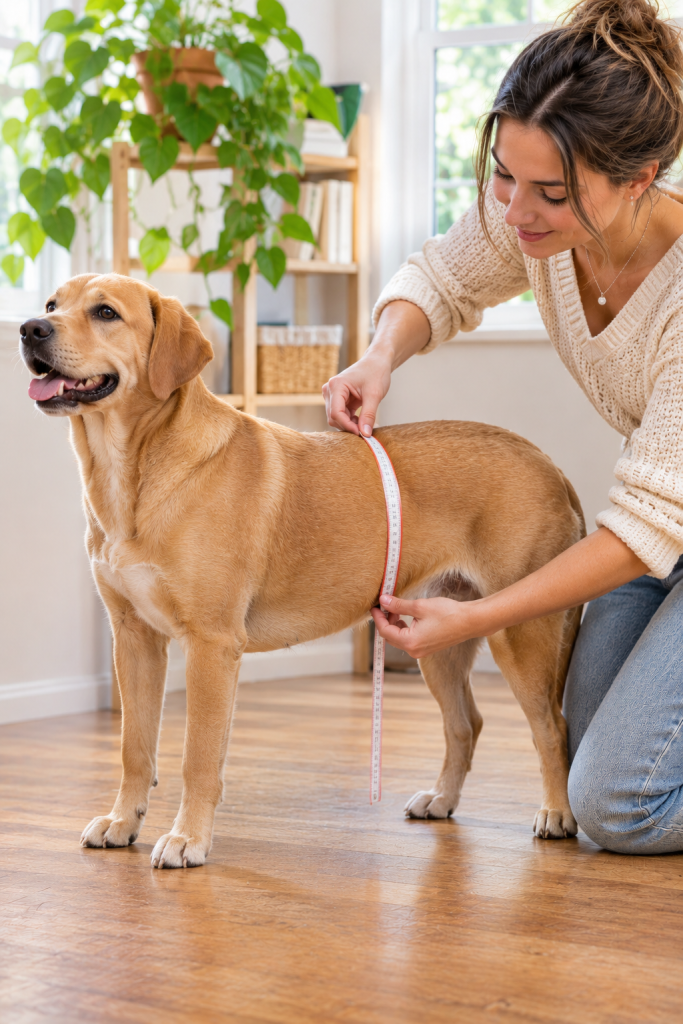
How to check your dog’s body condition
The number on the scale is useful, but it does not tell the entire story. Two dogs of the same breed and weight can have different builds, muscle mass, and body-fat levels.
A simple hands-on and visual check can help you recognize changes.
- Feel the ribs. Run your hands gently along both sides of your dog’s rib cage. At an ideal body condition, you should be able to feel the ribs without pressing firmly. A noticeable layer of fat that makes the ribs difficult to find can suggest excess body fat.
- Look for a waist. Stand above your dog and look down toward their back. Their body should narrow behind the rib cage, creating a visible waist. If the body looks equally wide from the ribs through the hips, check for additional fat coverage.
- Check the side profile. Look at your dog from the side while they are standing naturally. The abdomen should rise behind the rib cage rather than hanging in a rounded, straight line.
These checks form part of a veterinary body condition score, commonly assessed on a nine-point scale. Scores around 4–5 are generally considered ideal. The WSAVA dog body condition chart provides helpful visual comparisons.
- Weigh your dog monthly. Use the same scale when possible and record the result. Try to weigh your dog under similar conditions each month so you can compare trends rather than individual fluctuations.
- Compare the result with breed guidance. A breed weight chart can provide useful context, especially when it separates adult males and females. However, breed ranges are not individual targets. Your dog’s frame, build, and body condition matter just as much as the number.
A healthy-looking body shape and a consistent weight trend are more useful than trying to match an arbitrary breed average.
The measured fix: food, treats and movement
Once you have checked your dog’s body condition, focus on changes you can measure. Avoid making several large changes at once. A consistent routine makes it easier to see what is working.
Weigh the food instead of guessing
Start by recording how much your dog currently eats in a full day. Include breakfast, dinner, snacks, and anything added to the bowl.
A kitchen scale can help you measure dry food in grams. This is often more consistent than relying on a loosely filled measuring cup.
Check the food label for its calorie content. Two foods can have noticeably different calorie amounts per cup, even when the portions look similar.
Feeding directions on packaging are useful starting points, but they do not automatically account for every dog’s activity level, age, body condition, or metabolism.
Count treats inside the daily total
Treats should not be an invisible addition to your dog’s regular meals.
You can make this easier by preparing the day’s treat allowance in advance. Use part of the dog’s measured kibble as training rewards, or choose suitable lower-calorie treats in controlled portions.
Remember to count dental chews, food toppers, table scraps, and edible rewards. A small amount from several people can become a large amount over the course of a week.
Use an appropriate calorie target
Your dog’s ideal calorie intake depends on factors such as:
- Current and target body weight
- Age and activity level
- Neutering status
- Breed and individual metabolism
- Current food and body condition
A veterinarian can estimate a suitable daily calorie target using your dog’s ideal weight and individual needs. This is especially helpful when your dog is already overweight or has other health considerations.
Do not simply copy another dog’s feeding plan. Even dogs of similar size may need different amounts.
Build activity back gradually
Movement supports healthy weight management, but suddenly increasing exercise is not always the right approach.
Start with activities your dog already handles comfortably. You might add a short walk, another gentle play session, or a little extra movement during the day.
As fitness improves, activity can be increased gradually. Adjust the routine to your dog’s age, physical ability, breed, and usual stamina.
Consistency matters more than occasional exhausting exercise sessions. Regular walking, play, and opportunities to move are easier to maintain over time.
Track weight and body condition alongside these changes. If the scale continues rising despite consistent portions and activity, discuss the pattern with your veterinarian rather than repeatedly cutting food.
When weight gain needs a vet
Not every change in body weight is explained by eating too much or exercising too little.
Arrange a veterinary assessment if your dog gains weight rapidly, experiences unexplained changes, or continues gaining despite no obvious increase in food.
Pay particular attention when weight gain happens alongside:
- Eating less than usual but becoming heavier
- Unusual tiredness or a noticeable reduction in normal activity
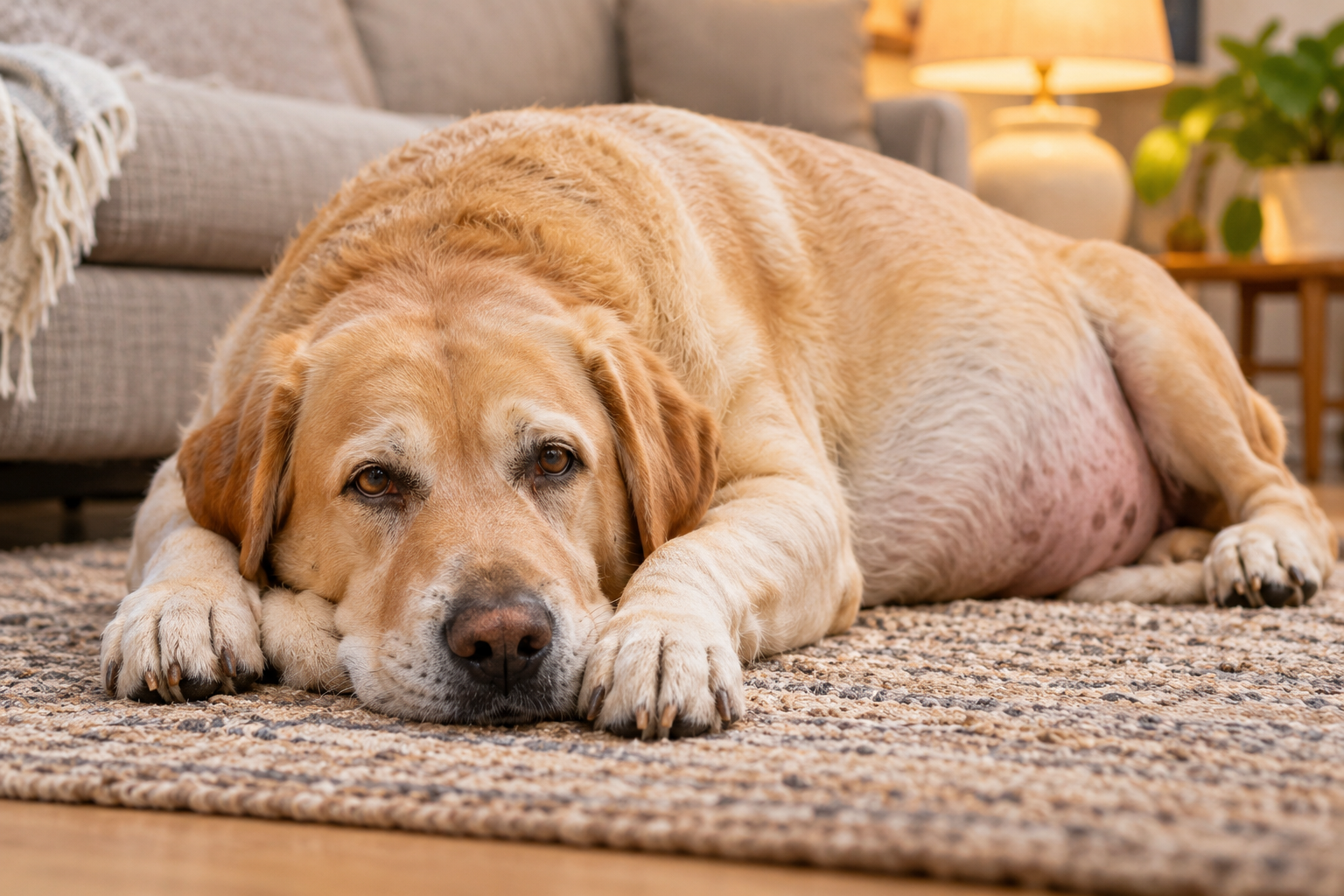
- A newly swollen, enlarged, or rounded abdomen
- Changes in drinking, appetite, movement, or general behavior
A swollen abdomen should not automatically be treated as ordinary weight gain. Abdominal enlargement can have different causes and deserves veterinary assessment. Contact a veterinarian promptly, particularly when swelling occurs with restlessness, discomfort, or changes in breathing.
Your veterinarian can review your dog’s weight history, diet, physical condition, and other changes to decide what needs checking.
The purpose of a feeding adjustment is to manage ordinary calorie balance, not to cover up a change that needs professional attention.
Frequently asked questions
Do dogs gain weight after being neutered?
They can. Neutering can reduce energy requirements and affect appetite, so a dog may gain weight when the previous food portion is continued unchanged. Measuring meals and reassessing calorie needs after surgery can help prevent this. Neutering does not mean weight gain is unavoidable.
Why has my dog gained weight suddenly?
A sudden change deserves more attention than gradual weight gain. Check whether food portions, treats, activity, or feeding routines have changed, but do not assume these explain everything. Contact your veterinarian, especially if the change is rapid, unexplained, or accompanied by abdominal swelling or other unusual symptoms.
Why is my dog gaining weight but eating less?
Weight gain despite eating less is not something to manage by simply cutting food further. Record the change, note your dog’s activity and general behavior, and arrange a veterinary assessment. The combination of reduced appetite and increasing weight deserves professional evaluation rather than assumptions about calorie intake.
How much should I cut my dog’s food?
There is no single reduction that suits every dog. First establish how much your dog actually eats, including treats and extras. Then ask your veterinarian to help set an appropriate calorie target. Make small, measured adjustments rather than suddenly removing a large portion of food, and monitor weight and body condition consistently.
Do female dogs gain weight after spaying?
They can. As with neutering in male dogs, changes following spaying can lower energy needs and affect appetite. The same feeding amount may become excessive if it is not reassessed. Measuring meals, counting treats, and monitoring body condition help keep weight under control.
Conclusion
When an adult dog gains weight, the first places to look are usually food portions, treats, activity, age, and changes following spaying or neutering. Small differences in daily habits can add up over time.
Start by checking your dog’s ribs, waist, and abdominal tuck. Record their weight monthly, measure their food, count treats, and build a consistent activity routine. Use your veterinarian’s guidance to establish an appropriate calorie target rather than making drastic feeding cuts.
Most importantly, do not dismiss rapid or unexplained weight gain as ordinary ageing or a feeding issue. A measured approach can help maintain a healthy body condition while making sure changes that deserve veterinary attention are not overlooked.