Boxer weight chart: the short answer
A healthy adult male Boxer typically weighs 65–80 pounds (29.5–36.3 kg), while an adult female usually weighs around 50–65 pounds (22.7–29.5 kg). Males are generally larger and heavier, although individual dogs can fall outside these ranges and still be healthy.
Height follows a similar pattern. According to the American Kennel Club, male Boxers typically stand 23–25 inches at the shoulder, while females stand approximately 21.5–23.5 inches.
Boxer puppies gain weight steadily during their first year, but their development does not stop when they celebrate their first birthday. They often go through a noticeably gangly adolescent stage, with long-looking legs and a relatively narrow chest. Their bodies continue filling out as muscle develops, particularly between ages 18 months and 3 years.
The figures in this Boxer weight chart are typical estimates rather than exact targets. Published growth references differ, and genetics, litter size, nutrition, activity, and individual development can all influence a puppy’s weight. Your Boxer’s overall body condition and consistent growth matter more than matching one particular number.
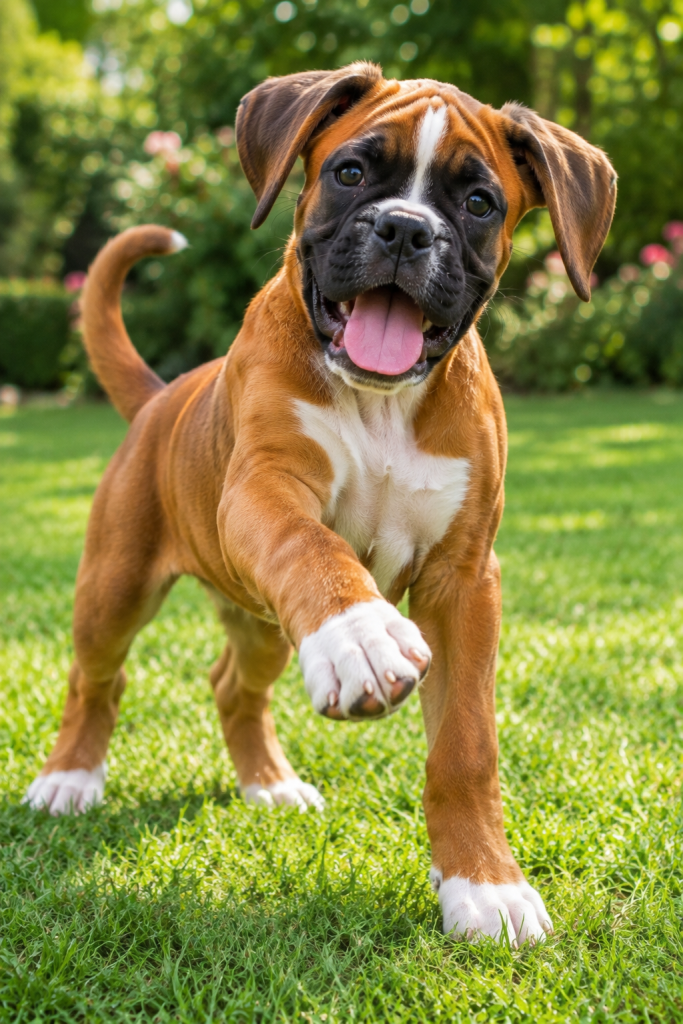
Boxer weight chart by age
The following table provides estimated weight ranges for male and female Boxers from 8 weeks through adulthood. Both pounds and kilograms are included to make tracking easier.
| Age | Male lb | Male kg | Female lb | Female kg |
|---|---|---|---|---|
| 8 weeks | 10–20 | 4.5–9.1 | 8–16 | 3.6–7.3 |
| 3 months | 20–28 | 9.1–12.7 | 16–26 | 7.3–11.8 |
| 4 months | 28–35 | 12.7–15.9 | 24–34 | 10.9–15.4 |
| 5 months | 33–43 | 15.0–19.5 | 30–38 | 13.6–17.2 |
| 6 months | 42–50 | 19.1–22.7 | 36–44 | 16.3–20.0 |
| 8 months | 50–60 | 22.7–27.2 | 44–54 | 20.0–24.5 |
| 10 months | 56–68 | 25.4–30.8 | 49–60 | 22.2–27.2 |
| 12 months | 60–72 | 27.2–32.7 | 50–62 | 22.7–28.1 |
| 18 months | 63–78 | 28.6–35.4 | 50–65 | 22.7–29.5 |
| Adult | 65–80 | 29.5–36.3 | 50–65 | 22.7–29.5 |
Important: These are broad reference ranges, not guaranteed weights or measurements from a single standardized study. Puppy growth charts use different data and methods, so their estimates can vary. The ranges above are intended to help owners understand general development, not establish a pass-or-fail weight target.
A puppy may be temporarily below or above the listed range without having a growth problem. Look at the direction of growth over several weeks rather than judging development from one weigh-in.
For example, a male Boxer weighing 40 pounds at six months would be slightly below this chart’s typical range, but that number alone would not establish that he is underweight. His frame, appetite, body condition, and previous weights all provide important context.
Boxer growth milestones
Boxers grow relatively quickly as puppies, but their development has several distinct stages. Understanding these stages can help explain why a young Boxer might look different from an adult of the same breed.
8 weeks to 4 months: Early puppy growth
This is an active period of physical development. Puppies gain weight, grow taller, and develop stronger legs and bodies. Their proportions are still changing, and they generally have a softer, more puppy-like appearance.
You may notice noticeable weight increases between weigh-ins. However, growth does not always happen at exactly the same rate each week. A short plateau followed by another growth spurt is not automatically a concern.
4 to 6 months: Rapid development
During this stage, many Boxers become visibly bigger and stronger. Their legs lengthen, their bodies become more substantial, and their appetite may increase to support continued growth.
This is also a useful time to establish consistent feeding portions and regular weight checks. Providing more food simply to make a puppy grow faster is not a good approach. Steady, healthy development is preferable to rapid weight gain.
6 to 12 months: The gangly adolescent stage
This is when many Boxers develop their familiar awkward, lanky appearance.
Their legs can appear disproportionately long, their chests may look narrow, and their bodies might seem less muscular than expected. Some owners worry that their Boxer is too thin during this stage.
Often, this is simply part of normal development. The body is still changing, and the adult muscular appearance has not fully developed.
12 to 24 months: Filling out
A Boxer can be close to adult height by this point while still developing a broader chest and stronger-looking muscles.
Weight gain usually becomes slower than during early puppyhood. Some dogs continue gaining gradually as their bodies mature, while others remain relatively stable for several months.
2 to 3 years: Physical maturity
Most Boxers have reached much of their adult physical size by around 18–24 months, but maturity can continue into the third year.
Males may continue developing a broader, more muscular appearance, while females generally retain a somewhat lighter build. Neither sex should be expected to gain weight continuously throughout this period.
The important distinction is that filling out with healthy muscle is different from accumulating excess body fat.
How much should a Boxer weigh?
The right weight for an individual Boxer depends on more than age and sex. Two dogs of the same age can have noticeably different frames, muscle development, and body proportions.
A tall, athletic male may naturally weigh more than a smaller male. Similarly, a compact female might be healthy at a weight toward the upper end of her typical range.
Rather than relying entirely on the scale, look at your Boxer’s body condition.
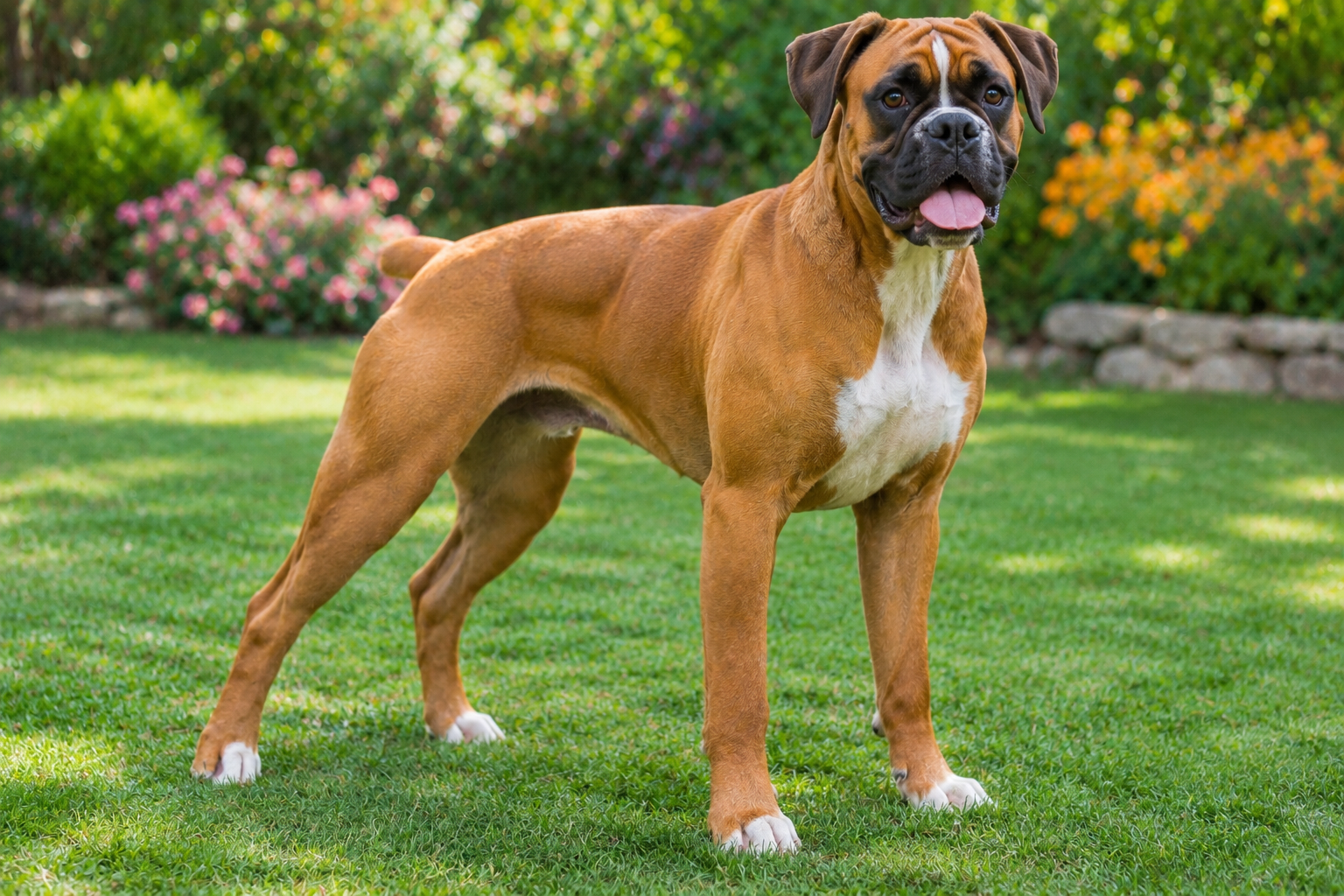
A healthy Boxer should generally have:
- Ribs that are easy to feel beneath a light covering of fat.
- A visible waist when viewed from above.
- An abdomen that rises gently toward the hind legs when viewed from the side.
- A muscular, athletic appearance without excessive fat around the chest, belly, or hips.
You should be able to feel the ribs without pressing hard, but they should not look extremely prominent. The waist should be visible without the hips and spine appearing sharply bony.
The World Small Animal Veterinary Association describes an ideal canine body condition as one where the ribs are palpable without excessive fat covering, the waist is visible from above, and an abdominal tuck is present.
This is especially useful for Boxers because their muscular build can make weight comparisons misleading.
A lean Boxer is generally a healthier goal than a heavy Boxer. Extra weight can place unnecessary strain on joints and make physical activity more difficult. There is no benefit in trying to make your dog reach the top of the chart simply because the breed is known for its muscular appearance.
Feeding a growing Boxer
Nutrition plays an important role in healthy Boxer development. A growing puppy needs sufficient energy and balanced nutrients, but overfeeding is not a shortcut to a stronger adult dog.
Start with a complete and balanced puppy food formulated for growth. Follow the feeding instructions as a starting point, then adjust the daily amount according to your puppy’s age, activity level, body condition, and weight trend.
A few practical habits help:
- Measure meals consistently. Use a measuring cup or kitchen scale rather than estimating portions by eye. Even small daily differences can add up over time.
- Divide food into appropriate meals. Younger puppies generally benefit from several smaller meals throughout the day. As they get older, many transition to two meals daily. Your feeding schedule can be adjusted according to age and your veterinarian’s advice.
- Avoid encouraging rapid growth. A plump puppy is not necessarily a healthier puppy. Excess food can contribute to unnecessary body fat and an undesirable growth pattern.
- Keep treats in proportion. Training treats and table scraps should be considered part of the overall daily food intake. They should not replace balanced puppy nutrition.
- Monitor digestion. Some Boxers have sensitive stomachs, although digestive sensitivity is not universal. Introduce dietary changes gradually and pay attention to persistent loose stools, vomiting, or changes in appetite. Repeated digestive problems deserve veterinary attention rather than constant experimentation with different foods.
As your Boxer approaches adulthood, discuss when to transition from puppy food to adult maintenance food. The timing should reflect the dog’s physical development rather than an automatic switch on its first birthday.
Fresh drinking water should always be available.
When to worry
A Boxer falling outside the weight chart does not automatically mean something is wrong. However, certain changes deserve closer attention.
- Ribs and hip bones becoming too visible: A naturally lean Boxer may have a visible outline, but prominent ribs, spine, or pelvic bones combined with reduced muscle mass can suggest that the dog is underweight.
- A barrel-shaped appearance: A Boxer with little visible waist, difficulty feeling the ribs, and increasing abdominal fat may be carrying too much weight. This can happen even when the number on the scale appears reasonable for the breed.
- Growth suddenly stalling: Puppies do not gain weight at exactly the same rate every week. However, a prolonged lack of progress, particularly when accompanied by poor appetite or changes in energy, should be discussed with a veterinarian.
- Unexpected weight loss: Losing weight without an obvious explanation is worth investigating. Changes in appetite, persistent vomiting, diarrhea, or other unusual symptoms make an examination particularly important.
- Difficulty maintaining weight: A puppy that consistently struggles to gain despite eating an appropriate diet may need an individual assessment. Digestive issues, parasites, nutritional problems, and other health concerns can affect growth.
Contact your veterinarian if your Boxer is consistently outside the expected growth pattern or appears unwell. Seek prompt veterinary attention for sudden significant changes or severe symptoms.
Bring previous weight measurements if possible. A record showing how your puppy has grown over several months can be more useful than a single measurement.
Frequently asked questions
How much should a 4 month old Boxer weigh?
A four-month-old male Boxer typically weighs around 28–35 pounds (12.7–15.9 kg). A female is generally around 24–34 pounds (10.9–15.4 kg).
These are approximate ranges, not requirements. A healthy puppy might be slightly lighter or heavier depending on genetics, frame size, and growth rate. Body condition and steady progress are more important than hitting the middle of the chart.
How big do Boxers get?
Adult male Boxers typically weigh 65–80 pounds and stand 23–25 inches tall at the shoulder. Females generally weigh around 50–65 pounds and stand 21.5–23.5 inches tall.
Boxers are muscular, athletic dogs, but their individual builds vary. Some are naturally taller and leaner, while others have a more compact appearance.
When do Boxers stop growing?
Most Boxers approach their adult height and weight between 18 and 24 months. However, they can continue developing chest width, muscle, and overall physical maturity until approximately 3 years old.
A Boxer may look lanky at one year and considerably more muscular at two. This does not necessarily indicate a growth problem.
Is my Boxer too skinny?
A visible waist and abdominal tuck are normal features of a healthy, athletic Boxer. You should also be able to feel the ribs easily beneath a light layer of fat.
However, clearly protruding ribs, prominent hip bones, a visible spine, or loss of muscle can indicate that a dog is too thin. Look at the overall body condition rather than judging by appearance alone. A veterinarian can help determine whether your Boxer needs a different feeding plan or further evaluation.
How much does a full-grown Boxer weigh?
A full-grown male Boxer typically weighs 65–80 pounds (29.5–36.3 kg). A female commonly weighs 50–65 pounds (22.7–29.5 kg).
These are general adult ranges. A dog’s ideal weight depends on height, skeletal frame, muscle development, and body condition. A healthy Boxer does not need to reach the maximum weight listed for the breed.
A Boxer weight chart is a helpful starting point, but it should never replace looking at the dog in front of you. Track your puppy’s weight consistently, pay attention to body condition, and allow time for the breed’s naturally slow physical maturation. A steadily growing, lean, muscular Boxer is a much better goal than a puppy that simply matches every number on a chart.