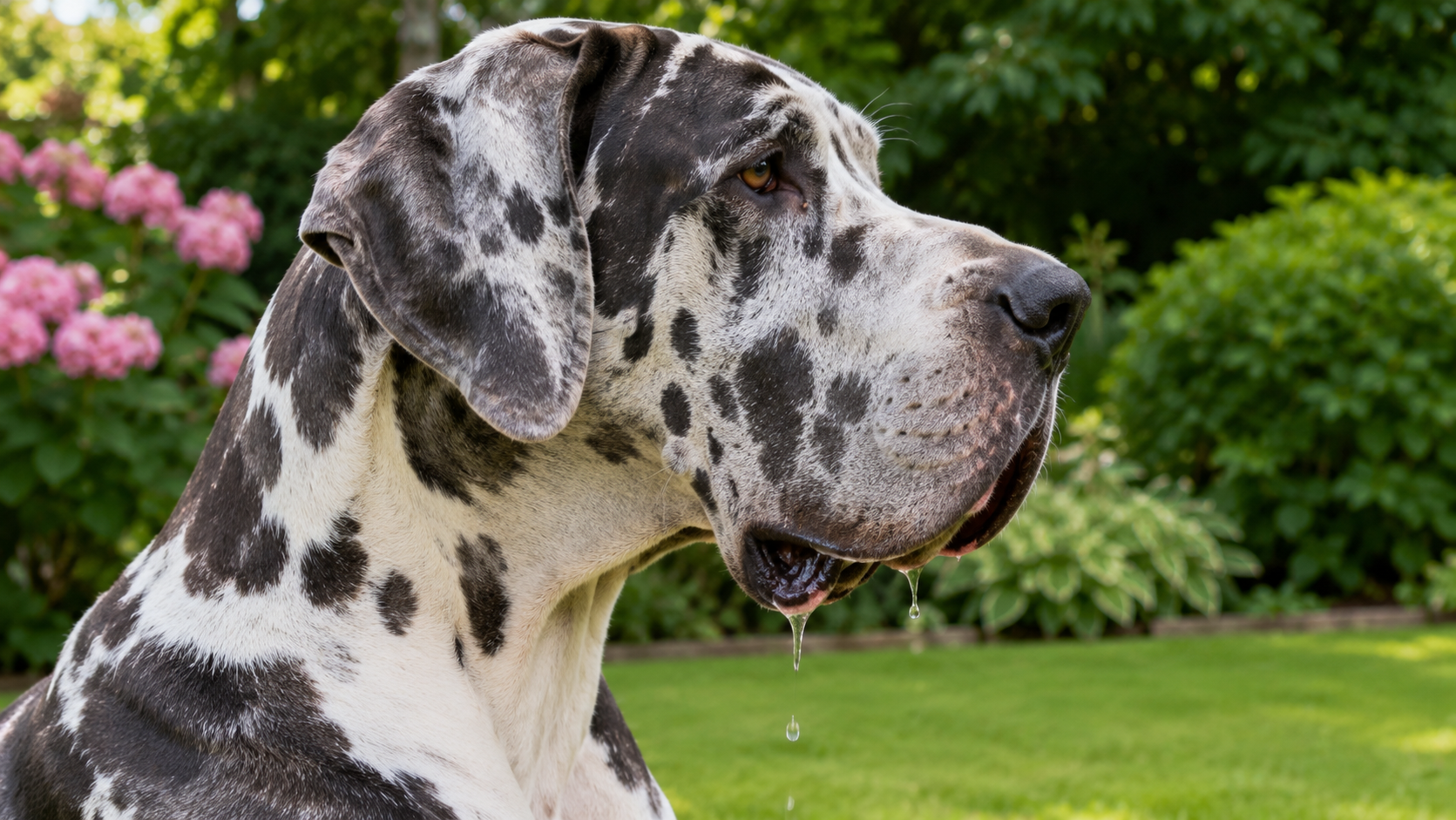
When you first meet a Great Dane, their size grabs your attention. Then, often, you notice the slobber. A wet chin, a string of saliva, or a surprise smear on your sleeve are all part of the package for many Great Dane owners.
Do Great Danes drool a lot, then? Indeed. They are prone to drooling because of their big jowls and slack lips. Fortunately, most everyday slobber can be controlled if you know what produces it and create a straightforward cleanup schedule. It’s equally critical to understand when drooling is natural and when it indicates a problem.
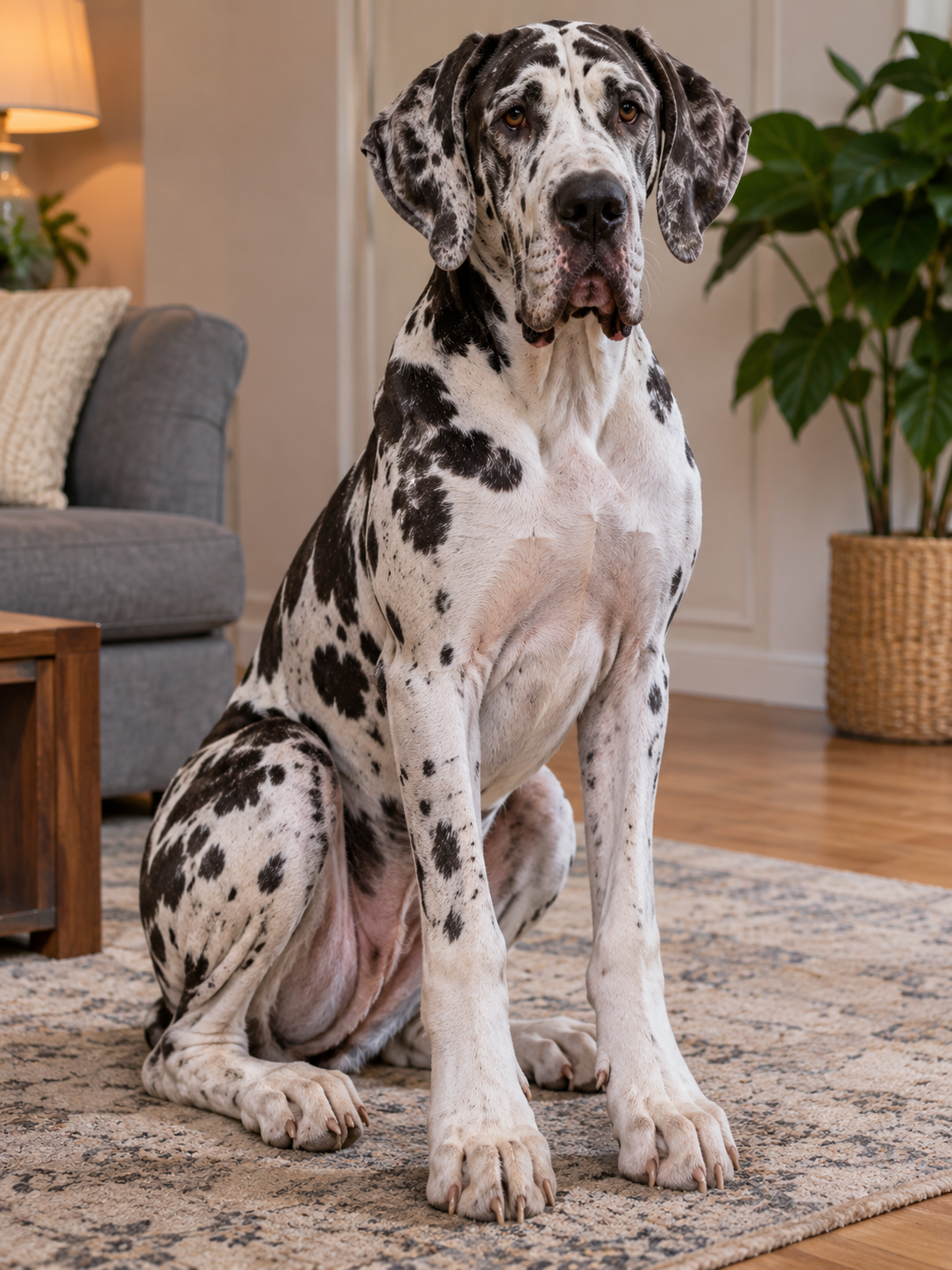
Do Great Danes drool a lot? The short answer
Yes, Great Danes are moderate-to-heavy droolers compared to most dog breeds. Their loose lips and jowls mean saliva can escape more easily, especially after drinking or eating. For many owners, this means keeping a towel handy and wiping faces regularly.
That said, not every Great Dane drools to the same degree. Some are only occasional droolers, while others seem to produce saliva constantly. Age, excitement, and individual facial structure all play a part. For a broader look at breed lifespans, see our guide to dog breeds with the shortest lifespan.
Individual differences are common. It’s possible that two Great Danes in the same house won’t drool in the same way. The amount of drool you see can be influenced by their daily surroundings, feeding habits, enthusiasm levels, and facial anatomy.
Why Great Danes drool
Great Danes have noticeable flews and rather loose lower lips. The loose upper lips that encircle a dog’s mouth are called flews. Gravity can take care of the rest when saliva gathers in these regions.
After drinking, water often mixes with saliva and drips from the jowls. The same happens after eating, when excitement or chewing stimulates saliva production. When a Great Dane shakes its head, loose saliva can travel surprisingly far.
This is largely a matter of breed build, not bad behaviour. Great Danes were not designed with tight, dry mouths. Their facial structure simply allows more saliva to escape than in breeds with shorter, tighter lips.
How much do Great Danes drool compared to other breeds?
Drool levels vary by breed, but in general terms, Great Danes sit in the moderate-to-heavy range. Here’s how they compare with some other well-known breeds:
| Breed | Typical drool level |
|---|---|
| Great Dane | Moderate to heavy |
| Labrador | Low to moderate |
| German Shepherd | Low to moderate |
| Saint Bernard | Heavy |
| Bloodhound | Heavy |
| English Bulldog | Moderate to heavy |
On average, German Shepherds and Labradors are less likely than Great Danes to drool. The loose face skin and slobbery mouths of Saint Bernards and Bloodhounds are especially well-known. Drooling is also a result of English Bulldogs’ broad jowls and loose lips.
In short, Great Danes are not the heaviest droolers of all, but they are well above average. If you dislike slobber, this is something to consider before bringing one home.
When drooling increases
Several everyday situations can cause a Great Dane to drool more than usual:
Heat and exercise: Warm weather and physical activity can increase panting and saliva. After a walk or play session, drooling is common.
Food anticipation: The smell or sight of food often triggers saliva. Many Great Danes start drooling before meals or when treats are being prepared.
Stress or car rides: Some dogs drool more when they are anxious, excited, or travelling. Car rides are a common trigger, especially for dogs that are not used to them.
These increases are usually temporary. Once the dog cools down, calms, or finishes eating, drooling often returns to its normal level.
Living with the drool: practical management
Drool management becomes a routine aspect of Great Dane care with a little consistency. Slobber can be controlled with a few wise practices, but owners who prefer a clean home may need to modify their expectations.
Here are some practical tips:
Towels at water bowls: Place absorbent towels or a mat under and around the water bowl to catch drips.
Bib or bandana: A soft bib or bandana can catch saliva and is easier to wash than furniture.
Washable covers: Use washable throws on sofas and beds to protect them from drool and make cleaning easier.
Wiping routine: Keep a cloth near the door, the kitchen, and the water bowl. A quick wipe after drinking or eating can prevent drool from spreading.
Regular cleaning of the mouth area is also helpful. Gently wiping the jowls can reduce odour and keep the skin around the mouth dry. If you are tracking your dog’s growth, you can use our dog weight chart by age and breed to compare typical sizes.
When drooling is a warning sign
Most drooling in Great Danes is normal. However, some patterns should prompt a call to your vet.
Sudden heavy drooling with restlessness, pacing, or a swollen-looking belly in a deep-chested breed warrants a prompt vet call. These signs together are not something to wait out at home.
Drooling with vomiting, a mouth injury, or not eating is also a vet matter. Mouth pain, nausea, or difficulty eating can all increase saliva, and a vet can assess the cause.
When in doubt, it is always better to ask. A quick call can give you reassurance or help you decide whether your dog needs to be seen.
Frequently asked questions
Do all Great Danes drool?
Most do, but not all to the same extent. Some Great Danes drool heavily, while others only drool occasionally, especially after drinking or eating.
Do female Great Danes drool less?
There is no consistent rule. Drooling depends more on individual facial structure, excitement, and habits than on sex alone. Some females drool heavily, and some males drool very little.
At what age do Great Danes start drooling?
Many start as puppies, but drooling often becomes more noticeable as they grow and their jowls develop. Adult Great Danes tend to drool more than very young puppies.
How do I stop my Great Dane drooling?
Honestly, you manage it — you do not stop it. Drooling is linked to breed build, so it cannot be trained away. Towels, bibs, washable covers, and a wiping routine are the most effective ways to live with it.
Is drooling a sign of bloat in Great Danes?
Drooling alone is not a diagnosis. However, sudden heavy drooling combined with restlessness, pacing, or a swollen-looking belly in a deep-chested breed is a reason to contact a vet promptly. This article is general information only, not veterinary advice.
Conclusion
Great Danes do drool a lot compared to many breeds, but for most owners, it becomes a manageable part of life. Their loose jowls and flews mean saliva escapes easily, especially after eating, drinking, or exercise. With a few simple habits, you can keep your home and your dog comfortable.
If drooling changes suddenly or comes with other worrying signs, do not hesitate to call your vet. Otherwise, embrace the slobber — it is part of what makes a Great Dane a Great Dane.