Teaching your dog new tricks is a fun way to build communication, encourage mental stimulation, and spend quality time together. You do not need a professional training setup or a naturally talented dog. A few treats, a quiet space, and some patience are enough to get started.
This guide covers 12 tricks to teach your dog, from simple paw shakes to more challenging skills like putting toys away. Start with the easiest options, reward small successes, and move forward at your dog’s pace.
Before you start: 5 training rules that make every trick easier
Good trick training is about making the right behavior easy to understand and rewarding it when it happens. These five habits help keep sessions positive and productive.
- Use positive reinforcement only. Reward the behavior you want with treats, praise, or play. Never frighten, intimidate, or physically punish your dog for getting something wrong. The American Veterinary Society of Animal Behavior’s guidance recommends reward-based training.
- Choose small, soft treats. Pea-sized pieces work well for most dogs because you can reward frequently without filling them up too quickly. Use something your dog genuinely enjoys.
- Keep sessions short. Aim for five to ten minutes, and make sessions even shorter for young puppies or dogs who tire easily.
- Introduce one cue at a time. First help your dog understand the movement, then add a spoken word such as “spin” or “shake.” Say the cue just before the behavior you want.
- End on a win. Finish after an easy, successful repetition and offer a reward. If your dog gets stuck, make the task simpler or return to the previous step rather than repeating the same confusing request.
Easy tricks (start here)
These five tricks are useful starting points for beginners. Your dog does not need to master all of them before trying another, but basic skills such as sitting and lying down can make several tricks easier.
| Trick | Difficulty | What you need |
|---|---|---|
| Shake a paw | Easy | Small treats |
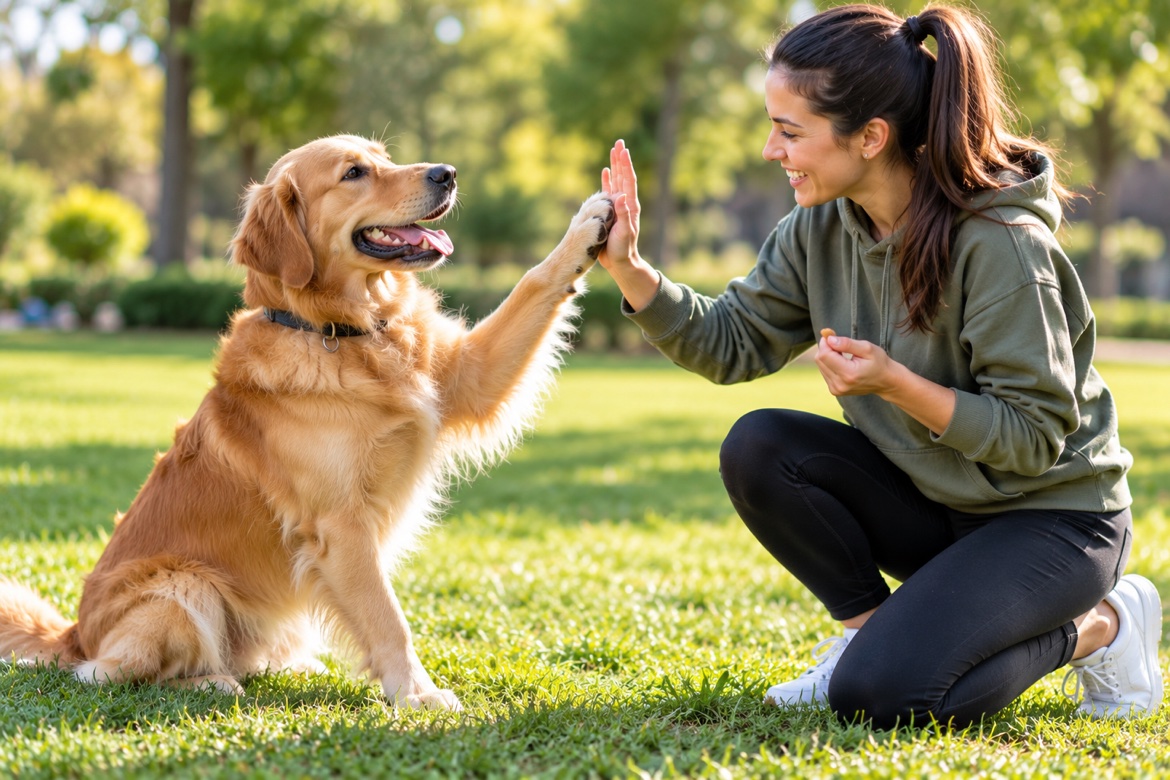
| High five | Easy | Treats, open palm |
| Spin | Easy | Treat, clear floor space |
| Roll over | Easy to moderate | Treats, padded surface |
| Speak | Easy to moderate | Treats, a quiet setting |
1. Shake a paw
Difficulty: Easy. Best for dogs who are comfortable sitting.
- Ask your dog to sit.
- Hold a treat in your closed hand near one front paw.
- Reward any small paw lift or movement toward your hand.
- Gradually wait for a paw touch before rewarding.
- Add the cue “shake” once the behavior becomes predictable.
2. High five
Difficulty: Easy. A natural next step after shake.
- Ask for a shake if your dog already knows it.
- Raise your open palm slightly higher than usual.
- Reward your dog for touching your palm with a paw.
- Gradually raise your hand to a comfortable high-five position, then add the cue “high five.”
3. Spin
Difficulty: Easy. Requires enough clear, nonslip floor space to turn comfortably.
- Hold a treat near your dog’s nose while they stand.
- Move the treat slowly in a wide circle so your dog follows it.
- Reward a full turn, or reward smaller turning movements while your dog learns.
- Add the cue “spin” before guiding the movement with your hand.
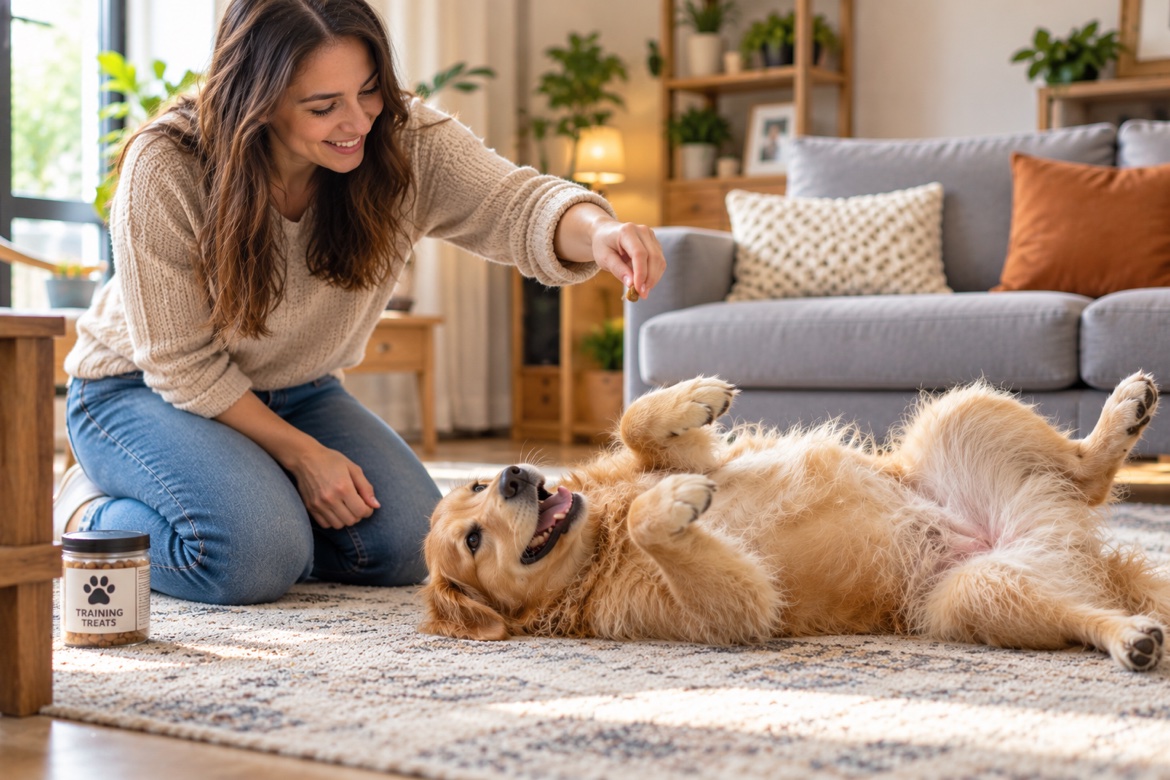
4. Roll over
Difficulty: Easy to moderate. Skip this trick if rolling is uncomfortable or medically unsuitable for your dog.
- Ask your dog to lie down on a padded, nonslip surface.
- Move a treat toward one shoulder so your dog turns its head and shifts to one side.
- Reward the comfortable side-lying position before gradually encouraging a fuller roll.
- Add “roll over” when your dog begins completing the movement readily.
5. Speak
Difficulty: Easy to moderate. Best for dogs who occasionally bark naturally.
- Wait for a natural bark in an appropriate setting.
- Immediately mark the bark with a word such as “yes” and give a treat.
- After several successful repetitions, say “speak” just before a bark is likely.
- Reward a bark after the cue, and pause between repetitions so barking does not become continuous.
Medium tricks (once the basics click)
These tricks combine familiar movements or require a little more coordination. Break each one into small pieces instead of expecting the complete behavior immediately.
6. Play dead
Difficulty: Medium. Start with a reliable down cue.
- Ask your dog to lie down on a comfortable surface.
- Guide a treat gently toward one shoulder to encourage a relaxed lean onto the side.
- Reward the side-lying position, even if your dog holds it only briefly.
- Add “play dead” when the movement becomes familiar, then gradually increase the comfortable hold.
7. Sit pretty (beg)
Difficulty: Medium. Only suitable for dogs who can balance comfortably without straining their back or joints.
- Ask your dog to sit on a nonslip surface.
- Move a treat slowly upward from nose level without pulling the dog off balance.
- Reward a small lift of the front paws while the rear stays grounded.
- Build duration gradually, adding “sit pretty” when the movement is consistent.
8. Give a kiss
Difficulty: Medium. A gentle nose touch is a useful starting point.
- Teach your dog to touch your open palm with its nose, rewarding each touch.
- Move your hand beside your cheek while keeping the target easy to reach.
- Reward a gentle nose touch near your cheek, then add the cue “kiss.”
- Gradually use the cue without presenting your hand as the target every time.
Keep this trick comfortable for everyone. Never force your dog’s face toward yours, particularly if the dog seems uneasy.
9. Fetch a named toy
Difficulty: Medium. Your dog should already enjoy retrieving or carrying toys.
- Choose one distinctive toy and say its name as you present it.
- Reward your dog for looking at, touching, or picking up that toy.
- Encourage a short retrieve and reward bringing the toy back.
- Introduce a second toy later, asking for the named toy and rewarding the correct choice.
Advanced tricks (for dogs who love training)
These skills involve several behaviors linked together. Expect to practice in small pieces over weeks of short sessions, not days. Progress depends on the individual dog, its experience, and how comfortable it finds the task.
10. Leg weave
Difficulty: Advanced. Requires comfortable, controlled movement between your legs.
- Stand with your feet apart and guide your dog through the gap using a treat.
- Reward each successful pass before asking for another.
- Step one foot forward and lure your dog through the next gap from the opposite side.
- Gradually alternate sides, then add the cue “weave” when your dog understands the pattern.
Keep the movements wide and gentle. Avoid repetitive weaving in growing puppies or dogs with mobility problems.
11. Hold an object
Difficulty: Advanced. Builds on a comfortable retrieve or picking up an object.
- Offer a safe, lightweight object that is too large to swallow and easy to grip.
- Reward your dog for touching or picking it up.
- Gradually reward holding it for a brief moment before giving a separate release cue.
- Increase the hold slowly, rewarding calm success rather than pulling the object from your dog’s mouth.
12. Tidy up toys into a basket
Difficulty: Advanced. Combines retrieving, carrying, and releasing an object in a specific place.
- Place a basket beside your dog and reward looking at or approaching it.
- Teach your dog to pick up one familiar toy and carry it toward the basket.
- Reward dropping the toy inside, using a consistent release cue such as “drop.”
- Gradually connect the steps and add “tidy up” before asking your dog to put away one toy at a time.
Training safety: puppies, seniors, and sore joints
Choose tricks based on your dog’s physical comfort, not just its age or enthusiasm. Puppies should have very short sessions and avoid repetitive jumping or strenuous weaving until their growth plates have closed. The timing varies by dog, so ask your veterinarian when higher-impact activities are appropriate.
Senior dogs and dogs with arthritis, back problems, or other mobility concerns should skip roll over, sit pretty, and jumping tricks that may strain them. Low-impact options such as shake, high five, and a gentle nose-touch trick may be more suitable. Use soft, nonslip surfaces and stop if your dog seems sore, stressed, unusually tired, or reluctant to continue. The VCA guide to training senior dogs offers additional comfort-focused advice. Ask your veterinarian about new discomfort or changes in movement before continuing.
Common questions about tricks to teach your dog
How long does it take to teach a dog a trick?
It varies. Some dogs pick up a simple paw shake relatively quickly, while others need many short sessions. Complex tricks can take weeks or longer. There is no guaranteed timeline, so reward progress rather than rushing to the final result.
What age should you start trick training?
You can start with gentle, reward-based learning when a puppy settles into its new home and can engage comfortably. Begin with simple behaviors, keep sessions brief, and avoid strenuous physical tricks while your puppy grows.
What are the best training treats?
Choose small, soft, easy-to-chew treats your dog finds appealing. Tiny pieces of an appropriate commercial training treat or another dog-safe food can work well. Account for treats in your dog’s daily food intake.
Can old dogs learn new tricks?
Yes. Older dogs can learn new behaviors, although they may need more time, softer surfaces, and lower-impact movements. Choose tricks that fit your dog’s mobility and comfort rather than focusing on complicated physical skills.
My dog loses interest after two minutes. What am I doing wrong?
Probably nothing serious. Two minutes may be enough for your dog right now. Try a quieter space, more appealing treats, easier steps, and shorter sessions. End while your dog is still engaged and try again later.
Conclusion: Make learning fun for both of you
The best tricks to teach your dog are the ones your dog can practice safely and enjoy. Start with shake, high five, or spin, then gradually explore more challenging skills as your dog’s understanding grows. Keep rewards positive, celebrate small wins, and let your dog set a comfortable pace. Consistency matters more than perfection.
By Jennifer, Founder of CanineCalc
Jennifer is a dog owner and researcher who creates practical pet-care resources. She is not a veterinarian, breeder, or certified dog trainer. This article provides general training guidance, not individualized veterinary advice.