Golden Retriever feeding chart by age
| Age | Typical weight range | Food per day (cups) | Meals per day |
|---|---|---|---|
| 8 weeks | 8-12 lb | 1.5-2 cups | 3-4 |
| 3 months | 18-22 lb | 2-2.5 cups | 3 |
| 4 months | 25-32 lb | 2.5-3 cups | 3 |
| 5 months | 32-42 lb | 3-3.5 cups | 2-3 |
| 6 months | 42-52 lb | 3-4 cups | 2 |
| 9 months | 52-62 lb | 3-4 cups | 2 |
| 12 months | 58-70 lb | 3-4.5 cups | 2 |
| Adult, 1-6 years | Females: 55-65 lb; males: 65-75 lb | 3-4.5 cups, depending on activity | 2 |
| Senior, 7+ years | Varies with size and condition | 2.5-3.5 cups as a starting range | 2 |
Important: These starting ranges assume dry kibble containing approximately 350-400 calories per cup. Actual needs depend on the food’s calorie density, your dog’s size, activity, and body condition. Check the feeding instructions on the food label, then adjust with your veterinarian’s guidance. A dog eating 450-calorie kibble will need fewer cups than one eating 300-calorie kibble to receive the same energy.
Your Golden Retriever’s age is a useful starting point, but it cannot tell you everything about the right portion. Two dogs of the same age can have very different needs. One might spend hours retrieving, hiking, and running, while another prefers leisurely walks and long naps.
Treat this chart as a starting guide rather than a daily prescription. Track your dog’s growth and shape, and adjust portions gradually as those needs change.
From cups to calories: getting your Golden’s number right
A measuring cup tells you the volume of food, not how much energy it provides. Dry foods can contain roughly 300-500 or more calories per cup, so following a generic feeding chart without checking the label can lead to underfeeding or overfeeding.
The calculation is straightforward:
Cups per day = daily calorie target ÷ calories per cup
For example, if your dog’s daily target were 1,200 calories and the food provided 400 calories per cup, the calculation would be 3 cups per day. That is an illustration of the math, not a recommended calorie target for every Golden.
Start with the food manufacturer’s feeding guide and your dog’s current weight. You can also use the dog calorie calculator to estimate a starting calorie target. Treat the result as an estimate, since age, body condition, health, and activity can all change an individual dog’s requirements.
Activity deserves particular attention with Golden Retrievers. They are a sporting breed, and their energy needs can shift substantially with their daily routine. A field-bred Golden working or exercising vigorously may need considerably more food than a companion dog with a relaxed schedule. In some cases, their calorie needs can differ by roughly a third or more.
Neutered dogs often need fewer calories after the procedure, although the size of the change varies. If your dog has been neutered, gained weight, or become less active, review the current portion rather than automatically continuing the same amount.
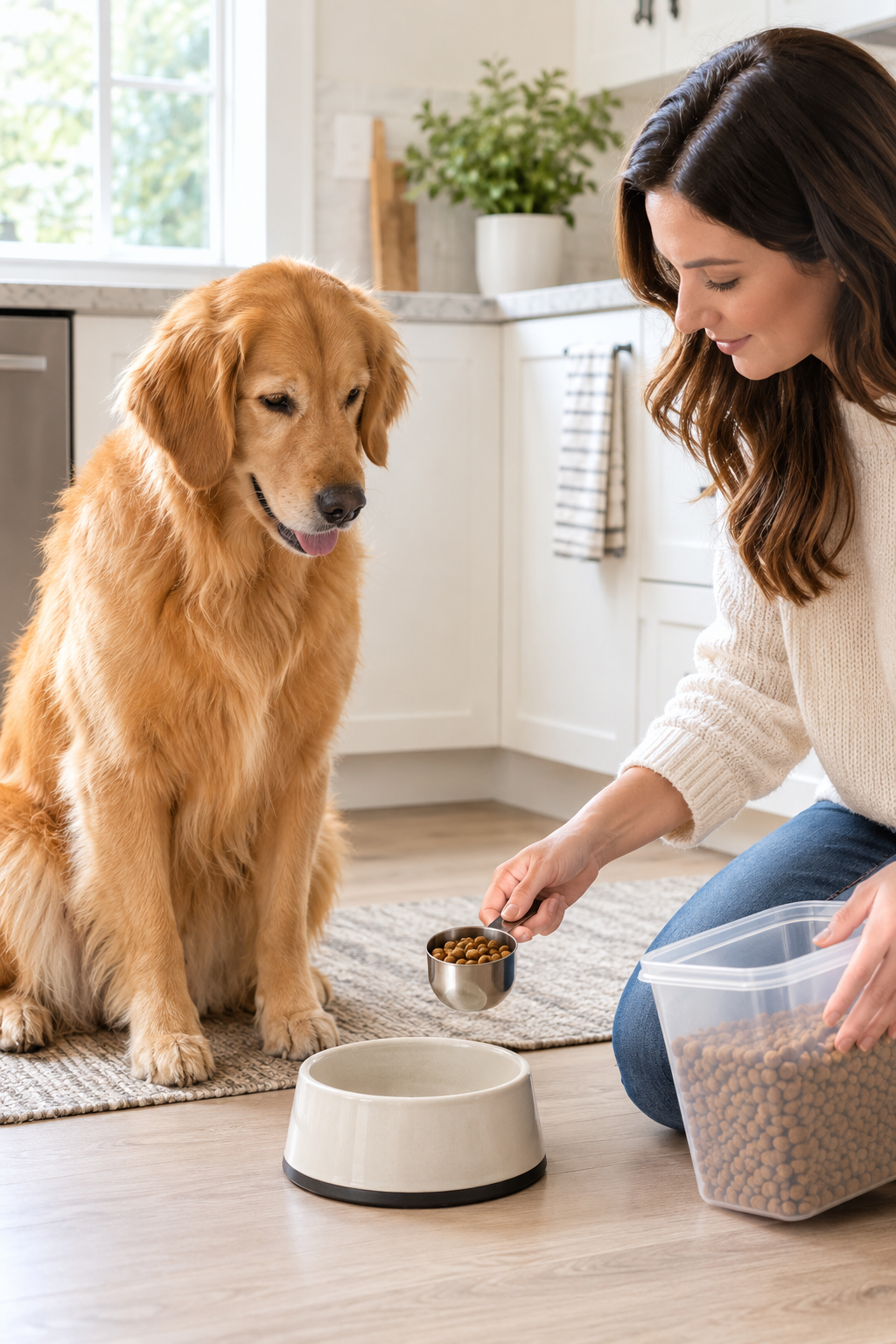
Measure the full day’s food, including treats used in training. Divide that amount between meals so you know what your Golden actually consumes.
Golden growth: why “more food” is not “more growth”
Golden Retriever puppies grow quickly, particularly between three and six months. Watching a puppy get taller and heavier almost weekly can make it tempting to add an extra scoop whenever they seem hungry or look slim.
Resist the urge to accelerate growth through extra food. Puppies need enough energy and balanced nutrients to develop, but excess calories can encourage rapid weight gain that places additional stress on developing joints.
Hip and elbow dysplasia are important concerns in large breeds, including Golden Retrievers. These conditions have multiple contributing factors, and overfeeding does not explain every case. However, maintaining an appropriate growth rate and a lean body condition helps avoid unnecessary loading of immature joints.
Choose a complete and balanced large-breed puppy food formulated for growth. These diets are designed to provide appropriate energy and mineral levels, including controlled calcium, for growing large-breed puppies. Avoid adding calcium or other mineral supplements unless your veterinarian specifically recommends them. Extra supplementation can upset an otherwise balanced diet.
Your puppy should develop steadily, not become round as quickly as possible. Ribs should be easy to feel beneath a light covering of fat, and the waist should remain visible. An individual puppy’s growth pattern matters more than matching every weight in a general chart.
For another way to follow development, use the Golden Retriever weight chart. Compare measurements over time rather than worrying about a single weigh-in. Your veterinarian can help assess whether your puppy is growing appropriately for their frame and age.
Is your Golden the right weight?
A thick Golden Retriever coat can make it difficult to judge body shape. A dog may look broad and fluffy even when lean, or excess fat can hide beneath that beautiful coat. Use your hands as well as your eyes.
Start with the rib test. Run your fingers gently along both sides of your dog’s chest. You should be able to feel the ribs without pressing hard, but they should not be sharply visible in a healthy adult dog.
Next, look from above. There should be a noticeable waist behind the ribs rather than one continuous oval shape. From the side, the abdomen should tuck upward toward the hind legs instead of hanging straight down.
A body condition score (BCS) of 4-5 on the nine-point scale is a common target for dogs. At this score, the ribs are readily palpable beneath a modest fat covering, the waist is visible from above, and the abdomen rises when viewed from the side. Puppies, seniors, and dogs with medical conditions may need individualized assessment.
Weigh your Golden about once a month when practical. Record the result alongside their food intake and activity. If their weight rises unexpectedly, reassess portions and treats before making large changes.
Try not to fall into the “big-boned” trap. Goldens naturally vary in frame and build, but a broad chest or heavy coat does not make excess body fat harmless. If you cannot feel the ribs easily or the waist has disappeared, discuss body condition and an appropriate feeding adjustment with your veterinarian.
Treats and the counter-surfing problem
Golden Retrievers often learn quickly when a behavior earns food. That eagerness can be wonderful during training, but a steady stream of rewards can add substantial calories to a normal day’s meals.
Use the 10% rule: treats and other foods that are not part of a complete, balanced diet should generally provide no more than 10% of daily calories. Keep at least 90% from the dog’s nutritionally complete food. Count training rewards, chews, table scraps, and food used to administer medication.
On busy training days, set aside part of your Golden’s measured daily kibble allowance for rewards. This lets you reinforce good behavior without continually increasing total intake. For a dog that needs a little extra volume, small portions of plain green beans or carrot may be useful, provided they agree with the dog’s digestion and are served safely.
Goldens are also notorious for discovering food left within reach. Secure pantry items, keep counters clear, and use a securely closed bin. Besides adding calories, stolen food can contain ingredients that are dangerous for dogs.
Chocolate can cause poisoning, xylitol (also called birch sugar) can cause a dangerous drop in blood sugar and other complications, and cooked bones can splinter or cause digestive injuries. Contact a veterinarian or animal poison control service promptly if your dog eats a potentially dangerous item. Do not wait for symptoms to appear.
Consistent portions and predictable reward rules make it easier to maintain a healthy weight without sacrificing training opportunities.
Feeding notes by life stage
Puppies: Young puppies generally do best with frequent, measured meals. A practical pattern is four meals around eight weeks, three meals through early puppyhood, and two meals as they get older. Adjust the timing to your puppy’s appetite, digestion, growth, and veterinarian’s advice. Avoid leaving the daily food allowance unrestricted if it makes intake difficult to track.
Adolescents: Between six and twelve months, your Golden is still developing even if they already look like a substantial dog. Many puppies do well with two measured meals daily at this stage. Keep using a large-breed puppy formula while growth continues, and monitor weight instead of automatically adding food whenever the puppy has a growth spurt.
Adults: Consider transitioning to an appropriate adult maintenance food around 12-18 months, with timing guided by your veterinarian and the individual dog’s development. Goldens mature gradually, so reaching their first birthday does not automatically mean every dog is ready for the same change. Make the transition gradually according to the food manufacturer’s instructions. Most healthy adult Goldens do well with two meals a day.
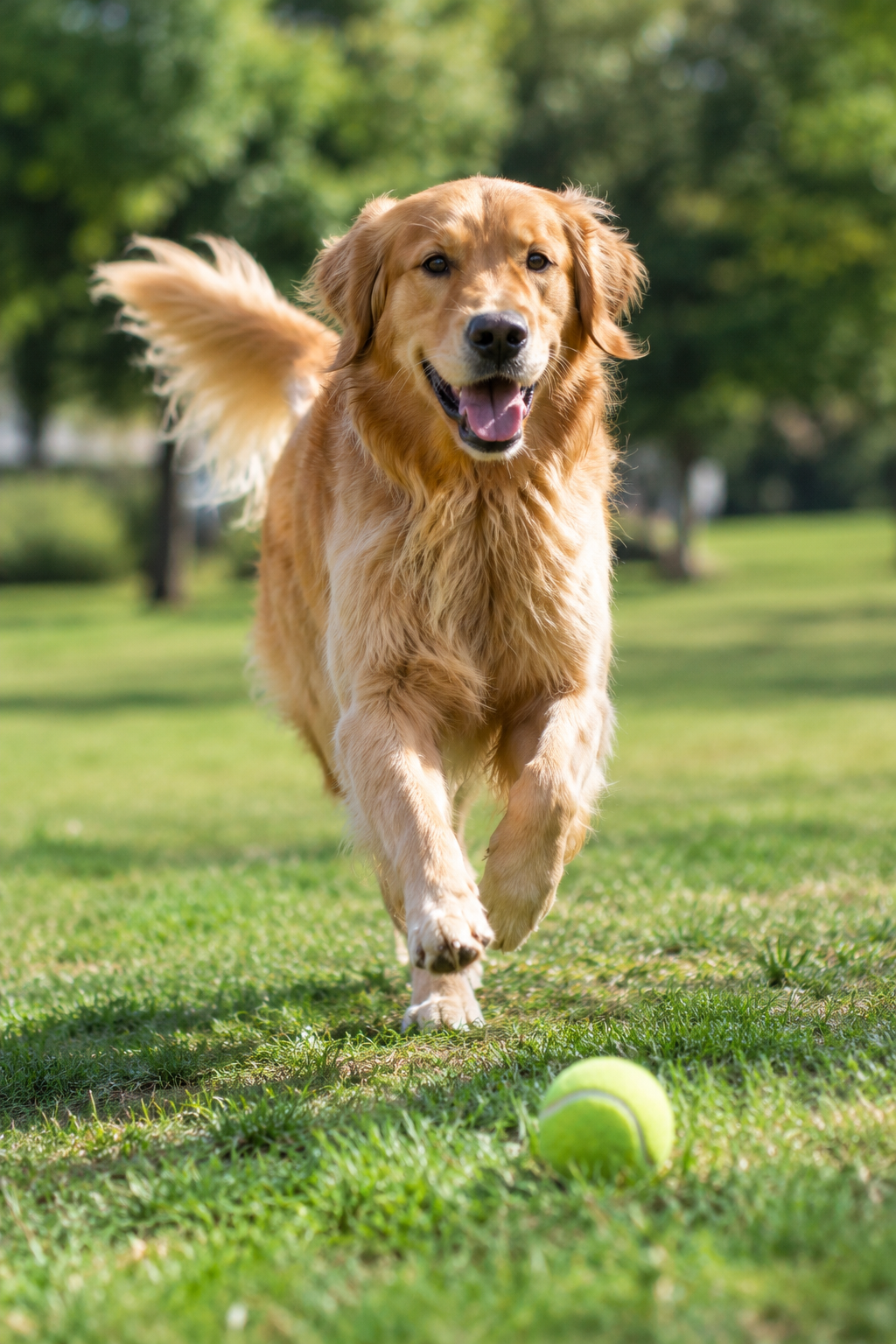
Seniors: From around seven years onward, reassess your dog’s activity, body condition, muscle mass, and health regularly. Some older Goldens need fewer calories because they move less, while others remain active and maintain their usual requirements. If weight begins to rise, a less calorie-dense food or smaller portions may help. Do not simply cut food indiscriminately: adequate protein remains important for maintaining muscle in older dogs. Ask your veterinarian about changes if your senior is losing weight, struggling to maintain muscle, or has a medical condition that affects nutrition.
Frequently asked questions
How much should a 3-month-old Golden Retriever eat?
The starting range in this chart is about 2-2.5 cups of dry kibble per day, divided into three meals, assuming approximately 350-400 calories per cup. Check the label because calorie density varies. Monitor rib coverage, waist shape, and growth rather than increasing portions simply because your puppy asks for more.
How many cups should an adult Golden Retriever eat?
Many adult Goldens start around 3-4.5 cups daily, depending on food calories, activity, and body condition. A moderately active dog may need less than a highly active sporting companion. Females commonly weigh 55-65 pounds and males 65-75 pounds, but weight alone does not determine portions. Calculate from the food label and adjust to maintain a healthy shape.
When should I switch my Golden puppy to adult food?
A transition around 12-18 months is a reasonable starting point, but the right timing depends on growth and individual development. Ask your veterinarian whether your puppy is ready, and choose a complete diet appropriate for the next life stage. Avoid switching early just because your puppy looks nearly full-grown.
My Golden Retriever always acts hungry. Should I feed more?
Not necessarily. A Golden may be very enthusiastic about food even after meeting their energy needs. First check body condition, measure meals, review treats, and consider a slow feeder or food puzzle. If the hunger is suddenly stronger than usual, especially with weight loss, increased thirst, or other changes, contact your veterinarian.
How much should a senior Golden Retriever eat?
A senior may start around 2.5-3.5 cups per day under this chart’s calorie assumptions, but individual needs can fall below or above that range. Less activity may mean fewer calories, while continued exercise can maintain higher needs. Prioritize healthy body condition and muscle retention, and review unexplained weight or appetite changes with your veterinarian.
The goal is steady growth and a healthy adult
Feeding a Golden Retriever well is not about reaching a particular number of cups. It is about providing the right energy for the dog’s life stage, keeping growth steady, and making adjustments when activity or body condition changes. Start with the chart, check the calorie information on your food, and reassess portions regularly.
A lean, well-muscled Golden can enjoy walks, play, training, and family life with less unnecessary weight to carry. Consistent measurements and small adjustments are usually more useful than dramatic changes to the bowl.
If you are comparing breeds, our Labrador feeding chart by age is the sibling guide for another enthusiastic sporting breed.
By Jennifer
Jennifer is the founder and owner of CanineCalc. She is a dog owner and researcher who creates practical resources to help dog owners understand weight, growth, and everyday care. Her guides are educational and are not a substitute for advice from a veterinarian who knows your dog.