
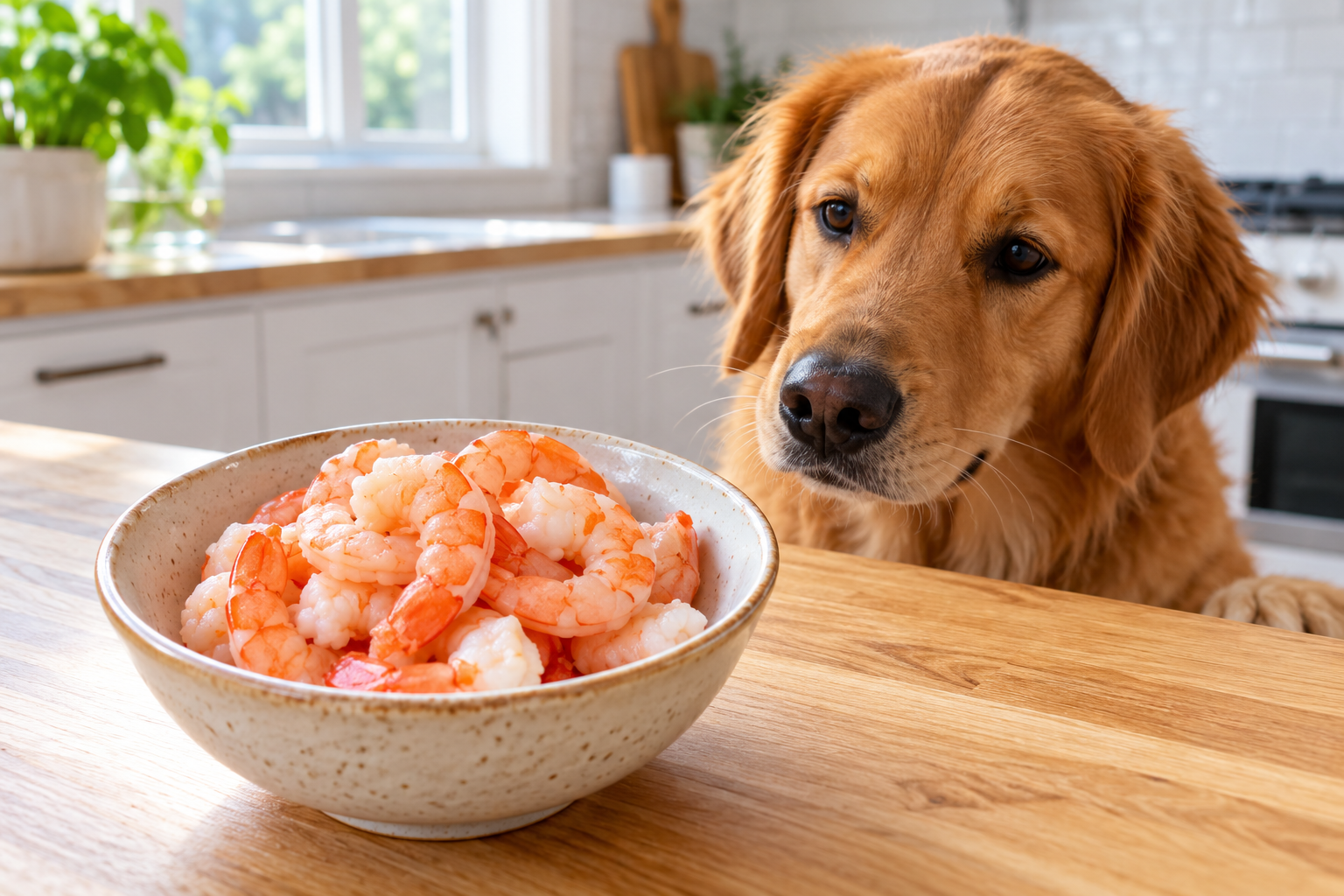
Can dogs eat shrimp tails? The short answer
Can dogs eat shrimp tails? No, it is best not to feed shrimp tails to dogs. Dogs can enjoy small amounts of plain, fully cooked shrimp meat, but the hard tail shell creates unnecessary risks. Remove the tail, shell, head, and legs before offering shrimp to your dog.
The main concerns are choking, irritation from hard or sharp shell fragments, and the possibility of an intestinal obstruction. These problems will not happen every time a dog swallows a shrimp tail, but there is no nutritional reason to take the chance.
Most established pet-care sources, including the American Kennel Club’s shrimp feeding guide and PetMD’s shrimp safety guide, recommend removing the shell and tail before serving shrimp.
That distinction matters: the shrimp meat can be a suitable occasional treat, while the tail is a part worth leaving out. If your dog has already swallowed one, do not automatically assume something serious will happen. The appropriate response depends on your dog’s size, the amount swallowed, and whether any concerning symptoms appear.
Why are shrimp tails a problem for dogs?
Can dogs eat shrimp tails without risk? Shrimp tails are not considered poisonous to dogs simply because they are shrimp shells. The concern is their physical structure and how a particular dog handles them.
1. Choking risk
A shrimp tail can be a choking hazard, particularly for toy and small-breed dogs. Dogs that gulp their food without chewing thoroughly may swallow a hard piece before they have broken it into smaller fragments.
The same concern applies to larger dogs that eat quickly. A dog’s size may affect the level of risk, but it does not make swallowing a hard shell fragment automatically safe.
2. Hard, potentially sharp edges
Shrimp tails and shells have a firm, rigid texture. When swallowed, fragments may irritate the mouth, throat, or digestive tract. A piece that is uncomfortable to chew can also become lodged between teeth or gums.
Not every tail causes a problem, and a swallowed fragment may pass without an obvious issue. However, owners cannot reliably predict what will happen based only on the appearance of the tail.
3. Difficult digestion
Shrimp shells contain chitin, a structural material that is not as readily broken down as ordinary shrimp meat. Depending on the size and shape of the swallowed pieces, shell fragments may pass through the digestive system without being fully digested.
Larger pieces or multiple tails can raise concern about an intestinal blockage. This is especially important when a small dog swallows something relatively large for its body size.
4. Seasonings and butter are separate concerns
A cooked shrimp tail may come from shrimp prepared with butter, garlic, onion, salt, or spicy sauces. Those ingredients create additional concerns independent of the shell.
Garlic and onion can be toxic to dogs, while excess fat, salt, and seasoning can cause other problems. Removing the tail does not make heavily seasoned shrimp suitable for dogs. Plain preparation matters just as much as removing the shell.
Shrimp itself: How to serve it safely
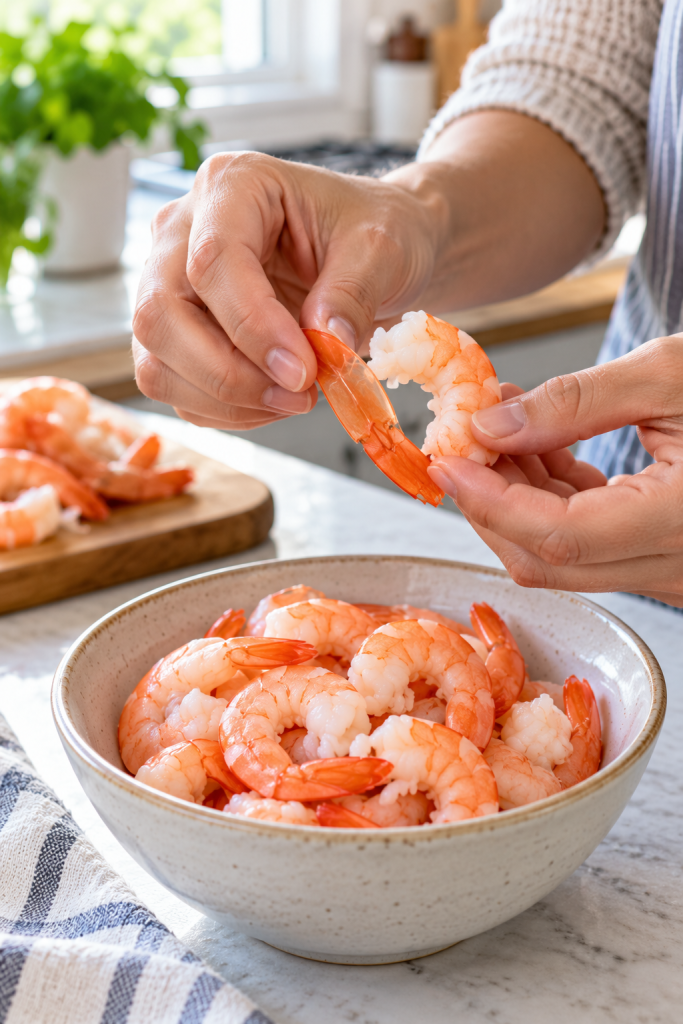
If you are asking, can dogs eat shrimp tails, keep the preparation simple: plain shrimp meat is the part to offer, not the shell.
Follow these general guidelines:
- Cook it thoroughly. Boil, steam, bake, or grill shrimp without adding ingredients that could be unsuitable for dogs.
- Remove the entire shell. Take off the head, legs, shell, and tail before serving.
- Remove the digestive tract. Deveining is a useful preparation step, although it does not replace cooking or peeling.
- Skip butter and seasoning. Do not add garlic, onion, spicy sauces, excess salt, oils, or rich toppings.
- Cut it into small pieces. Adjust the size to your dog rather than offering a whole shrimp that could be gulped down.
- Start with a tiny portion. This is particularly important when your dog has never eaten shrimp.
Shrimp is optional, not a food dogs need to receive regularly. Keep treats within the commonly recommended limit of 10% of daily calories, with the remaining 90% coming from a complete and balanced diet.
Some dogs may also have a food intolerance or reaction to shellfish. After the first small serving, watch for signs such as itching, vomiting, or diarrhea. Stop offering shrimp and contact your veterinarian if a reaction occurs. Facial swelling or difficulty breathing warrants urgent veterinary attention.
Puppies need the same caution with preparation and portion size. Their regular food should provide the nutrition required for growth. For general guidance on feeding amounts as puppies grow, see our puppy food chart.
The disagreement: Why does one source say shrimp tails are OK?
Some dog owners, including people who favor raw feeding, take a more permissive view of edible animal parts. Their argument is that dogs can chew and digest some shells, that shell material is natural, and that individual dogs may swallow small tails without any apparent problem. There are also accounts of dogs eating shrimp tails without an obvious immediate reaction.
That perspective deserves a fair hearing: can dogs eat shrimp tails without harm? Swallowing a shrimp tail does not guarantee that a dog will become ill. Dogs vary in size, chewing habits, and tolerance, and some may pass small fragments without noticeable symptoms.
However, an absence of problems in one dog does not establish that shrimp tails are a reliably safe treat. The majority recommendation is to remove them because they can be hard to digest, may have sharp edges, and can pose choking or obstruction risks. The shell also provides no meaningful nutritional advantage over the cooked shrimp meat itself.
For most owners, the decision is straightforward. If the meat offers the treat you want to share, remove the part that adds avoidable risk. You do not need to settle the entire debate about dogs and animal shells to make the safer everyday choice.
Cooked vs. raw shrimp
Dogs should be offered fully cooked shrimp rather than raw shrimp. Raw or undercooked shellfish can carry bacteria and other harmful pathogens that may cause foodborne illness.
Thorough cooking reduces that risk. Steaming or boiling plain shrimp is a simple option because it does not require butter or seasoning.
Freeze-dried products are a separate category, so check that any product specifically intended for dogs has suitable preparation and feeding instructions. Do not assume that raw, marinated, or partially cooked shrimp is safe just because it looks fresh.
Can dogs eat shrimp tails when the shrimp is cooked or raw? No – remove the tail and shell in either case. Cooking does not eliminate the physical risks posed by hard shell fragments.
How much shrimp can a dog eat?
Shrimp should be an occasional treat, not a meal replacement. There is no single portion that fits every dog, because calorie needs, overall diet, health, and shrimp size differ.
Can dogs eat shrimp tails as part of these portions? No – the following amounts are conservative starting points for an otherwise healthy dog receiving plain, fully cooked, peeled shrimp:
| Dog size | General starting portion |
|---|---|
| Toy or small dogs | A small bite or about half a shrimp |
| Medium dogs | About one small shrimp |
| Large dogs | One small shrimp, or up to two depending on size and diet |
These are rough examples, not prescribed serving sizes. Cut the meat into appropriately small pieces, start with less when introducing a new food, and keep the calories within the daily treat allowance. A large shrimp and a small shrimp do not provide the same amount of food.
Offer shrimp occasionally rather than making it a daily habit. If your dog follows a prescription diet or has a health condition that affects what they can eat, ask your veterinarian before adding new foods.
Frequently asked questions
Are shrimp tails digestible for dogs?
Can dogs eat shrimp tails and digest them reliably? Not reliably enough to recommend feeding them. Shrimp tails contain chitin and may pass through partly intact. Some dogs swallow them without an obvious problem, but hard fragments can cause choking, irritation, or obstruction. Remove the tail before offering shrimp.
Can dogs eat cooked shrimp?
Yes, most dogs can eat small amounts of plain, thoroughly cooked shrimp meat. Remove the shell, tail, head, and legs, and avoid butter, garlic, onion, sauces, and heavy seasoning. Begin with a small portion.
Can dogs eat shrimp shells?
It is safer not to feed shrimp shells to dogs. They are hard, may have sharp edges, and can present choking or digestive obstruction risks. Offer the peeled meat instead.
What if my dog ate a shrimp tail?
Pay attention to choking, gagging, repeated vomiting, or other unusual behavior. If your dog is choking or has difficulty breathing, seek emergency veterinary care. If the tail was swallowed, contact your veterinarian for guidance, especially if your dog is small, swallowed several tails, or develops symptoms. Do not attempt home treatment without veterinary guidance.
Are prawns subject to the same rule?
Yes. The common names shrimp and prawn can vary by region and species, but the same practical feeding rule applies: serve plain, fully cooked meat and remove the shell and tail. Avoid raw or heavily seasoned preparations.
The bottom line
Can dogs eat shrimp tails? Dogs can enjoy a little plain, fully cooked shrimp meat as an occasional treat, but shrimp tails should stay off the menu. Although some dogs may swallow them without obvious consequences, the hard shell adds choking and digestive risks without offering a meaningful benefit.
Remove the shell and tail, skip the seasoning, keep the serving small, and introduce shrimp cautiously. When your dog has already swallowed a tail or shows concerning symptoms, contact your veterinarian for advice specific to the situation.