
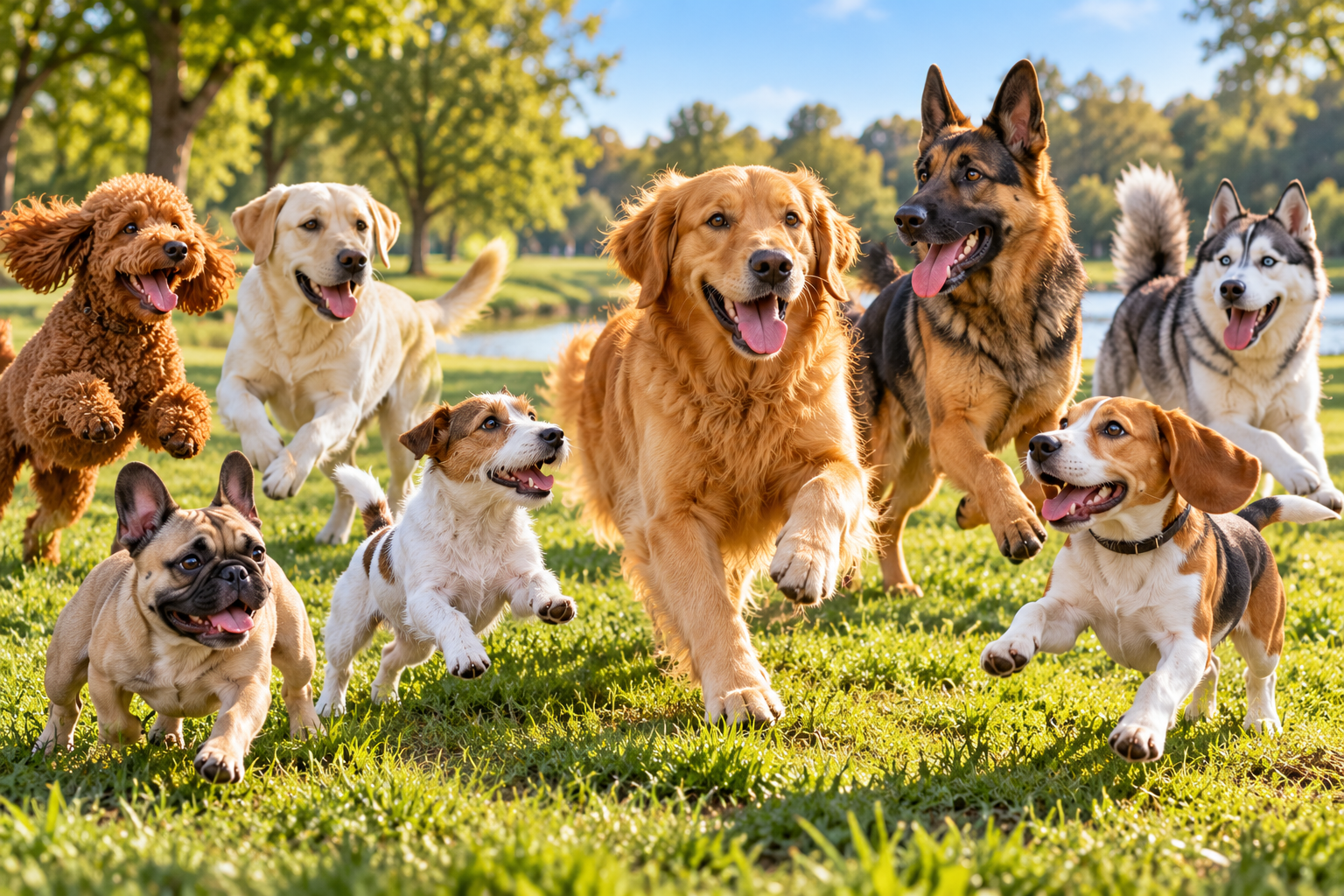
Dogs do far more than chase balls, wag their tails, and curl up beside their favorite people. Their senses work differently from ours, their history stretches back thousands of years, and their behavior is more complex than many familiar dog facts suggest.
These 25 interesting facts about dogs focus on what veterinary guidance, scientific research, breed records, and historical evidence can support. Where a claim is uncertain, the distinction matters just as much as the discovery itself.
Interesting facts about dogs at a glance
Some of the most surprising facts about dogs are that they can hear high-frequency sounds beyond the range of typical human hearing, see a more limited range of colors, and use human gestures to gather information. Dogs also experience REM sleep, develop different physical needs as they age, and have a domestication history that researchers are still piecing together.
Other fascinating facts require a little caution. There is no single universal count of recognized dog breeds, tail wagging does not always indicate happiness, and extraordinary claims about the world’s oldest dog need reliable documentation.
Senses and abilities
A dog’s world is shaped by information humans often overlook. Smells, sounds, movement, and subtle physical signals help dogs navigate their surroundings.
1. Dogs use smell to explore the world.
A dog’s nose provides valuable information about nearby animals, people, and the environment. Scent hounds have been selectively bred to follow trails using odors in the air and on the ground.
Source type: breed research and working-dog guidance.
2. Dogs can hear high-frequency sounds humans cannot.
Dogs are particularly capable of detecting high-pitched sounds, including some frequencies beyond the range of typical adult human hearing. However, that does not mean their hearing is better than ours in every situation.
Source type: veterinary and canine hearing guidance.
3. Dogs see colors, but not the same range humans do.
Dogs have two main types of color-detecting cone cells, while humans typically have three. This means dogs can distinguish some colors, especially blues and yellows, but have more difficulty distinguishing red and green.
The popular claim that dogs see everything in black and white is incorrect.
Source type: veterinary ophthalmology research and explanation.
4. Dogs can see in relatively dim light.
Canine eyes have adaptations that help them function in lower light, including a light-reflecting layer behind the retina in many dogs. This can improve vision in dim conditions, but it does not give dogs perfect night vision.
Source type: veterinary ophthalmology.
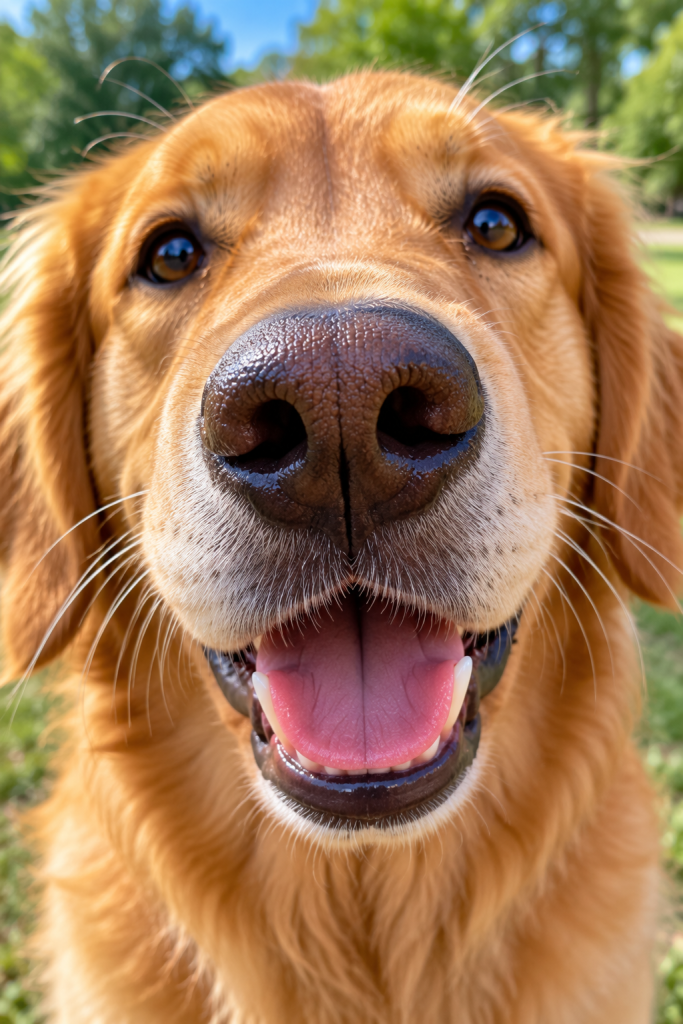
5. Whiskers are sensory tools, not just facial decoration.
The sensitive hairs around a dog’s muzzle can help it detect nearby objects and changes in its immediate surroundings. Whiskers are connected to sensory structures in the skin, so trimming them unnecessarily may remove useful sensory input.
Source type: veterinary anatomy.
6. Dogs have a third eyelid.
Besides their upper and lower eyelids, dogs have a third eyelid, also called the nictitating membrane. This tissue helps protect the eye and contributes to keeping its surface healthy.
Source type: veterinary eye anatomy.
History and breeds
Modern dogs come in a remarkable range of sizes, shapes, coats, and temperaments. That diversity reflects a long shared history with humans, followed by generations of selection for particular tasks and traits.
7. Dogs lived alongside humans before agriculture became widespread.
Ancient DNA and archaeological evidence show that dogs were part of human life thousands of years before farming became widespread in many regions. Research published in Nature in 2026 examined ancient remains that provide evidence of dogs dating back at least 14,200 years.
Source type: ancient DNA and archaeological research.
8. The exact origin of domestic dogs is still debated.
Scientists agree that domestic dogs descended from ancient wolf populations, but the precise timing and location of domestication remain subjects of research. New genetic discoveries can refine earlier explanations without settling every question.
Source type: canine evolutionary genetics.
9. There is no single universally accepted number of dog breeds.
Breed counts depend on which kennel club or international organization is doing the recognizing. The American Kennel Club maintains its own recognized-breed list, while the Fédération Cynologique Internationale uses a different international classification system.
That is why two reputable sources can give different answers without either necessarily being wrong.
Source type: official AKC breed listings and FCI breed classifications.
10. Many breeds were developed for particular jobs.
Dogs have been selected for roles such as herding livestock, retrieving game, guarding property, pulling sleds, and assisting with search-and-rescue work. These historical purposes can help explain why breeds differ in their preferred activities and natural tendencies.
Source type: breed history and working-dog classifications.
11. Not every hunting dog relies on scent in the same way.
Sighthounds, such as Greyhounds and Salukis, were developed to pursue prey by sight. Scent hounds, including Beagles and Bloodhounds, rely much more heavily on odor trails. These different working styles reflect distinct forms of canine specialization.
Source type: breed history and hunting-dog research.
Behaviour and bonding
Dogs communicate through posture, facial movement, vocalizations, and learned responses to people. Their behavior becomes easier to interpret when you look at several signals together instead of relying on one familiar gesture.
12. A wagging tail does not automatically mean a dog is happy.
Tail movement is only one part of canine body language. A dog’s posture, facial tension, ear position, movement, and surrounding situation all matter when interpreting what it might be communicating.
Source type: canine communication research.
13. The direction of a tail wag may carry information.
Some studies have found associations between the side toward which dogs wag their tails and their emotional responses to different situations. This is an interesting research finding, not a dependable shortcut for interpreting every dog’s mood.
Source type: behavioral research on tail-wagging asymmetry.
14. Dogs may change their facial expressions when people pay attention to them.
In a published experiment, dogs produced more facial movements when a human was facing and attending to them than when the person was turned away. The findings suggest that at least some canine facial expressions may play a role in communication, rather than being purely automatic reactions.
Source type: peer-reviewed behavioral research.
15. Dogs can use human pointing gestures to find information.
Research suggests that dogs can follow a person’s pointing gesture to locate something, although performance depends on context and the way the gesture is presented. Their responses are more flexible than simple obedience to a hand movement.
Source type: animal cognition research.
16. Sniffing is a meaningful part of a dog’s daily experience.
When a dog pauses to investigate a scent, it is gathering information about its surroundings. Allowing appropriate opportunities to sniff during walks provides more than physical movement; it also gives dogs a chance to engage their primary exploratory sense.
Source type: veterinary behavior guidance and scent-work research.
Health and ageing
Dogs do not all develop or age in the same way. Size, breed, inherited traits, environment, and individual health can influence what happens throughout a dog’s life.
17. Dog lifespan varies considerably.
Smaller dogs generally live longer than larger dogs as a group, although there are exceptions. Breed, inherited health risks, body condition, preventive care, and individual circumstances also influence longevity.
Source type: canine lifespan research and veterinary population studies.
18. Ageing can affect a dog’s senses.
Older dogs may experience changes in hearing, sight, or smell, alongside changes in mobility and daily behavior. These changes can develop gradually, but a sudden or significant change should not automatically be dismissed as normal ageing.
Source type: veterinary ageing guidance.
19. Panting is an important part of how dogs cool themselves.
Dogs rely heavily on panting to release heat. They also have sweat glands in their paw pads, but these do not provide the same whole-body cooling mechanism that sweating provides in humans.
Source type: veterinary physiology.
20. Puppies and adult dogs have different numbers of teeth.
Puppies normally develop 28 baby teeth, which are eventually replaced by permanent teeth. Most adult dogs have 42 permanent teeth, although individual dental differences can occur.
Source type: veterinary dental guidance.
21. A senior dog may need a different care approach from a younger adult.
Ageing can change a dog’s nutritional, mobility, dental, and preventive-care needs. Veterinary guidance recommends tailoring senior care to the individual animal rather than assuming every older dog needs the same plan.
Source type: AAHA senior-care guidelines.
Facts that sound fake but are real
A few interesting facts about dogs seem almost too unusual to believe. The key is separating findings supported by research or records from claims that sound impressive but cannot be verified.
22. Dogs probably dream during sleep.
Dogs experience REM sleep, a stage associated with dreaming in humans. Their twitching paws, small movements, or sleep-time vocalizations are consistent with the possibility that they dream, although no one can directly confirm the content of a dog’s dream.
Source type: veterinary sleep guidance.
23. Dogs can show a preference for one paw.
Research has examined whether individual dogs tend to favor their left or right paw during certain tasks. Findings suggest that paw preference occurs in dogs, but there is no simple rule that all dogs prefer one side.
Source type: canine behavioral research and meta-analysis.
24. The world’s oldest-dog record shows why verification matters.
Guinness World Records withdrew Bobi’s “oldest dog ever” title in February 2024 after reviewing the evidence and concluding that his date of birth could not be conclusively established. Bluey, an Australian Cattle Dog, had previously held the long-standing record at 29 years and five months.
The lesson is simple: an extraordinary age reported by an owner or repeated online is not automatically a verified record.
Source type: Guinness World Records’ record review.
25. The “one dog year equals seven human years” rule is not reliable.
Dogs do not age at a uniform rate throughout their lives. Development is especially rapid early on, and size and breed influence later life stages. A conversion can be useful for general understanding, but it cannot give an exact biological equivalent for every dog.
For a more useful explanation, read our guide on how to calculate dog years.
Source type: veterinary ageing research.
Common questions about interesting facts about dogs
What is the most interesting fact about dogs?
One particularly fascinating fact is that dogs can use human gestures to gather information. Research shows that many dogs can follow pointing gestures, although how they interpret and respond to them depends partly on context and experience.
How many dog breeds are there?
There is no single worldwide total because kennel clubs and international organizations recognize different sets of breeds. The American Kennel Club, for example, maintains its own official list, while the FCI uses a separate international classification. See our guide to the most famous dog breeds for an introduction to popular types.
How old is the oldest dog?
The answer depends on which record has been formally verified. Bluey reached 29 years and five months, while Guinness withdrew Bobi’s later claim after finding the evidence for his age inconclusive in 2024. For a current record holder, consult the latest Guinness World Records listing, as record status can change.
Why do dogs wag their tails?
Tail wagging is part of canine communication and can accompany different emotional states. Its meaning depends on the dog’s overall body language and the situation. A wag alone is not enough to establish that a dog feels friendly or relaxed.
Do dogs dream?
Dogs experience REM sleep, and their sleep movements and vocalizations are consistent with dreaming. Researchers cannot ask dogs what they experienced, so the exact content of their dreams remains uncertain.
Conclusion
The most interesting facts about dogs reveal how much there is to learn from their senses, history, health, and behavior. Some findings are well established, while others remain subjects of active research. Treating those differences honestly helps dog owners understand their companions without relying on exaggerated claims or misleading numbers.
Whether you’re learning why your dog sniffs every tree, wondering how their vision works, or exploring how dogs age, reliable information can make everyday life with them even more rewarding.