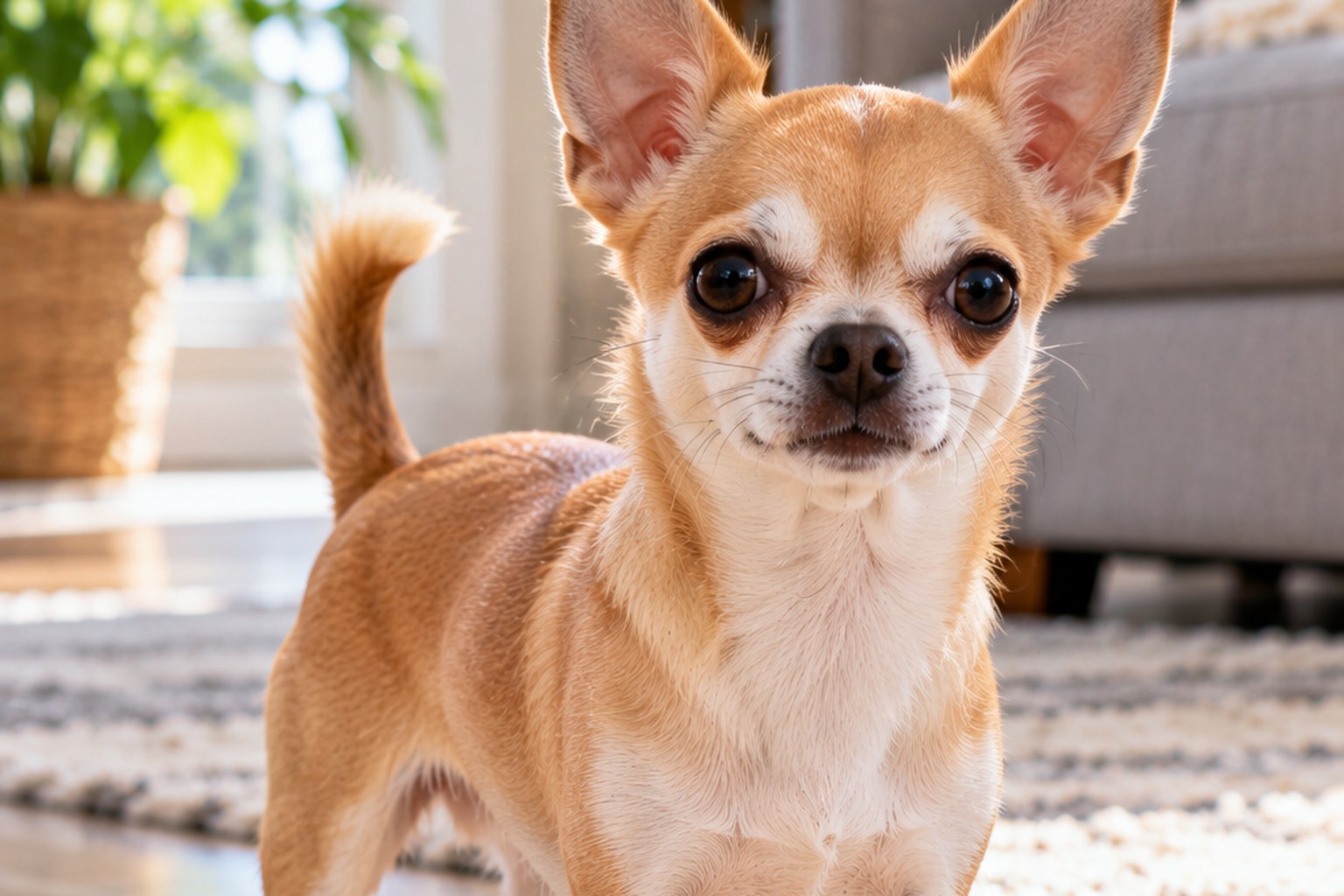
Chihuahuas have a reputation for barking at strangers, snapping at people, and guarding their favorite humans. If you have ever watched a tiny Chihuahua growl at a dog ten times its size, it is easy to understand where that reputation comes from.
But why are Chihuahuas so mean? In most cases, the behavior is not about being mean at all. Chihuahuas are small dogs in a big world, and unfamiliar people, larger animals, sudden movements, and unwanted handling can feel intimidating. Some also learn that barking or snapping makes uncomfortable situations stop.
The good news is that many of these behaviors can improve with patient training, consistent boundaries, and opportunities to feel safe. Understanding what your Chihuahua is trying to communicate is the first step toward helping them become calmer and more confident.
Why are chihuahuas so mean? The short answer
Most Chihuahuas are not mean by nature. Their small size, fear of unfamiliar situations, inconsistent training, and learned behaviors can explain much of the barking, growling, and snapping owners describe as meanness.
Imagine being a tiny dog surrounded by people who tower over you. Someone suddenly reaches down, picks you up, or tries to pet your head without warning. You might bark, pull away, or snap because you feel threatened and want the interaction to stop.
Chihuahuas can also become protective of their favorite people, beds, toys, and food. If barking repeatedly makes visitors back away or makes someone put them down, they may learn that the behavior works.
That does not mean every Chihuahua behaves this way. Some are outgoing and friendly, while others are naturally more cautious. Their personalities, early experiences, environment, and training all play a part.
Rather than labeling a Chihuahua as mean, it is more useful to ask what triggers the behavior and what the dog needs to feel secure.
The real reasons chihuahuas snap and bark
Several everyday situations can help explain why a Chihuahua seems unusually defensive or reactive.
- Their small size can make the world feel intimidatingChihuahuas are among the smallest dog breeds. Larger dogs, running children, approaching strangers, and sudden movements can be overwhelming, particularly when the Chihuahua has little room to move away.
A Chihuahua may bark or lunge to create distance. What looks like confidence or aggression can actually be an attempt to make a frightening situation less threatening.
Give your dog space and notice the situations that trigger reactions. A Chihuahua who can move away without being chased or cornered has more opportunity to feel safe.
- Being picked up too often can increase defensivenessMany owners carry their Chihuahuas everywhere, often with good intentions. However, repeatedly lifting a dog whenever something unfamiliar appears can prevent them from learning how to navigate ordinary situations at a comfortable distance.
Some Chihuahuas also dislike being picked up unexpectedly. They lose control over where they go and cannot easily move away from whatever worries them.
Let your dog approach safe situations at their own pace. Pick them up when necessary for safety or practical reasons, but avoid making carrying the automatic response to every bark or passing person.
- Limited socialization can lead to fearDogs benefit from positive, gradual exposure to different people, environments, sounds, surfaces, and everyday experiences.
A Chihuahua who has had few opportunities to experience the world calmly may find visitors, unfamiliar dogs, or busy sidewalks particularly stressful. Simply exposing them to more people is not enough; the experiences also need to feel manageable and safe.
Keep introductions brief, allow plenty of distance, and reward relaxed behavior. Never assume your dog must greet everyone they meet.
For puppy training basics, see: https://caninecalc.com/when-can-a-puppy-go-outside/
- Inconsistent boundaries can teach unwanted habitsIt is tempting to laugh when a tiny puppy growls at someone or barks persistently for attention. But if the same behavior later becomes frustrating, the dog may not understand why the rules have changed.
For example, a Chihuahua might receive attention every time they bark, be allowed to jump on guests sometimes, or have their growling dismissed because they are small.
Consistency matters. Decide which behaviors are acceptable, reward the ones you want to see, and manage situations that encourage unwanted reactions. Your Chihuahua needs clear expectations, not harsh corrections.
- Guarding people, food, or favorite spacesSome Chihuahuas become defensive when another person or animal approaches their favorite human, food bowl, bed, or toy.
A dog sitting on your lap might growl when someone tries to sit beside you. Another might snap when a family member reaches toward a treasured chew.
These reactions should not be mistaken for proof that the dog loves you more than anyone else. They are signs that the dog is uncomfortable with what is happening.
Avoid grabbing guarded items or forcing your dog to tolerate close contact. Give them space, manage access to valued resources, and seek qualified training support if the behavior is recurring or escalating.
One important note: A sudden change in behavior warrants a vet check.
Small dog syndrome: myth or real pattern
“Small dog syndrome” is an informal term for behaviors such as excessive barking, jumping, growling, and snapping that people often associate with small breeds. It is not a formal diagnosis or an inevitable Chihuahua personality trait.
However, the idea points to a genuine possibility: owners sometimes treat small dogs differently from larger dogs.
Consider two dogs barking and lunging at a visitor. The large dog might be expected to learn calmer greetings, while the Chihuahua might be picked up, cuddled, or excused because its behavior seems less threatening.
Over time, those different responses can affect what the dogs learn.
Small dogs also have legitimate reasons to be cautious. They are more physically vulnerable around larger animals, and people often handle them without asking or respecting their signals.
The solution is not to treat a Chihuahua like a large, powerful dog. It is to provide the same thoughtful training, boundaries, social opportunities, and respect for personal space that any dog needs.
Small dog syndrome is better understood as a possible pattern of learned behavior and owner responses, not a defect that comes with the breed.
How to help a snappy chihuahua
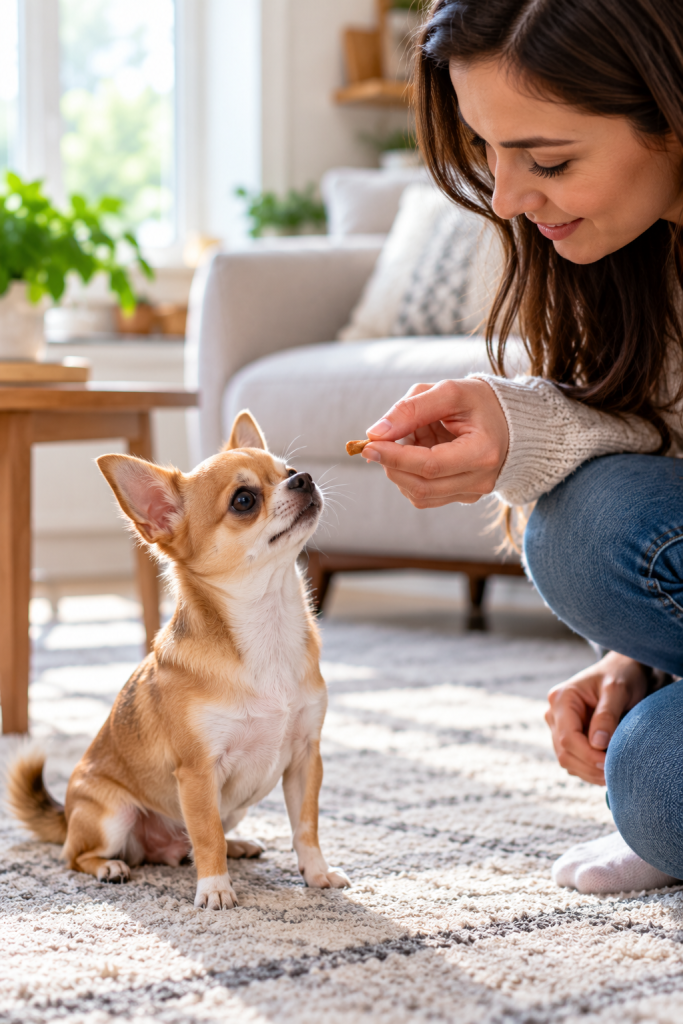
You do not need to change your Chihuahua’s personality to improve their behavior. Focus on making everyday situations more predictable and rewarding calm responses.
Reward calm behavior
Keep small dog-friendly training treats available during appropriate practice sessions. When your Chihuahua notices a visitor from a comfortable distance without barking, or settles calmly while someone walks past, reward that behavior.
Start with situations your dog can handle. If they are already barking, lunging, or trying to escape, increase the distance or reduce the intensity of the situation rather than demanding obedience.
The American Veterinary Society of Animal Behavior recommends reward-based training methods rather than aversive techniques.
Introduce new people and experiences gradually
Let your Chihuahua observe unfamiliar people from a distance. Ask visitors to avoid reaching over the dog, staring directly at them, or insisting on petting.
Reward calm observation and allow your dog to retreat whenever needed. Successful socialization does not require greeting every stranger or playing with every dog.
Stop picking them up at every trigger
Give your Chihuahua opportunities to walk, explore, and move away when it is safe to do so. If a situation is genuinely unsafe or too overwhelming, calmly move your dog to a safer place.
The goal is to build confidence, not to leave a frightened dog to cope alone.
Keep household rules consistent
Make expectations clear for everyone in the home. If your Chihuahua jumps on guests, for example, teach and reward an alternative greeting rather than allowing the behavior sometimes and correcting it at other times.
Reward behaviors you want repeated, including settling on a bed, responding to their name, and remaining relaxed at a distance from visitors.
Create a safe space
Provide a quiet bed, crate, or gated area where your Chihuahua can rest without being disturbed. Teach family members and visitors to leave the dog alone in that space.
Never make the safe area a place for punishment. Your dog should be able to retreat without someone following them or reaching inside to pick them up.
Manage visitors and walks
Use a secure leash on walks and maintain enough distance from unfamiliar dogs and people to prevent unwanted confrontations.
Before visitors arrive, decide where your Chihuahua will stay and explain the rules. A barrier, separate room, or quiet resting area may help your dog remain comfortable while guests settle in.
If snapping or biting continues, becomes more intense, or is difficult to manage safely, consult a qualified, reward-based dog trainer with experience in fear and reactivity. Look for a professional who assesses triggers and teaches practical alternatives without intimidation.
What NOT to do
Trying to stop barking or snapping through force can make an already uncomfortable Chihuahua feel less secure.
Avoid these common mistakes:
- Do not use punishment-based methods. Yelling, hitting, or using painful corrections can increase fear and undermine trust.
- Do not rely on alpha or dominance corrections. Your dog needs clear guidance and predictable boundaries, not a confrontation.
- Do not tease your Chihuahua. Pulling toys away, startling them, or deliberately provoking growling can damage trust and encourage defensive reactions.
- Do not force interactions with strangers or children. Let your dog keep a comfortable distance and ensure children are supervised and taught to respect the dog’s space.
Growling is communication. Instead of punishing the warning, identify what made your Chihuahua uncomfortable and change the situation. Reward-based training and sensible management provide a clearer path toward safer behavior.
Common questions about Chihuahua behavior
Are Chihuahuas naturally aggressive?
No. Chihuahuas are not naturally mean simply because they belong to a particular breed. Individual temperament, early experiences, fear, socialization, and learned behavior all influence how a dog responds to people and other animals.
Why does my Chihuahua bite me?
A Chihuahua may bite during unwanted handling, when someone approaches a valued resource, or when an interaction feels frightening or overwhelming. Pay attention to the circumstances surrounding the bite, avoid repeating the trigger, and seek qualified training help if the behavior recurs.
Why is my Chihuahua mean to strangers?
Strangers may move too quickly, reach toward the dog, enter the dog’s home, or get too close to their favorite person. Barking and snapping may be attempts to create distance. Give your Chihuahua space and reward calm behavior without forcing greetings.
Do Chihuahuas calm down with age?
Some Chihuahuas become more settled as they mature, develop predictable routines, and gain experience. However, age alone does not guarantee calmer behavior. Habits such as persistent barking and defensive reactions may still need consistent, positive training.
Are Chihuahuas good with children?
They can be, particularly in households where children understand how to interact gently and respect a dog’s space. Their small size makes them vulnerable to accidental injury, rough handling, and unwanted chasing. Supervise interactions closely, and never require a Chihuahua to tolerate a child approaching or touching them.
Conclusion: Understand the behavior before judging the dog
So, why are Chihuahuas so mean? Often, what looks like meanness is a mixture of fear, defensiveness, learned habits, and inconsistent boundaries. Their small size can make ordinary interactions feel intimidating, but it does not mean they are destined to bark, growl, or snap.
Give your Chihuahua opportunities to feel safe, reward calm behavior, respect their need for space, and establish consistent rules. Progress may take time, but patient, positive training can help your dog handle everyday life with greater confidence.
A Chihuahua does not have to become everyone’s favorite social butterfly. Learning to feel safe around others and respond more calmly is a worthwhile goal on its own.