Hypoallergenic dog breeds: the short answer
No dog breed is completely hypoallergenic. Every dog produces allergens, mainly proteins found in skin flakes (dander), saliva, and other body materials. Even breeds that barely shed can trigger symptoms in someone with dog allergies.
However, some hypoallergenic dog breeds are easier for allergy sufferers to live with. Their coats shed very little, which can help keep dander-containing hair and skin flakes from spreading around the home. Many people with dog allergies find that they tolerate certain low-shedding breeds better than heavily shedding dogs.
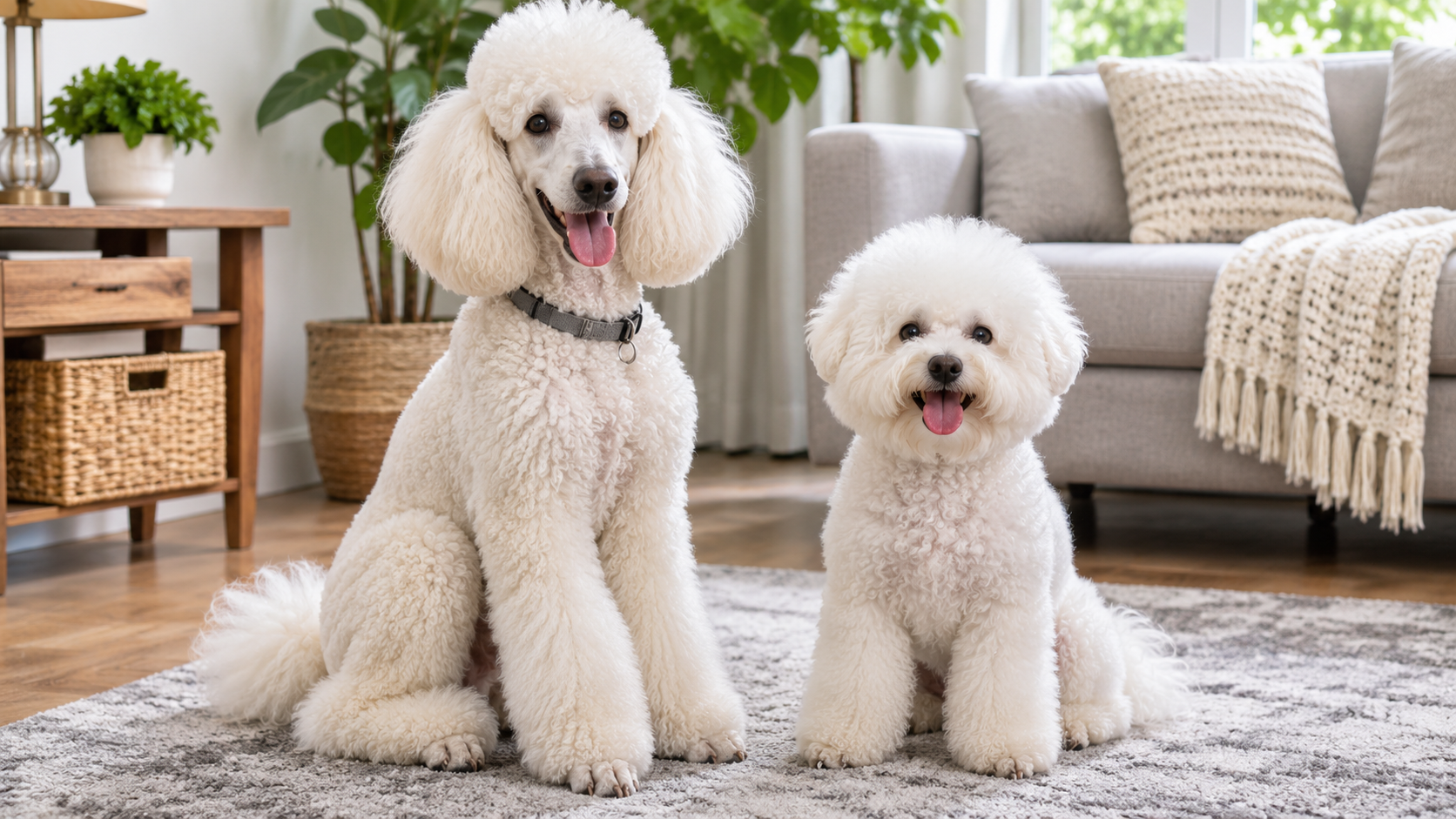
Popular options include Poodles, Bichon Frises, Maltese, Schnauzers, Portuguese Water Dogs, and Yorkshire Terriers.
The important word is certain. One person may be comfortable around a particular Poodle but react to another. Your own sensitivity matters just as much as the breed’s coat.
If you’re considering getting a dog and allergies are part of the decision, use this guide to compare breeds, understand their grooming needs, and find a sensible way to test your compatibility before committing.
What “hypoallergenic” really means
Dog allergies are not simply reactions to fur. The main triggers are proteins produced by dogs, including proteins found in their dander and saliva.
Dander consists of tiny flakes of dead skin. When dogs shed hair, groom themselves, or spend time around the house, allergen-containing material can spread onto furniture, carpets, clothing, and other surfaces.
Coat type influences how much loose hair and associated dander gets distributed around a home.
Low-shedding dogs often retain more loose hair in their coats instead of dropping it throughout the house. This can reduce some everyday exposure, particularly when the dog receives regular brushing and grooming.
But low shedding does not mean low allergen production. A dog can still release allergen proteins through skin flakes and saliva.
There are also two important differences between dogs:
- Individual dogs: Two dogs of the same breed may produce different amounts of allergens or trigger different reactions.
- Individual people: Someone with mild sensitivity may tolerate a breed that causes noticeable symptoms for another person.
This is why breed lists are useful starting points, not guarantees. Coat type can help narrow your choices, but spending time with the actual dog is much more informative.
Hypoallergenic is not the same as low-shedding
These terms overlap, but they describe different things.
Low-shedding is mainly about how much loose hair a dog leaves on floors, clothing, and furniture.
Hypoallergenic is about the potential for a dog to trigger allergic reactions.
A low-shedding coat can help limit the spread of allergen-containing hair, but it cannot eliminate the proteins responsible for dog allergies.
If your main concern is keeping hair off your sofa, clothes, and floors, see our guide to low-shedding dogs. That guide approaches the subject from a housekeeping and coat-maintenance perspective rather than an allergy-first perspective.
15 hypoallergenic dog breeds compared
The following breeds are commonly considered by people looking for a lower-shedding companion. They range from tiny apartment-friendly dogs to athletic medium-sized breeds.
One important distinction: these are popular less-shedding options, not scientifically guaranteed low-allergen dogs.
| Breed | Size | Coat type | Grooming load | Best for |
|---|---|---|---|---|
| Poodle (Toy, Miniature, Standard) | Small to large | Dense, curly | High | Intelligent, active households |
| Bichon Frise | Small | Soft, curly | High | Companion-focused homes |
| Maltese | Small | Long, silky | High | Calm indoor lifestyles |
| Miniature Schnauzer | Small | Wiry double coat | Moderate–high | Small homes and families |
| Standard Schnauzer | Medium | Wiry double coat | Moderate–high | Active families |
| Portuguese Water Dog | Medium–large | Wavy or curly | High | Active owners |
| Shih Tzu | Small | Long, flowing | High | Indoor companionship |
| Yorkshire Terrier | Small | Fine, silky | High | Smaller households |
| Havanese | Small | Long, soft, wavy | High | Social family homes |
| Coton de Tulear | Small | Soft, cotton-like | High | Companion-focused owners |
| Kerry Blue Terrier | Medium | Soft, wavy, curly | High | Experienced terrier owners |
| Soft Coated Wheaten Terrier | Medium | Soft, silky, wavy | High | Active families |
| Chinese Crested | Small | Hairless or powderpuff | Moderate–high | Owners comfortable with special coat care |
| Xoloitzcuintli | Small to large | Hairless or short-coated | Low–moderate | Owners wanting a distinctive companion |
| Lagotto Romagnolo | Medium | Dense, curly, woolly | High | Active owners who enjoy grooming |
Grooming loads are practical estimates, not allergy ratings. Individual coat condition and preferred haircut can change the amount of maintenance required.
Here is what to know about the breeds before narrowing your shortlist:
1. Poodle: Toy, Miniature, and Standard Poodles offer three different size options. Their tightly curled coats shed very little, but they need regular brushing and professional clipping. They are intelligent, active dogs that need more than occasional walks.
2. Bichon Frise: A cheerful little companion with a fluffy coat that holds loose hair. Regular brushing and professional grooming are important to prevent painful mats.
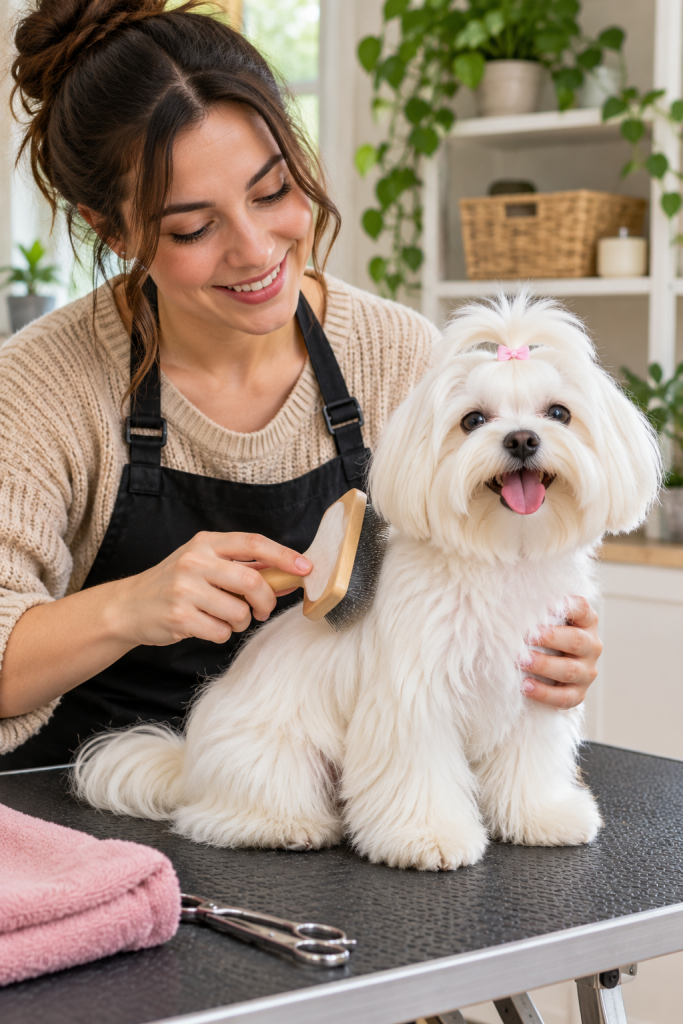
3. Maltese: This small companion has a long, silky coat that sheds relatively little. Daily brushing is often necessary if you keep the coat long. Shorter pet trims can simplify maintenance.
4. Miniature Schnauzer: A sturdy little dog with a distinctive beard and wiry coat. It needs regular trimming and coat maintenance. Its alert, energetic personality suits owners who enjoy training.
5. Standard Schnauzer: Larger than its Miniature relative, this intelligent working breed needs exercise, consistent training, and regular coat care. It can be a good match for an active household.
6. Portuguese Water Dog: Athletic, energetic, and often happiest with an active family. Its curly or wavy coat requires consistent brushing and professional maintenance. It is not the easiest choice for someone wanting a low-exercise dog.
7. Shih Tzu: A friendly companion with a long, flowing coat. Haircuts can make daily care easier, but regular grooming remains essential. Its exercise needs are generally more manageable than those of working breeds.
8. Yorkshire Terrier: Yorkies have fine, silky hair rather than a typical heavy-shedding coat. Their small size suits many compact homes, although their coats need frequent brushing and trimming.
9. Havanese: Sociable and affectionate, this breed often fits well into family life. Its soft coat requires regular brushing, whether kept long or in a shorter style.
10. Coton de Tulear: Known for its cotton-like coat and companionable personality. The coat looks soft and easygoing, but it can tangle quickly without consistent grooming.
11. Kerry Blue Terrier: A confident, active terrier with a soft, wavy coat. It requires regular professional grooming and an owner comfortable with terrier independence.
12. Soft Coated Wheaten Terrier: Its silky, wavy coat is a familiar feature of the breed. It needs frequent brushing to prevent tangles and mats. Wheatens are lively, friendly dogs that benefit from daily activity.
13. Chinese Crested: Available in hairless and powderpuff varieties. The hairless variety still produces allergens and needs attention to exposed skin. The powderpuff has a full coat that requires brushing.
14. Xoloitzcuintli: Also called the Mexican Hairless, the Xolo comes in hairless and coated varieties and several sizes. Hairless dogs need appropriate skin care, and their lack of fur does not make them allergen-free.
15. Lagotto Romagnolo: An energetic Italian breed with a dense, curly coat. It needs regular coat maintenance and exercise. Its working-dog background makes mental stimulation important.
The main takeaway is that a lower-shedding coat often comes with a grooming commitment. If you choose one of these breeds, budget for brushing, bathing, and professional grooming where needed.
Best hypoallergenic breeds by living situation
Your home and daily routine matter just as much as coat type. Here are some general starting points.
Apartments and small homes: Toy Poodles, Maltese, Bichon Frises, Yorkshire Terriers, and Havanese are worth considering. Their smaller size can make everyday living easier, although exercise and companionship needs still matter. See our guide to toy dog breeds for more small-breed options.
Families with children: Bichon Frises, Havanese, Poodles, and Soft Coated Wheaten Terriers can suit family households. Individual temperament, socialization, and supervision around children are more important than a breed label.
First-time owners: A Bichon Frise, Havanese, or Toy Poodle may be worth exploring. However, remember that grooming can be demanding even when a dog’s exercise needs are modest.
Active owners: Portuguese Water Dogs, Standard Poodles, Standard Schnauzers, and Lagotto Romagnolos offer more opportunities for hiking, training, and outdoor activities.
None of these matches guarantees allergy compatibility. Choose a dog whose everyday needs you can meet, then test your reaction to that particular breed and individual.
Living with a dog when you have allergies
If you bring a dog home, a few household habits may help limit exposure to allergens.
- Keep up with grooming: Follow a bathing and brushing routine appropriate for the dog’s coat. Avoid excessive bathing that could irritate its skin.
- Groom outside the bedroom: Brush the dog outdoors when practical, or have a non-allergic household member handle grooming.
- Choose easier-to-clean flooring: Hard floors are generally easier to clean than wall-to-wall carpeting, which can trap dander.
- Wash bedding regularly: Use washable dog bedding and clean blankets frequently.
- Consider an air purifier: A properly sized HEPA air purifier may help reduce airborne allergen particles. It is not a complete solution.
- Wash your hands: After handling, petting, or playing with your dog, wash your hands before touching your face.
Keeping the dog out of the bedroom can also help maintain one lower-exposure space. These measures may reduce household allergen levels, but they cannot guarantee symptom-free living.
Before you commit: test properly
A breed description cannot tell you exactly how your body will react to a particular dog.
Before bringing one home, arrange to spend meaningful time with the breed you’re considering.
A breeder visit, rescue visit, or carefully arranged fostering opportunity can give you a better idea of what daily exposure feels like. Ideally, spend time with the actual adult dog rather than relying only on a puppy’s coat.
A brief introduction is not necessarily enough. Repeated exposure may produce a different experience from a short visit, and reactions can vary between individual dogs.
If your allergies are significant, discuss your plans with your own doctor or an allergist before making a commitment. They can help you understand your sensitivity and whether living with a dog is a realistic option.
A weekend visit is a much better starting point than choosing a breed based on photographs or an online list. And if you have a household member with allergies, include that person in the testing process.
Common questions about hypoallergenic dog breeds
Are hypoallergenic dogs completely allergy-free?
No. Every dog produces allergen proteins, including proteins found in saliva and dander. Even hairless breeds can trigger allergic reactions. The term hypoallergenic simply describes dogs commonly considered as potentially easier for some allergy sufferers to live with.
Which is the most hypoallergenic dog breed?
There is no scientifically established winner. Poodles, Bichon Frises, and Portuguese Water Dogs are popular choices because of their low-shedding coats. However, no breed consistently guarantees fewer allergic reactions. Your response to an individual dog matters more than its position on a breed list.
Are doodles and crossbreeds hypoallergenic?
Not necessarily. A Goldendoodle or Labradoodle may inherit a curly, lower-shedding coat, but coat characteristics can vary between puppies in the same litter. A Poodle cross is not automatically hypoallergenic, and its adult coat can be difficult to predict.
Do hypoallergenic dogs still shed?
Yes. Some shed very little, while others have hair that grows continuously and needs regular trimming. Even hairless dogs have skin that naturally sheds. Low-shedding should never be confused with completely non-shedding.
Can someone with dog allergies own any dog?
Some people with dog allergies can live comfortably with a dog using careful exposure management and household cleaning. Others experience symptoms even around low-shedding breeds. Testing your reaction to an individual dog and discussing your situation with an allergist are sensible steps before committing.
Conclusion
Hypoallergenic dog breeds can be a useful starting point if you love dogs but worry about allergies. Poodles, Bichon Frises, Maltese, Schnauzers, and Portuguese Water Dogs are among the popular options, with different sizes, personalities, exercise requirements, and grooming commitments.
But don’t let the hypoallergenic label make the decision for you. No breed is completely allergy-free, and low shedding does not automatically mean low allergen exposure.
Choose a breed that fits your home and lifestyle, spend meaningful time with the actual dog, and understand your own allergy response before bringing a new companion home. A little research and a proper trial can help you make a much more confident decision.