Finding dog hair on your clothes, furniture, and floors can get old quickly. If you love dogs but would rather spend less time vacuuming, low shedding dogs are worth considering. Certain breeds naturally leave less loose hair around the house, making everyday cleanup easier.
There are two important trade-offs to understand first. No dog is 100% hypoallergenic, and low shedding does not guarantee that a dog will be comfortable for someone with allergies. Also, dogs that shed very little often need more brushing, coat maintenance, and professional grooming because loose hair remains trapped in their coats. The American Kennel Club (AKC) makes the same distinction in its guidance on dogs and allergies.
With those expectations in mind, these 15 breeds offer a useful starting point, from tiny apartment companions to larger, active dogs.
What “low shedding” actually means
Dogs naturally shed old hair as part of their hair-growth cycle. The amount you notice depends on genetics, coat type, season, and the individual dog.
Many low-shedding breeds have curly, wavy, silky, or wiry coats that hold onto loose hairs instead of dropping them around the home. This can mean less visible fur on your sofa, but those trapped hairs must be brushed out. Without regular grooming, they can tangle into mats that pull on the skin and become difficult to remove.
Coat type also matters. A double coat has an insulating undercoat beneath the outer coat, while many low-shedding breeds have coats that grow continuously or retain loose hairs. These are general patterns, not a guarantee about every individual dog.
What about hypoallergenic dogs? No breed is completely hypoallergenic. Dog allergies can involve proteins found in dander, saliva, and other secretions, not simply loose hair. Low shedding may make cleanup easier and may suit some allergy sufferers, but it cannot promise fewer symptoms. Even a Poodle or Schnauzer can trigger a reaction. The AKC explains why breed labels cannot guarantee an allergy-free experience in its hypoallergenic dog guide.
Low shedding small breeds
Small dogs can be a good fit for apartments and smaller homes, but their coats still need a regular care routine. These six popular choices cover several coat types and grooming styles, with two additional small companion breeds included to round out the list.
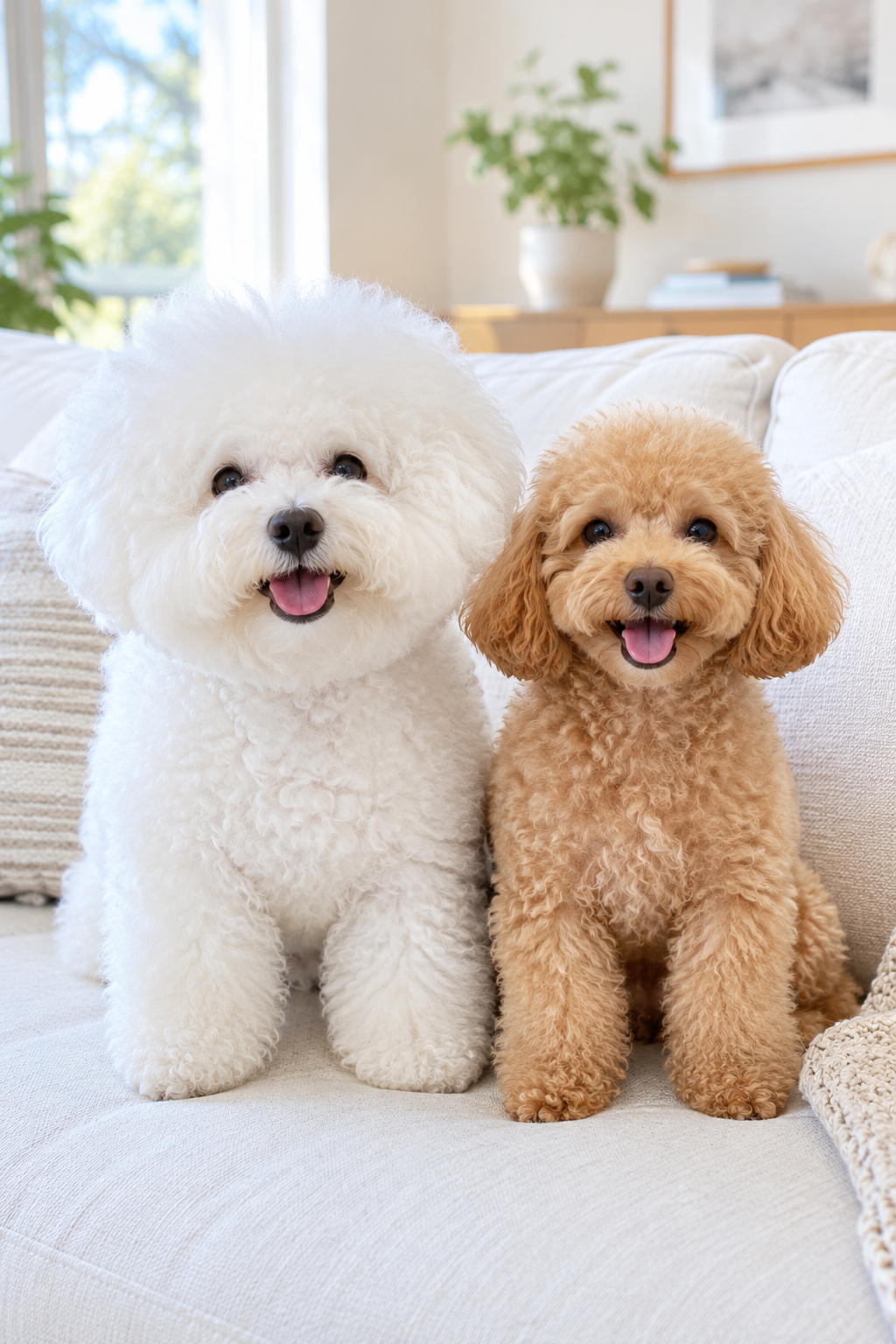
1. Toy Poodle
Shedding: Minimal. The Toy Poodle has a dense, curly coat that retains loose hair and can be clipped into different styles. Its small size makes it easy to handle during home brushing, but frequent combing and professional trims are still important.
2. Miniature Poodle
Shedding: Minimal. Like the Toy Poodle, the Miniature Poodle has a curly coat that can mat when neglected. It is slightly larger, but the basic grooming commitment is similar: brush consistently and arrange regular trims.
3. Bichon Frise
Shedding: Minimal. The Bichon’s soft, fluffy double coat tends to hold loose hairs, helping keep visible shedding low. Its plush appearance takes work to maintain, with brushing several times a week, ideally more often, and professional clipping commonly needed every four to six weeks.
4. Maltese
Shedding: Light to minimal. Maltese dogs have long, silky hair rather than a thick, shedding-prone coat. A short pet trim makes upkeep more manageable, while a long coat needs frequent brushing to prevent tangles and knots.
5. Yorkshire Terrier
Shedding: Minimal. The Yorkie’s fine, silky coat grows continuously and typically leaves relatively little loose hair around the home. A shorter haircut can simplify grooming, but long coats need regular brushing and gentle detangling. For details about expected size and puppy development, see the Yorkie growth chart.
6. Shih Tzu
Shedding: Light to minimal. Shih Tzus have a long double coat that can trap loose hairs, but the coat mats easily if brushing is skipped. A shorter puppy cut reduces daily maintenance, although regular brushing and professional grooming remain necessary.
7. Miniature Schnauzer
Shedding: Minimal. This small, sturdy breed has a wiry outer coat and softer undercoat. Its coat generally sheds less than many common breeds, but it needs brushing, occasional hand-stripping or clipping, and routine attention to the beard and legs.
8. Havanese
Shedding: Light to minimal. The Havanese has a soft, abundant coat that may be kept long or clipped into a shorter style. Long hair needs frequent brushing, while a practical pet cut can reduce tangles without eliminating grooming appointments.
9. Coton de Tulear
Shedding: Minimal. The Coton is known for its cottony coat, which tends to retain loose hairs. Its hair can mat quickly, so frequent gentle brushing is important. A shorter trim can make everyday care easier for busy households.
Low shedding medium and large breeds
Larger low-shedding dogs still need substantial coat care, and some are energetic working dogs rather than relaxed couch companions. Match their exercise needs to your lifestyle, not just their shedding level.
10. Standard Poodle
Shedding: Minimal. The Standard Poodle has the same dense, curly coat as its smaller relatives, in a much larger package. Loose hairs often remain in the curls, making regular brushing and professional clipping essential. Plan for daily coat checks if the hair is kept long.
11. Portuguese Water Dog
Shedding: Minimal. This athletic, medium-sized breed has a dense coat that may be curly or wavy. It leaves relatively little loose hair, but the coat needs consistent brushing and trimming. Portuguese Water Dogs also need plenty of exercise and mental engagement.
12. Standard Schnauzer
Shedding: Minimal to light. The Standard Schnauzer’s wiry coat can help reduce loose hair around the home. Regular brushing and clipping or hand-stripping are needed to keep the coat in good condition, especially around the face and legs.
13. Giant Schnauzer
Shedding: Minimal to light. The Giant Schnauzer has a dense, wiry coat similar in type to the smaller Schnauzers, but it belongs to a much larger, powerful working breed. Expect regular coat maintenance, daily exercise, training, and space in your routine for an active dog.
14. Soft Coated Wheaten Terrier
Shedding: Light to minimal. The Wheaten Terrier has a soft, wavy coat that tends to shed less visibly than many double-coated breeds. That silky texture can tangle, so thorough brushing and regular trimming help prevent mats. Wheatens are lively terriers and need more than coat care alone.
15. Lagotto Romagnolo
Shedding: Minimal. This medium-sized Italian breed has a dense, curly coat that traps loose hair and can mat if neglected. Regular brushing and trimming are needed, and the coat may require more care depending on its texture. Lagotti also benefit from exercise and activities that challenge their noses and minds.
Low shedding dogs at a glance
The shedding descriptions below are general breed tendencies, not a scientific ranking. Grooming needs depend on coat length, haircut, and the individual dog.
| Breed | Size | Shedding level | Grooming effort |
|---|---|---|---|
| Toy Poodle | Toy | Minimal | High |
| Miniature Poodle | Small | Minimal | High |
| Bichon Frise | Small | Minimal | High |
| Maltese | Small | Light to minimal | High |
| Yorkshire Terrier | Toy | Minimal | Moderate to high |
| Shih Tzu | Small | Light to minimal | High |
| Miniature Schnauzer | Small | Minimal | Moderate to high |
| Havanese | Small | Light to minimal | Moderate to high |
| Coton de Tulear | Small | Minimal | High |
| Standard Poodle | Large | Minimal | High |
| Portuguese Water Dog | Medium | Minimal | High |
| Standard Schnauzer | Medium | Minimal to light | Moderate to high |
| Giant Schnauzer | Large | Minimal to light | High |
| Soft Coated Wheaten Terrier | Medium | Light to minimal | High |
| Lagotto Romagnolo | Medium | Minimal | Moderate to high |
The trade-off: less shedding, more grooming
For most low-shedding breeds with continuously growing or easily tangled coats, expect regular brushing and professional grooming appointments roughly every four to eight weeks. Some coats need daily attention, especially when kept long. A short haircut can reduce brushing time, but it does not remove the need for bathing, trimming, ear care, and nail maintenance.
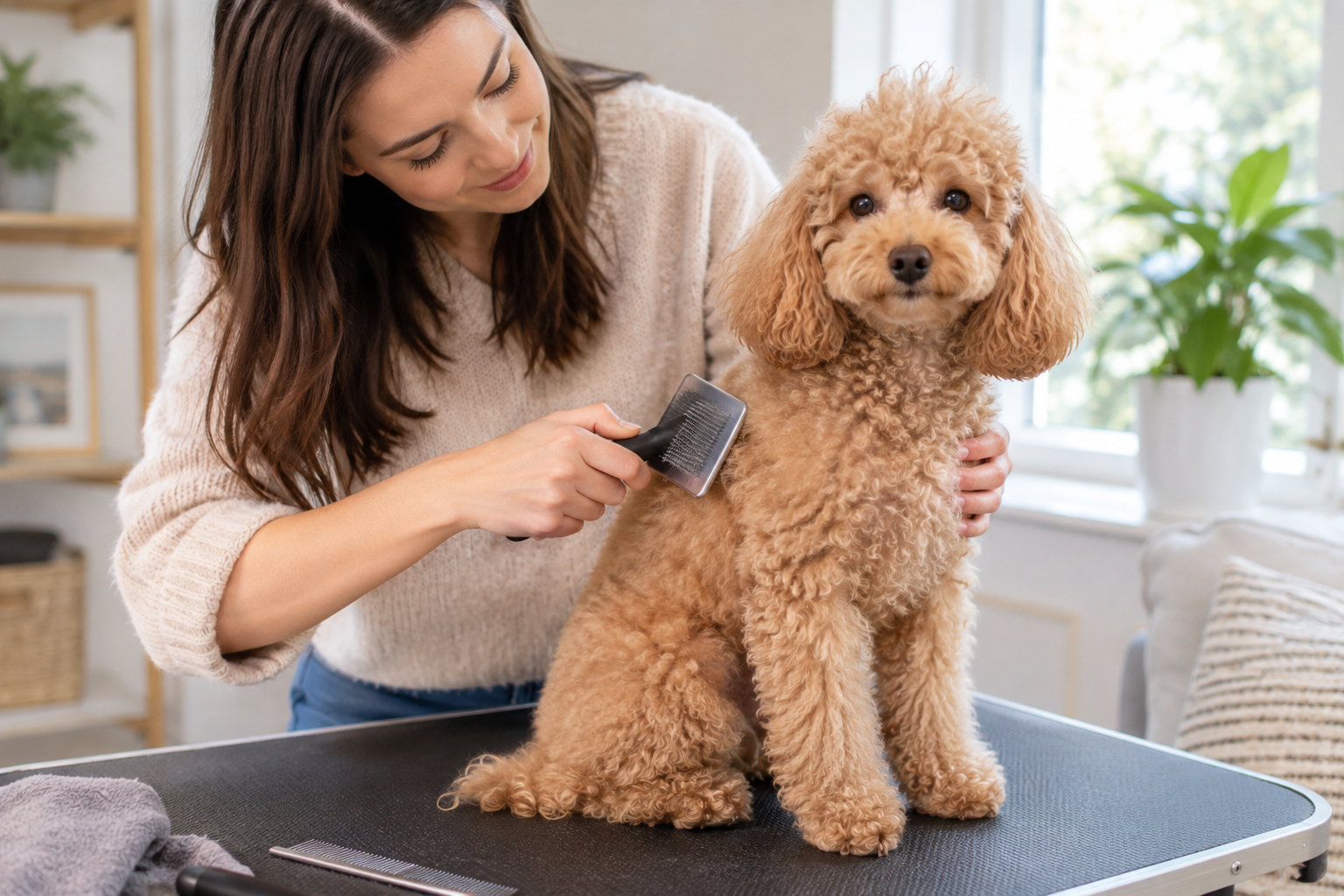
Grooming also affects your budget. Costs vary by location, dog size, coat condition, haircut, and how often your dog needs an appointment. Larger breeds may cost more to groom, and neglected coats can take extra time to untangle. Ask a local groomer about typical maintenance costs before choosing a breed.
These dogs can suit people who prefer less visible hair around the house and are happy to maintain a coat. They may be less suitable for someone who wants the lowest possible ongoing care commitment. If you can tolerate more hair on furniture and clothing, a short-coated dog may be simpler to groom, even if it sheds more.
What about doodles and mixed breeds?
Poodle mixes, including Labradoodles and Goldendoodles, are often promoted as non-shedding or hypoallergenic. Neither description is guaranteed. A puppy can inherit a coat that resembles a Poodle’s, a coat that sheds more, or a mixture that is difficult to predict.
Even puppies from the same litter can develop different coat textures and shedding patterns. If minimizing shedding is a priority, ask about the adult coats of the puppy’s parents and the grooming needs of the likely coat type. Remember that a low-shedding coat still does not guarantee fewer allergy symptoms.
How to choose a low-shedding dog
Start with size, energy, temperament, and daily routine, then consider shedding. An active Portuguese Water Dog or Giant Schnauzer may be a poor match for a household seeking a quiet, low-exercise companion, while a small dog still needs walks, play, training, and attention.
Next, be realistic about grooming. Decide whether you can brush several times per week, keep up with coat checks, and budget for regular trims. Meet adult dogs of the breed whenever possible, since seeing the coat in person can help you understand its texture and upkeep.
If allergies are your reason for looking at low shedding dogs, spend time around the specific breed and, where possible, the individual dog before committing. A short visit cannot guarantee how you will react at home. For significant or persistent symptoms, speak with an allergist rather than relying on a breed label.
Finally, consider lifespan and long-term care as part of the decision. This guide to how long dogs live by size can help you think beyond the puppy stage and plan for years of care.
Frequently asked questions
What dog breed sheds the least?
Poodles, Bichon Frises, Maltese, and several Schnauzer varieties are commonly considered minimal shedders. There is no universal winner, and even dogs within the same breed can differ.
Are low shedding dogs hypoallergenic?
No breed is fully hypoallergenic. Allergies can be triggered by proteins in dander, saliva, and other secretions, so less loose hair does not mean no allergic reaction.
Do low shedding dogs need haircuts?
Yes, most breeds on this list need regular trimming because their coats keep growing or become tangled. The frequency depends on the breed and the haircut you maintain.
What is the lowest-maintenance low shedding dog?
No low-shedding dog is zero-maintenance. A simple, short pet trim can reduce brushing for some breeds, but coat care, bathing, nail trimming, and other routine needs still apply.
Are doodles really non-shedding?
Not reliably. Poodle mixes can inherit different coat types, and shedding is not guaranteed by the mix. Their grooming needs can also be significant, even when loose hair is minimal.
Conclusion
Low shedding dogs can mean less fur on your floors and clothes, but they are not automatically easier to care for. The best match is a dog whose size, energy, temperament, and grooming needs fit your daily life. Choose with realistic expectations, especially if allergies are part of the decision, and you will be better prepared for a happy long-term match.
By Jennifer
Jennifer is the founder and owner of CanineCalc, a dog owner and researcher who creates practical guides to help people understand dog size, growth, and everyday care. She is not a veterinarian, breeder, or certified trainer. This article is intended for general education and is not a substitute for individualized veterinary or allergy advice.