Last updated: October 2026
Finding a tiny white tooth on the living-room rug can be a surprise, especially when you didn’t realize puppies lose their baby teeth in the first place. You might wonder whether your puppy is hurting, whether the small spot of blood on a toy is normal, or whether a tooth that refuses to fall out needs attention.
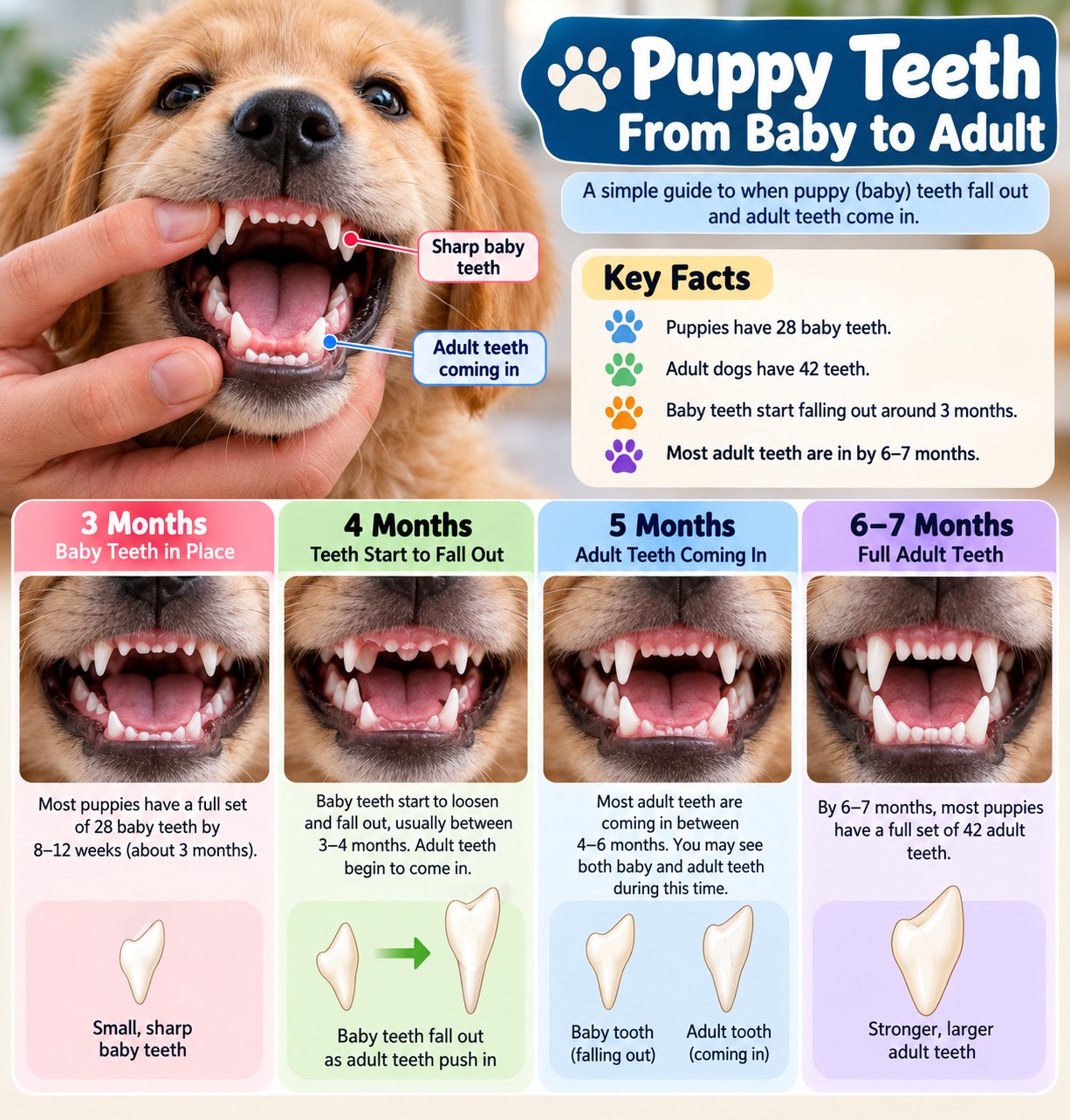
Here’s the good news: puppy teething is a normal part of growing up. Most puppies start losing their baby teeth at around 3–4 months of age, and their adult teeth are usually in place by about 6–7 months. The important part is knowing what normal tooth replacement looks like and which signs deserve a closer look.
When Do Puppies Lose Their Baby Teeth?
When do puppies lose their baby teeth? It is the normal stage when a puppy’s 28 deciduous teeth shed as 42 permanent teeth emerge, usually starting around 12–16 weeks and ending by about 6–7 months. Timing varies, so use age as a guide rather than a strict deadline.
Most puppies begin losing baby teeth at about 3–4 months and have their adult set by around 6–7 months. According to the Merck Veterinary Manual, updated in June 2025, permanent teeth usually start appearing at 4–5 months and are all present by 7 months. The American Kennel Club’s teething timeline also places the start of noticeable tooth shedding around weeks 12–16.
The dates are estimates, not appointments your puppy’s teeth have to keep.
Sources differ slightly in how they describe the beginning of teething. Some focus on when the baby teeth begin falling out, while others describe when the permanent teeth start emerging. Those milestones overlap, and individual puppies don’t all develop on precisely the same schedule.
In other words, some months bring bigger changes than others.
Most dogs have two sets of teeth during their lives. The first is the baby, or deciduous, set. The second is the permanent adult set. According to Merck Veterinary Manual, most dogs have 28 baby teeth and 42 adult teeth. The adult teeth gradually replace the baby teeth as your puppy grows.
Puppy Teething Timeline by Age
A puppy teething timeline usually moves from a full set of baby teeth at around 6 weeks to the first lost teeth around 12–16 weeks, followed by gradual replacement over the next few months. According to the American Kennel Club, tiny shed teeth may turn up around weeks 12–16, and puppy teeth should generally be gone by about six months. Merck Veterinary Manual places the complete adult set by around seven months.
How Long Does Puppy Teething Last?
Here is what you can generally expect as the weeks pass.
| Puppy age | What is happening | What you might notice |
|---|---|---|
| Weeks 2–4 | Baby teeth begin erupting through the gums. | Tiny teeth start appearing while the puppy is still with the mother and littermates. |
| Weeks 5–6 | Most or all baby teeth have come in. | Your puppy has a set of small, sharp teeth and is transitioning toward eating solid puppy food. |
| Weeks 8–12 | Your puppy is growing, exploring, and practicing normal chewing behavior. | Mouthing, playful nipping, and interest in chewable objects may be noticeable. |
| Weeks 12–16 | Baby teeth begin falling out, and permanent teeth start appearing. | You may find a tiny tooth on the floor, notice extra chewing, or see a small spot of blood on a toy. |
| Weeks 16–20 | Tooth replacement continues. | Some teeth may look loose while the new ones emerge. Chewing can remain intense. |
| Weeks 20–28, roughly 5–7 months | Most puppies approach the end of the transition to adult teeth. | Check that baby teeth are not remaining beside their permanent replacements. |
Which teeth fall out first?
The small front incisors are among the first teeth owners may notice changing. The canine teeth—the pointed teeth commonly called fangs—and the premolars also undergo replacement as adult teeth emerge.
One detail that can be confusing: dogs don’t have baby molars. Their adult molars arrive as part of permanent dentition, so a new-looking tooth toward the back of the mouth isn’t automatically a retained baby tooth.
What most quick answers skip is that a retained baby tooth beside an emerging adult tooth is a different issue from a tooth that simply hasn’t fallen out yet. That distinction matters more than whether your puppy is a few days ahead of or behind the timeline.
Related: when puppies stop growing
What Is Normal During Puppy Teething?
Some temporary behavior changes are expected during teething. Your puppy may want to chew more, explore objects with its mouth, or become interested in toys that previously held little appeal.
They’ll mouth toys more, you’ll spot the occasional drool, and you may notice a little blood on a chew.
Common signs of ordinary teething include:
- Increased chewing: Your puppy may seek out toys, blankets, or furniture more often than usual.
- Mild gum tenderness: The gums may look slightly irritated around erupting teeth.
- A tiny amount of blood: A small spot on a toy can occur as a tooth loosens or emerges.
- Loose or missing baby teeth: You may find a small tooth near the puppy’s bed or feeding area.
- Temporary changes in play: Your puppy may prefer chewing a toy to playing a game that requires a lot of mouth contact.
A missing tooth isn’t usually a reason to panic.
Do puppies swallow their baby teeth?
Yes, they may. Puppies often swallow shed baby teeth while eating, playing, or grooming themselves. A tooth that disappears without turning up on the floor doesn’t automatically mean something is wrong.
A useful opinion that some owners might disagree with: you don’t need to collect every baby tooth to know that teething is progressing. Finding a tooth can be interesting, but watching the mouth for normal replacement and problems with alignment is more useful than keeping a count of the teeth you find.
Quick note: mild bleeding and chewing can happen during teething, but they shouldn’t be used to explain every mouth-related problem. Significant or persistent bleeding, severe pain, facial swelling, or an inability to eat deserves veterinary attention.
This guide covers the typical teething timeline and everyday signs. It doesn’t diagnose a specific tooth, bite, or jaw problem. General guidance works best for an otherwise healthy puppy; it won’t tell you whether an injured or painful tooth needs treatment.
How to Help a Teething Puppy Safely
A teething puppy needs safe outlets for chewing, not a household ban on anything that can go in its mouth. Chewing is normal behavior, and providing suitable alternatives can protect furniture while giving your puppy an appropriate activity.
The big question is how much your puppy still has to grow. Reward your puppy for choosing the right item.
Five ways to make teething easier
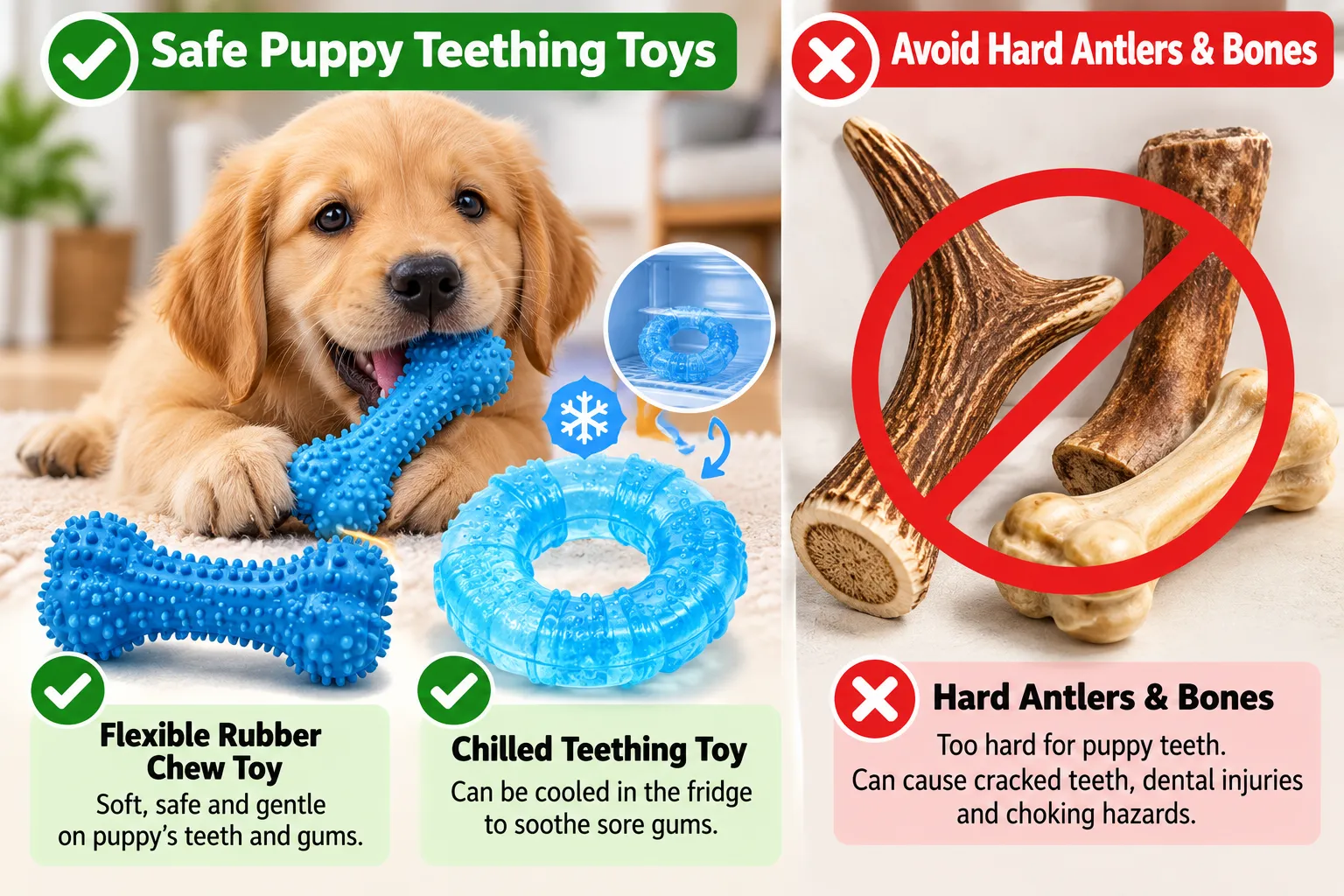
- Choose flexible chew toys. Look for puppy-appropriate toys that have some give and are large enough not to be swallowed whole. A useful check is whether the material can be indented with a fingernail.
- Try a puppy-safe chilled toy. Follow the manufacturer’s instructions for chilling a suitable teething toy. Avoid offering something frozen solid or hard enough to damage teeth.
- Supervise chewing. Remove toys that break apart, fray, or shed pieces. A toy that was safe last week may no longer be safe once your puppy has chewed through it.
- Redirect inappropriate chewing. When your puppy grabs a shoe or starts chewing your fingers, calmly offer a suitable toy instead. Don’t encourage hands or feet to become regular chew targets.
- Introduce gentle mouth checks. Briefly and gently lift your puppy’s lips when it is relaxed. Reward calm behavior so you can become familiar with your puppy’s teeth and spot changes over time.
The goal is comfort and safe behavior.
What should you avoid giving a teething puppy?
Avoid extremely hard chew objects, including bones, antlers, hard nylon toys, and ice cubes. These may fracture teeth instead of relieving discomfort. Veterinary guidance from VCA Animal Hospitals recommends choosing toys with some flexibility rather than very hard objects. Supervision is still needed, even with a toy designed for puppies.
Quick Comparison
| Option | Best For | Key Benefit | Limitation |
|---|---|---|---|
| Flexible puppy chew toy | Everyday chewing and mild teething discomfort | Gives under pressure and provides an appropriate chewing outlet | Must be the right size and checked for damage |
| Puppy-safe chilled toy | Offering a cool chewing surface | Can provide a soothing alternative | Must be used according to its instructions and supervised |
| Hard bones or antlers | Not recommended as routine teething chews | May attract a persistent chewer | Can fracture teeth |
| Pulling a loose tooth at home | Not recommended | No reliable benefit over allowing normal shedding | May injure the gums or damage a tooth that needs veterinary assessment |
You don’t need to make a puppy’s mouth entirely chew-proof. Focus on appropriate objects, supervision, and early training.
When to Call the Vet About Puppy Teeth
Most puppy tooth loss happens without a major problem. The important exception is a retained baby tooth, which is a baby tooth that remains in the mouth after the permanent tooth beside it has started erupting.
You might notice two teeth occupying what appears to be the same position. This is particularly important to check around the canine teeth, where the smaller, sharper baby tooth may remain beside a larger adult canine.
According to VCA Animal Hospitals’ guidance on retained baby teeth, retained teeth can interfere with the position of adult teeth, contribute to crowding, and trap food around the gums. Small breeds and some short-nosed breeds are more prone to this issue. A veterinarian can examine the mouth and determine whether treatment is needed.
Should you wait for a retained baby tooth to fall out?
Some general advice says to give a loose baby tooth time to fall out on its own. That’s reasonable while the tooth is simply loose and its adult replacement hasn’t emerged beside it.
But if you can see a baby tooth and its permanent replacement occupying the same area, arrange a veterinary examination rather than waiting indefinitely. A veterinarian can decide whether the retained tooth needs removal.
Don’t try to pull it yourself. A baby tooth’s roots and the developing adult tooth beneath it need proper assessment, and an at-home extraction can cause injury.
Signs that need a veterinary check
Contact your veterinarian if you notice any of the following:
- Two teeth in the same position: A baby tooth remains alongside an emerging adult tooth.
- Persistent or heavy bleeding: A little blood on a toy can occur, but ongoing or substantial bleeding should not be dismissed as teething.
- Difficulty eating: Your puppy repeatedly drops food, refuses meals, or seems unable to chew comfortably.
- Visible tooth damage: A chipped, broken, or unusually positioned tooth needs professional assessment.
- Obvious pain or swelling: Persistent pawing at the mouth, marked discomfort, or swelling around the face or gums warrants prompt attention.
Seek urgent veterinary care for severe bleeding, substantial facial swelling, significant mouth trauma, or an inability to eat or drink.
Here’s the thing: the age of the puppy is helpful, but the condition of the mouth matters more. A puppy that is four months old and chewing normally may simply be going through teething. A puppy of the same age with a broken tooth or a painful, swollen mouth needs a different response.
If you are unsure what you are seeing, a photograph may help you explain the concern when contacting the clinic, but it cannot replace a hands-on dental examination when one is needed.
Related: puppy growth chart predictor
Common Questions About Puppy Teething
Q: What’s the best age to expect a puppy to start losing baby teeth?
Most puppies start losing their baby teeth around 12–16 weeks, or roughly 3–4 months. The change continues over several months, with the adult set generally complete by 6–7 months.
Q: How do I know if my puppy’s tooth loss is normal?
Look for gradual tooth replacement, ordinary chewing, and possibly a small spot of blood on a toy. Heavy bleeding, significant pain, difficulty eating, or a baby tooth beside an emerging adult tooth deserves a veterinary check.
Q: Should I be worried if I can’t find my puppy’s missing teeth?
Usually not. Puppies may swallow shed baby teeth while eating or playing, so not every tooth will turn up on the floor. Focus on the condition and alignment of the teeth rather than collecting every one.
Q: Why does my puppy have two teeth in the same spot?
A baby tooth may be retained while the adult replacement emerges. This can cause crowding and other dental problems, so arrange a veterinary examination instead of trying to remove the baby tooth yourself.
Q: When should I call the vet about puppy teething?
Contact your vet if a baby tooth stays beside its adult replacement, or if you notice a broken tooth, ongoing bleeding, difficulty eating, or persistent pain. Severe bleeding, facial swelling, or major mouth trauma needs urgent attention.
Final Takeaway
Puppies usually start losing their baby teeth between 12 and 16 weeks, and most have their full set of adult teeth by about six to seven months. Extra chewing, a tiny amount of blood, and the occasional missing tooth are often normal parts of the process.
Offer safe chew toys, supervise your puppy, and avoid hard objects that can damage emerging teeth. Most of all, check that a baby tooth isn’t remaining alongside its adult replacement. When in doubt, ask your veterinarian to examine the mouth rather than trying to diagnose or remove the tooth yourself.
A little monitoring now can help your puppy move through teething safely and start life with healthy adult teeth.
Editorial health note: This article provides general educational information and is not a substitute for veterinary advice or a dental examination. Consult a licensed veterinarian about your puppy’s individual symptoms or dental concerns.