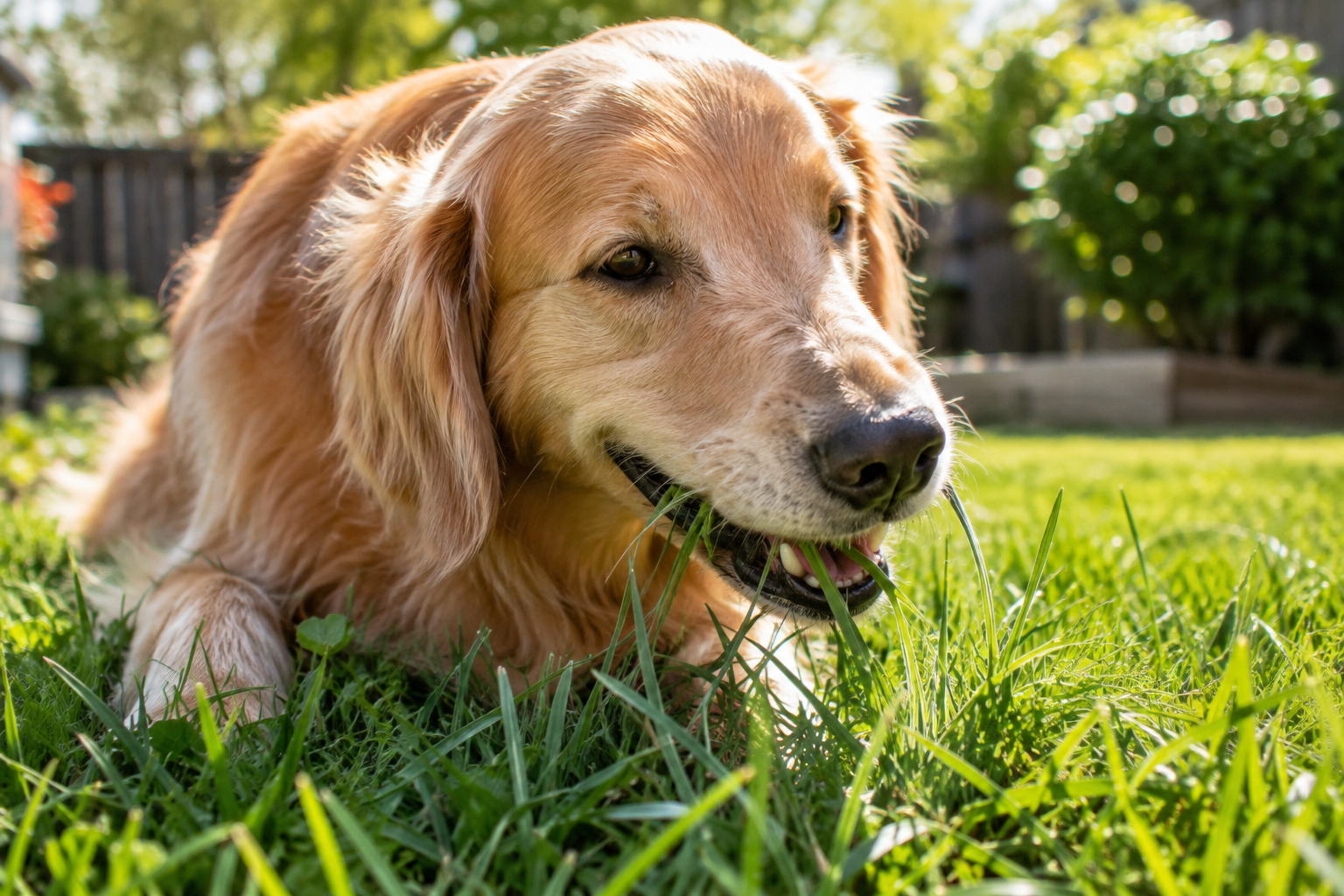
Watching your dog stop mid-walk to munch on grass can be confusing, especially if you have heard that dogs eat grass when they feel sick. The good news is that occasional grass-eating is common and is usually normal behavior. It does not automatically mean your dog has an upset stomach or a nutritional deficiency.
So, why is my dog eating grass? Dogs may enjoy its taste or texture, seek stimulation, or follow an instinctive behavior. Some may also eat grass when they feel digestive discomfort, although research suggests this is not the main explanation for most dogs. Understanding the possible reasons, along with the risks and warning signs, can help you decide when to let the behavior go and when to contact your veterinarian.
Is it normal for dogs to eat grass?
Yes. Grass-eating is a common behavior in domestic dogs, including dogs that appear healthy and eat a balanced diet. Researchers have investigated the habit, and the findings challenge the idea that dogs usually eat grass because they are sick.
A 2008 study published in Applied Animal Behaviour Science examined plant-eating behavior using owner surveys. Among 1,571 eligible responses from owners of plant-eating dogs, 68% reported that their dogs ate plants daily or weekly. Grass was the plant most frequently reported, and 79% identified it as the type their dogs ate most often.
The study also found that only 9% of respondents said their dogs frequently appeared ill before eating plants, while 22% reported frequent vomiting afterward. Most owners said their dogs rarely showed signs of illness around the behavior or rarely vomited after eating plants.
These findings support the idea that grass-eating is often normal. However, the research relied on owner reports and included a survey specifically targeting plant-eating dogs, so the results cannot explain every dog’s behavior. A dog that occasionally nibbles grass and otherwise acts normally is different from one that suddenly starts eating it obsessively or develops other symptoms.
Why do dogs eat grass? 5 common reasons
There is no single proven explanation for every dog. Several factors may help explain the behavior, and more than one may apply to the same dog.
1. They enjoy the taste or texture
Sometimes the simplest explanation is that dogs like grass. Fresh blades have a distinct smell, texture, and taste that may appeal to curious dogs. You might notice your dog choosing particular patches or preferring young, tender blades. These preferences do not necessarily indicate a health problem.
2. They are bored or seeking attention
A dog with little to do in the yard may turn grass-chewing into an activity. Some dogs may also repeat a behavior after learning that it earns attention from their owners. This does not mean every grass-eater is bored; it is one possible explanation, especially when the behavior happens during quiet or understimulating periods.
3. It may be an instinctive behavior
Dogs descended from ancestors that ate a varied diet, and plant consumption has been observed in wild canids as well as domestic dogs. Grass-eating may be part of their broader foraging behavior. However, an evolutionary explanation does not establish precisely why an individual dog chooses to eat grass today.
4. They may have mild digestive discomfort
Some dogs eat grass when they feel nauseated or experience stomach discomfort. It is possible that a particular dog associates the behavior with how it feels afterward. However, studies do not support the idea that most dogs eat grass because they are already sick. If grass-eating occurs alongside repeated vomiting, diarrhea, appetite changes, or discomfort, speak with your veterinarian instead of assuming the grass is helping.
5. They may be interested in fiber or roughage
Fiber plays a role in normal digestion, which has led researchers and owners to consider whether dogs seek grass for its roughage. There are individual reports suggesting that dietary fiber may influence some plant-eating behaviors, but the evidence is limited. Grass-eating alone does not prove that your dog lacks fiber or other nutrients. Check your dog’s food and feeding routine with your veterinarian before making dietary changes or adding supplements.
If your dog’s grass-eating comes with loose stools, our guide on how to firm up dog poop explains the common causes and what helps.
The vomiting myth: what the evidence says
The familiar explanation is that dogs eat grass deliberately to make themselves vomit and relieve an upset stomach. Sometimes vomiting follows grass-eating, but the evidence suggests that this is not the usual purpose of the behavior.
In the 2008 owner-survey study, only 22% of respondents reported that their dogs frequently vomited after eating plants, and only 9% reported frequent signs of illness beforehand. A separate study, published in Applied Animal Behaviour Science, recorded 374 grass-eating events but just two vomiting events during its observations. The researchers found no evidence that the dogs were using grass to induce vomiting in that study.
These findings do not mean grass can never precede vomiting or that digestive problems never play a role. They mean that grass-eating is not a reliable sign that a dog is sick or attempting to self-medicate. If your dog vomits repeatedly, investigate the symptoms with a veterinarian rather than treating grass as a remedy.
When grass-eating can be risky
Although ordinary grass is not automatically dangerous, the environment and the amount consumed matter. Keep these risks in mind:

- Chemically treated lawns: Pesticides, herbicides, and some fertilizers can be harmful if ingested. Do not let your dog eat grass from a recently treated area unless the product’s instructions specifically establish when it is safe for pets. Contact a veterinarian promptly if you suspect chemical exposure.
- Toxic plants mixed into grass: Dogs may accidentally chew poisonous weeds or other plants growing nearby. Supervise outdoor grazing and keep your dog away from unfamiliar vegetation.
- Contamination and parasites: Grass contaminated by animal feces may expose dogs to intestinal parasites or infectious organisms. Avoid areas soiled by animal waste, pick up droppings, and keep routine veterinary care, parasite prevention, and appropriate fecal testing up to date.
- Sudden or excessive grass-eating: A sudden change in behavior, particularly alongside digestive symptoms or changes in appetite, deserves attention. Eating substantial amounts of plant material may also cause digestive problems in some dogs.
When walking your dog, redirect them away from unknown lawns and contaminated areas. In your own yard, use only pet-appropriate lawn products as directed and prevent access until the label says it is safe.
When to call the vet
Occasional grass-eating in an otherwise healthy dog usually does not require an urgent visit by itself. However, pay attention to changes in behavior and your dog’s overall condition. Contact your veterinarian if you notice:
- Repeated vomiting or vomiting that continues after grass-eating.
- A sudden increase in grass-eating or persistent, difficult-to-interrupt grazing.
- Loss of appetite, unusual tiredness, or signs of abdominal discomfort.
- Diarrhea that persists or occurs alongside other symptoms.
- Unexplained weight loss or blood in vomit or stool.
Seek urgent veterinary guidance if your dog has blood in vomit or stool, appears severely weak, repeatedly retches without bringing anything up, cannot keep water down, or may have eaten chemically treated grass or a toxic plant. Severe symptoms should not be dismissed as a normal result of grazing.
These warning signs can have different causes, and grass-eating alone cannot establish a diagnosis. Your veterinarian can assess your dog’s history, diet, behavior, and symptoms and determine whether further evaluation is appropriate.
Frequently asked questions
Should I stop my dog from eating grass?
You do not necessarily need to stop every occasional nibble if your dog is healthy and the grass is from a known, untreated area. Still, discouraging the behavior is sensible when the lawn may be contaminated, toxic plants are present, or your dog is eating large amounts. Redirect your dog calmly and monitor for symptoms.
Is grass safe for puppies?
Not always. The same concerns about chemicals, toxic plants, and contaminated grass apply to puppies. Be especially cautious with puppies that have not completed their vaccination series because exposure to contaminated feces can carry serious infectious risks. Supervise outdoor exploration and ask your veterinarian about safe access to shared grassy areas.
Why does my dog eat grass and throw up yellow bile?
Yellow vomit often contains bile, which can appear when a dog vomits on an empty stomach, but it does not identify the cause on its own. Grass may be unrelated, may irritate the stomach, or may be part of a broader pattern of digestive discomfort. Contact your veterinarian if this happens repeatedly or is accompanied by poor appetite, lethargy, diarrhea, or other changes.
Can dogs eat grass instead of food?
No. Grass is not a nutritionally complete substitute for dog food and cannot meet your dog’s overall nutritional needs. If your dog regularly ignores meals but eats grass, consult your veterinarian rather than trying to replace meals with plants.
How do I redirect a bored grass-eater?
Offer more sniffing opportunities on walks, short training sessions, interactive toys, puzzle feeders, and suitable chew toys. Reward your dog for moving away from grass when you call them. If the behavior persists despite greater enrichment, or it increases suddenly, discuss it with your veterinarian.
Conclusion: grass-eating is not always a reason to worry
If you have been wondering, “Why is my dog eating grass?” the most reassuring answer is that occasional grass-eating is common, and research does not support the belief that most dogs do it to make themselves vomit. Taste, texture, instinct, boredom, and occasional digestive discomfort may all play a part, although the exact reason is not always clear.
Focus on where your dog is grazing, whether the grass could be contaminated, and how your dog behaves before and afterward. A dog that otherwise eats well and acts normally may simply be displaying an ordinary canine behavior. Repeated vomiting, sudden behavioral changes, appetite loss, diarrhea, blood, or other signs of illness warrant veterinary advice.
About Jennifer: Jennifer is the founder of CanineCalc, a dog owner and researcher who creates educational content to help people understand their dogs. She is not a veterinarian or breeder. CanineCalc articles provide general information and are not a substitute for professional veterinary advice.