Finding soft poop in the yard can make any dog owner worry. The good news is that a single soft stool in an otherwise happy, healthy adult dog is rarely an emergency. A recent food change, a few extra treats, or a stressful day may be enough to upset your dog’s digestion.
The key is knowing what you can reasonably try at home and when soft stool needs veterinary attention. If you’re wondering how to firm up dog poop, start with simple food and routine adjustments, keep fresh water available, and watch for other symptoms. Home care is appropriate only for mild, short-lived cases, not ongoing diarrhea or a dog who seems unwell.
What normal dog poop looks like (and what “soft” really means)
Healthy dog poop is generally a moist, formed log that holds its shape when you pick it up. It shouldn’t be rock-hard, excessively dry, or so loose that it leaves a mess on the ground.
Think of stool consistency in three simple categories:
- Formed log: Holds its shape and is easy to pick up. This is the goal.
- Soft-serve consistency: Has some shape but squashes easily, leaves residue, or loses its form. This is the type of soft stool you may be able to monitor briefly if your dog otherwise feels well.
- Watery stool: Has little or no shape and spreads into a puddle. This is diarrhea, not simply slightly soft poop, and it deserves closer attention.
One unusual bowel movement doesn’t automatically mean something is wrong. Look at the pattern over the next few bowel movements, along with your dog’s appetite, energy, and drinking habits. Repeated loose stools or any additional warning signs change the situation.
Why your dog’s poop is soft: the common causes
Soft stool can have several explanations, and the timing often offers a useful clue. Common possibilities include:
- A sudden food change: Switching brands, recipes, or protein sources too quickly can upset digestion.
- Rich or fatty food: Table scraps, greasy leftovers, and unfamiliar foods may be harder for some dogs to tolerate.
- Too many treats: Extra snacks can disrupt an otherwise balanced diet, especially when several different treats are introduced at once.
- Scavenging or garbage: Something found on a walk, in the garden, or in the trash may not agree with your dog. Swallowed objects or toxic foods require prompt veterinary advice.
- Stress: Travel, boarding, visitors, moving house, or changes to your daily schedule can coincide with digestive upset.
- Overfeeding: Larger portions or frequent treats may contribute to loose stool. Puppies can be particularly sensitive to changes in their feeding routine.
- Food sensitivity: Some dogs repeatedly develop digestive symptoms after eating particular ingredients. Recurring problems deserve a veterinary discussion rather than a series of random food swaps.
Parasites and illnesses can also cause soft stool. You cannot reliably rule them out by looking at the poop, and adding pumpkin won’t address every underlying cause.
Does your dog eat grass when their stomach seems unsettled? Read our guide to why dogs eat grass and whether it’s connected to stomach upset. Grass eating alone doesn’t identify the cause, so pay attention to the full picture.
How to firm up dog poop: 8 fixes that actually help
These measures are for an otherwise well adult dog with mild, recent soft stool. Introduce sensible changes rather than adding several new foods and supplements at once.
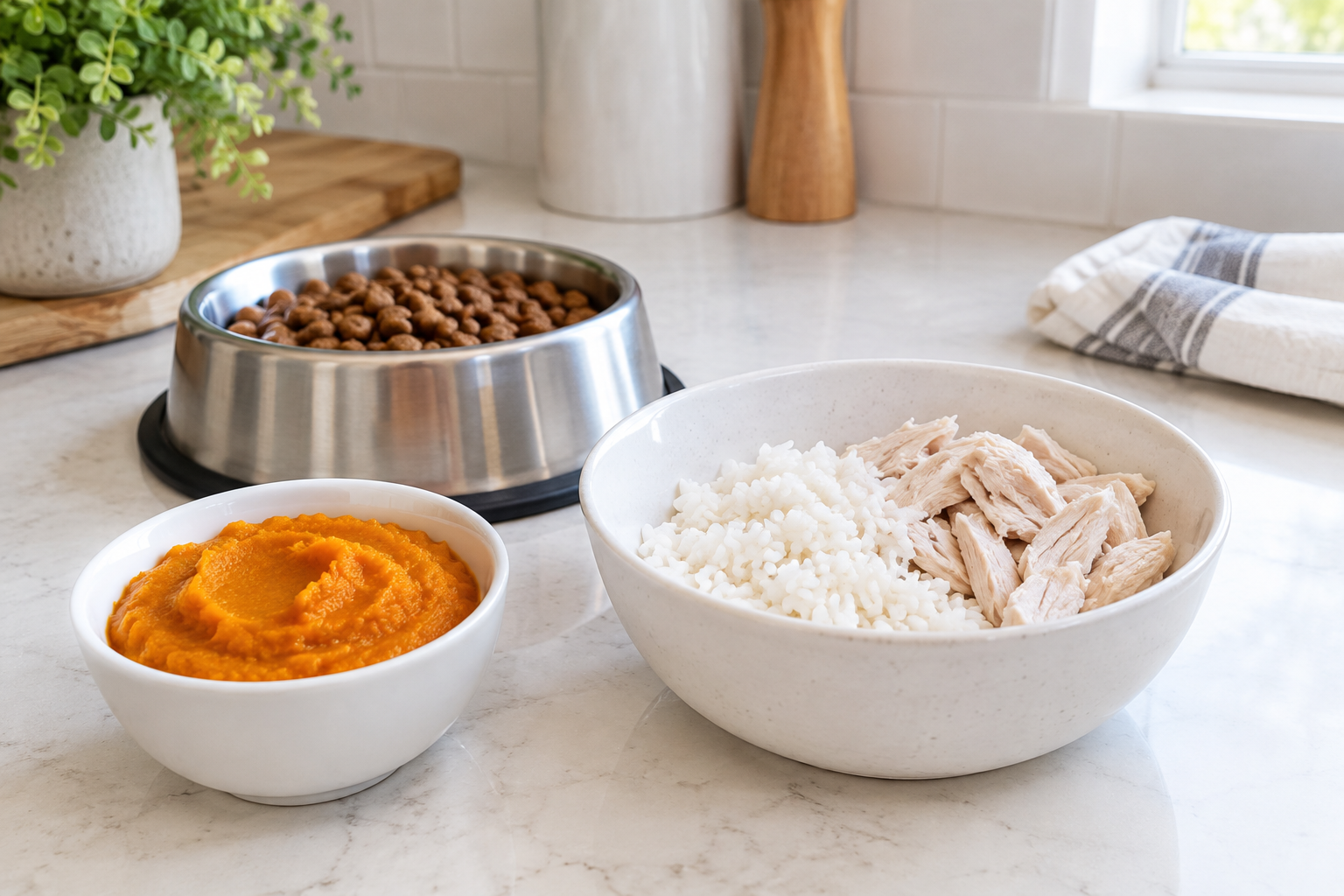
1. Try a little plain pumpkin puree
Plain pumpkin contains fiber that can help support more consistent stool in some dogs. Choose 100% plain pumpkin puree, not pumpkin pie filling, which may contain added sugar and spices.
Start conservatively. A teaspoon is a reasonable small-dog starting point, while a medium or larger dog may tolerate a modest spoonful, up to about a tablespoon. Individual needs vary, so don’t keep increasing the amount if the stool doesn’t improve. Pumpkin is a food-based option, not a cure for illness, and it may not suit every dog.
2. Consider a short-term bland meal
For a healthy adult dog with mild digestive upset, plain boiled chicken breast and cooked white rice may be a temporary option for a day or two. Prepare them without butter, oil, salt, sauces, or seasonings, and remove the bones.
This combination isn’t nutritionally complete, so it shouldn’t become a long-term diet. A veterinarian can advise whether a bland meal is appropriate or whether a complete veterinary gastrointestinal diet is a better choice. Don’t attempt home feeding adjustments if your dog is vomiting, refusing food, or showing other warning signs. VCA’s bland-diet guidance explains the limitations of homemade bland meals.
3. Stop treats and table scraps temporarily
Give your dog’s digestive system a break from extras. Skip training treats, rich chews, leftovers, and food shared from your plate for a few days while you monitor the stool.
Keep the regular diet consistent rather than replacing every snack with a different homemade option. If your dog relies on treats for training or medication, ask your veterinarian about suitable alternatives.
4. Feed smaller, more frequent meals
Instead of serving one unusually large meal, divide your dog’s normal daily food allowance into smaller portions across the day. This can make feeding more manageable during a mild digestive upset.
Don’t increase the total daily amount when splitting meals. If you suspect overfeeding, review the whole day’s intake, including treats and chews. For puppy portions, see our puppy food chart, which covers feeding amounts by age.
5. Make food transitions gradual
If you’ve recently changed foods, abrupt switching may be contributing to the problem. For future transitions, aim for a gradual change over about seven days, mixing increasing amounts of the new food with the old food.
Some dogs need a slower transition. If soft stool began during a food switch, avoid adding yet another unfamiliar food without a clear reason. If digestive problems continue despite a gradual transition, ask your vet whether the diet needs a closer review. The American Kennel Club also recommends gradual food changes to reduce digestive upset.
6. Ask your vet about a dog probiotic
Some dog-specific probiotics may help support digestive health, but products and results vary. Don’t assume that a supplement will fix soft stool or that a product intended for people is suitable for your dog.
Ask your veterinarian whether a canine probiotic makes sense for your dog’s age, symptoms, and current diet, especially if the problem keeps returning.
7. Keep fresh water available
Loose stool can cause fluid loss, and vomiting can increase the risk of dehydration. Keep fresh, clean water available and make sure your dog can drink normally.
If your dog won’t drink, cannot keep water down, seems weak, or appears increasingly unwell, don’t rely on home care.
8. Keep exercise gentle and normal
Continue ordinary, comfortable walks and bathroom breaks, but skip unusually strenuous exercise while your dog’s stomach is unsettled. Give your dog opportunities to poop without rushing, and notice whether the stool is becoming more formed.
If mild soft stool isn’t improving within 48 hours, contact your veterinarian. Don’t wait for that deadline if symptoms worsen or a warning sign appears.
Puppy has soft stool: what’s different?
A puppy with soft stool deserves closer attention than a healthy adult dog. Puppies are smaller, have developing immune systems, and can become dehydrated faster when diarrhea causes fluid loss.
Common reasons for puppy stool changes include the stress of moving into a new home, switching away from the breeder’s food, eating too much, or getting into something they shouldn’t. Changes in routine around early veterinary visits and vaccinations may also coincide with digestive upset, but don’t assume they explain the symptoms.
If your puppy has soft stool, keep track of their appetite, energy, drinking, and how often they poop. Avoid experimenting with multiple foods, supplements, or home remedies.
Contact a veterinarian promptly if a young puppy develops watery stool, vomiting, poor appetite, or unusual tiredness. A very young puppy, a toy-breed puppy, or one who isn’t fully vaccinated deserves particular caution. Don’t wait 48 hours when a puppy seems unwell. Veterinary guidance for puppies recommends prompt attention when diarrhea occurs alongside vomiting, lethargy, appetite loss, or blood in the stool.
Red flags: see a vet instead of home care
Soft stool isn’t always a simple dietary issue. Stop trying home remedies and contact your veterinarian if your dog has any of these signs:
- Blood in the stool or black, tarry poop. Both warrant veterinary attention.
- Vomiting alongside loose stool, especially if repeated or accompanied by weakness.
- Loss of appetite or unusual lethargy. A dog who refuses food or seems noticeably less responsive may be ill.
- Repeated straining or difficulty passing stool. Don’t assume this is just an upset stomach.
- Persistent soft stool. Contact your vet if an adult dog hasn’t improved within 48 hours, or sooner if symptoms worsen. For puppies, use a more cautious threshold of 24 hours at most, with earlier contact for young or symptomatic puppies.
- Higher-risk health status. Very young puppies, senior dogs, and dogs with chronic illnesses may need attention sooner.
- Possible toxin or swallowed object. Contact a veterinarian or emergency veterinary service promptly rather than waiting for symptoms to pass.
Severe weakness, difficulty standing, significant bleeding, or suspected poisoning can require emergency care. Cornell University College of Veterinary Medicine identifies vomiting, black or bloody stool, poor appetite, lethargy, and persistent diarrhea as reasons to seek veterinary attention.
When in doubt, call your veterinary clinic and describe the stool, when it started, and any other symptoms. A photo or fresh stool sample may help your vet assess the situation.
What NOT to do
When you’re trying to firm up dog poop, a few well-intentioned choices can make things worse.
Don’t give human anti-diarrhea medicine unless your veterinarian specifically directs you to. Some products can harm dogs or interact with other medications.
Don’t fast a puppy. Puppies need regular nutrition. For adult dogs, fasting isn’t routinely necessary either; a suitable bland meal may be more appropriate when home care is reasonable.
Don’t switch suddenly to a random new food. Repeated diet changes can make it harder to identify what is contributing to the problem.
Don’t keep adding remedies. Pumpkin, probiotics, and bland meals aren’t guaranteed cures.
Don’t wait when red flags appear. Home care should never delay needed veterinary attention.
Common questions about firming up dog poop
How long does it take for a dog’s poop to firm up?
If a mild stool change is caused by diet or a temporary disruption, improvement may begin within one to three days. Contact your veterinarian if an adult dog isn’t improving within 48 hours, and seek help sooner if other symptoms appear.
Does pumpkin really firm up dog poop?
It can help some dogs because pumpkin contains fiber, which supports stool consistency. Use plain pumpkin puree rather than pie filling, and introduce only a modest amount. It won’t treat parasites, infections, or every other cause of diarrhea.
Can too much food cause soft stool?
Yes. Overfeeding, frequent treats, and rich table scraps can contribute to loose stool in some dogs. Review your dog’s total daily intake rather than looking only at the food in their main bowl.
Should I fast my dog for soft stool?
Not routinely. Puppies should never be fasted as a home remedy for soft stool. For a healthy adult dog with mild digestive upset, a short-term bland meal may be an option, provided there are no warning signs and home care is appropriate.
When is soft stool an emergency?
Seek prompt veterinary advice for blood or black, tarry stool, repeated vomiting, severe lethargy, refusal to eat, or suspected toxin exposure or a swallowed object. Severe weakness or difficulty standing warrants emergency care. Puppies and medically vulnerable dogs need extra caution.
Conclusion
Learning how to firm up dog poop starts with looking at the whole picture. For a healthy adult dog with one or two mildly soft stools, consistent meals, fewer treats, appropriate short-term food adjustments, and access to fresh water may help. Keep an eye on the next bowel movements instead of trying every remedy at once.
Persistent or worsening symptoms need veterinary attention. No home remedy can reliably tell you why your dog’s stool changed, and getting professional help early is better than missing a more serious problem.
By Jennifer, Founder of CanineCalc
Jennifer is a dog owner and researcher who creates practical, research-informed resources to help people understand their dogs’ care needs. She is not a veterinarian, breeder, or certified trainer. CanineCalc articles provide general educational information and are not a substitute for individualized veterinary advice.