Can dogs eat raw eggs? The short answer
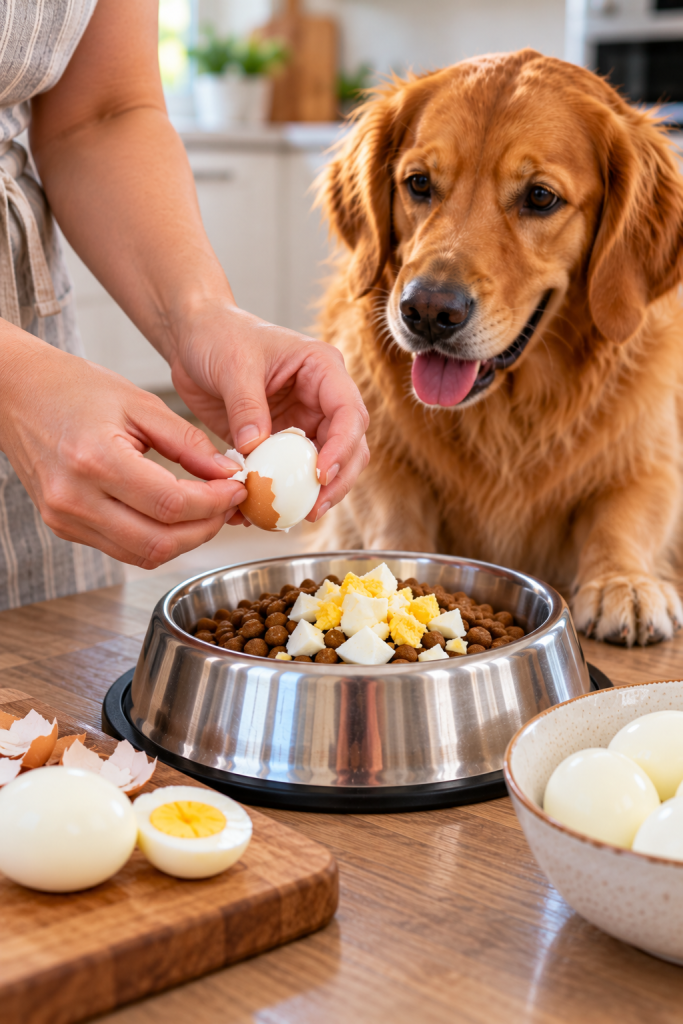
No, dogs should not be fed raw eggs. Although eggs provide useful nutrients, serving them raw introduces avoidable food-safety risks without offering a proven nutritional advantage over fully cooked eggs. For a safer option, boil or scramble an egg until it is completely cooked, then serve it plain and in a portion that suits your dog’s size and usual diet.
Eggs contain high-quality protein, fats, vitamins, and minerals. These nutrients remain useful when eggs are cooked, so there is no need to add a raw egg to your dog’s bowl to provide the benefits associated with eggs in general. Veterinary nutrition guidance from PetMD and Hill’s Pet Nutrition recommends serving eggs fully cooked rather than raw.
The distinction matters whether you are feeding a large adult dog, a small companion breed, or a growing puppy. A raw egg mixed into kibble, cracked over meat, or served whole is still raw. Using fresh eggs, washing the shell, or buying eggs from a trusted source does not guarantee that harmful bacteria are absent.
If eggs are an occasional addition to your dog’s meals, choose a fully cooked version and keep the rest of the meal simple. Your dog’s regular, complete and balanced food should remain the foundation of their diet.
Why raw eggs are risky
Raw eggs come with several food-safety and nutritional concerns. These do not mean that every dog who eats one will become sick. They do mean that feeding raw eggs is an unnecessary risk when a straightforward alternative is available.
1. Salmonella and other foodborne bacteria
Raw eggs can carry Salmonella, a bacterium associated with foodborne illness. Dogs may be exposed when they eat contaminated eggs, and people can also be exposed while handling raw eggs, cleaning bowls, or coming into contact with contaminated food and surfaces.
A dog does not have to appear ill to make raw-food handling a concern. The American Veterinary Medical Association’s guidance on raw or undercooked animal-source proteins explains that contaminated raw foods can create risks for animals and the people around them.
Cooking eggs thoroughly reduces this bacterial risk. It is a more reliable everyday precaution than assuming an egg is safe because it looks fresh or comes from a familiar carton.
2. Raw egg whites can interfere with biotin absorption
Egg whites contain a protein called avidin. Avidin binds to biotin, also known as vitamin B7, and can reduce how much of this vitamin is absorbed. Biotin has important roles in normal metabolism and other body functions.
This concern is mainly relevant to repeated or substantial feeding of raw egg whites. It should not be interpreted as evidence that a single accidental taste will automatically cause a deficiency. Egg yolks also contain biotin, and the nutritional consequences depend on the overall feeding pattern.
Cooking changes avidin’s activity and makes this particular concern less relevant. The Merck Veterinary Manual’s explanation of biotin nutrition describes why raw egg whites are a consideration in animal nutrition.
The practical takeaway is simple: cooked eggs provide protein without requiring you to accept the same raw-egg concerns.
3. The shell can carry contamination
An egg’s shell is not sterile. Contamination may be present on the outside and can spread to hands, kitchen surfaces, bowls, or the food itself during preparation. Shell fragments also introduce a separate concern because they can be sharp or difficult to chew.
Removing the shell does not make the raw contents reliably safe. If you are preparing an egg for your dog, cook it thoroughly, discard the shell, wash your hands after handling the raw egg, and clean any surfaces that came into contact with it.
Raw vs cooked eggs
The main difference is not whether eggs contain useful nutrients. Both raw and cooked eggs provide nutrients, but cooking makes eggs the safer choice for routine feeding.
| Form | Safety | Nutrition note |
|---|---|---|
| Raw whole egg | Not recommended | Contains protein and other nutrients, but carries avoidable bacterial and raw-egg concerns. |
| Raw egg white | Not recommended | Avidin can interfere with biotin absorption when raw whites are fed repeatedly. |
| Soft-boiled or runny egg | Avoid | Undercooking may leave food-safety risks that thorough cooking helps reduce. |
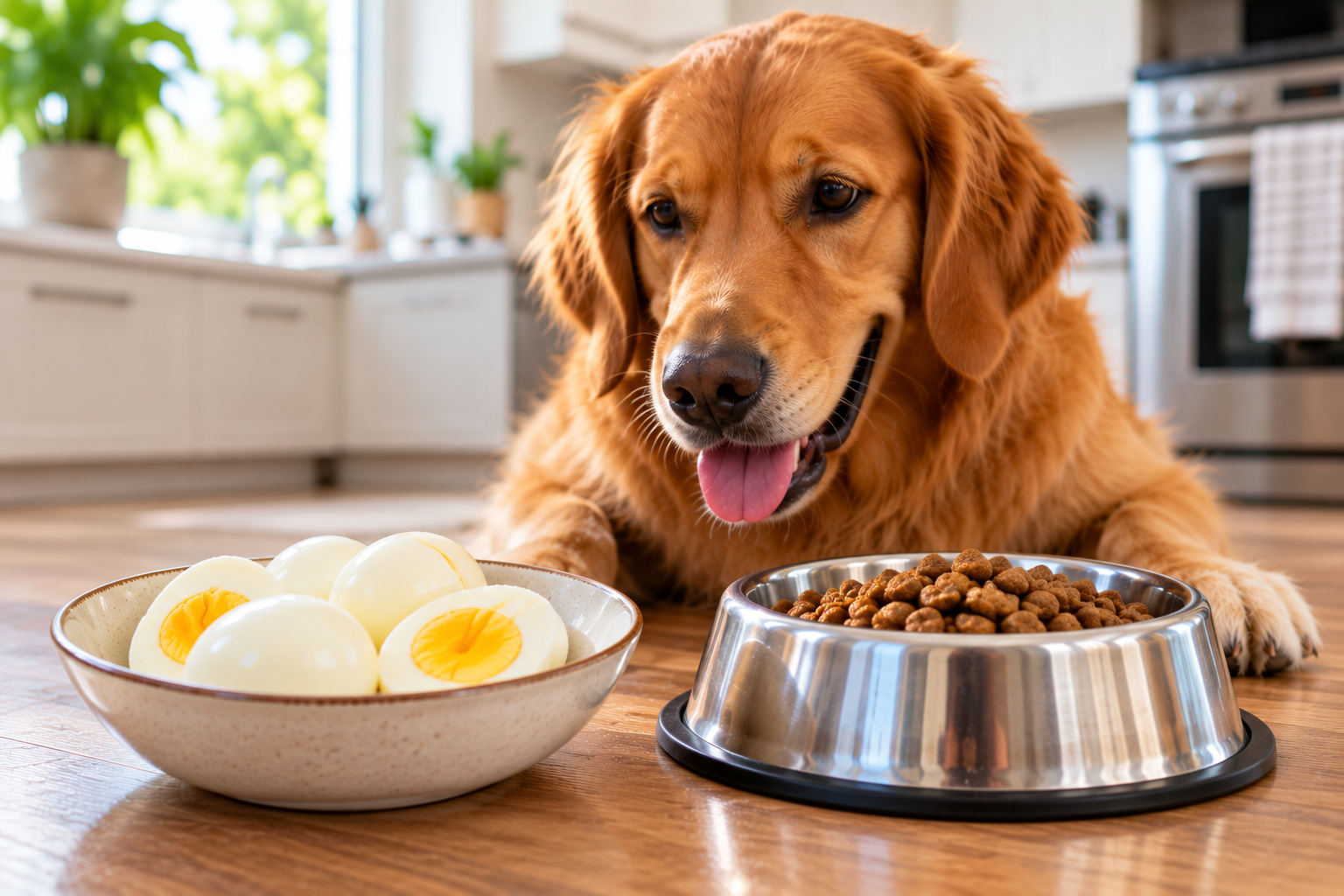
| Fully hard-boiled egg | Generally suitable when plain | Provides protein and other nutrients without the same raw-egg risks. |
| Fully cooked scrambled egg | Generally suitable when plain | Offers similar basic nutritional benefits; added butter, salt, and seasonings are unnecessary. |
| Eggshells | Not needed as a routine treat | Contain calcium, but extra calcium is not automatically appropriate for a dog already eating a balanced diet. |
For most households, a plain boiled egg or fully cooked scrambled egg is the easiest option. Let it cool before serving, and cut it into small, manageable pieces. Avoid preparations with raw or runny portions, even when the egg is intended as a small topper rather than a complete meal.
How to serve eggs safely
Eggs can be an occasional treat for many dogs when prepared properly. You do not need a complicated recipe or additional ingredients. A few practical steps make serving eggs straightforward.
Cook the egg completely
Boil the egg until both the white and yolk are firm, or scramble it until there are no raw, liquid portions left. Allow the egg to cool, remove the entire shell, and cut it into pieces appropriate for your dog.
Keep it plain
Prepare the egg without salt, butter, oil, garlic, onion, sauces, or seasoning blends. These additions are unnecessary, and some common cooking ingredients are unsuitable for dogs. Plain eggs make it easier to control what your dog eats.
Start with a small amount
Your dog’s appropriate portion depends on body size, daily calorie needs, activity, and what else they eat. A few small bites may be enough for a small dog, while a larger dog may be able to accommodate more. Avoid assuming that every dog should receive one whole egg.
Eggs should be treated as an occasional addition rather than a replacement for a complete and balanced food. A commonly used feeding guideline is to keep treats and other extras to around 10% or less of daily calories, with the remainder coming from balanced meals. That is a general guide, not a target every dog needs to reach.
If you are tracking your puppy’s daily portions, the CanineCalc puppy food chart can help you think about feeding in the context of growth and regular meals. Eggs should not displace the food that supplies the nutrients a growing puppy needs.
Introduce eggs gradually
Offer a small portion the first time rather than adding a full egg to the bowl. Pay attention to how your dog tolerates the new food, and do not continue offering it if it appears to cause a problem. Dogs eating a prescribed diet or following specific nutritional restrictions should have any additions checked with their veterinarian first.
Eggs are also not a requirement for a healthy diet. If you want another simple food to discuss as an occasional addition, see our guide to boiled chicken for dogs.
Why the raw-egg myth persists
Raw eggs often appear in conversations about natural feeding, homemade dog meals, and raw diets. Some owners believe that foods served raw are more natural or that cooking removes too much of their nutritional value. Others report adding a raw egg to a dog’s meals because they believe it improves coat softness or shine.
These ideas can sound convincing because eggs genuinely are nutritious. Their protein, fats, and other nutrients can contribute to an appropriate diet. But the nutritional value of eggs does not establish that serving them raw is better.
Owner discussions illustrate how the shiny-coat belief persists. In this Reddit discussion about raw eggs and dogs’ coats, participants discuss perceived coat changes and whether raw eggs deserve the credit. Such conversations show what individual owners have noticed, not whether raw eggs caused the change or whether the same result would occur with cooked eggs.
Coat condition can be influenced by many factors, including overall nutrition and the dog’s individual needs. An anecdote cannot separate the effects of the egg from the rest of a dog’s diet, normal changes over time, or other feeding adjustments.
There is also a difference between preserving nutrients and avoiding all cooking. Some nutrients can change during cooking, but that does not automatically make raw food the better choice. For eggs specifically, PetMD explains that raw eggs do not provide an established additional benefit that offsets the safety concerns.
The more practical conclusion is that dogs can enjoy the nutritional benefits of eggs without eating them raw. Fully cooked eggs are a straightforward choice that avoids the need to debate whether an unproven raw-food benefit outweighs an avoidable risk.
Frequently asked questions
Can dogs eat raw eggs?
No. Raw eggs are not recommended for dogs because they may carry Salmonella and raw egg whites contain avidin, which can interfere with biotin absorption when fed repeatedly. Fully cooked, plain eggs are the safer option.
Are raw eggs bad for dogs?
Raw eggs are a less safe feeding choice than fully cooked eggs. Not every dog that eats a raw egg will become ill, but contamination is possible, and regular feeding of raw whites can interfere with biotin absorption. There is no established need to feed eggs raw.
Can dogs eat cooked eggs?
Yes, many dogs can eat fully cooked eggs in moderation. Plain hard-boiled eggs and fully cooked scrambled eggs are simple options. Let them cool, remove the shell, avoid added ingredients, and serve a portion that fits your dog’s size and usual diet.
Can dogs eat eggshells?
Eggshells contain calcium, but they are not necessary as a routine addition for a dog eating complete and balanced food. Shell fragments can also be sharp, and adding calcium without considering the overall diet is not automatically beneficial. Do not routinely feed eggshells unless a veterinarian has recommended an appropriate preparation and amount.
How many eggs can a dog eat?
There is no single amount that suits every dog. Size, calorie needs, usual food, and individual dietary restrictions all matter. Start with a small amount of fully cooked egg, offer it occasionally, and count it among your dog’s treats and other extras. Eggs should not replace a balanced main diet.
The bottom line
Can dogs eat raw eggs? It is best to say no. Although eggs can be a useful source of protein and other nutrients, raw eggs introduce bacterial risks and concerns about biotin absorption that are easy to avoid. Fully cooked, plain eggs offer the same basic reason to include eggs in an occasional treat without making raw feeding necessary.
Keep the serving modest, skip the seasoning, and prioritize a complete and balanced diet. The safest everyday choice is also the simplest: cook the egg thoroughly before sharing it with your dog.