Are puppies born with teeth?
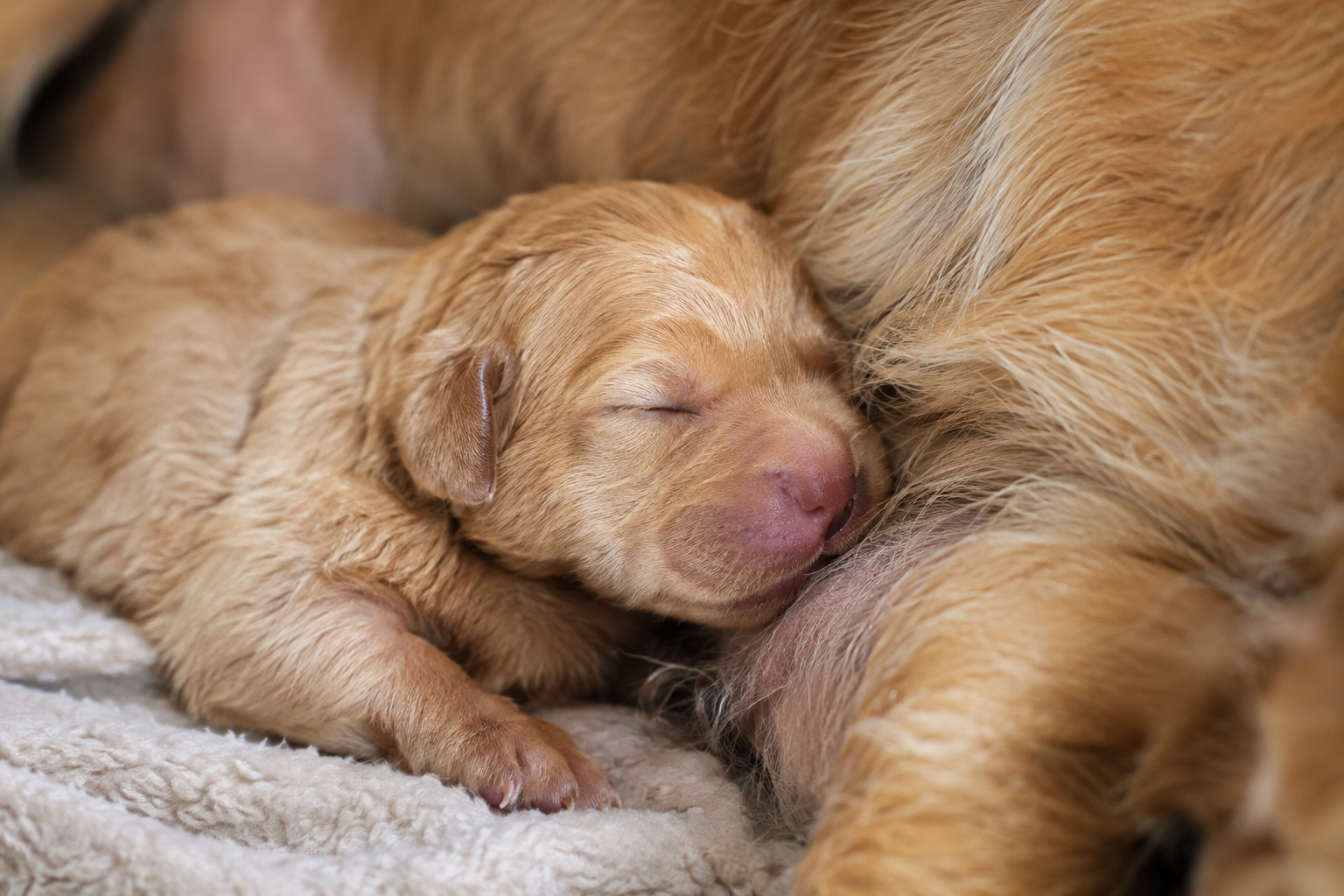
No, puppies are born without teeth. Their baby teeth are developing beneath the gums and usually begin to emerge at around 3 weeks of age. Like their eyes and ears, a newborn puppy’s mouth is still developing, and teeth are not needed for nursing during the first days of life.
A toothless mouth makes sense at this stage. Newborn puppies depend on their mother’s milk for nourishment, and they can nurse using their gums, tongue, and sucking reflex. They do not need sharp teeth to chew food yet.
As puppies grow, their baby teeth gradually push through the gums. This early development happens quickly, so a puppy that has nothing visible in its mouth at birth may have tiny, pointed teeth just a few weeks later.
When do puppies get their first teeth?
Puppies typically start getting their first baby teeth between 2 and 4 weeks of age, although veterinary references differ slightly on the exact starting point. The first teeth are usually the incisors at the front of the mouth and the canine teeth, followed by the premolars farther back. Most puppies have their full set of 28 baby teeth by around 6–8 weeks.
The table below provides a practical overview of what you may notice as your puppy develops.
| Puppy’s age | What you may see |
|---|---|
| Birth | No visible teeth. The gums are toothless, and the puppy nurses from its mother. |
| 2–3 weeks | The first tiny tooth tips may begin to appear, particularly toward the end of this period. Some puppies still have no visible teeth. |
| 3–4 weeks | The front incisors and pointed canine teeth begin to emerge and become easier to spot. The earliest premolars may start appearing toward the end of this range. |
| 5–6 weeks | Premolars continue emerging behind the canine teeth. Many puppies have most or all of their 28 baby teeth by approximately 6 weeks. |
| 6–8 weeks | The full set of 28 baby teeth is generally present, although individual puppies may develop at slightly different rates. |
Timeline sources: Merck Veterinary Manual, VCA Animal Hospitals, and PetMD. These ranges describe typical development, not deadlines for individual puppies.
One important detail: your puppy will not necessarily develop every tooth at the same time as its littermates. A tooth appearing a few days earlier or later does not automatically indicate a problem.
What newborn puppy teeth development looks like week by week
Knowing what to expect makes it easier to recognize normal development without repeatedly handling a young puppy’s mouth.
Birth to 2 weeks: Smooth, toothless gums
During the first couple of weeks, puppies have no visible baby teeth. Their main activities are nursing, sleeping, and growing.
You may notice soft gum tissue if the mouth is briefly visible during normal handling, but you should not need to open a newborn puppy’s mouth repeatedly to check for teeth. At this age, there is no reason to expect little white tooth tips.
Weeks 2–3: The first signs of teeth
As the puppy approaches 3 weeks, the first teeth may begin to break through the gums. These early teeth are tiny and can be difficult to see unless the mouth happens to be open.
The incisors are the small teeth at the front of the mouth. Canine teeth, which eventually look like little fangs, follow during this early eruption period. The exact timing varies, so a puppy that has only one or two visible teeth may still be developing normally.
Weeks 3–4: Tiny teeth become noticeable
This is when the changes can become easier to spot. The puppy may have several small, pointed teeth, especially near the front of the mouth.
You might also notice more mouthing during play. Puppies begin exploring their surroundings with their mouths, and the arrival of sharp baby teeth makes gentle nibbling more noticeable. The teeth are small, but they can feel surprisingly sharp against your fingers.

Weeks 4–6: More teeth and the beginning of weaning
Premolars begin to emerge farther back in the mouth while the earlier teeth continue to develop. By this stage, a puppy’s mouth can look quite different from the completely toothless mouth it had at birth.
This period also overlaps with the gradual move from exclusive nursing toward solid food. As puppies develop teeth, nursing may become less comfortable for the mother, and she may begin moving away or limiting some nursing sessions. Weaning is a gradual process, however, and the arrival of teeth alone does not mean puppies are ready to stop nursing.
Weeks 6–8: The full baby set takes shape
By approximately 6–8 weeks, most puppies have their complete set of 28 baby teeth. The teeth are small, sharp, and useful for beginning to handle age-appropriate solid food.
If you are caring for a litter, this is a reasonable time to discuss any noticeable differences in dental development with the breeder and veterinarian. Do not try to pull a tooth that appears loose or force the puppy’s mouth open for a closer look.
How this fits the bigger puppy teeth picture
Puppies have two sets of teeth during their lives. Their first set contains 28 baby teeth, also called deciduous teeth. Later, these are replaced by permanent adult teeth, and most adult dogs have 42 permanent teeth.
This article focuses on the first stage: why puppies are born without visible teeth and how their baby teeth emerge over the first several weeks.
The next stage is a separate part of puppy development. For the complete comparison between baby and adult teeth, read CanineCalc’s guide to How Many Teeth Do Dogs Have? If your question is about when the first set starts falling out, continue to When Do Puppies Lose Their Baby Teeth? These companion guides cover the later stages without confusing them with newborn dental development.
Common questions about newborn puppy teeth
Can newborn puppies bite?
Newborn puppies cannot deliver a tooth-based bite because they have no visible teeth at birth. They can press their gums against skin, root around while nursing, and scratch with their tiny claws. True nipping with sharp baby teeth becomes more noticeable as those teeth emerge over the following weeks.
When can puppies start eating soft food?
Puppies may begin transitioning to softened, complete puppy food at around 3–4 weeks of age while continuing to nurse. The right timing depends on their development, health, and ability to eat safely. A veterinarian or experienced, responsible breeder can help guide the transition. Do not use tooth development alone to decide when to stop nursing or introduce a new diet.
Is it normal for one puppy’s teeth to come in later than a littermate’s?
Yes, some variation is normal. Veterinary references describe typical age ranges rather than one exact date when every tooth must appear. If one puppy’s development seems substantially behind the others, or the puppy has trouble nursing or eating, ask a veterinarian to check its mouth and overall development.
Do puppies swallow their baby teeth?
Yes, puppies commonly swallow baby teeth when those teeth eventually fall out during the later teething stage. This is generally harmless, so you may never find every lost tooth. For the timing of that stage, see CanineCalc’s guide to When Do Puppies Lose Their Baby Teeth?
When should a vet check a puppy’s teeth?
A veterinarian can examine a puppy’s mouth during routine health visits and advise you if the teeth appear to be developing unusually. Arrange an earlier assessment if the puppy has difficulty nursing or eating, obvious swelling, persistent bleeding, or apparent mouth pain. If no teeth have appeared by around 6–8 weeks, discuss that with your veterinarian rather than trying to diagnose the cause yourself.
Conclusion: Puppies start life toothless
Puppies are born without visible teeth, but that changes quickly. The first baby teeth typically emerge around 3 weeks of age, followed by the premolars, with the full set of 28 generally present by about 6–8 weeks.
Watching this progression can help you understand your puppy’s early development, particularly when the first teeth appear alongside mouthing and the gradual introduction of solid food. Remember that these ages are guides, not exact deadlines. When something about a puppy’s mouth or feeding seems unusual, a veterinary check is the safest next step.
About Jennifer: Jennifer is the founder and owner of CanineCalc, a dog owner and researcher who writes about canine development and practical pet-care topics. She is not a veterinarian or breeder, and her articles are intended to help readers understand common canine health questions and know when to seek professional guidance.