Puppy teeth are tiny, sharp, and surprisingly painful. One minute your puppy is playing happily, and the next, they’re biting your fingers, grabbing your sleeves, or chasing your ankles across the room.
The good news is that nipping is a normal part of puppy development, and you can teach your puppy to use their mouth more gently. The key is to understand why it happens, prevent unnecessary overexcitement, and respond consistently without frightening or hurting your dog.
Learning how to stop a puppy from nipping takes patience. You are building a habit, not correcting a behavior overnight. Start with the eight practical habits below, and give your puppy time to learn.
Why puppies nip (it’s normal, but it still needs teaching)
Puppies use their mouths to explore the world. They investigate new objects, play with people and other dogs, and discover how much pressure their teeth can apply. What looks like misbehavior is often a young dog practicing normal canine behaviors without yet understanding human boundaries.
There are four common reasons for nipping.
Exploration and play: Puppies use their mouths much like human babies use their hands. During play, they may grab fingers, sleeves, or ankles because movement catches their attention and biting has become part of the game.
Teething discomfort: As baby teeth give way to adult teeth, puppies often want to chew more. This transition commonly occurs between roughly 3 and 7 months, although timing varies. Safe chew toys give them a better outlet than your hands. For more detail, read our guide to puppy teething and tooth loss.
Overstimulation: An excited puppy may become increasingly mouthy during play, greetings, or busy household moments. Once excitement builds, even a puppy who knows the rules may struggle to follow them.
Overtiredness: Some puppies become especially nippy in the evening or after a long stretch of activity. They may need sleep rather than another game.
Nipping is not automatically a sign of dominance. Puppies are not usually biting because they are trying to become the household leader. Their behavior is better understood through development, excitement, learning, and the consequences of their actions. Clear boundaries and reward-based training are more useful than attempts to establish control through intimidation.
First, set up for success: sleep, chew outlets, and management
Training works better when your puppy’s basic needs are met. Before focusing on the response to each nip, make the environment easier for your puppy to succeed in.
1. Protect your puppy’s sleep. Young puppies often need around 18 to 20 hours of sleep in a day, including naps. Individual needs vary, but frequent, predictable rest periods can help prevent overtired biting.
Watch for a puppy who starts grabbing harder, ignoring familiar cues, racing around, or repeatedly returning to your hands. These can be signs that it’s time for a quiet break. Offer a potty opportunity if needed, then help your puppy settle in a comfortable, familiar resting area.
2. Keep appropriate chew outlets nearby. Make acceptable chewing easier than finding your fingers. Try durable rubber chew toys, appropriately sized puppy-safe teething toys, food-stuffable toys, or a damp washcloth that has been chilled or frozen for supervised chewing. A lick mat can also provide a calming activity when used safely.
Choose items suitable for your puppy’s age, size, chewing strength, and ability to swallow pieces. Supervise chewing, and remove anything that becomes damaged or starts breaking apart.
3. Manage the space. Use baby gates, exercise pens, and puppy-proofed rooms to limit access to situations that repeatedly trigger nipping. Keep suitable toys within reach wherever your puppy spends time.
Management is not a substitute for training. It gives you a calm way to interrupt a difficult moment without chasing your puppy, grabbing their muzzle, or turning every interaction into a struggle.
How to stop a puppy from nipping: the 6-step response
When your puppy’s teeth touch your skin, aim for a predictable sequence. Everyone in the household should follow the same basic approach so your puppy receives a clear message.
Step 1: Use a calm marker.
At the moment teeth touch skin, say a quiet “ouch” or use a brief, gentle yelp. Keep your reaction boring rather than dramatic. The goal is to signal that the interaction has changed, not to excite your puppy further.
Some puppies respond well to a yelp. Others become more excited by the sound. If yours gets wilder, skip the vocal reaction and move straight to the next step.
Step 2: Freeze and withdraw attention.
Stop moving your hands and body. Avoid jerking your hand away, waving your arms, or pushing your puppy away. When it’s safe to do so, calmly remove your hands and turn away.
Withdraw attention for about 10 to 20 seconds. Stand still, fold your arms, or briefly step behind a gate if necessary. This teaches your puppy that nipping makes the fun stop.
Step 3: Redirect to an appropriate toy.
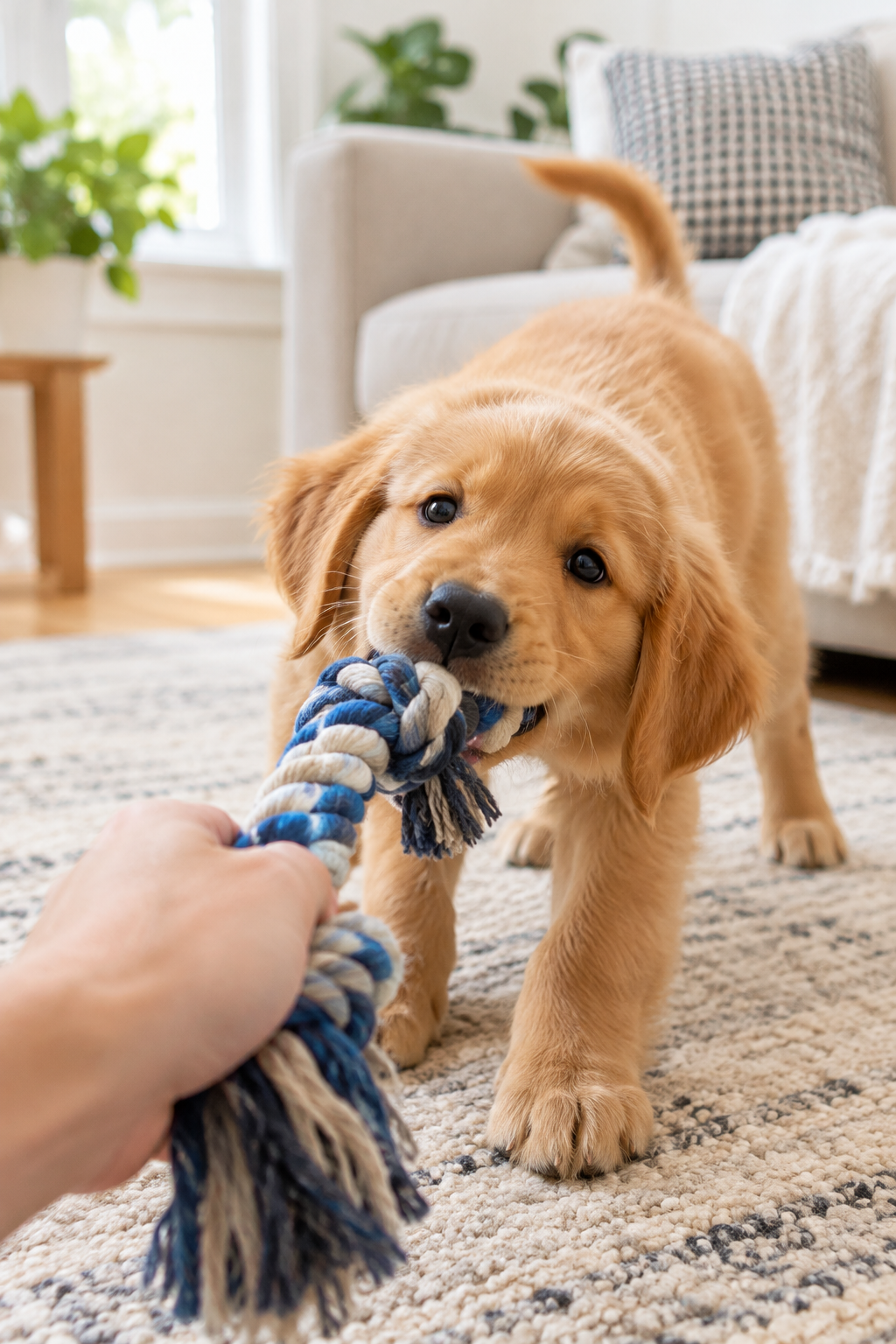
Once your puppy has paused, offer a toy they can bite, tug, or chew. Choose one long enough to keep little teeth away from your fingers.
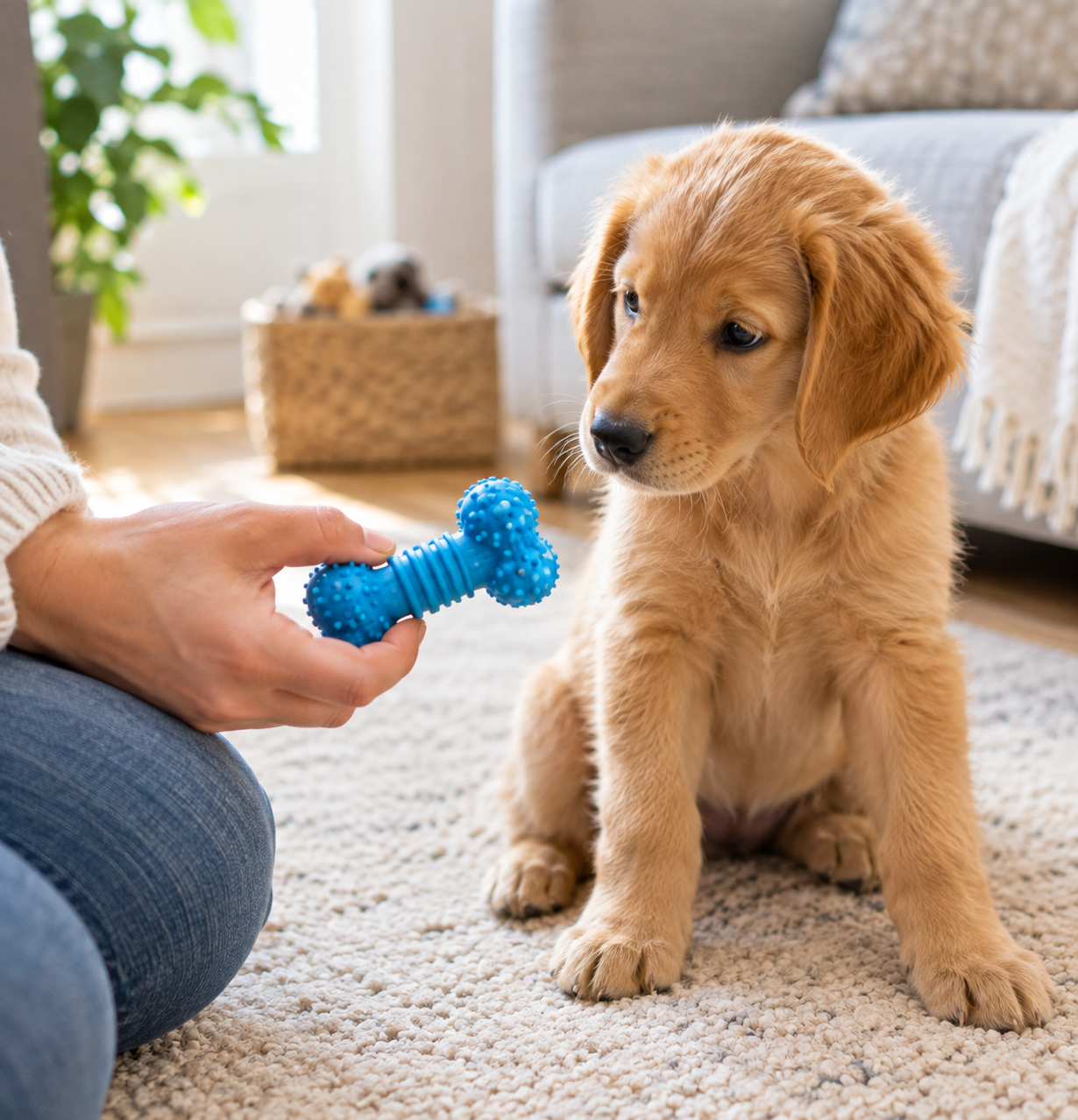
When your puppy bites the toy instead of your skin, praise them calmly and continue the appropriate game. You’re teaching what to do, not simply what to avoid.
Step 4: Repeat the same response every time.
Your puppy may nip again seconds later. That’s normal during early learning. Repeat the sequence rather than changing tactics each time.
Consistency across the household matters. If one person stops playing when teeth touch skin but another laughs, wrestles, or lets the puppy chew their hands, the rules become confusing. Agree on one response and make sure visitors understand it, too.
Step 5: End the session if biting escalates.
If your puppy keeps lunging, grabbing, or biting more intensely despite redirection, calmly end the interaction. Guide them toward a safe, familiar pen or quiet area with an appropriate activity.
The break should help your puppy settle, not frighten them. Check whether they need sleep, a potty break, water, or a lower-stimulation environment before resuming play.
Step 6: Reward gentle mouth and calm behavior.
Don’t wait for a mistake to teach your puppy what earns attention. Praise calm greetings, relaxed play, choosing a toy, and settling beside you. Reward gentle interactions before they become too exciting.
A puppy who learns that calm behavior makes good things happen has a clear alternative to grabbing hands and clothing.
Teaching bite inhibition: soft mouth before no mouth
Bite inhibition means learning to control bite pressure. A dog with good bite inhibition understands how to use their mouth gently and can reduce pressure if play becomes too intense.
You can build on the six-step response by first rewarding every sign that your puppy is using a softer mouth. Praise gentle mouthing, pauses, and moments when your puppy chooses a toy instead of skin.
Next, gradually apply the same response to all teeth-on-skin contact. First reward softer mouths, then make any contact with skin end the interaction.
Both stages matter. If you immediately make every light touch end the game, your puppy gets less feedback about pressure. On the other hand, acceptable gentle mouthing should not become a permanent invitation to chew on people. Keep progressing toward the household goal: teeth belong on toys, not skin.
7 mistakes that make nipping worse
Good intentions can still reinforce biting if the response rewards the behavior or makes your puppy more excited.
1. Pulling your hands away quickly. Fast movement can look like part of the game and encourage your puppy to lunge again.
2. Pushing your puppy away. Pushing often feels like rough play or opposition. It can increase excitement instead of helping your puppy settle.
3. Yelling or using physical punishment. Holding a muzzle shut, forcing a puppy onto their back, tapping, shaking, or other confrontational responses can frighten them, damage trust, and make biting harder to change. Education guidance generally recommends positive, reward-based methods and avoiding aversive techniques.
4. Wrestling with your hands. If hands sometimes function as toys, your puppy may reasonably treat them as toys at other times. Use a toy as the target instead.
5. Giving different rules. Inconsistent responses make learning slower. Everyone who interacts with your puppy should follow the same plan.
6. Skipping naps. More training is not always the answer. A tired puppy may need rest more than another repetition.
7. Letting children run and squeal around a nippy puppy. High-pitched noise, running, and waving arms can trigger chasing and grabbing. Keep early interactions calm and supervised. Teach children the “statue game”: stop moving, fold their arms, and wait quietly for an adult’s help.
Nipping vs. real aggression: when to get help
Most everyday puppy nipping occurs during play, greetings, excitement, or overtiredness. The puppy’s body tends to remain loose and wiggly, and the behavior usually settles when stimulation drops.
More concerning signs can include a stiff or frozen posture, hard staring, growling combined with guarding, lunging without an obvious play context, attempts to bite that feel targeted or persistent, or biting that causes serious injury. So can guarding food, toys, resting places, or people.
Seek professional help promptly if you see these signs. A certified professional dog trainer, such as a CPDT-KA, an IAABC consultant, or a veterinary behaviorist can assess the behavior and create a safety plan. Your veterinarian can also check for pain or another medical issue that may be contributing.
Do not try to resolve suspected aggression with punishment. Stop the risky interaction, manage the environment, and get qualified assessment.
Your puppy-nipping questions, answered
How long does the puppy nipping phase last?
Many puppies improve noticeably by about 5 to 7 months, particularly as teething ends and training becomes part of daily life. The timeline varies with the individual puppy, consistency at home, sleep, and continued social learning. Some young dogs still become mouthy when excited and need ongoing reminders.
Should I yelp like a puppy when mine bites?
You can try a brief, quiet yelp, but it isn’t essential. If the sound gets your puppy more excited, skip it and rely on freezing, withdrawing attention, and redirecting to a toy.
My puppy nips at clothes and heels. What helps?
Stop moving rather than pulling away or trying to outrun your puppy. Fold your arms, wait for a pause, and redirect to a toy or another appropriate activity. Motion often makes heels and loose clothing more tempting, especially for herding breeds, so calm movement and ready access to toys can make a big difference.
Is it OK to use bitter spray?
Taste deterrents can be used on suitable objects, but they shouldn’t be the main lesson. Spraying your hands doesn’t teach your puppy what to bite instead, and some puppies ignore the taste. Use management, redirection, sleep, and reward-based training as the foundation.
When should a puppy know not to bite?
There is no single day when every puppy reaches the same point. Focus on whether nipping is becoming less frequent, less intense, and easier to interrupt. Steady improvement is a more useful sign than expecting perfection by a particular age.
The goal is progress, not perfection
Learning how to stop a puppy from nipping is partly about the immediate response to teeth on skin, but it’s also about the life around the puppy. Enough sleep, safe things to chew, manageable environments, consistent rules, and rewards for calm behavior all work together.
You may notice fewer bites first, followed by softer mouthing, then faster recovery after a single reminder. Track the direction of travel rather than expecting one perfect day. With patience, your puppy will learn where teeth belong and how to interact more comfortably.
For another way to channel your puppy’s energy into something constructive, explore our guide to fun dog training ideas.
About Jennifer
Jennifer is the founder and owner of CanineCalc, a dog owner and researcher who develops practical, research-informed dog-care resources. She is not a veterinarian, breeder, or certified dog trainer.