Bringing home a puppy means plenty of new adventures, along with a few important vet visits. Vaccinations help protect your growing dog from serious infectious diseases, but keeping track of which shots are due and when can feel confusing.
This puppy vaccination chart provides a general age-by-age schedule based on the American Animal Hospital Association (AAHA) canine vaccination guidelines and information from the American Veterinary Medical Association (AVMA). Your puppy’s final schedule may differ depending on local rabies laws, health history, lifestyle, and exposure risks. Always confirm dates and vaccine choices with your veterinarian.
Puppy vaccination chart: the schedule at a glance
Most puppies begin their core combination vaccines between 6 and 8 weeks old. Additional doses follow at intervals of about 3 to 4 weeks until the puppy receives a final dose at 16 weeks of age or older. Other vaccines have their own starting ages and booster intervals.
| Age | Vaccine(s) due |
|---|---|
| 6-8 weeks | First DHPP or DAPP dose, covering distemper, adenovirus, parvovirus, and often parainfluenza. Your vet may recommend additional vaccines based on exposure risk. |
| 10-12 weeks | Next DHPP/DAPP dose. Begin the leptospirosis series at 12 weeks or older, if recommended under your vet’s protocol. Some puppies may also need Bordetella or other lifestyle-based vaccines. |
| 14-16 weeks | Continue DHPP/DAPP, with the final puppy dose given at 16 weeks or older according to the schedule. Give the second leptospirosis dose 2-4 weeks after the first. Administer rabies when permitted by local law and the vaccine label. |
| 12 months after the initial series | DHPP/DAPP booster within one year after the last initial dose; leptospirosis booster within one year after its initial series, followed by annual boosters; rabies booster according to local law and vaccine labeling. Your vet will confirm the exact dates. |
Important: These are approximate age windows, not fixed appointment dates. AAHA recommends at least three doses of the distemper, adenovirus, and parvovirus combination vaccine between 6 and 16 weeks, generally 2-4 weeks apart. Some puppies need additional doses, particularly if their last scheduled dose would occur before 16 weeks. Rabies timing depends on local requirements, and leptospirosis has a separate two-dose initial series. Your veterinarian may adjust this chart to fit your puppy’s needs.
Core vs. non-core vaccines: what’s the difference?
Core vaccines protect against diseases considered important for all dogs, regardless of lifestyle, unless a medical reason makes vaccination inappropriate. Non-core vaccines are recommended according to a dog’s activities, geographic location, and likelihood of exposure.
Under AAHA’s current guidance, the core vaccines include distemper, adenovirus, parvovirus, rabies, and leptospirosis. DHPP or DAPP combination vaccines cover several of these diseases, while rabies and leptospirosis generally require separate vaccination protocols.
One detail worth knowing: AAHA’s canine guidelines were published in 2022 and updated in 2024 to classify leptospirosis vaccination as core for all dogs. Older summaries of the original guidance may describe it as risk-based. Your vet can explain how that update applies to your puppy.
Non-core vaccines include Bordetella, canine influenza, and Lyme disease. These may be particularly useful for puppies that attend daycare, visit boarding facilities, participate in group training, spend time in tick-prone areas, or frequently encounter unfamiliar dogs. Not every puppy needs every non-core vaccine, but some are important for particular lifestyles and locations.
What each vaccine protects against
Understanding what the letters on your puppy’s vaccination record mean makes it easier to follow the schedule.
- Distemper: Protects against a serious virus that can affect the respiratory system, digestive tract, and nervous system.
- Parvovirus: Helps protect against a highly contagious virus that can cause severe vomiting, diarrhea, dehydration, and potentially life-threatening illness, especially in young puppies.
- Adenovirus and infectious canine hepatitis: Protects against adenovirus-related disease that can damage the liver and other organs. Modern combination vaccines commonly use canine adenovirus type 2 to provide protection against infectious canine hepatitis.
- Parainfluenza: Helps protect against a respiratory virus that can contribute to kennel cough and other contagious respiratory illnesses.
- Rabies: Protects against a fatal viral disease that affects the nervous system and can spread to people. Vaccination is subject to local laws.
- Leptospirosis: Protects against a bacterial infection that can damage the kidneys and liver and can spread to people. Exposure may occur through water or soil contaminated with infected animal urine.
- Bordetella: Helps reduce the risk of kennel cough, especially in dogs that mix with other dogs in shared environments.
- Lyme disease: Helps protect against a tick-transmitted bacterial infection in areas where Lyme disease is a concern.
- Canine influenza: Helps protect against certain strains of dog flu, particularly where exposure is more likely.
The exact combination in a vaccine can vary, so check the product and vaccination details on your puppy’s record. Your vet can explain which diseases each dose covers.
Why puppies need a series of shots
You might wonder why a puppy cannot receive one vaccination and be protected for life. The answer involves maternal antibodies, which puppies receive from their mother, primarily through her first milk.
These antibodies provide early protection, but they can also interfere with a vaccine’s ability to stimulate the puppy’s own immune system. The antibodies gradually fade, and the timing varies from one puppy to another. A dose given too early may not produce enough protection if maternal antibodies are still present.
Repeating vaccines every few weeks helps cover this uncertain window as maternal protection decreases. The series is not simply a set of unnecessary extra shots. It gives the puppy’s immune system repeated opportunities to respond as those antibodies fade.
This is why completing the series matters. A puppy that has received one or two doses may still be vulnerable. Your vet will determine whether the final dose needs to occur after 16 weeks based on the vaccine protocol and your puppy’s circumstances. The AVMA vaccination brochure also explains why young pets need a series instead of a single dose.
Puppy vaccine visits: what to expect
Schedule a veterinary examination soon after bringing your puppy home, even if the breeder or shelter says vaccinations are up to date. Bring any available medical paperwork, including the dates of previous vaccinations, vaccine labels or product details, deworming history, and records of any past reactions.
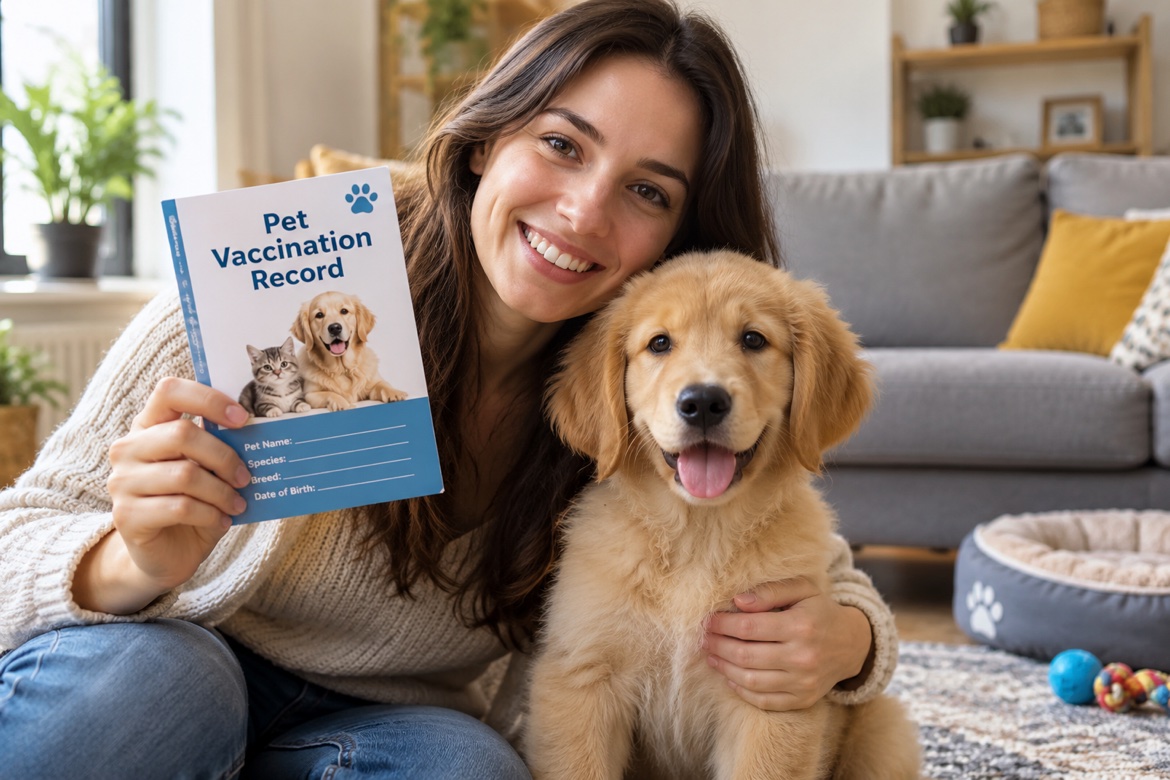
Your vet will review your puppy’s health and history, discuss disease risks in your area, and plan the next doses. Keep a copy of the updated vaccination record and note the date each vaccine was given, the next due date, and any booster requirements. This record is useful for future appointments, boarding, training classes, and travel.
Some puppies experience mild, temporary effects after vaccination, such as sleepiness, soreness around the injection site, a slightly reduced appetite, or a mild fever. These effects generally improve within a day or two. Ask your vet what to expect from the specific vaccines your puppy receives.
More serious reactions are uncommon but need prompt attention. Facial swelling, hives, repeated vomiting or diarrhea, or other rapidly developing symptoms warrant an immediate call to your veterinarian. Difficulty breathing, collapse, or severe weakness should be treated as an emergency. When in doubt, contact a veterinary professional rather than trying to assess a reaction at home.
Socialization is important during the same period, so vaccination does not mean keeping your puppy isolated until several months of age. Until your vet confirms the appropriate precautions, avoid dog parks, heavily used public potty areas, and places frequented by unknown or unvaccinated dogs. Carry your puppy in public when practical, arrange controlled visits with healthy vaccinated dogs, and ask about reputable puppy classes with appropriate health and cleaning requirements.
Puppy vaccination questions, answered
Can my puppy go outside before all shots are done?
Yes, with sensible precautions and guidance from your vet. Early positive experiences with people, sounds, and different environments matter, but puppies with an incomplete vaccine series remain vulnerable to infection. Choose clean, low-risk settings, carry your puppy in public where appropriate, and avoid dog parks and heavily trafficked dog areas. Ask your vet about local parvovirus risk before planning walks or group activities.
What if I miss a puppy booster window?
Contact your veterinarian and provide the dates of every dose your puppy has received. The best next step depends on the vaccine, how late the dose is, and your puppy’s history. Some vaccine courses may need adjustment or additional doses. Do not assume your puppy must restart every vaccine series, and do not guess at a replacement schedule.
How much do puppy vaccinations cost?
Costs vary by location, veterinary clinic, the number of visits, and which vaccines your puppy needs. The complete puppy series costs more than a single appointment, and examination fees may be separate from vaccine charges. Ask your clinic for an itemized estimate covering the core series, rabies, leptospirosis, and any recommended non-core vaccines. Community clinics and animal welfare organizations may offer lower-cost vaccination services in some areas.
Do indoor puppies need vaccines?
Yes. Indoor living reduces some opportunities for exposure, but it does not remove the risk of infectious disease. Contaminated footwear, objects, surfaces, other animals, and unexpected trips outside can introduce pathogens into a puppy’s environment. Core vaccination remains important even for dogs that spend most of their time indoors.
When is my puppy fully vaccinated?
Many puppies complete their initial DHPP series at around 16 weeks or later, depending on their individual schedule. Their immune response takes time to develop, so protection is not immediate after the last injection. Your veterinarian may advise allowing roughly 1-2 weeks after the final puppy dose before certain higher-risk activities. Rabies status and legal requirements follow their own rules, and leptospirosis or other vaccines may require separate follow-up doses.
Keep your puppy’s vaccination plan on track
A vaccination chart is a useful way to remember the major milestones, but the right schedule is the one tailored to your puppy. Keep vaccination records together, book follow-up visits before leaving the clinic, and contact your vet whenever a dose is overdue or a record is unclear.
Vaccination is one part of keeping a puppy healthy, alongside parasite prevention, appropriate nutrition, regular checkups, and safe socialization. For the most reliable plan, use this chart as a starting point and confirm every vaccine and due date with your veterinary team.
By Jennifer
Founder of CanineCalc, dog owner, and researcher