

Wondering whether your dog might be pregnant? The first signs can be easy to miss. She may seem a little more tired than usual, eat less for a few days, or become unusually affectionate. As pregnancy progresses, changes to her nipples, appetite, weight, and belly may become more noticeable.
Dog pregnancy lasts approximately 63 days from ovulation, or about nine weeks. However, the timing of mating does not always match the date of conception, and every dog develops differently. The signs and symptoms of dog pregnancy can help you decide when to seek veterinary care, but they cannot confirm that puppies are on the way. Some of the same changes also occur during false pregnancy.
The early signs of dog pregnancy (weeks 1-3)
During the first three weeks, you may notice very little. Many pregnant dogs look and behave much as they normally do, making this the least reliable stage for spotting pregnancy at home.
Possible early signs include:
- Mild appetite changes: Some dogs eat less briefly or show less interest in food than usual.
- Slight tiredness: Your dog may rest more often or seem less eager to play.
- Changes in affection: She might become more clingy and seek extra attention, or prefer a little more quiet time.
- Mild nausea-like symptoms: Occasional appetite dips or brief stomach upset may occur, although these signs are not specific to pregnancy.
These changes are subtle and can have many other causes. Hormonal changes and early embryonic development are already taking place, but visible body changes usually have not developed much yet. According to the American Kennel Club’s guide to canine reproduction, many dogs show few or no obvious pregnancy signs during the first three weeks.
If your dog may have mated, do not rely on her appetite or energy level to decide whether she is pregnant. Arrange veterinary guidance instead of waiting for more obvious symptoms.
Mid-pregnancy signs (weeks 4-6)
Between weeks four and six, pregnancy may become easier to spot. Hormonal and physical changes can be more noticeable, although their timing and intensity vary between dogs. This is also when veterinary testing can help determine whether puppies are developing.
Common changes during this period include:
- Nipples enlarge and darken: Often called “pinking up,” this change may become noticeable around weeks three to four. The nipples may appear more prominent or pink than before.
- Increased appetite: Some dogs begin eating more as pregnancy progresses, although appetite can fluctuate.
- Gradual weight gain: Your dog may gain weight as the pregnancy develops.
- A rounder belly: Abdominal enlargement may become noticeable toward the end of this period, particularly in dogs carrying larger litters.
- Behavioral changes: She might be calmer, more affectionate, or less interested in her usual activity.
Use the following table as a general guide rather than a diagnostic checklist. Individual dogs may show these changes earlier, later, or not at all.
| Week range | What you may notice |
|---|---|
| Weeks 1-2 | Few visible changes; appetite and energy may remain normal. |
| Weeks 3-4 | Possible nipple enlargement or pinker nipples; subtle behavioral changes. |
| Weeks 4-5 | Possible appetite increase and early weight gain. |
| Weeks 5-6 | Gradual belly rounding, more noticeable weight gain, and changes in appetite or activity. |
| Weeks 7-8 | A larger abdomen, possible puppy movement, and increasing preparation for birth. |
| Week 9 | Possible nesting, restlessness, appetite changes, and other signs that labor is approaching. |
None of these changes proves pregnancy on its own. Nipple changes and weight gain can also occur for other reasons, including false pregnancy.
Late-pregnancy signs (weeks 7-9)
During the final weeks, the physical signs of dog pregnancy are often more obvious. Your dog’s abdomen may look noticeably enlarged, and you may be able to see or feel puppy movement through the abdominal wall. Avoid pressing or squeezing her belly to check; let your veterinarian advise you on safe handling.
Other possible late-pregnancy signs include:
- Visible belly growth: The abdomen becomes fuller as the puppies grow, although the amount of enlargement depends on the dog and litter.
- Developing mammary glands: The breasts may enlarge, and milk or other secretions may appear near the end of pregnancy.
- Nesting behavior: Your dog may rearrange bedding, seek a quiet corner, or repeatedly prepare a resting area.
- Restlessness: Pacing, panting, trembling, reduced appetite, or frequent changes of position may occur as labor approaches.
- A drop in body temperature: A fall in rectal temperature can occur approximately 8-24 hours before labor, but it is not a reliable stand-alone prediction of exactly when delivery will begin.
The Merck Veterinary Manual describes these late-pregnancy and pre-labor changes while noting that the timing of delivery can be difficult to predict from mating dates alone. Ask your veterinarian how to monitor your dog and prepare for delivery safely.
How vets confirm a dog pregnancy
Physical signs can raise suspicion, but veterinary examinations and diagnostic tests provide much more reliable answers. Your veterinarian can recommend the right method based on how long it has been since mating and the information you need.
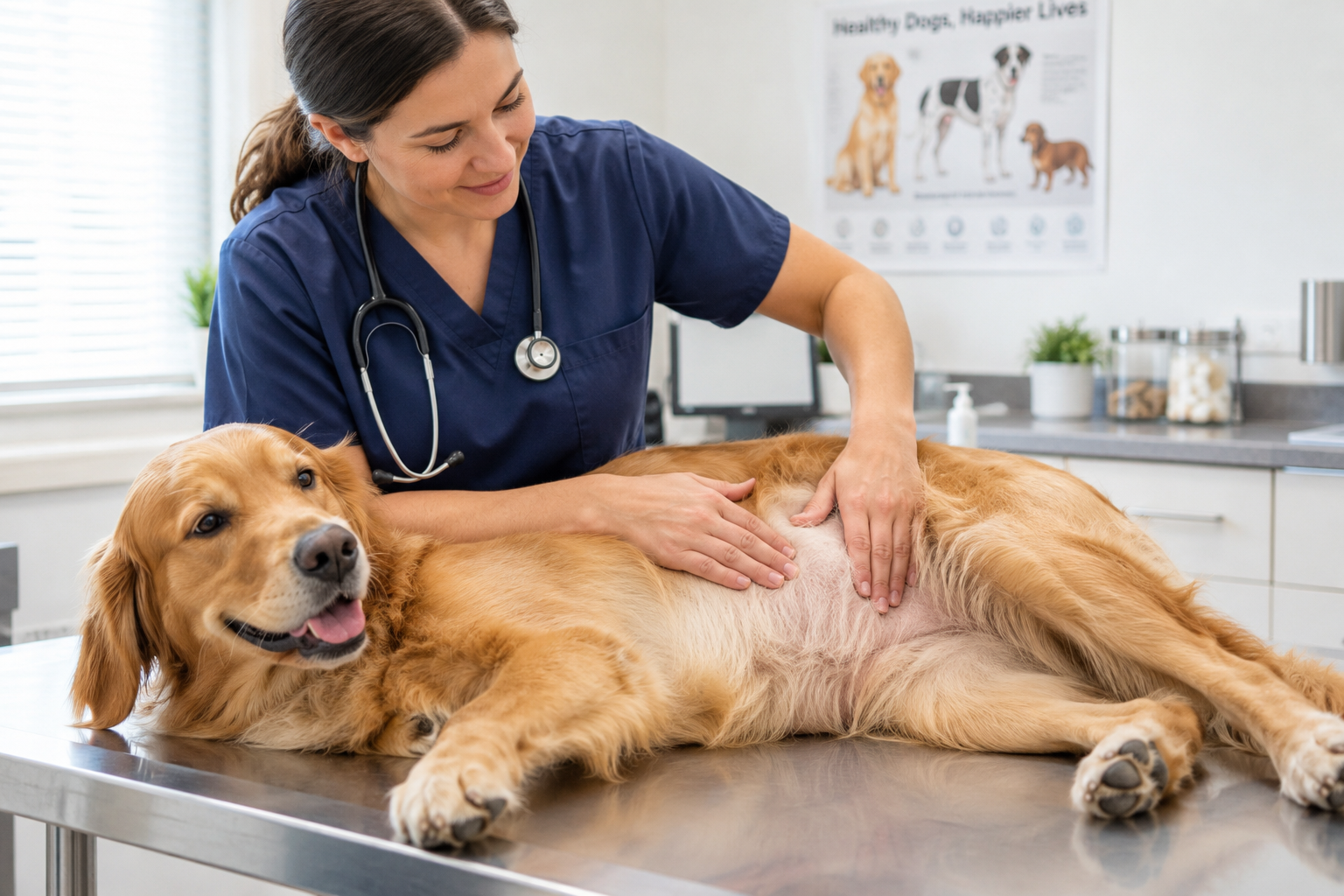
- Abdominal palpation: A veterinarian may be able to feel characteristic uterine swellings at approximately days 21-30 of pregnancy. The window is limited, and palpation requires experience. It is not a reliable way to count puppies or assess whether every fetus is alive.
- Ultrasound: Ultrasound can generally detect pregnancy from around day 25 and is useful for assessing fetal development and viability. Testing too early can produce a false-negative result.
- Relaxin blood test: This test measures relaxin, a hormone associated with the developing placenta. It may detect pregnancy from approximately days 22-27 after breeding with suitable assays, although your veterinarian may recommend testing later or repeating a negative result if pregnancy remains possible.
- X-ray: Puppy skeletons become visible on radiographs at approximately day 42-45. X-rays taken after day 55 are generally most useful for estimating litter size.
These timelines are approximate, and your veterinarian may adjust them according to the suspected mating date and your dog’s circumstances. The UC Davis School of Veterinary Medicine explains that nipple appearance, weight gain, and abdominal enlargement are not reliable methods of pregnancy detection.
If your dog may have mated accidentally, contact your veterinarian promptly rather than waiting for symptoms. Early advice is especially important if the pregnancy is unintended because available options and their timing need professional assessment.
False pregnancy: when the signs lie
False pregnancy, also called pseudopregnancy, can make an unspayed female dog appear pregnant even when she is not. It commonly occurs after a heat cycle and can cause many of the same changes seen during a real pregnancy.
A dog experiencing false pregnancy may develop enlarged nipples, swollen mammary glands, milk production, weight changes, or a fuller-looking abdomen. She may also become restless, build a nest, carry toys around, or behave as though she is caring for puppies.
Because the overlap is so strong, you cannot reliably distinguish false pregnancy from a real pregnancy by watching your dog at home. A veterinarian can review her history and perform an examination or recommend ultrasound and other appropriate tests. A relaxin test may also help because the hormone is associated with placental development.
Do not squeeze or attempt to express milk from enlarged mammary glands. Stimulation can encourage further milk production. If your dog’s glands are painful, she seems unwell, or her behavior changes significantly, seek veterinary advice.
Common questions about dog pregnancy
How soon can you tell if a dog is pregnant?
Some subtle changes may appear within the first few weeks, but they are unreliable. A veterinarian can often assess pregnancy with ultrasound from around day 25. The best timing depends on the suspected breeding date and the test used.
Can you use a human pregnancy test on a dog?
No. Human home pregnancy tests detect human chorionic gonadotropin (hCG), while veterinary pregnancy blood tests for dogs measure relaxin. A human test cannot reliably tell you whether your dog is pregnant.
Do pregnant dogs get morning sickness?
Some dogs experience brief appetite dips or mild stomach upset, but this is not a dependable pregnancy sign. Persistent vomiting, refusal to eat, marked lethargy, or other concerning symptoms warrant a veterinary assessment rather than an assumption that pregnancy is the cause.
How long are dogs pregnant?
Canine pregnancy lasts about 63 days from ovulation, usually described as roughly nine weeks. The interval from mating can be shorter or longer because mating and ovulation do not necessarily happen on the same day. You can estimate the due date with our dog pregnancy calculator.
When should I take my dog to the vet after mating?
Contact your veterinarian as soon as you know or suspect that mating occurred. Your vet can discuss any time-sensitive concerns and help schedule pregnancy confirmation, often around three to four weeks after the suspected mating. You do not need to wait for visible signs.
Conclusion
The signs and symptoms of dog pregnancy change as the weeks pass. Early on, you may notice little more than a slight appetite or energy shift. Later, nipple changes, weight gain, belly growth, puppy movement, and nesting may provide stronger clues. However, even several signs together cannot confirm pregnancy because false pregnancy can look remarkably similar.
If you suspect your dog is pregnant, contact your veterinarian to plan the right test and discuss appropriate care. A timely examination can help you understand what is happening and prepare for the next steps with greater confidence.
By Jennifer
Jennifer is the founder and owner of CanineCalc, a dog owner, and a researcher who creates practical, research-informed resources to help dog owners better understand their pets. Her articles provide general educational information and are not a substitute for veterinary advice.