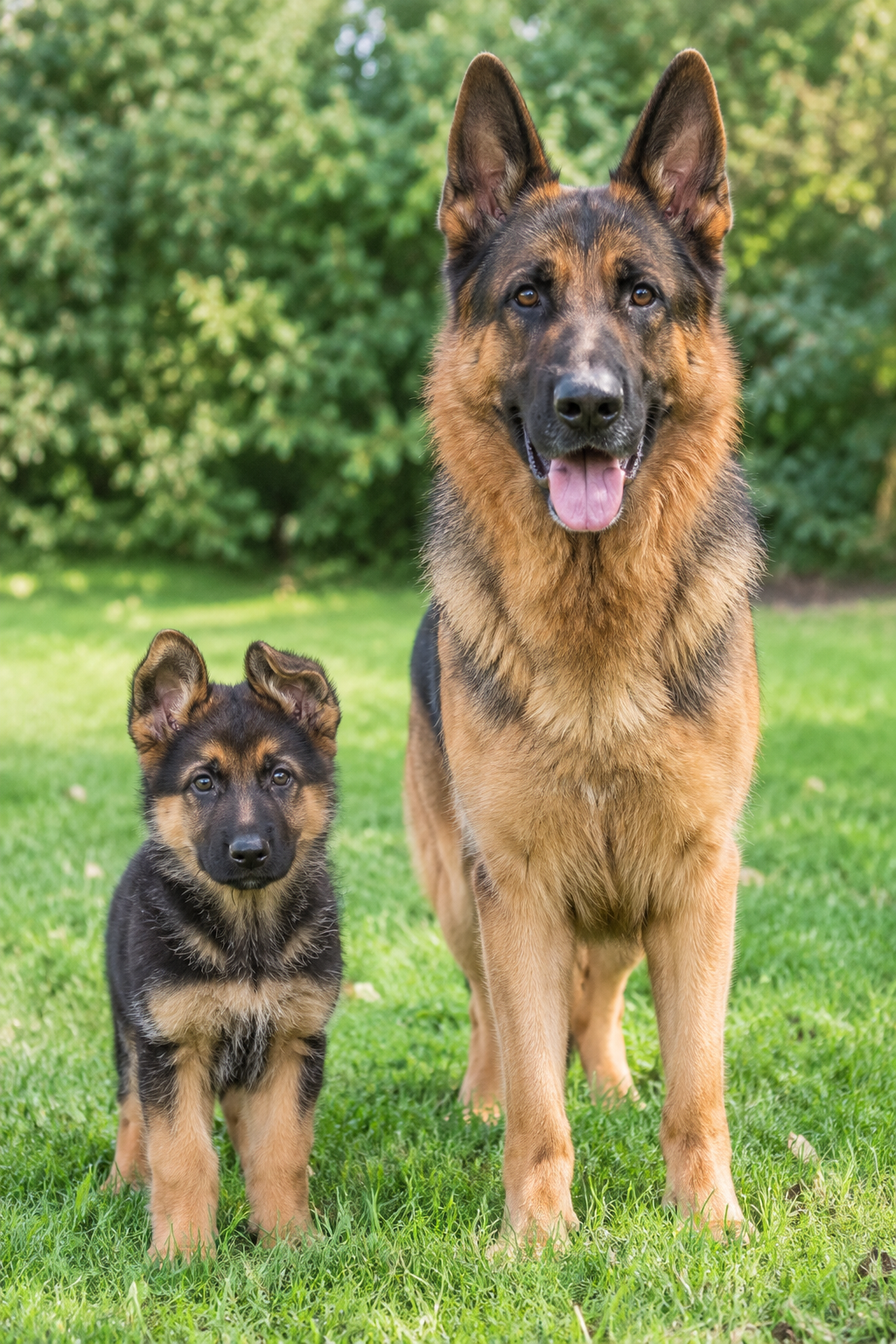
German Shepherds do most of their growing during the first year, but they usually need longer to reach full physical maturity. Their height often levels off between 12 and 18 months, while their chest, muscles, and overall build can continue developing until they are around 2 to 3 years old.
The exact timeline depends on genetics, sex, nutrition, and individual development. Male German Shepherds generally grow taller than females, and two puppies of the same age can have noticeably different heights while both develop normally.
The American Kennel Club (AKC) lists an adult height of 24 to 26 inches for males and 22 to 24 inches for females, measured at the shoulder. These breed-standard measurements are useful reference points, but they do not predict exactly how tall every individual dog will become.
The short answer: height by 12–18 months, full maturity by 2–3 years
Most German Shepherd puppies gain height rapidly during their first six months. Growth usually slows during the second half of the first year, and many dogs approach their adult shoulder height between 12 and 18 months.
Their bones grow through areas of cartilage called growth plates. As these plates mature and close, the long bones stop growing in length. The timing varies among dogs and between individual bones, so there is no single birthday when every German Shepherd stops getting taller.
Height is only part of the picture. Even after a German Shepherd reaches nearly its adult height, its chest may deepen, its muscles may become more developed, and its body may look more substantial. This filling-out process can continue into the second or third year.
A useful rule of thumb: expect most height growth during the first year, near-adult height by 12–18 months, and a more mature adult build by around 2–3 years.
German Shepherd height chart by age
The chart below provides broad, approximate shoulder-height ranges for male and female German Shepherds at common ages. They are practical estimates, not an official month-by-month AKC growth chart. Puppies grow at different rates, and some healthy dogs will fall outside these ranges.
| Age | Male height range | Female height range |
|---|---|---|
| 2 months | 7–9 inches | 6–8 inches |
| 3 months | 9–12 inches | 8–11 inches |
| 4 months | 12–15 inches | 10–13 inches |
| 6 months | 16–20 inches | 15–18 inches |
| 8 months | 19–23 inches | 18–21 inches |
| 10 months | 22–25 inches | 20–23 inches |
| 12 months | 23–26 inches | 21–24 inches |
| 18 months | 24–26 inches | 22–24 inches |
| 24 months | 24–26 inches | 22–24 inches |
| Adult AKC breed standard | 24–26 inches | 22–24 inches |
The adult figures follow the AKC German Shepherd Dog breed profile and the German Shepherd Dog Club of America breed standard. The younger-age ranges are approximate guides rather than breed-standard requirements. They should not be used to diagnose a growth problem.
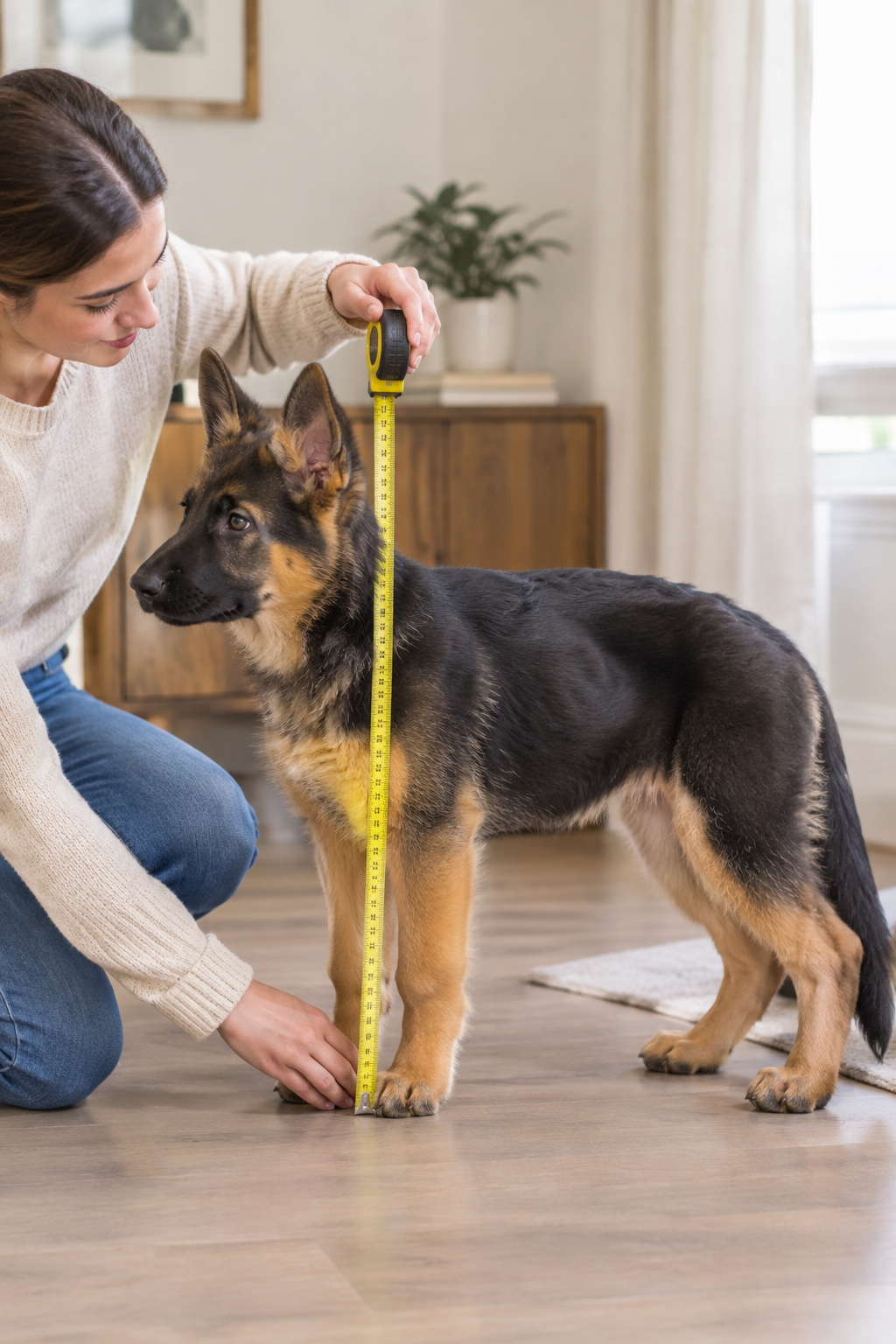
How to measure your German Shepherd’s height
You can check your dog’s height at home with a flat floor, a measuring tape, and a straight-edged object.
- Have your dog stand naturally on a level surface, with all four feet positioned normally.
- Locate the withers, the highest point of the shoulder blades at the base of the neck.
- Measure vertically from the floor to the top of the withers. Keep the tape straight rather than following the curve of the back.
- Repeat the measurement to check your result, ideally with your dog standing still and looking forward.
Measure in the same way each time and keep a simple record of your dog’s age, height, and weight. Small differences in posture or measurement technique can affect the result, so focus on the overall trend rather than a fraction of an inch.
Growth stages: what changes when
Birth to 6 months: rapid growth. German Shepherd puppies change quickly during their first six months. Their legs lengthen, their bodies become more coordinated, and their height increases noticeably. Growth is not perfectly even, so a puppy may look leggy one month and more balanced the next.
6 to 12 months: slower height growth. Growth continues, but the pace usually becomes less dramatic. Your puppy may still gain several inches, especially during the earlier part of this period. Differences between male and female dogs may also become easier to notice.
12 to 18 months: approaching adult height. Many German Shepherds are close to their final shoulder height during this stage. Some continue to gain a little height while their growth plates mature. A dog that seems to have stopped growing taller may still be developing in other ways.
18 to 36 months: filling out and maturing. Height generally changes little during this stage, but the body can become more muscular and substantial. The chest may deepen, the neck and shoulders may develop, and the dog’s overall proportions may look more adult. Physical and behavioral maturity do not always arrive at the same time.
Does neutering affect a German Shepherd’s final height?
It can influence skeletal development, depending on timing. Sex hormones play a role in growth-plate closure, and early spaying or neutering may delay closure in some dogs. That can affect final bone length slightly, but it does not mean early neutering will reliably produce a taller German Shepherd.
Timing decisions should consider your dog’s breed, sex, health, lifestyle, and risk of accidental breeding, not height alone. Discuss the options with your veterinarian before deciding when to spay or neuter a growing German Shepherd.
What affects how big a German Shepherd gets?
Genetics and parent size. A puppy’s parents are among the best clues to its likely adult height. Dogs from larger parents may trend toward the upper end of the breed’s range, while puppies from smaller parents may mature closer to the lower end. Genetics still allows plenty of individual variation.
Sex. Males are generally taller and more substantial than females. The AKC height ranges reflect this distinction, although the ranges should not be treated as guarantees for individual puppies.
Nutrition and body condition. A complete, balanced large-breed puppy food helps support controlled skeletal development. Feeding excessive amounts does not make a puppy healthier or guarantee a larger adult. Overfeeding can encourage overly rapid growth and put unnecessary stress on developing bones and joints. Avoid adding calcium or other supplements unless your veterinarian recommends them.
Health during the first year. Illness, digestive problems, parasites, or other conditions can affect a puppy’s growth. A temporary slowdown does not always signal a serious problem, but a persistent change in the growth pattern deserves attention.
Is my German Shepherd too small or too big?
Start by looking at your dog’s overall health rather than judging its size from a single number. The AKC standard describes the desired height for the breed; it is not a complete health assessment. A German Shepherd slightly outside the standard is not automatically unhealthy, and a dog within the standard can still have health or body-condition concerns.
Check whether your dog maintains a healthy body condition, eats normally, has appropriate energy, and continues to develop over time. You should generally be able to feel the ribs without pressing hard, while the ribs should not be prominently visible from a distance. Ask your veterinarian to assess body condition if you’re unsure.
A puppy that grows more slowly than expected may simply have a different growth pattern. However, arrange a veterinary check if slow or stalled growth occurs alongside poor appetite, lethargy, persistent digestive issues, unexplained weight loss, or other changes in health. Sudden changes in growth or signs of pain also warrant attention.
Your veterinarian can review the puppy’s history, check for possible health problems, and assess whether its growth pattern is appropriate. Repeated measurements and weight records are usually more informative than one comparison with an online chart.
For a related estimate, try the German Shepherd weight calculator. For a broader explanation of canine growth milestones, see When Do Puppies Stop Growing?.
Frequently asked questions
At what age is a German Shepherd fully grown?
Most German Shepherds approach their adult height by 12–18 months, but full physical maturity can take around 2–3 years. Their chest, muscles, and overall build may continue developing after height growth slows.
How tall is a 6-month-old German Shepherd?
As a broad estimate, a 6-month-old male may stand around 16–20 inches at the shoulder, while a female may measure around 15–18 inches. These are approximate ranges, not pass-or-fail milestones. A veterinarian can help assess growth if your puppy seems unusually small or large for its age.
Do female German Shepherds stop growing earlier than males?
Generally, females reach their adult size a little earlier than males, although individual dogs vary. Both sexes often approach adult height between 12 and 18 months, while filling out may continue afterward.
Will neutering make my German Shepherd taller?
Early neutering may delay growth-plate closure, potentially affecting final bone length. It does not reliably make a dog taller, and timing can have other health implications. Discuss the best timing for your individual dog with your veterinarian.
How can I predict my puppy’s adult height?
Start with the height and build of both parents, then track your puppy’s height and weight as it grows. Its current age and measurements provide useful context, but no chart can promise an exact adult height. A veterinarian can help evaluate the growth trend over time.
Conclusion
German Shepherds do most of their growing during puppyhood, with height often leveling off between 12 and 18 months. Their adult build takes longer, commonly developing through the second or third year. Use the German Shepherd height chart as a rough guide, keep your dog at a healthy body condition, and pay attention to steady development rather than a single measurement. The breed standard offers a helpful reference, but your dog’s overall health matters more than matching a number perfectly.
About the author: Jennifer is the founder of CanineCalc, a dog owner and researcher who creates practical resources to help people understand canine growth, size, and development. Her articles are designed to support informed conversations with veterinary professionals, not replace individualized veterinary advice.