Last updated: October 2026
Your dog’s water bowl is empty again, and you’re wondering whether something is wrong. A dog drinking a lot of water may simply be responding to heat, exercise, or a change in diet. But a persistent increase in thirst can also signal a health problem that needs veterinary attention.
The key is understanding what’s normal for your dog and recognizing when a change deserves attention.
Dog drinking a lot of water means a noticeable increase in how much a dog drinks; veterinarians may call excessive drinking polydipsia. One thirsty afternoon after exercise can be normal. A persistent change, especially when paired with increased urination or other symptoms, deserves a conversation with your veterinarian.
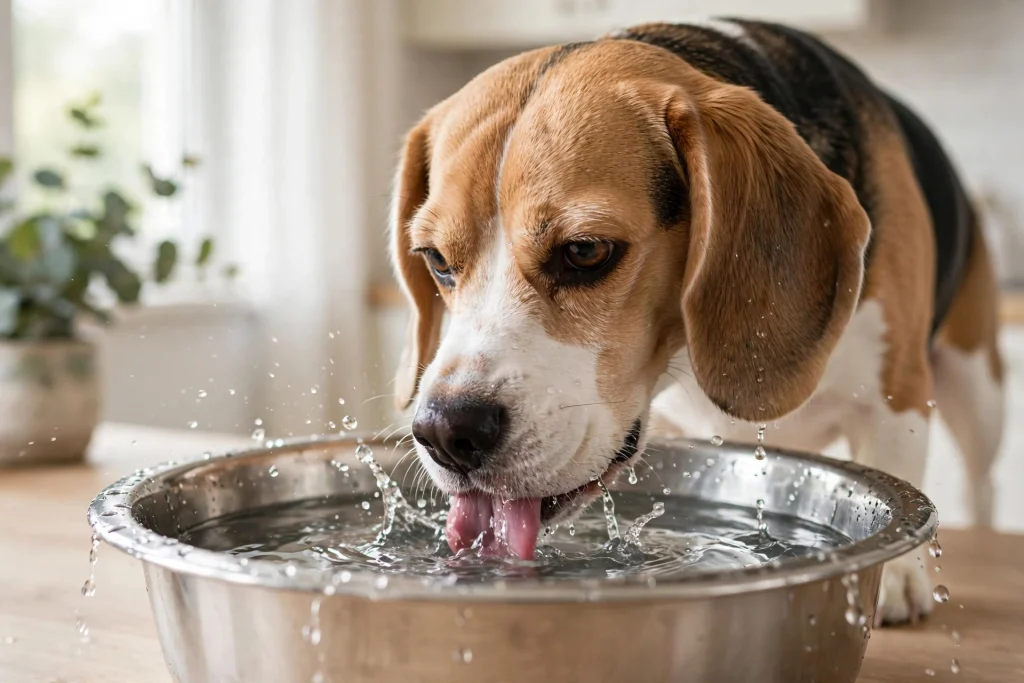
How Much Water Should a Dog Drink Each Day?
Normal daily water intake varies with a dog’s size, diet, activity, and surroundings. A useful starting point is roughly 1 fluid ounce of water per pound of body weight per day, equivalent to approximately 60 mL per kilogram as a practical estimate.
Normal daily water intake for a dog depends on body size, food, weather, and activity. According to the American Kennel Club (AKC), many dogs drink about 40–60 mL per kilogram daily, while a commonly used home estimate is roughly 1 fluid ounce per pound. Treat either figure as a guide, not a prescription.
That baseline helps.
A dog that eats dry kibble will generally get less moisture from food than a dog eating wet food. Hot weather, longer walks, vigorous play, and other sources of fluid loss can also increase drinking. Some dogs naturally drink more than others, so daily patterns matter as much as a general estimate.
A normal amount isn’t a strict limit
Here’s where the numbers need context. Sources use different benchmarks for typical intake and excessive thirst.
The AKC describes 40–60 mL per kilogram per day as a typical range. Cornell University’s Riney Canine Health Center identifies intake above 100 mL per kilogram per day as a threshold for polydipsia. These figures address different questions: one describes typical intake, while the other flags unusually high consumption. Neither means you should ignore a significant change below that threshold.
For example, if your dog has suddenly started emptying the bowl twice as often, that change deserves attention even if you haven’t calculated the exact daily volume.
What most guides skip is the importance of your dog’s own baseline. A consistent change in drinking and urination may matter more than whether a single measurement crosses a general threshold.
Source: American Kennel Club — typical daily water-intake guidance and signs of excessive thirst.
Why Is My Dog Drinking So Much Water?
Reasons a dog may drink more than usual range from heat, vigorous exercise, dry food, or salty treats to medication effects and medical conditions. According to Cornell’s Riney Canine Health Center (2024), increased drinking often follows increased urination, rather than starting the problem itself. An examination and appropriate tests are needed to identify the cause.
That last point can be surprising.
Everyday reasons your dog may be thirstier
A temporary increase in drinking can make sense after a change in your dog’s routine. Consider whether your dog has recently experienced:
- Hot weather: Warm conditions can increase water requirements.
- More exercise: A longer walk, a vigorous play session, or an active day outdoors can leave a dog thirstier.
- A diet change: Dry food contains less moisture than wet food, so dogs eating kibble may drink more from their bowls.
- Saltier food or treats: A salty snack or an unusual meal may increase thirst.
- Medication changes: Certain medicines, including some corticosteroids and diuretics, can increase thirst and urination.
These are possibilities, not automatic explanations. If your dog’s increased thirst continues after an obvious trigger has passed, contact your veterinarian rather than assuming the change is harmless.
Medical conditions that can increase thirst
Several medical problems can cause a dog to drink more water and urinate more frequently. Examples include:
- Diabetes mellitus: A dog may drink and urinate more while losing weight, sometimes despite having a normal or increased appetite.
- Kidney disease: Changes in kidney function can affect the body’s ability to conserve water.
- Cushing’s disease: This hormonal disorder can cause increased thirst and urination.
- Urinary or kidney infections: These may affect urination and, in some cases, thirst.
- Other conditions: Liver disease, certain electrolyte imbalances, and some medications can also contribute.
The signs can overlap. Increased thirst alone cannot tell you which condition, if any, is present. Your veterinarian may recommend a physical examination, blood tests, and urine testing to investigate the cause.
A change in drinking is a clue, not a diagnosis.
When does increased thirst become concerning?
Knowing when to call a vet for increased thirst starts with the pattern and your dog’s other symptoms. Cornell flags water intake above 100 mL per kilogram per day as polydipsia, but a sudden change can matter before that threshold. Contact your veterinarian for a persistent increase or added urination; seek urgent help for severe symptoms.
Trying to predict your puppy’s adult size? Here’s what to know.
Some owners prefer to wait a few days whenever a dog seems otherwise well. That can feel reasonable when the increase follows a hot afternoon or unusual exercise and quickly settles. But when the change persists, or you notice other symptoms, calling your veterinarian early is the safer choice.
Here’s the important part: growth isn’t always predictable. You need to recognize a meaningful change and pass that information to someone qualified to assess it.
When Should I Call the Vet?
Not every increase in drinking is an emergency. The decision depends on how long it lasts, what else has changed, and how your dog is acting.
Signs that deserve a veterinary appointment
Contact your regular veterinarian if you notice:
- Drinking noticeably more than usual for no clear reason.
- Asking to go outside more often or producing unusually large amounts of urine.
- New accidents indoors, despite being reliably house-trained.
- Changes in appetite, unexplained weight loss, or lower energy.
- Increased thirst that continues after a change in activity or weather.
A dog may appear perfectly comfortable while an underlying problem is developing. That’s one reason a persistent change deserves attention even when your dog is still eating, playing, and behaving normally.
Signs that warrant urgent attention
Do not wait for a routine appointment if excessive thirst occurs alongside serious symptoms such as repeated vomiting, marked weakness, collapse, difficulty breathing, or severe lethargy. Seek urgent veterinary care. Difficulty urinating, particularly repeated straining with little or no urine, also needs prompt assessment.
Do not restrict your dog’s water to see whether the drinking improves. A dog may be drinking to replace fluid lost through urination, and withholding water can be dangerous. Veterinary guidance warns against water restriction unless a veterinarian specifically directs it.
Quick Comparison
| Option | Best For | Key Benefit | Limitation |
|---|---|---|---|
| Observe a short-lived increase | Thirst after obvious exercise or warm weather | Helps establish whether the change settles | Not appropriate when other symptoms appear |
| Measure daily intake | An ongoing change in drinking habits | Gives your vet useful information | Measurements can be unreliable if pets share a bowl |
| Schedule a vet visit | Persistent thirst or increased urination | Helps identify possible underlying problems | The cause cannot be determined from water intake alone |
| Seek urgent veterinary care | Thirst with severe symptoms or difficulty urinating | Gets concerning signs assessed promptly | Do not wait for a daily intake calculation first |
This guide covers normal intake, common causes, and warning signs. It does not diagnose your dog or replace an individual veterinary examination.
How to Measure Your Dog’s Water Intake at Home
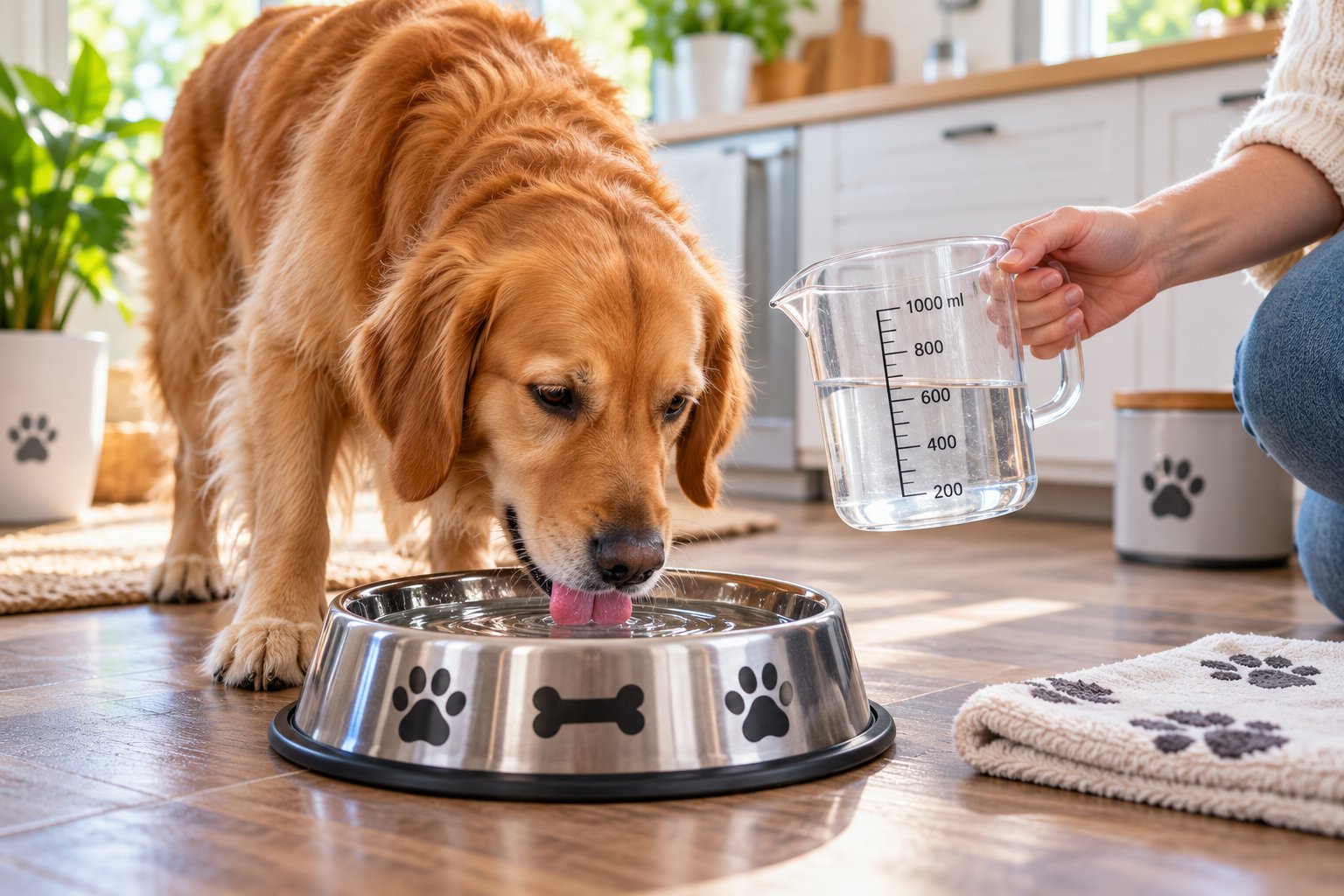
You don’t need special equipment to get a useful estimate. A measuring cup, a note on your phone, and a little consistency can help.
To estimate your dog’s daily water intake, follow these steps:
- Measure the water you pour into the bowl.
- Record every refill over 24 hours.
- Note spills, shared bowls, and other water sources.
- Record changes in urination, appetite, energy, or weight.
- Share the information with your veterinarian if the increase persists or concerns you.
Keep fresh water available throughout the process.
Make the measurement useful
Try to measure intake over a full day, using the same approach each time. If another pet uses the bowl or your dog drinks outside, record that limitation rather than pretending the result is exact.
Don’t force your dog to drink a particular amount or limit access to water to produce a cleaner measurement. The goal is to observe normal behavior, not change it.
Here’s the thing: your notes don’t need to be perfect. A reliable estimate and a clear description of what changed are often more useful than a single number without context.
Related: more dog health guides
Source: Cornell Riney Canine Health Center — the clinical threshold for excessive drinking and possible underlying causes.
Quick Answers to Common Questions
Q: Why is my dog suddenly drinking so much water?
Heat, exercise, food changes, and medications can increase thirst. A sudden or persistent change can also signal a medical problem, especially when your dog urinates more often or develops other symptoms. Contact your veterinarian if the change is unexplained or continues.
Q: How do I know whether my dog is drinking too much water?
Start by comparing current intake with your dog’s usual pattern. Roughly 1 fluid ounce per pound daily is a practical estimate, not a strict limit. Record daily intake and urination, and ask your vet about a persistent increase.
Q: Should I worry if my dog drinks more water at night?
Not always. Activity, diet, and the day’s conditions can influence thirst. Repeated nighttime drinking, new indoor accidents, or a lasting change in intake deserves veterinary advice, especially if other symptoms appear.
Q: What’s the best way to monitor my dog’s water intake?
Measure the amount offered and remaining over 24 hours, record refills, and account for spills or shared bowls. Keep water available. Bring your notes to your veterinarian if you notice an ongoing increase.
Q: When should I take my dog to the vet for excessive thirst?
Schedule a veterinary appointment for persistent unexplained thirst, increased urination, new accidents, or changes in appetite or weight. Seek urgent care if your dog develops severe weakness, collapse, breathing difficulty, repeated vomiting, or difficulty urinating.
A calm next step
A dog drinking a lot of water isn’t automatically sick, and a normal-looking dog isn’t automatically in the clear. Pay attention to what has changed, keep a rough record of intake, and look at drinking alongside urination and your dog’s general behavior.
Jennifer is a researcher and dog owner, not a veterinarian. This article offers general educational guidance, not a diagnosis or individualized treatment advice. Your veterinarian is the right person to assess persistent changes and decide whether testing is needed.