Can dogs eat corn on the cob? No, dogs should never eat corn on the cob, but plain corn kernels are generally safe in moderation. The important difference is the cob itself. While your dog can enjoy a few cooked kernels removed from the cob, swallowing the hard, fibrous center can cause choking or a potentially serious intestinal blockage. The American Kennel Club also recommends serving corn kernels separately rather than letting dogs chew directly from the cob.
If you’re preparing corn for a family meal or barbecue, the safest approach is simple: remove the kernels completely, leave off the butter and seasonings, and offer only a small portion. If your dog has already swallowed a piece of cob, contact your veterinarian promptly rather than waiting for symptoms to appear.
Can dogs eat corn on the cob? The short answer
Dogs can eat plain corn kernels, but they should never be given a whole corn cob or allowed to chew kernels directly from one.
Here’s the distinction:
- Plain corn kernels: Generally safe as an occasional treat when cooked, removed from the cob, and served without added ingredients.
- Corn on the cob: Unsafe because the cob can become lodged in the digestive tract or cause choking.
- Buttered or seasoned corn: Best avoided because added fat, salt, and seasonings are unnecessary and may cause problems.
- Corn husks: Also best kept away from dogs because they are difficult to digest and may cause a blockage.
Corn itself is not inherently toxic to dogs. The central issue is that the cob is not digestible in the same way as the kernels. Even a dog that seems able to chew through an ear of corn may swallow a piece large enough to cause trouble.
The safest rule is to enjoy corn at the table yourself and give your dog a small serving of plain kernels in a separate bowl.
Why the cob is dangerous
A corn cob may look like a harmless leftover, but a dog’s digestive system cannot reliably break it down. Unlike the soft kernels, the cob is tough and fibrous. If swallowed, it can travel into the stomach or intestines and become stuck instead of passing through normally.
This is called a gastrointestinal foreign-body obstruction. According to Cornell University College of Veterinary Medicine, corn cobs are among the objects that can cause an intestinal obstruction, which may require urgent veterinary care.
The size of the dog matters, too. A piece that seems relatively small beside a large dog may still be difficult to pass, while a similar piece can pose a substantial risk to a smaller dog. Chewing the cob into fragments does not make it reliably safe.
There is also a choking risk if a dog tries to swallow a large piece. Dogs can be enthusiastic eaters, and a tempting cob left on a plate, in a trash can, or on an outdoor table can disappear quickly.
For these reasons, do not give a corn cob as a chew toy, even after most of the kernels have been removed. Discard it somewhere your dog cannot access.
Corn kernels: how to serve them safely
Plain corn kernels can be an occasional treat for many healthy dogs. You don’t need to eliminate corn from your dog’s diet simply because the cob is dangerous. You do, however, need to prepare it appropriately.
Follow these basic guidelines:
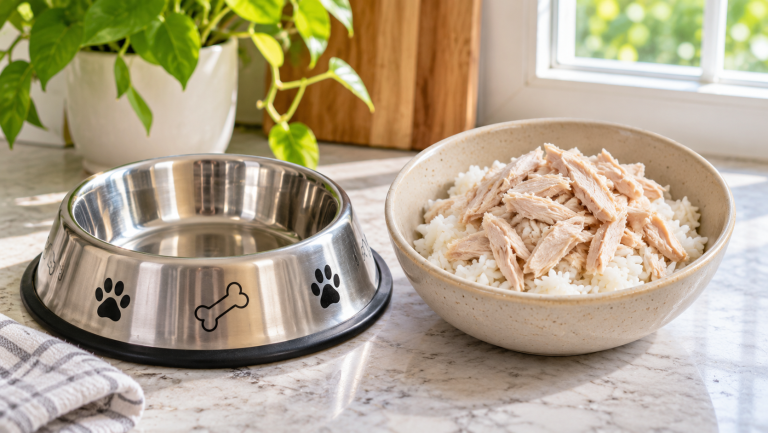
Cook the corn plainly. Boiled or steamed corn without added oil or seasoning is an easy option. Allow it to cool before serving.
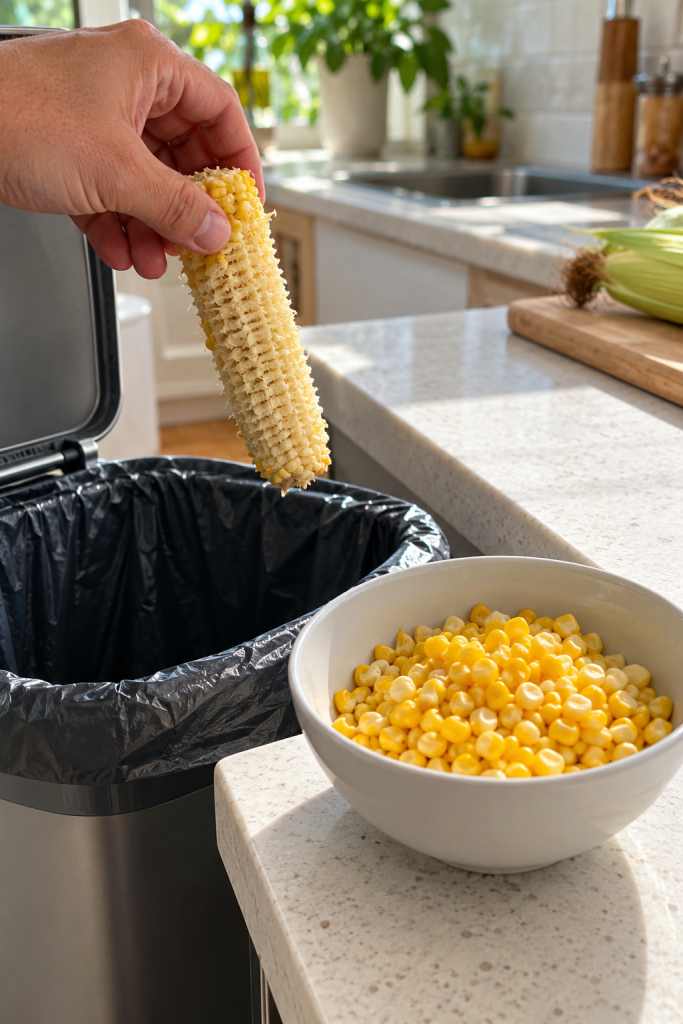
Remove every kernel from the cob first. Put the cob out of reach before offering any corn. Never let your dog nibble kernels straight from the ear.
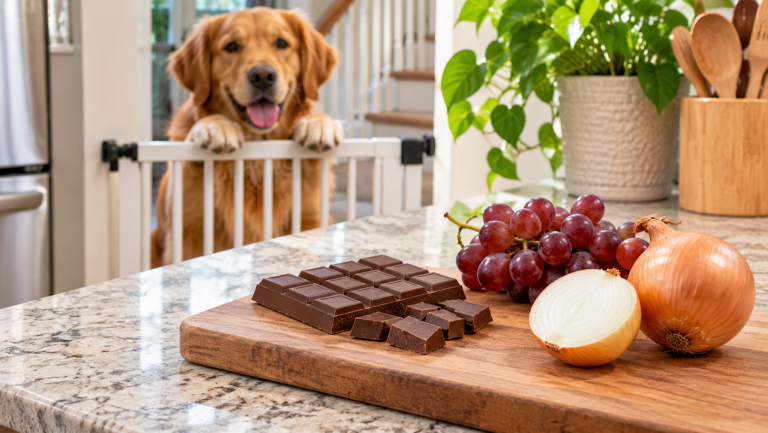
Skip butter and salt. Butter adds unnecessary fat, while excess salt can be harmful. Avoid pepper, spicy seasonings, garlic, onion, and flavored sauces, too. Garlic and onion are toxic to dogs.
Start with a small amount. If your dog has never eaten corn before, offer just a few kernels. A sudden addition of a new food may upset some dogs’ stomachs. Watch for digestive changes or other signs that the food does not agree with your pet.
Keep treats within the 10% rule. All treats and extras combined should make up no more than about 10% of your dog’s daily calories. The other 90% should come from a complete and balanced diet appropriate for your dog’s needs.
Corn does not need to be a daily snack. Think of it as an occasional extra rather than a substitute for your dog’s regular food.
Dogs with known food sensitivities, medical conditions, or prescription diets may need different feeding guidance. Check with your veterinarian before adding new foods if any of these apply.
How much corn can a dog eat?
The right portion depends on your dog’s size, normal calorie needs, activity level, and tolerance for new foods. There is no single portion that suits every dog.
The following amounts are illustrative starting portions for plain, cooked kernels, not veterinary prescriptions:
- Small dogs: Start with about 1 teaspoon.
- Medium dogs: Start with about 1 tablespoon.
- Large dogs: Start with 1 to 2 tablespoons.
These amounts are starting points, not daily targets. You may need to offer less, particularly if your dog is small, inactive, prone to weight gain, or eating other treats that day.
Keep in mind that the 10% rule applies to all treats combined, not to corn alone. If your dog has already had training treats, dental chews, or table-food extras, there may be little room for additional snacks.
Introduce corn gradually and keep an eye out for gas, loose stools, vomiting, or other digestive changes. If your dog does not tolerate it well, there is no nutritional need to keep offering it.
For help understanding your growing dog’s regular food needs, see our puppy food chart: how much to feed by age.
What if your dog already ate a cob?
If your dog has swallowed a corn cob or part of one, stay calm, but take the situation seriously.
Contact your veterinarian or a local emergency veterinary clinic promptly, even if your dog seems perfectly normal. Tell them what was swallowed, approximately how much may be missing, and when the incident happened. They can advise you on the appropriate next step for your dog’s circumstances.
Do not try home remedies, force food or liquids, or attempt to induce vomiting yourself. Do not assume the danger has passed simply because your dog is behaving normally. A blockage may not cause obvious signs immediately.
Warning signs can include:
- Vomiting, particularly repeated vomiting
- Loss of appetite or refusal to eat
- Straining to pass stool or difficulty passing stool
- Lethargy or reduced activity
- Belly pain or unusual abdominal discomfort
These signs can have several causes, and they do not by themselves confirm a blockage. However, after possible cob ingestion, they make prompt veterinary assessment especially important.
If your dog is choking or having difficulty breathing, seek emergency veterinary assistance immediately.
The key point is not to wait until your dog looks unwell before calling. A veterinarian can assess the situation and determine whether further evaluation is needed. This article provides general feeding information, not a diagnosis or treatment plan.
Corn in dog food vs. corn on the cob
You may wonder why corn appears in so many commercial dog foods if the vegetable can be dangerous.
The answer is that corn kernels and corn cobs are very different materials. When corn is used in kibble, it is typically processed, such as by grinding and cooking, which makes its nutrients more accessible to digestion.
Corn can provide carbohydrates for energy, along with fiber, protein, fatty acids, and other nutrients. In a complete and balanced dog food, corn can be one part of a formulation designed to meet a dog’s nutritional needs.
A whole cob, on the other hand, is a tough object that does not break down normally in the digestive tract. Its physical structure, rather than the nutritional content of the corn itself, is the main concern.
Seeing corn listed in your dog’s food ingredients is therefore not a reason to assume corn cobs are safe. The two are not interchangeable.
Quick answers: Common questions about dogs and corn
Can dogs eat cooked sweetcorn?
Yes. Plain cooked sweetcorn kernels are generally safe for dogs in small amounts. Remove them from the cob, let them cool, and avoid butter, salt, sauces, and seasonings.
Can dogs eat corn kernels off the cob?
Yes. Plain kernels removed completely from the cob can be offered as an occasional treat. Keep the portion small and introduce corn gradually, especially if your dog has never tried it before.
What happens if a dog eats a corn cob?
The cob can cause choking or become lodged in the digestive tract, potentially leading to a serious intestinal blockage. Contact a veterinarian promptly if your dog has swallowed any part of a cob, even if no symptoms are apparent.
Is corn toxic to dogs?
No, plain corn kernels are not generally considered toxic to dogs. The main danger is the cob, along with potentially harmful additions such as garlic, onion, or excessive salt. Individual dogs may also have food sensitivities.
Can puppies eat corn?
Puppies can generally have a few plain, cooked corn kernels removed from the cob, but it is not necessary to add corn to their diets. Keep portions very small because puppies have specific nutritional needs and may be more sensitive to dietary changes. Their primary food should be a complete, balanced puppy diet. Ask your veterinarian before introducing new foods if your puppy has digestive problems or special dietary requirements.
Conclusion: Kernels yes, cob no
So, can dogs eat corn on the cob? They can eat the kernels, but they should never eat the cob itself.
Serve a few plain, cooked kernels separately, leave out the butter and seasoning, and keep portions modest. Make sure leftover cobs and husks are disposed of securely, especially during cookouts and family meals when food may be left unattended.
If your dog swallows a cob, contact your veterinarian promptly rather than trying to manage the situation at home. Knowing the difference between a safe kernel and a dangerous cob makes it much easier to share a small treat without taking an unnecessary risk.