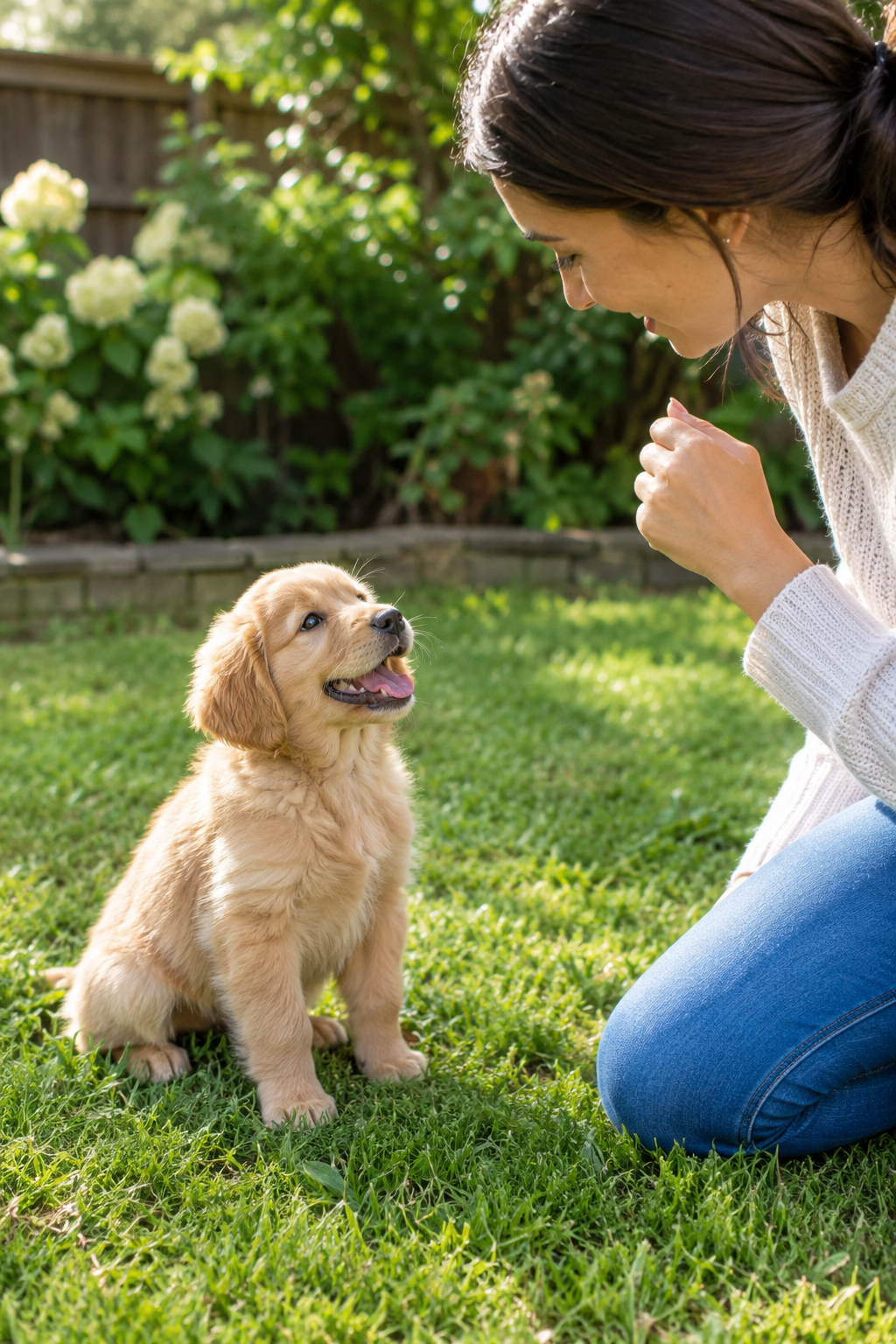
Housebreaking a puppy takes patience, a predictable routine, and plenty of small rewards. The goal is to help your puppy learn where to pee and poop, recognize when they need a break, and feel comfortable eliminating outdoors. Accidents will happen along the way, even when you are doing everything right.
The most effective approach combines close supervision, frequent outdoor trips, and immediate rewards for getting it right. Crate training can help, too, when used kindly and without expecting a young puppy to hold it longer than they can manage.
This guide covers when to toilet train a puppy, how to build a realistic daily schedule, what to do about accidents, and how to solve one of the most frustrating problems: a puppy that simply will not pee outside.
When to toilet train a puppy
Start housebreaking a puppy the day they come home. Most puppies leave their mothers and littermates at around eight weeks old, and that is a good time to begin teaching a consistent bathroom routine.
You do not need to wait until your puppy is older or has better bladder control. Puppies can start learning the connection between going outside, relieving themselves, and receiving a reward almost immediately.
Their physical control, however, develops gradually. A rough rule of thumb is that puppies may hold their bladder for approximately one hour per month of age, plus one hour. That would suggest about three hours for a two-month-old puppy. It is only a rough estimate, not a target or guarantee. Some puppies need to go much sooner, particularly when they are awake, excited, playing, or drinking.
For young puppies, offer bathroom breaks every one to two hours while awake, plus trips after meals, naps, play, and drinking. Small breeds may need even more frequent opportunities.
Waiting until your puppy is older can make training harder because they have more time to develop indoor bathroom habits. Starting early gives them a clear, consistent alternative before those habits become established.
The housebreaking system: supervise, schedule, reward
Successful housebreaking comes down to three habits.
- Supervise or safely confine. Keep your puppy in sight when they have access to the house. Watch for sniffing, circling, wandering away, or suddenly stopping play. When you cannot supervise, use a suitably sized crate or puppy-proofed pen with appropriate bathroom arrangements if needed.
- Follow a predictable schedule. Take your puppy outside before accidents become likely. Consistent meals and regular bathroom opportunities make their needs easier to anticipate.
- Reward immediately. When your puppy finishes peeing or pooping outside, offer a small treat and warm praise within seconds, while you are still outdoors. Rewarding only after you return indoors may leave them unsure what earned the treat.
Choose a consistent outdoor bathroom spot and use a simple cue such as “go potty.” With repetition, the location, cue, and reward help your puppy understand what you are asking.
A sample housebreaking schedule
Your puppy’s schedule should revolve around sleep, meals, activity, and bathroom needs. The following example is a starting point for a young puppy, not a rigid timetable.
| Time or trigger | What to do |
|---|---|
| 6:30 a.m. | Go outside immediately after waking |
| 7:00 a.m. | Serve breakfast, then go outside again |
| 8:00 a.m. | Offer another bathroom break before a nap |
| 9:00 a.m. | Go outside after waking and before play |
| 10:00 to 11:00 a.m. | Take another break, adjusting sooner if needed |
| 12:00 p.m. | Offer lunch if following three meals a day, then go outside |
| Afternoon | Go outside after naps, play, meals, and every one to two hours while awake |
| 6:00 p.m. | Dinner, followed by a bathroom trip |
| 8:00 to 9:00 p.m. | Bathroom break before settling down |
| Just before bed | Make one final, quiet trip outside |
Move these times to fit your household. The important part is taking your puppy out after waking, eating, drinking, playing, and spending time in a crate. If an accident happens, shorten the interval between trips.
For more guidance on building a consistent routine, see the American Kennel Club’s puppy potty-training timeline.
Crate training for housebreaking (the kind way)
A crate can help with housebreaking because many dogs prefer not to soil the area where they sleep. It also gives your puppy a safe, manageable space when you cannot watch them closely.
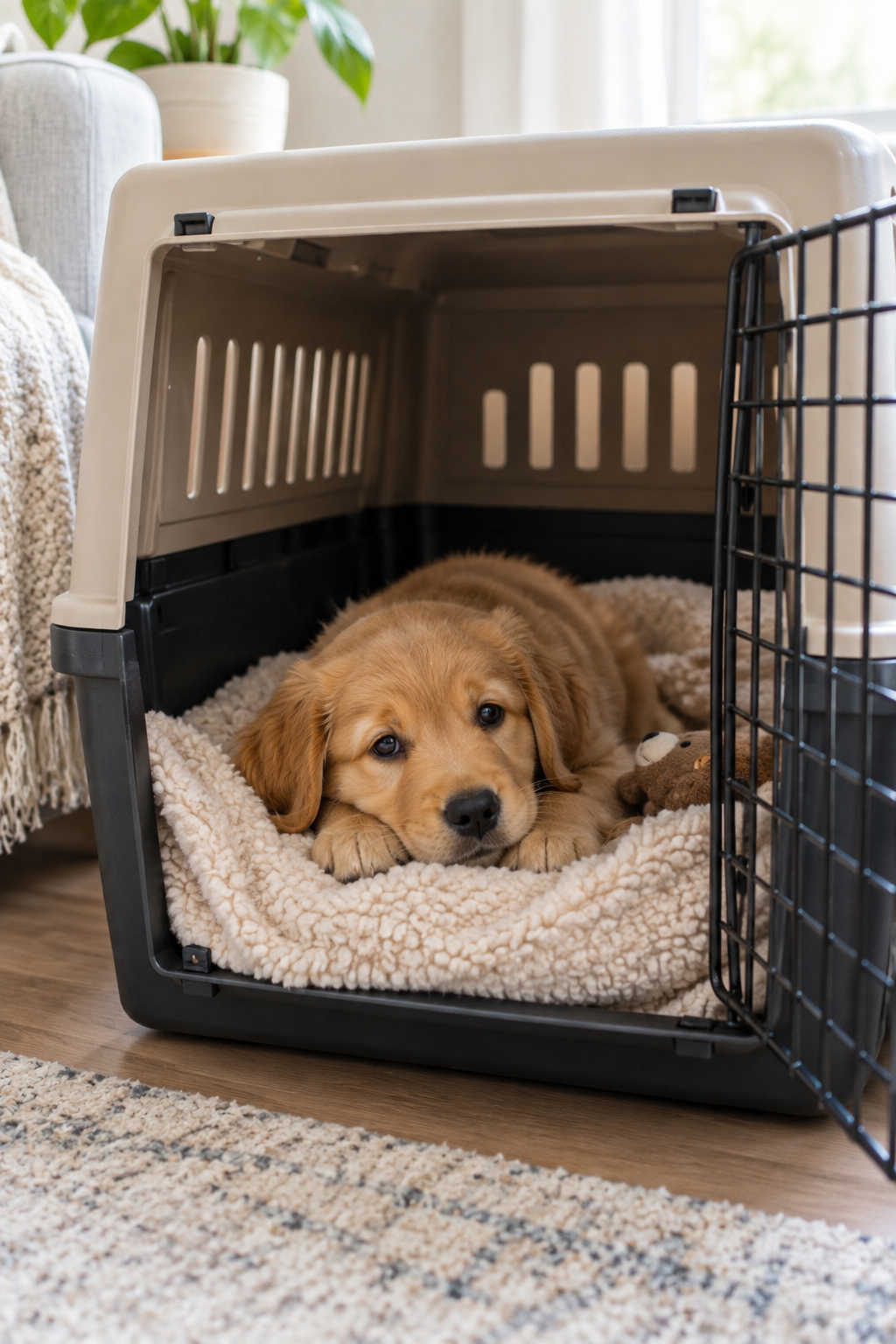
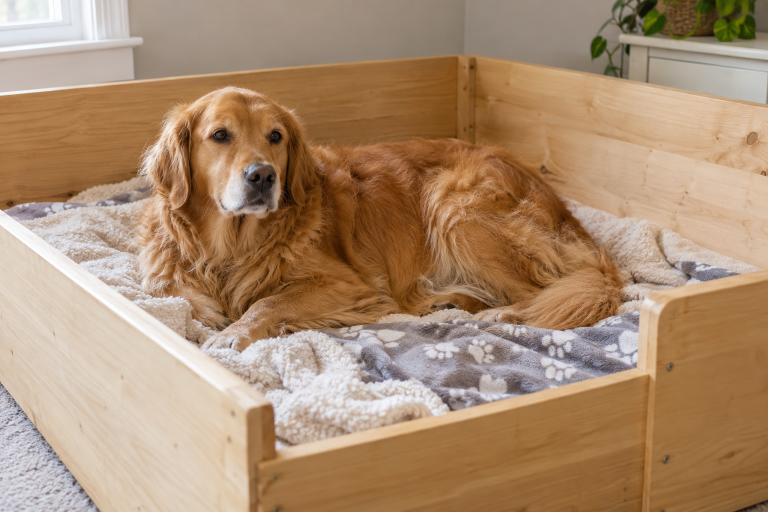
The crate must be large enough for your puppy to stand up, turn around, and lie down comfortably. A crate that is too large may allow a puppy to use one corner as a bathroom and another for sleeping. A divider can help as your puppy grows.
Use treats, meals, comfortable bedding where appropriate, and short positive sessions to build a good association with the crate. Never use it as punishment or leave a distressed puppy to struggle for long periods.
How long can a puppy stay in a crate? Young puppies need frequent breaks. As a practical daytime starting point, an eight- to ten-week-old puppy may need an opportunity to toilet every 30 to 60 minutes while awake. At around three months, some can manage one to two hours; at four months, perhaps two to three hours; older puppies may manage longer. These are planning estimates, not limits every puppy can meet.
The often-cited age-in-months-plus-one rule should not be treated as permission to leave a puppy confined for that long. Make arrangements for a bathroom break when needed. If you will be away longer than your puppy can comfortably manage, use a safe puppy-proofed pen with a separate toilet area rather than forcing them to soil their sleeping space.
If your puppy soils the crate, clean it thoroughly and reconsider the timing, crate size, and length of confinement. It does not mean they are being difficult.
For the right fit, use the CanineCalc dog crate size calculator. You can also review the dog crate sizes guide before choosing a crate.
Accidents: how to clean up and what NOT to do
Accidents are part of the learning process. Clean them up calmly and focus on preventing the next one.
Use an enzymatic cleaner. Ordinary cleaning products may remove the visible mess without fully eliminating the odors a puppy can detect. An enzymatic pet cleaner helps break down urine residue. Avoid ammonia-based products because their odor can resemble urine and may encourage repeat marking in the same area.
Interrupt gently if you catch an accident. If your puppy starts peeing indoors, calmly interrupt with a neutral sound, then take them straight outside. If they finish outdoors, reward them. If they have already finished inside, simply clean up.
Do not rub their nose in it or punish them afterward. A puppy is unlikely to connect punishment delivered after the accident with the earlier act of peeing. Instead, punishment can make them afraid of you or encourage them to hide when they need to go. That can make housebreaking harder, not faster.
Frequent accidents can sometimes have a medical cause. Contact your veterinarian if your puppy urinates unusually often, produces repeated tiny amounts, strains, cries while peeing, has blood in their urine, or suddenly starts having accidents despite making progress. These can be signs of a urinary tract problem or another health issue. A veterinarian can help determine the cause.
Night-time housebreaking
Take your puppy outside immediately before bedtime, even if they have already gone recently. Keep the final trip quiet and businesslike so your puppy learns that nighttime is for sleeping rather than playing.
During the first weeks at home, plan for one or two overnight bathroom trips, and be prepared for more if your puppy needs them. Keeping the crate near your bed can help you hear early signs that they need to go.
If your puppy wakes and fusses, take them outside calmly. Give them a chance to toilet, reward success quietly, and return them to bed. Avoid turning nighttime trips into exciting play sessions.
Some puppies begin sleeping for longer stretches around three to four months, while others need nighttime breaks for longer. Consistently dry nights often develop over several months. Follow your puppy’s needs instead of withholding a necessary bathroom trip to meet a target age.
Puppy won’t pee outside: 7 reasons and fixes
A puppy that holds their pee outdoors and then urinates as soon as they return inside can be frustrating. The problem often comes down to distraction, discomfort, an established habit, or a need for more practice.
1. The outdoors is too distracting
Birds, people, smells, and other dogs may be more interesting than the bathroom task.
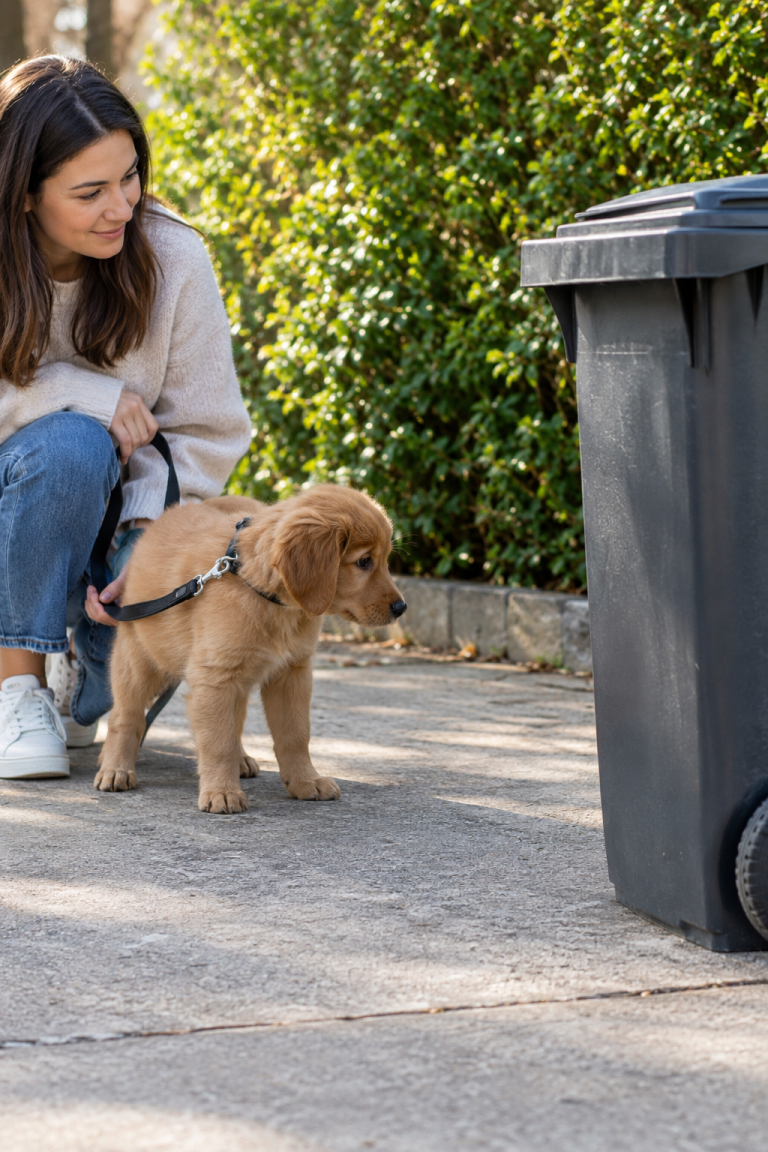
Fix: Take your puppy to a quiet, familiar spot on a leash. Stand still and give them a few minutes without turning the outing into playtime. Use the same cue each time and reward them as soon as they finish.
2. They dislike the surface or weather
Wet grass, cold ground, heavy rain, and unfamiliar surfaces can put a puppy off.
Fix: Try a sheltered spot, a covered outdoor area, or a familiar patch of grass. Be patient and keep the experience positive. Avoid forcing a frightened puppy to remain in uncomfortable conditions.
3. They have learned to wait until they get indoors
If your puppy has repeatedly held it outside and then relieved themselves inside, that pattern may have become familiar.
Fix: Stay outside for a little longer in a quiet area, walking slowly if necessary. If they do not go, bring them indoors under close supervision or into a suitable short-term confinement area, then try again shortly afterward. Reward the moment they finally pee outside.
4. Peeing ends the fun
Some puppies learn that going to the bathroom means playtime is over. They may delay peeing to keep the outing interesting.
Fix: After your puppy pees, spend another few minutes sniffing, exploring, or playing when it is safe and appropriate. This helps them learn that toileting does not always end the fun.
5. They are afraid to pee in front of you
If a puppy has been scolded for indoor accidents, they may become nervous about eliminating when you are watching.
Fix: Stop all scolding and rebuild trust with quiet praise and small treats. Give them a little space while staying close enough to notice when they finish. Never punish them for an accident.
6. A medical problem is interfering
A puppy that repeatedly squats, strains, urinates tiny amounts, or seems uncomfortable may not simply be struggling with training. Urinary infections, parasites, and other conditions can cause changes in bathroom habits.
Fix: Contact your veterinarian when you notice these symptoms or when progress stalls despite a consistent routine. Straining without producing urine needs urgent veterinary assessment.
7. They prefer puppy pads or newspaper
Puppies raised using indoor pads or newspaper may develop a preference for those textures. Grass can feel unfamiliar under their paws.
Fix: Transition gradually. Take the puppy to the same outdoor spot regularly, particularly after sleeping and meals. Reward every outdoor success. If you currently use pads, move toward a consistent outdoor routine rather than switching expectations unpredictably.
How long does housebreaking take?
Many puppies need around four to six months of consistent training before their bathroom habits become reliable, although the timeline varies. Some learn sooner, while small breeds may take longer because they have smaller bladders and may need more frequent breaks.
A puppy may appear fully trained for a few weeks and then have accidents again around five to seven months. Changes in routine, growing confidence, excitement, and incomplete habits can all contribute. Treat a setback as a reminder to return to more supervision and frequent outings.
Consistency matters more than trying to rush the process. If your puppy keeps having accidents, review your schedule, look for missed warning signs, and consider whether a medical issue needs to be ruled out.
Frequently asked questions
What age should a puppy be fully housebroken?
Many puppies become more reliable around six months, but full housebreaking may take until six to twelve months or longer. Breed, individual development, supervision, and routine all affect progress.
How often should I take my puppy outside?
For young puppies, start with every one to two hours while awake, plus immediately after waking, eating, drinking, playing, and coming out of the crate. Increase the interval gradually as your puppy demonstrates reliable control.
Should I use puppy pads?
Pads can be helpful when outdoor access is difficult, such as in some apartments or during necessary periods of confinement. However, they can slow outdoor training by teaching a puppy that indoor toileting is acceptable. Choose a consistent approach and transition gradually if your goal is outdoor-only bathroom habits.
My puppy pees when excited. Is that housebreaking failure?
Not necessarily. Excitement or submissive urination is different from a routine house-training accident and may happen during greetings or stressful interactions. Keep greetings calm, avoid punishment, and talk to your veterinarian if it is frequent or concerning.
How do I housebreak a puppy in an apartment?
Set up frequent trips to the same outdoor bathroom spot, allow extra time for elevators or stairs, and carry a very young puppy when practical to reduce accidents on the way out. If getting outside promptly is genuinely impossible, a designated indoor toilet area may be a temporary option, but transitioning to outdoors can take extra practice.
Build habits, not pressure
Housebreaking a puppy is a process of teaching, observing, and adjusting. Keep bathroom trips predictable, supervise closely, reward outdoor success, and clean accidents thoroughly. When things go wrong, look for the cause instead of blaming your puppy.
With patience and a consistent routine, your puppy can gradually learn where to go and become a more confident, reliable member of the household.
By Jennifer, founder and owner of CanineCalc. Jennifer is a dog owner and researcher who creates practical, research-informed resources to help people better understand and care for their dogs.