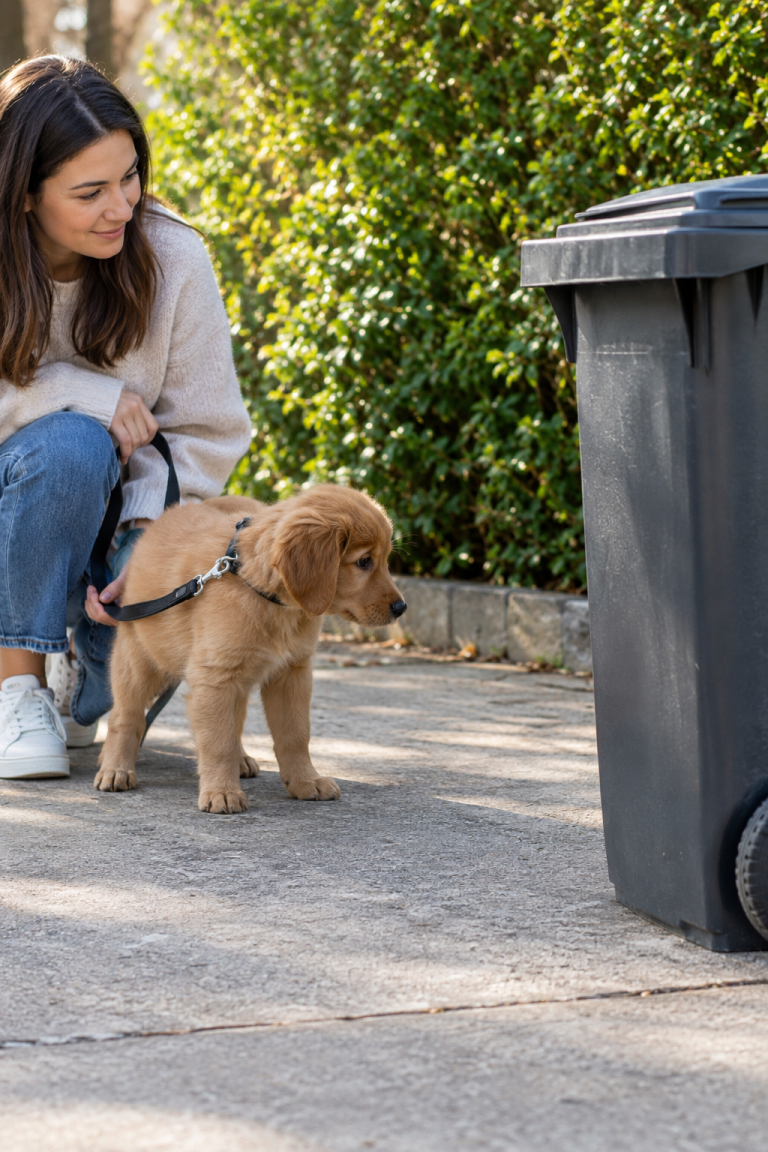
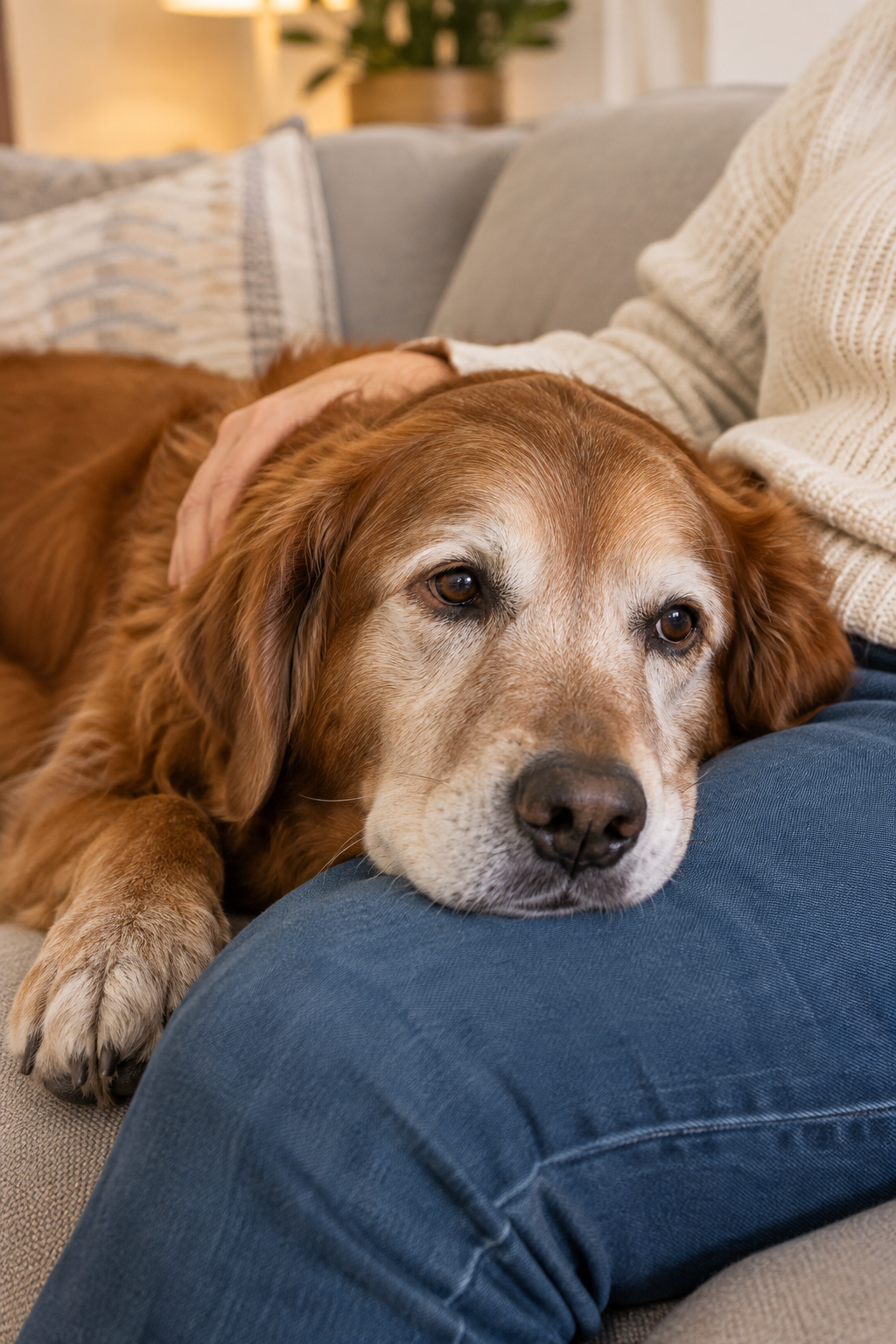
Dogs do not all become seniors on their seventh birthday. A Chihuahua and a Great Dane can be the same age but be at very different stages of life. Smaller dogs generally live longer, while large and giant breeds tend to reach their senior years earlier.
So, when is a dog considered a senior? A useful starting point is the last 25% of a dog’s expected lifespan. In practical terms, giant breeds may enter their senior years around age 5 or 6, while small dogs may not reach that stage until 10 or 11. Knowing where your dog falls on that timeline helps you adjust their care without treating normal aging as a reason to stop enjoying life together.
The short answer: it depends on your dog’s size
The American Animal Hospital Association (AAHA) defines the senior life stage as the last 25% of a dog’s estimated lifespan. Rather than using one birthday for every breed, this approach considers how long a dog of that type might reasonably be expected to live.
Think of it this way: a dog expected to live about 12 years could enter the senior stage around age 9, while a dog with a shorter expected lifespan might reach it considerably earlier. These are examples of the calculation, not guarantees of an individual dog’s lifespan.
Small dogs generally become seniors later because they tend to live longer than large and giant breeds. Genetics, breed, existing health conditions, and individual differences all influence aging, so the age ranges used by veterinary organizations are not identical.
You may also have heard that one dog year equals seven human years. That old rule is an oversimplification. Dogs mature much faster during their early years, and size and breed affect how their ages compare with human ages later in life.
For a more individualized human-years estimate, use the CanineCalc Dog Age Calculator. Remember that a human-age estimate and a senior life-stage classification answer slightly different questions.
Senior age by breed size (chart)
The following ranges offer a practical starting point for understanding when dogs typically enter their senior years. They are general guidelines, not exact cutoffs. Published veterinary charts sometimes differ by a year or more, particularly for medium and large breeds.
| Size class | Typical weight | Considered senior at | Examples |
|---|---|---|---|
| Toy and small | Up to 20 lb | Around 10–11 years | Chihuahua, Yorkshire Terrier, Toy Poodle |
| Medium | 21–50 lb | Around 7–8 years | Beagle, Border Collie, Australian Shepherd |
| Large | 51–90 lb | Around 6–7 years | German Shepherd, Labrador Retriever, Golden Retriever |
| Giant | Over 90 lb | Around 5–6 years | Great Dane, Mastiff, Saint Bernard |
Breed-specific expectations matter, too. A Labrador Retriever may be considered a senior around 7–8 years, while a German Shepherd often enters that stage around age 7. A Chihuahua may remain in the mature-adult stage until approximately 10–11, whereas a Great Dane may be considered senior at just 5–6.
Mixed-breed dogs can be harder to classify, especially if their adult size or breed background is uncertain. Use the chart as a guide, then discuss your dog’s individual needs with your veterinarian.
For the bigger picture, see How Long Do Dogs Live by Size?. That guide covers lifespan expectations, while this article focuses on recognizing and caring for the senior life stage.
Signs your dog is entering their senior years
Age alone does not tell the whole story. Some dogs remain energetic and playful well into their senior years, while others show changes earlier. Paying attention to small differences in your dog’s usual behavior can help you identify what deserves a conversation with your veterinarian.
A graying muzzle: White or gray hairs around the nose and eyes can appear with age. Note when the change develops and mention any other changes you notice.
Slower walks: Your dog might take longer to finish a familiar route or show less interest in vigorous play. A gradual change is worth tracking, particularly if stamina decreases noticeably.
Stiffness after rest: Hesitation when getting up, a slower start in the morning, or difficulty settling comfortably can be signs to discuss with your vet.
More sleeping: Older dogs may spend more time resting. Pay attention if your dog becomes unusually tired, stops enjoying favorite activities, or has a noticeable change in their sleep pattern.
Weight changes: Some dogs gain weight as activity decreases, while others lose weight. Record changes rather than assuming they are an inevitable part of getting older.
Cloudy eyes: A bluish haze can occur with normal age-related nuclear sclerosis, but cataracts and other eye problems can also cause cloudiness. These conditions can look similar, so your veterinarian should examine your dog’s eyes rather than relying on appearance alone.
Hearing or vision changes: Your dog may not respond to familiar sounds, hesitate in dim light, or become less confident navigating familiar spaces. Mention these observations at a veterinary visit.
New lumps or skin changes: Make a note of new growths, changes in existing lumps, or skin sores, and ask your vet to assess them.
None of these signs automatically means your dog is seriously ill. However, noticeable changes should not be dismissed simply because your dog is getting older. Sudden or pronounced changes deserve prompt veterinary advice rather than waiting for the next routine appointment.
What to change when your dog becomes a senior
Senior care is not about making every part of your dog’s life different. It is about making small, thoughtful adjustments that protect comfort, mobility, and overall health.
Schedule veterinary visits about every six months. Senior dogs can benefit from twice-yearly physical examinations instead of annual checkups. Your veterinarian may recommend bloodwork, urinalysis, or other screening based on your dog’s age, medical history, and examination findings. These visits also give you a regular opportunity to discuss appetite, sleep, bathroom habits, behavior, and mobility.
Keep weight in a healthy range. Extra body weight places additional stress on aging joints and can make movement more difficult. Ask your vet to assess your dog’s body condition and recommend an appropriate feeding amount. Weigh your dog regularly when practical, and pay attention to gradual changes that may otherwise go unnoticed.
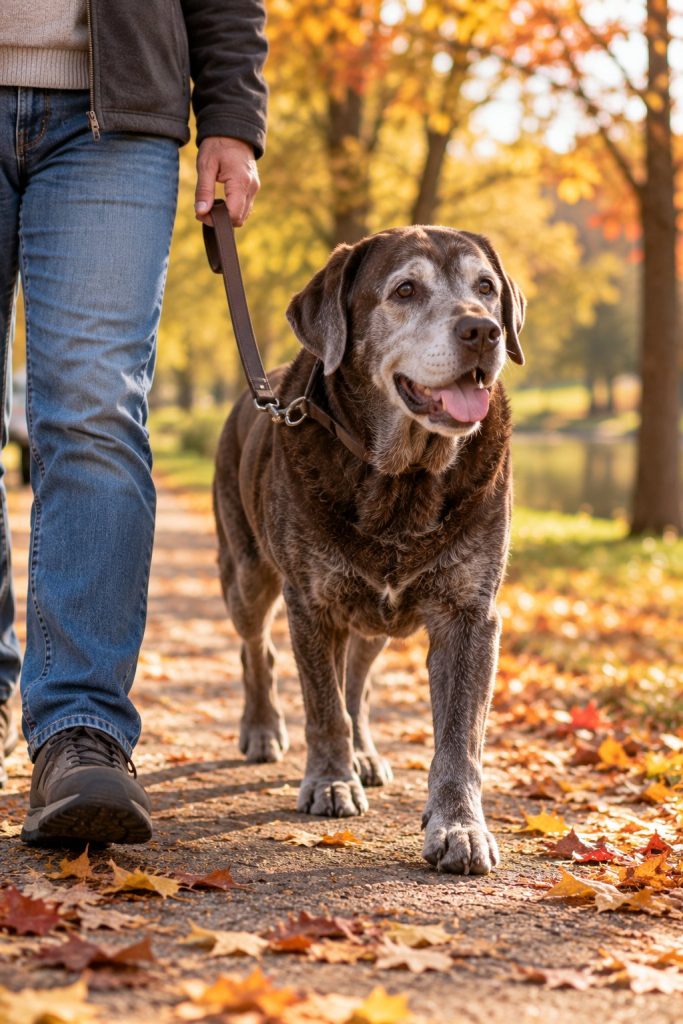
Adapt exercise instead of abandoning it. Many older dogs still benefit from daily movement. Several shorter walks may be more comfortable than one long outing, particularly if your dog tires more easily. Swimming may be another option for dogs who enjoy it and can participate safely. Let your dog’s comfort and your veterinarian’s guidance determine the appropriate activity level.
Make the home easier to navigate. A supportive orthopedic bed, non-slip rugs, and a ramp for getting into the car or reaching a favorite resting spot can reduce the effort required for everyday activities. Keep food and water accessible, and avoid expecting a stiff dog to jump onto furniture or climb stairs unnecessarily.
Review food with your veterinarian. A senior label does not automatically make a food the best choice. Older dogs have different needs depending on their weight, muscle condition, activity, and health. Some may benefit from a change in calories or nutrient balance, while others do well on their current food. Make dietary changes based on individual needs rather than age alone.
Keep up with dental care. Continue an appropriate tooth-cleaning routine and ask about dental checks during veterinary visits. Bad breath, difficulty chewing, or changes in eating deserve attention rather than being written off as normal aging.
Offer mental enrichment at a comfortable pace. Sniffing games, food puzzles suited to your dog’s abilities, gentle training, and relaxed time outdoors provide variety without requiring strenuous exercise. If your dog has reduced vision, hearing, or mobility, adjust activities so they remain safe and enjoyable.
Senior is not sick: keeping quality of life high
Becoming a senior does not mean your dog is nearing the end of their enjoyable years. Many older dogs continue to explore, learn routines, play, seek affection, and enjoy their favorite people for years.
One important part of senior care is recognizing that dogs may hide discomfort. Pain does not always look like crying or obvious limping. A dog who becomes reluctant to jump, hesitates at the stairs, repeatedly licks a joint, or grows irritable when handled may be communicating that something has changed. Mention these behaviors to your veterinarian rather than assuming they are simply signs of old age.
You can also pay attention to your dog’s everyday enjoyment. Are they still interested in food, comfortable while resting, engaged with family members, and happy to participate in activities they enjoy? Notice whether good days remain common and whether adjustments at home help your dog move and rest comfortably.
Keeping a simple record of appetite, mobility, sleep, bathroom habits, and favorite activities can make changes easier to recognize and explain at appointments. The goal is not to monitor every moment or worry about every gray hair. It is to understand what is normal for your dog and respond when something changes.
Senior care works best when it is proactive, practical, and individualized. Your dog does not need to stop being a dog just because the calendar says they are older.
Frequently asked questions
At what age is a Labrador considered a senior?
A Labrador Retriever is generally considered a senior at around 7–8 years old. Individual dogs may show age-related changes earlier or later, so health, mobility, and veterinary assessments matter alongside age.
Is a 7-year-old dog a senior?
It depends on the dog’s size and breed. A 7-year-old giant-breed dog is generally in the senior stage, and many large breeds reach it around this age. A small dog may still be a mature adult at seven.
How often should a senior dog see the vet?
Twice a year is a common recommendation for senior dogs. Your veterinarian may recommend a different schedule depending on your dog’s health, symptoms, and screening needs.
What age is a senior for a small dog?
Toy and small dogs are often considered seniors around 10–11 years old, although some guidelines use a broader range of approximately 9–12 years. The expected lifespan of the individual dog is more informative than a strict birthday cutoff.
Do senior dogs need special food?
Not automatically. Some older dogs benefit from a diet with different calorie levels or nutritional characteristics, while others can remain on their current food. Your veterinarian can help you decide based on your dog’s weight, muscle condition, activity, and health.
The bottom line
There is no single age when every dog becomes a senior. Giant breeds may reach that stage around 5–6 years, large breeds around 6–7, medium dogs around 7–8, and small dogs around 10–11. Use those ranges as a starting point, watch for changes, and work with your veterinarian to adapt your dog’s care. With the right support, the senior years can remain full of comfort, companionship, and enjoyable routines.
By Jennifer, founder of CanineCalc. Jennifer is a dog owner and researcher who develops practical, research-informed resources to help dog owners better understand their pets. She is not a veterinarian, breeder, or certified trainer.