
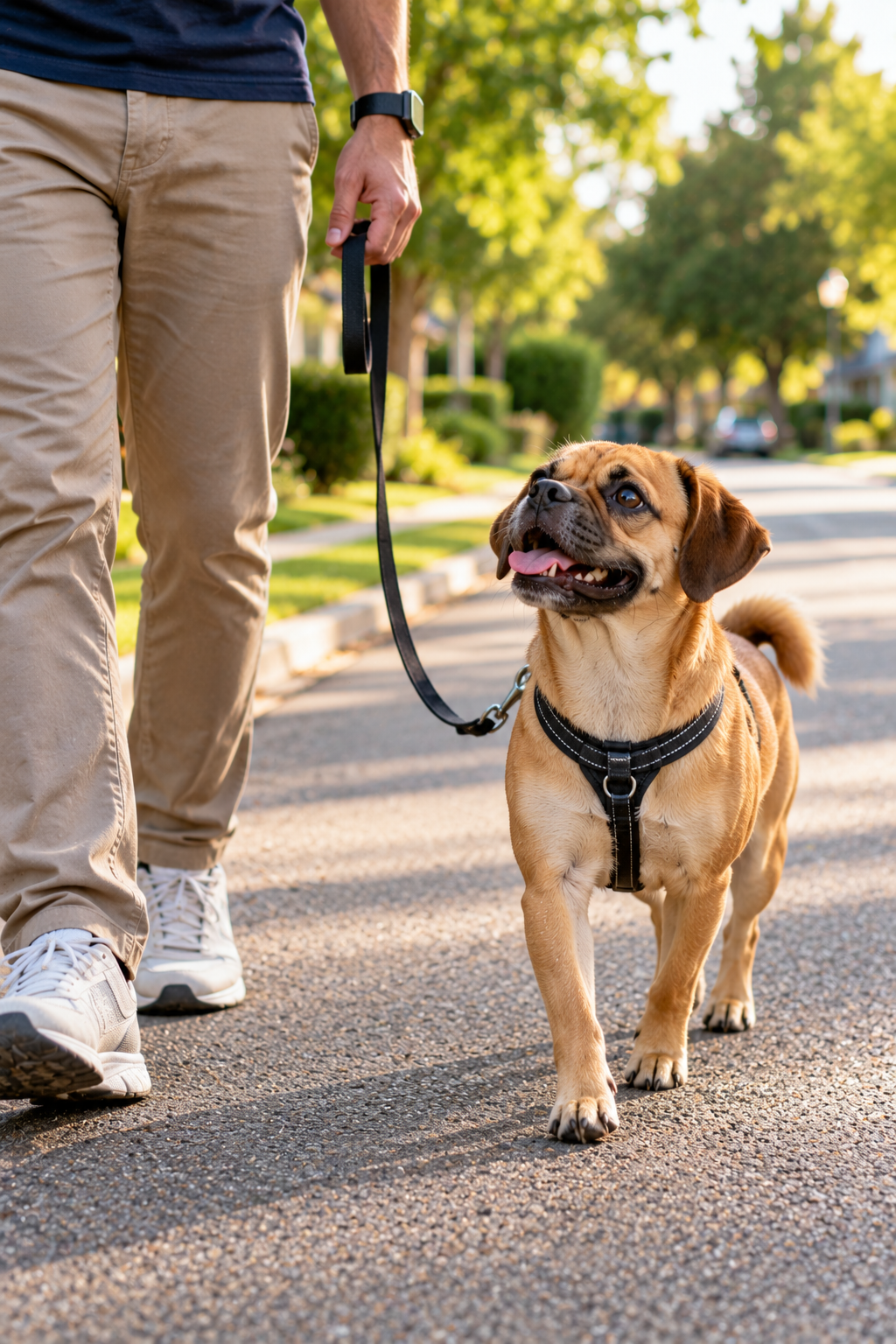
Teaching your dog to heel means helping them walk calmly beside you without pulling ahead or falling too far behind. The easiest way to teach this skill is to start indoors, reward your dog for choosing the correct position, and gradually practice around distractions.
You don’t need harsh corrections or special training tools. A few tasty treats, short sessions, and consistent rewards can help your dog learn that staying beside you is worthwhile.
What does heel mean for a dog?
A heel dog training cue teaches a dog to walk close beside their handler, roughly matching their pace without pulling on the leash. The dog learns a particular walking position and stays there until released or given another cue. The position can be on the left or right side.
There is a useful distinction between heeling and ordinary loose-leash walking.
| Walking style | What it means | Best use |
|---|---|---|
| Heel | Dog stays beside your chosen leg in a consistent position | Busy sidewalks, crossing roads, passing distractions |
| Loose-leash walking | Dog can move around within leash range while keeping the leash relaxed | Everyday walks, exploring and sniffing |
Heel is a position; loose-leash walking is a relaxed way to travel together. A dog can walk nicely without being glued to your leg for the entire outing.
Sources differ on how precise a heel needs to be. Competitive obedience may require close positioning and sustained attention, while a family dog usually needs a practical version that makes everyday walking safer and easier.
Heel is a skill you can switch on when needed, not a rule that your dog must follow every minute of every walk.
A useful goal is to teach your dog to move into position when asked, maintain it for a short stretch, and respond happily when you release them.
Before you start: What you need
Good preparation makes learning easier. You want your dog to understand the exercise, not struggle to concentrate in an environment that is too exciting.
Gather these basics:
- Small, tasty treats: Choose something your dog enjoys and can eat quickly. Save especially appealing treats for harder stages.
- A comfortable leash and well-fitted harness or collar: Keep the leash relaxed. Never jerk or pull your dog into position.
- A quiet training space: Start in a hallway or roomy part of your home with few distractions.
- A cue word: Choose one word, such as “heel,” and use it consistently. Decide which side you want your dog to walk on.
- Short practice sessions: Begin with a few minutes, ending before your dog becomes tired or frustrated.
You can also use a clicker or a cheerful marker word such as “yes.” This tells your dog precisely which action earned the reward.
According to the American Kennel Club’s heel-training guide, you can begin by rewarding a dog for moving into position indoors, then gradually build more movement and attention into the exercise.
Keep your expectations realistic. Your dog may understand the basic position quickly, but using it consistently around people, squirrels, traffic, and other dogs takes much more practice.
Step-by-step: Teach heel indoors first
Start where your dog can succeed easily. The aim is to reward the right position before asking for a long walk.
- Choose your side. Stand with your dog nearby and a few treats ready. Either side is fine for everyday training, as long as you’re consistent.
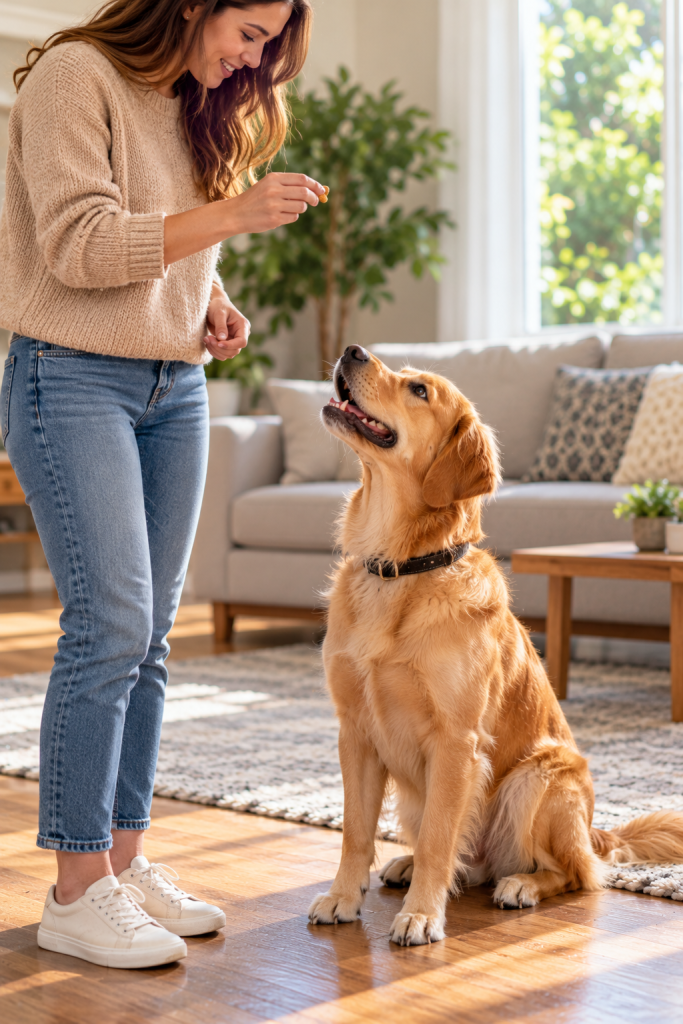
- Lure your dog into position. Hold a treat near your dog’s nose and guide them gently toward the space beside your chosen leg. Keep your movement smooth rather than pulling them around.
- Reward the position. When your dog stands beside you, with their shoulder roughly level with your leg, say “yes” and deliver the treat near your leg. Feeding in the correct place helps reinforce that position.
- Add one step. Move forward just one step. If your dog comes with you and stays beside you, mark the behavior and reward immediately.
- Introduce the cue. Once your dog is beginning to move into position voluntarily, say “heel” just before taking a step together. Reward the correct response.
- Build gradually. Practice two steps, then three, then a few more. Add gentle turns or changes of pace once your dog understands the basics.
- End on success. Finish with an easy repetition and a release word such as “free” or “okay,” so your dog learns when the exercise is over.
At first, reward frequently. You might give a treat after every successful step or two. Later, gradually reward after several steps, while still praising and occasionally treating your dog.
Avoid holding a treat permanently in front of your dog’s nose. Use it to introduce the position, then move your hand away and reward your dog for following the cue.
If you’re practicing and your dog keeps drifting away, return to an easier version. One successful step is more valuable than ten hurried steps that leave your dog confused.
Moving outside: Garden, then street
Outdoor environments are much harder because they contain smells, movement, sounds, and exciting things your dog wants to investigate. Increase the challenge gradually instead of expecting indoor skills to work everywhere immediately.
| Stage | Location | Distraction level | Suggested session |
|---|---|---|---|
| 1 | Indoors or hallway | Very low | 2–5 minutes |
| 2 | Quiet garden or enclosed yard | Low | 3–5 minutes |
| 3 | Quiet street or driveway | Moderate | 3–5 minutes |
| 4 | Park path or busier sidewalk | Higher | 3–5 minutes |
These are starting points, not strict limits. Shorten a session if your dog struggles to focus, and repeat an easier stage when needed.
Begin the outdoor session with a few easy repetitions your dog already knows. Reward your dog for staying near your side, checking in with you, and responding to the heel cue.
Move forward only when your dog can succeed at the current level. If a passing dog or loud vehicle makes concentration difficult, increase your distance from the distraction or return to a quieter spot.
For puppies, outdoor practice should also account for vaccination guidance and local disease risk. See puppy training basics: https://caninecalc.com/when-can-a-puppy-go-outside/
Common heel problems and fixes
Most heel-training setbacks mean that the exercise is too difficult, the reward is not motivating enough, or the dog needs a break. Adjust the setup before asking for more effort.
Your dog pulls ahead. Stop walking calmly and wait for the leash to loosen. Invite your dog back beside you, reward the correct position, and begin again. Don’t yank the leash or drag your dog toward your leg. If the same problem keeps happening, reduce the distance you expect them to walk at heel.
Your dog lags behind. Make the exercise more rewarding. Use a treat to encourage your dog into position, praise movement toward you, and try a more cheerful pace. Check whether your dog is tired, uncomfortable, or worried about something nearby. A dog who consistently avoids walking may need a health or comfort check.
Your dog wants to sniff everything. Sniffing is a normal and valuable part of a dog’s walk. Teach a permission cue such as “go sniff.” Ask for a short heel, release your dog to explore, then invite them back to position and reward them. This creates a useful balance between structured walking and freedom.
Your dog loses focus. Shorten your sessions, increase the value of your treats, and practice farther away from distractions. If your dog cannot respond to a familiar cue, the surroundings may simply be too exciting.
The RSPCA’s reward-based loose-leash walking advice similarly recommends rewarding attention and relaxed leash behavior while using short, regular practice sessions.
A formal heel for every step of every walk isn’t necessary for most family dogs. Giving your dog opportunities to sniff and explore is a reasonable goal, too. The important part is being able to ask for close walking when you need it.
If your dog remains very distressed or reactive around common walking triggers, consider help from a qualified trainer who uses reward-based methods.
How long does it take to teach heel?
Many dogs can begin learning the basic position within days, but building a reliable heel usually takes weeks or months of consistent practice. There is no universal deadline.
A realistic progression looks like this:
- First few days: Your dog starts associating the position beside your leg with treats and praise.
- Following weeks: Your dog may manage several steps, turns, and short stretches in familiar places.
- Over the following months: Practice can improve reliability around more difficult distractions and in unfamiliar locations.
Age, temperament, past training, physical comfort, and the environment all affect progress. Puppies may have short attention spans, while older dogs may bring established walking habits that need time to change. Both can learn new skills.
Consistency beats intensity. A few calm, successful repetitions on most days are generally more useful than one long session that overwhelms your dog.
This method works best when your dog is comfortable, able to engage with you, and practicing at a manageable difficulty level. It won’t solve every fear or severe reactivity problem by itself, and persistent difficulties are a good reason to seek reward-based professional support.
Common questions about teaching a dog to heel
What age should I teach my dog to heel?
You can begin with simple heel-position games when your puppy comes home, using tiny rewards and very short sessions. Keep expectations appropriate for your puppy’s age, attention span, and outdoor health precautions. Adult dogs can learn the same skill.
Is heel cruel for dogs?
No. Heel training can be a positive experience when the dog is taught with rewards, gentle guidance, and breaks. Avoid forcing the position or expecting a dog to walk tightly beside you for an entire outing. Dogs still need opportunities to move naturally and sniff.
Can I teach an older dog to heel?
Yes. Older dogs can learn to move into position and walk beside you. Start with very short distances, reward each success, and progress at a comfortable pace. Consider mobility, pain, and fatigue, particularly if your dog’s walking habits have changed suddenly.
Heel vs. loose-leash walking: What’s the difference?
Heel means staying beside a chosen leg in a specific position. Loose-leash walking means moving together without pulling, while allowing the dog more freedom within leash range. Heel is useful for short, controlled stretches; loose-leash walking often suits ordinary outings.
How long should heel training sessions be?
Start with around two to five minutes, adjusting for your dog’s age and attention span. Several brief practices are often easier than one long session. Stop while your dog is still engaged, and make the next session easier if frustration or distraction increases.
Conclusion
Teaching your dog to heel starts with one simple idea: make the correct position rewarding. Begin indoors, add movement one step at a time, and gradually practice in places with more distractions. Reward progress, allow time for sniffing, and keep sessions enjoyable.
Your goal isn’t a perfectly positioned dog on every walk. It’s a dog who understands the cue and can walk calmly beside you when the situation calls for it.
About Jennifer
Jennifer is the founder and owner of CanineCalc, a dog owner and researcher who creates practical, evidence-informed resources to help people better understand and care for their dogs. Jennifer is not a veterinarian, breeder, or certified dog trainer.