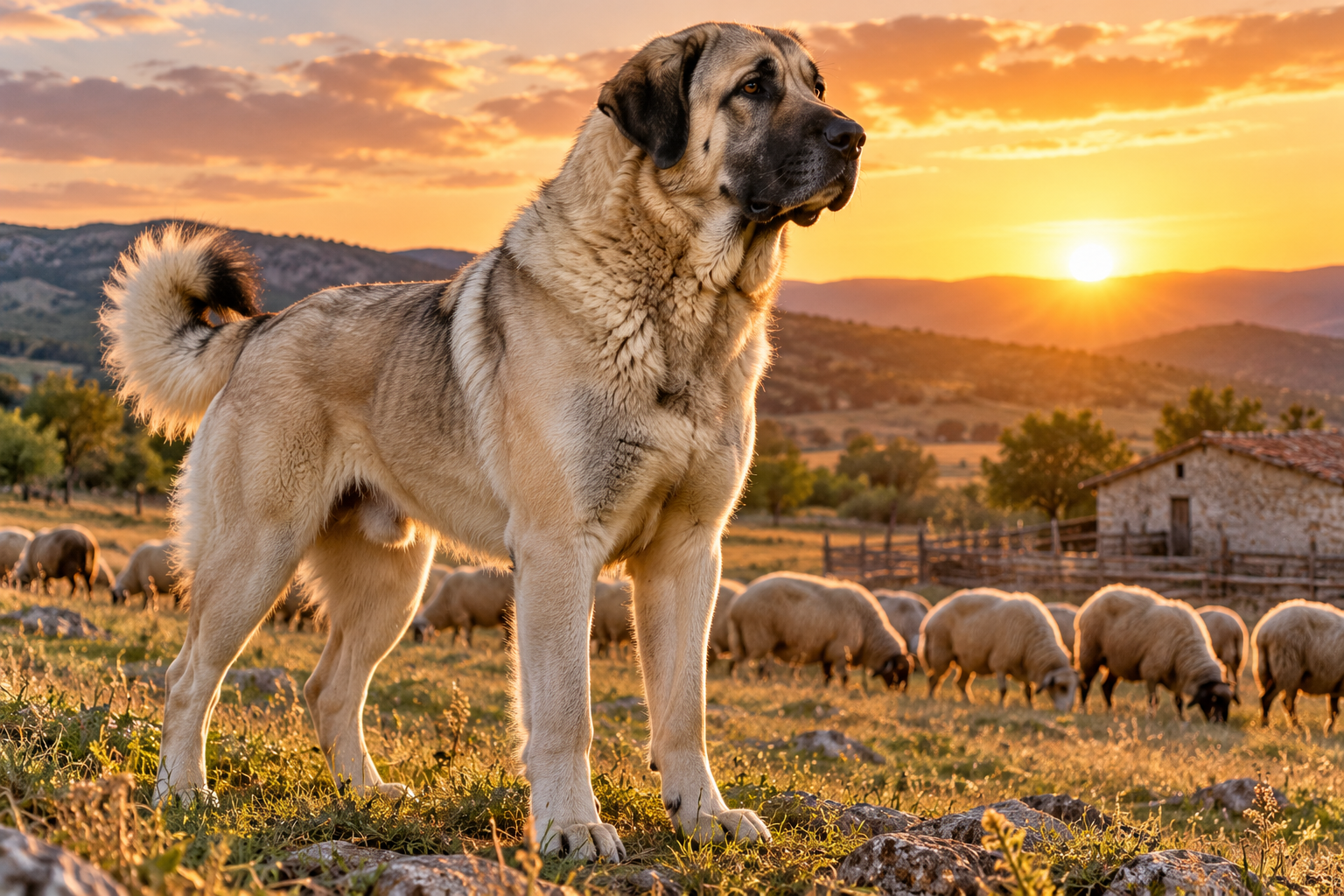
The Anatolian Shepherd is a large livestock guardian known for its loyalty, independence, and strong protective instincts. Originally developed to protect livestock in Turkey, this powerful breed is best suited to owners who understand guardian dogs and can provide secure outdoor space, thoughtful training, and clear boundaries.
An Anatolian Shepherd can be a devoted family companion, but its guarding instincts require careful consideration. This breed is not simply a big, affectionate dog that fits comfortably into every household. If you have searched for the common misspelling “Anatolian shepard,” you are looking at the same breed.
Before bringing one home, it helps to understand its temperament, adult size, grooming needs, training requirements, typical price, and the responsibilities of owning a dog bred to make independent decisions.
Anatolian Shepherd at a glance
The Anatolian Shepherd is a large working breed developed to guard sheep and other livestock. Rather than waiting for constant instructions, these dogs were bred to assess their surroundings and respond to potential threats independently. That background explains much of their behavior today.
Here is a quick overview of what prospective owners should know:
- Breed type: Livestock guardian and working dog.
- Adult size: A large, muscular dog, commonly weighing around 80–150 pounds, with males generally larger than females.
- Temperament: Loyal, watchful, independent, and naturally protective.
- Coat: Dense double coat that sheds, with seasonal increases in shedding.
- Exercise: Regular daily activity, opportunities to explore safely, and mental engagement.
- Training: Early socialization and consistent, patient guidance are essential.
- Lifespan: Often around 10–13 years, although individual dogs vary.
- Best suited to: Experienced owners with adequate space, secure fencing, and time to manage a guardian breed.
The biggest consideration is fit. An Anatolian Shepherd may thrive with an owner who appreciates a thoughtful, self-directed working dog, but struggle in a busy household that expects every visitor to receive an enthusiastic welcome.
If you are comparing different types of dogs, our guide to the most famous dog breeds offers a broader starting point.
Temperament and guardian instinct
Anatolian Shepherds are generally loyal to their families, reserved around unfamiliar people, and alert to changes in their environment. They can be affectionate with familiar people without being naturally outgoing toward everyone they meet. Breed temperament descriptions emphasize their independence and protective working background.
What does guardian instinct look like at home?
An Anatolian Shepherd may watch the property, investigate unfamiliar sounds, position itself between its family and something it considers concerning, or bark when someone approaches the boundary. These behaviors may be normal expressions of its instincts rather than signs that the dog wants constant attention.
That independence can be useful in an appropriate working environment. It can also become challenging when the dog decides that a delivery driver, neighbor, or visitor deserves closer scrutiny.
A calm, well-socialized Anatolian Shepherd is not supposed to be indiscriminately aggressive. However, its protective nature means owners must take boundaries, introductions, and supervision seriously. Visitors should not be expected to walk in and immediately become the dog’s friends.
This breed also needs appropriate outlets for its natural behaviors. Providing space to patrol safely, structured interaction, and opportunities for exploration is generally more useful than expecting it to behave like a highly social companion breed.
Individual dogs differ, too. Genetics, early experiences, socialization, and ongoing management all influence how an Anatolian Shepherd responds to people and other animals.
Size, coat and care
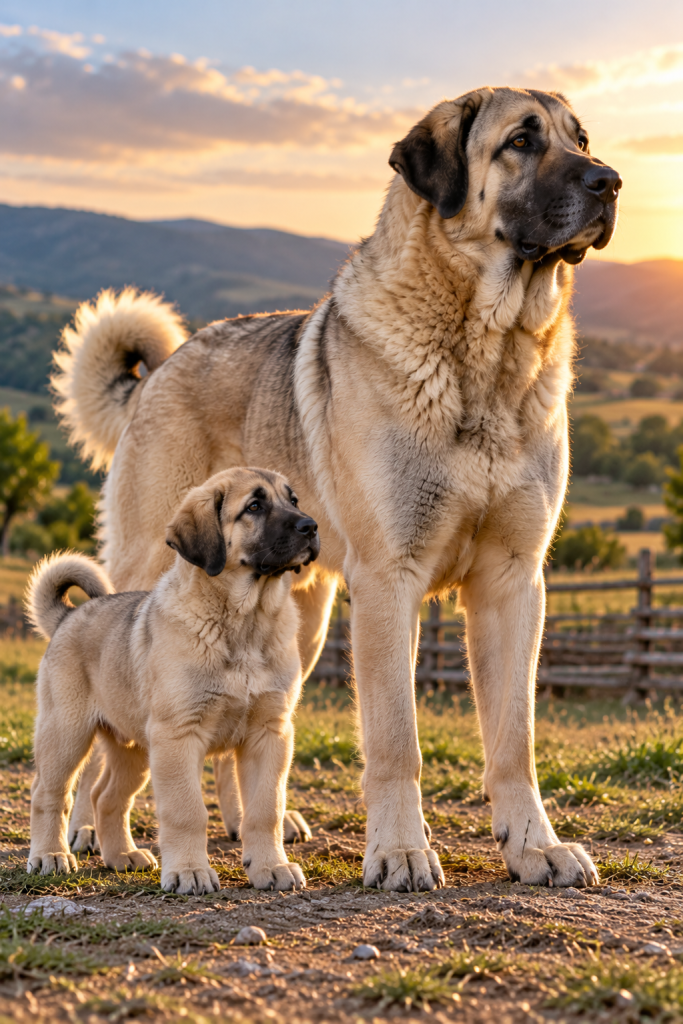
The Anatolian Shepherd has a substantial frame, broad head, muscular body, and a coat suited to outdoor work. Its size is an important part of everyday ownership, not just an impressive feature.
How big do Anatolian Shepherds get?
Adults commonly stand roughly 27–32 inches at the shoulder and weigh around 80–150 pounds, with males generally at the larger end of the range. These are broad estimates rather than predictions for every dog. Growth and final size vary with sex, genetics, and individual development.
That much dog requires practical planning. Beds, crates, vehicles, walking equipment, veterinary handling, and secure barriers all need to accommodate a powerful adult rather than a small puppy.
What is the coat like?
The breed has a dense double coat that helps protect it from changing weather conditions. Coat length varies, but regular brushing is useful for removing loose hair and keeping the coat in good condition.
Shedding can increase substantially during seasonal coat changes. Owners should be prepared for loose fur around the home, more frequent brushing during heavy shedding, and routine nail, ear, and dental care.
How much exercise do they need?
Anatolian Shepherds need regular daily activity, but exercise is not simply about covering a certain number of miles. Safe opportunities to walk, explore, sniff, and engage with their environment are important, alongside mental stimulation and appropriate rest.
A secure, spacious area can help meet their needs, but a large yard does not replace interaction or supervision. Avoid assuming that an isolated dog will automatically become a calm and well-adjusted guardian.
Puppies and growing dogs also need activity appropriate to their stage of development. Ask your veterinarian for guidance on exercise as your dog grows.
Anatolian Shepherd price and ownership costs
The initial price of an Anatolian Shepherd depends on the breeder, location, pedigree, health screening, and whether the dog comes from working or companion lines.
As a broad planning estimate, a responsibly bred puppy may cost around $1,500–$3,500, although individual prices can fall outside that range. This is an estimate, not a guaranteed market price or a verified national average. Adoption fees and the availability of rescue dogs vary.
Before choosing a puppy, ask about the parents’ health screening, the puppy’s early experiences, available veterinary records, and the breeder’s approach to matching dogs with suitable homes. A reputable breeder should welcome sensible questions about temperament and long-term support.
The purchase price is only one part of the budget. A dog of this size generally needs more food than a small breed, appropriately sized equipment, secure fencing, routine veterinary care, and potentially professional training support.
Fencing or property improvements can be a particularly important expense. Budget for ongoing care before deciding whether this breed is affordable.
Training an Anatolian Shepherd
Training an Anatolian Shepherd requires patience, consistency, and realistic expectations. These dogs are intelligent, but intelligence does not necessarily translate into instant obedience. Their working background favors independent judgment, so they may not respond like breeds developed primarily to follow close human direction.
Start socialization early. Introduce your puppy gradually and positively to different people, environments, surfaces, household routines, and appropriate animal encounters. The goal is to help the dog develop calm, confident responses, not to force it to interact with everyone.
Set consistent boundaries. Decide which areas the dog can access, how visitors will be introduced, and what behavior is expected around other pets. Everyone in the household should follow the same rules.
Use fair, reward-based teaching. Reward desirable behavior, keep expectations clear, and avoid harsh punishment or confrontational methods. Intimidation can undermine trust and make an already protective dog harder to manage.
Practice safe management. Secure fencing, reliable leash handling, controlled introductions, and supervised interactions are essential parts of responsible ownership. Training alone cannot replace sensible precautions.
An experienced trainer familiar with large guardian breeds can help you establish a practical plan. This is generally not an ideal first-dog breed for someone who has never managed an independent, powerful dog.
Is an Anatolian Shepherd right for you?
The right question is not just whether you like the breed’s appearance. Consider how its needs fit your home, experience, and everyday routine.
Use this checklist before committing:
- Space: You can provide room for the dog to move comfortably and explore safely, rather than expecting it to spend most of its life in a cramped environment.
- Fencing: Your property has secure, suitable boundaries, and you can manage access to gates, visitors, and neighboring animals.
- Time: You can provide daily activity, socialization, training, supervision, and companionship.
- Experience: You are prepared to manage an independent dog with strong guarding instincts, or have reliable professional support.
- Other pets: You can plan careful introductions and supervise interactions instead of assuming compatibility.
- Children: Adults can supervise interactions, teach children to respect the dog’s space, and provide separation when needed.
- Visitors: You can manage deliveries, guests, contractors, and unfamiliar people without putting them or the dog in difficult situations.
- Budget: You can afford ongoing food, veterinary care, suitable equipment, fencing, and training when needed.
If several of these requirements are difficult to meet, another breed may be a better fit.
Anatolian Shepherds can live alongside children and other animals in suitable circumstances, but no breed guarantees compatibility. Their size alone means that close supervision and careful management matter, particularly around young children and smaller pets.
Apartment living is not automatically impossible in every individual case, but the breed’s size, guarding behavior, and environmental needs can make it difficult. A property with space is useful only when the owner can provide secure boundaries and meaningful engagement.
People looking for a much smaller companion may prefer to explore toy dog breeds, although smaller breeds have their own care and training requirements.
Health and lifespan in general terms
Anatolian Shepherds often live around 10–13 years, although genetics, environment, overall care, and individual health can influence lifespan.
As with other large breeds, joint health deserves attention. Veterinary and breed resources also identify concerns involving the eyes and thyroid, while the American Kennel Club notes that owners should understand the seriousness of bloat even though it is not considered common in the breed. These are potential health considerations, not conditions every Anatolian Shepherd will develop.
When speaking with a breeder, ask what health screening has been completed for the parents and request the relevant documentation. Discuss preventive care, appropriate nutrition, growth, and age-related changes with your veterinarian.
A veterinarian who knows your dog’s history can help you understand individual risks and recommend appropriate examinations. Breed information is a useful starting point, not a substitute for professional veterinary guidance.
Frequently asked questions
Are Anatolian Shepherds good family dogs?
They can be loyal family companions in homes that understand their protective instincts. Early socialization, consistent boundaries, and supervision around children and visitors are essential. Their reserved nature and size make them a less suitable match for some households.
How big do Anatolian Shepherds get?
Many adults weigh around 80–150 pounds and stand roughly 27–32 inches at the shoulder. Males are generally larger than females, but individual dogs vary. Plan for the needs of a powerful, giant-sized adult.
Are Anatolian Shepherds easy to train?
They are intelligent but independent, which can make training challenging for inexperienced owners. Early socialization, consistent expectations, patient teaching, and appropriate professional guidance can help establish good habits.
Do Anatolian Shepherds bark a lot?
They can be frequent barkers, particularly when they notice unfamiliar activity or perceive a potential threat near their territory. Secure boundaries, thoughtful management, and training can help, but an owner should not expect to eliminate a natural guardian behavior entirely.
How much exercise does an Anatolian Shepherd need?
Most need regular daily activity, opportunities to explore safely, and mental engagement. Their needs depend on age, health, temperament, and working responsibilities. A spacious yard can help, but it does not replace interaction, supervision, or suitable exercise.
Is the Anatolian Shepherd the right choice?
The Anatolian Shepherd is a devoted, capable guardian with a distinctive combination of loyalty, independence, and protective instinct. It can be a rewarding companion for an owner who understands those qualities and has the space, experience, and resources to manage them responsibly.
However, its size and guarding behavior are not minor details to work around. They are central to the breed. Before bringing one home, consider your fencing, household visitors, other pets, training experience, and long-term budget.
The best match is a home that respects the Anatolian Shepherd’s working heritage and can provide clear guidance without expecting it to behave like a different kind of dog.
By Jennifer, founder and owner of CanineCalc. Jennifer is a dog owner and researcher who creates practical, research-informed resources to help people better understand dogs and make informed care decisions. Her breed guides provide general educational information and are not a substitute for advice from a veterinarian or qualified training professional.