
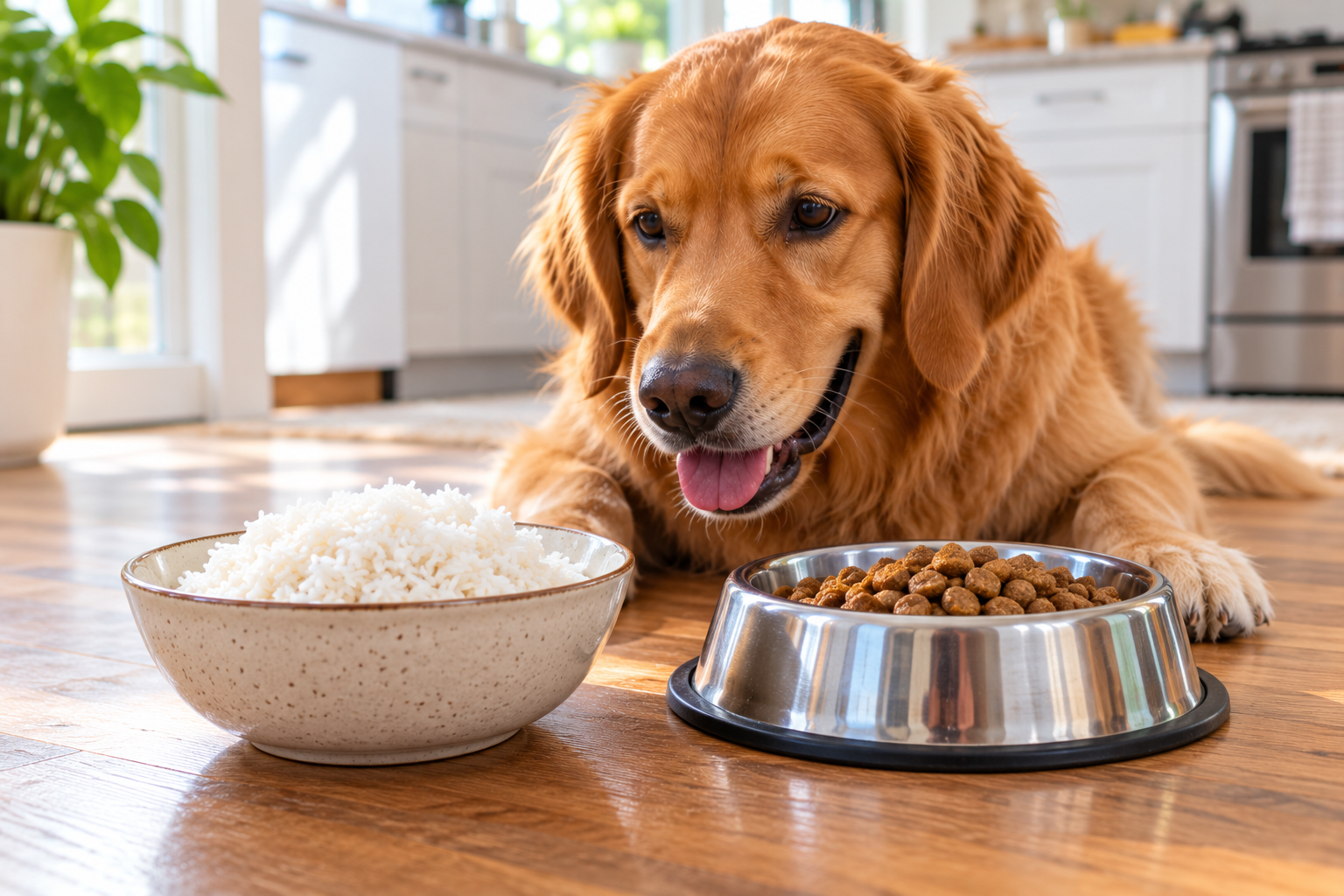
Can dogs eat rice? The short answer
Yes, dogs can eat plain, fully cooked rice in moderation. White, brown, wild, and basmati rice can all be reasonable options when prepared without salt, butter, sauces, or seasonings. The best choice depends on your dog’s digestion, overall diet, and individual health needs.
Rice is a carbohydrate source found in many commercial dog foods. Plain white rice is often easier to digest than brown rice, which is why veterinarians may recommend it as part of a short-term feeding plan for certain digestive problems. However, rice is not a cure for diarrhea or vomiting, and a homemade rice-based diet should not replace balanced dog food without veterinary guidance.
The important distinction is between plain cooked rice and rice prepared for human meals. A spoonful of soft rice may be fine, while fried rice containing garlic, onion, heavy seasoning, or excess fat can pose health risks.
According to the American Kennel Club’s guide to dogs and rice, rice can be a suitable carbohydrate source when served appropriately. Still, portion size matters because extra carbohydrates contribute calories without necessarily providing everything your dog needs.
If your dog has diabetes, is overweight, or follows a veterinarian-prescribed diet, ask your veterinarian before adding rice regularly.
White vs brown vs wild vs basmati rice
Not all rice is nutritionally identical. The varieties differ in how they are processed, their fiber content, and how easily some dogs digest them.
| Rice type | Digestibility in general | When owners usually choose it | Fiber note |
|---|---|---|---|
| White rice | Generally easy to digest | A simple food topper or a veterinarian-recommended short-term bland diet | Low in fiber |
| Brown rice | May be harder to digest because it retains its bran layer | Adding variety or choosing a less-processed grain | Higher in fiber |
| Wild rice | Firmer and chewier than white rice; individual tolerance varies | An occasional alternative grain | Generally more fiber than white rice |
| Basmati rice | Similar to other white rice when cooked plain; generally easy to digest | A long-grain option for everyday meal preparation | White basmati is low in fiber; brown basmati contains more |
White rice is often the simplest starting point. It has had its bran layer removed, making it lower in fiber than brown rice. Its softer texture and relatively easy digestibility can make it useful when a veterinarian recommends a simple diet for a dog with mild digestive upset.
Brown rice offers more fiber, but that is not always an advantage. Some dogs tolerate it well, while others may find it harder to digest. If your dog has diarrhea or a sensitive stomach, ask your veterinarian which option is appropriate rather than automatically choosing brown rice because it is less processed.
Wild rice can be offered when fully cooked and plain. Despite its name, wild rice is technically the seed of an aquatic grass rather than a traditional rice grain. It has a firmer texture and a different nutritional profile from white rice. Introduce it in a small amount to see how your dog tolerates it.
Basmati rice is a type of long-grain rice, not a special dietary requirement for dogs. Plain white basmati is generally suitable in the same modest portions as other white rice varieties. There is no need to buy basmati specifically for your dog.
For most households, the practical choice is straightforward: use plain white rice when a simple, easily digested grain is appropriate, and consider other varieties only if your dog tolerates them and they fit the overall feeding plan.
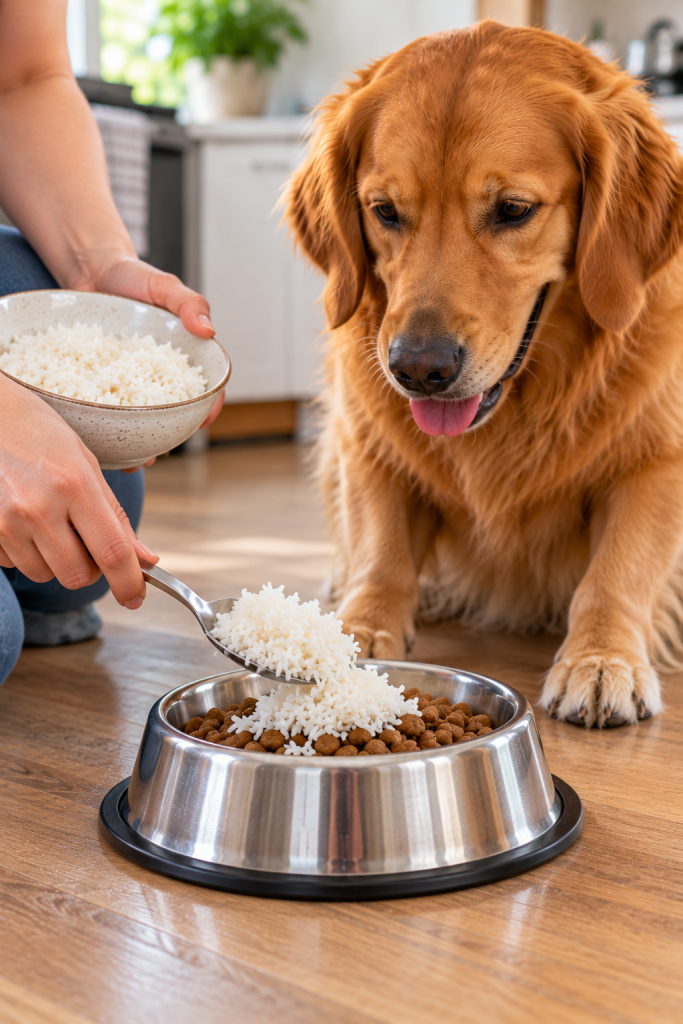
How to cook rice for dogs
Cooking rice for your dog does not require a special recipe. The goal is to make it soft, fully cooked, and free from unnecessary ingredients.
Follow these simple rules:
- Rinse the rice first. Place the uncooked rice in a fine-mesh strainer and rinse it under running water. This helps remove surface starch and loose debris.
- Use plain water. Cook the rice according to the package directions, using water rather than seasoned broth. Some broths contain onion, garlic, or excessive sodium.
- Skip salt and butter. Dogs do not need added salt, butter, oil, or other flavorings in their rice. Added fats also contribute extra calories.
- Do not add seasonings. Avoid garlic, onion, spice blends, sauces, and seasoning packets. Garlic and onion can be toxic to dogs, and other additions may upset their digestive systems.
- Cook until soft. Follow the appropriate cooking time for the variety. Brown and wild rice generally take longer than white rice. The finished grains should be tender rather than hard or crunchy.
- Let it cool before serving. Allow the rice to cool to a safe temperature before putting it in your dog’s bowl. Warm rice should never be hot enough to burn your dog’s mouth.
- Store leftovers safely. Transfer cooked rice to a shallow container and refrigerate it promptly. FoodSafety.gov advises refrigerating perishable cooked foods within two hours, or within one hour when temperatures exceed 90°F (32°C). Discard rice left out beyond those limits.
You can serve a small spoonful of cooled rice on top of your dog’s usual food. If you are preparing rice because your dog has digestive symptoms, speak with your veterinarian first, especially if the symptoms are persistent or accompanied by vomiting, blood in the stool, weakness, or reduced appetite.
Veterinary guidance from VCA Animal Hospitals on bland diets also highlights an important limitation: homemade combinations such as chicken and rice are not nutritionally complete for long-term feeding. A simple ingredient list does not automatically make a balanced diet.
How much rice can a dog eat
The right amount depends on your dog’s size, calorie requirements, activity level, existing diet, and health. There is no single serving size that works for every dog.
For an ordinary food topper, start with a small amount. A teaspoon may be enough for a very small dog, while a larger dog may tolerate a tablespoon or a few tablespoons. These are cautious starting points, not requirements or daily targets. Watch for changes in stool, appetite, or comfort when introducing any new food.
Keep three principles in mind:
- Follow the 10% treat rule. Treats, snacks, and other extras should generally account for no more than 10% of your dog’s daily calorie intake, with at least 90% coming from a nutritionally complete and balanced diet. This limit applies to all extras combined, not just rice. It refers to calories, not the percentage of food by volume.
- Treat rice as an addition, not a complete meal. Rice supplies carbohydrates but does not provide all the protein, essential fatty acids, vitamins, and minerals your dog needs in the right proportions. Replacing regular meals with rice can create nutritional imbalances.
- Account for your dog’s existing food. If your dog already eats a complete commercial diet, adding rice increases total calorie intake unless you adjust the overall plan appropriately. This matters particularly for dogs that gain weight easily or need controlled portions.
Puppies have different nutritional needs from adult dogs, so avoid replacing their regular food with rice. Use the puppy food chart as a starting point for understanding puppy feeding, and consult your veterinarian about individual growth and nutrition needs.
For adult dogs, the dog calorie calculator can help estimate daily energy needs. Use that estimate to understand how small extras fit into the bigger picture, remembering that individual needs can vary.
If your dog is diabetic, overweight, or has a medical condition requiring dietary management, get individualized advice before feeding rice regularly.
Rice mistakes to avoid
Rice itself is generally safe when properly cooked, but preparation and storage can turn an ordinary food into a poor choice.
- Seasoned or fried rice: Restaurant-style rice may contain garlic, onion, salty sauces, excess oil, or other ingredients unsuitable for dogs. Fried rice is not a good substitute for plain cooked rice.
- Instant flavored rice packets: These products often contain seasoning mixes, sodium, oils, or other additives. Check every ingredient, but plain rice cooked at home is the simpler option.
- Raw or undercooked rice: Do not offer uncooked rice as a snack. It is hard and difficult to digest. Cook the grains thoroughly and serve them soft.
- Rice left out too long: Cooked rice can support the growth of Bacillus cereus, a bacterium associated with foodborne illness when food is mishandled. Refrigerate leftovers promptly and discard rice that has been sitting at room temperature too long. Reheating should not be used to make improperly stored rice safe.
- Too much rice in the bowl: A large serving can add unnecessary calories and displace nutritionally complete food. More rice does not automatically mean a healthier meal.
- Using rice to manage ongoing illness without advice: Rice is sometimes included in short-term veterinary feeding plans, but it cannot address every cause of digestive trouble. Repeated vomiting, persistent diarrhea, blood in the stool, dehydration, or unusual lethargy warrants veterinary attention. Puppies and dogs with underlying health problems may need prompt assessment.
Frequently asked questions
Can dogs eat rice?
Yes. Dogs can eat plain, fully cooked rice in moderation. White rice is generally easy to digest, while brown and wild rice contain more fiber and may be harder for some dogs to tolerate. Avoid raw rice, seasoning, sauces, and added fats.
Can dogs eat brown rice?
Yes, plain cooked brown rice is generally safe for dogs. It contains more fiber than white rice because it retains its bran layer. However, some dogs digest it less comfortably. White rice is often preferred when a veterinarian recommends a simple, easily digested grain for short-term digestive support.
Can dogs eat rice every day?
A small amount may fit into some dogs’ diets, but daily additions need to be considered alongside total calories and nutritional balance. Rice should not replace complete dog food, and all treats and extras should generally stay within 10% of daily calories. Ask your veterinarian before making rice a daily addition for a dog with a medical condition.
How much rice should I feed my dog?
Begin with a teaspoon for a very small dog or a tablespoon for a larger dog, adjusting cautiously for size and individual tolerance. These are starting examples rather than fixed serving recommendations. The correct amount depends on your dog’s daily calorie needs and existing food. If rice is part of a veterinary-directed diet, follow the veterinarian’s portion instructions instead.
Is white or brown rice better for dogs?
Neither is best for every dog. White rice is generally easier to digest and lower in fiber, making it a common choice for short-term bland feeding when recommended by a veterinarian. Brown rice contains more fiber and retains more of the grain’s original nutrients, but can be harder to digest. Choose according to your dog’s tolerance and nutritional needs rather than assuming one variety is always healthier.
Dogs can eat plain cooked rice, and white, brown, wild, and basmati varieties can all be suitable in modest amounts. White rice is usually the simplest choice when easy digestibility matters, while brown and wild rice provide more fiber but may be less comfortable for some dogs.
Keep preparation simple: rinse the grains, cook them until soft, use water rather than seasoned broth, skip salt and butter, and allow the rice to cool before serving. Refrigerate leftovers promptly, keep portions modest, and make sure rice remains an addition to a balanced diet rather than a replacement for it.
A little plain rice can be a practical extra, but your dog’s overall diet, health, and calorie needs matter more than the particular rice variety.
By Jennifer, founder and owner of CanineCalc, dog owner and researcher.