
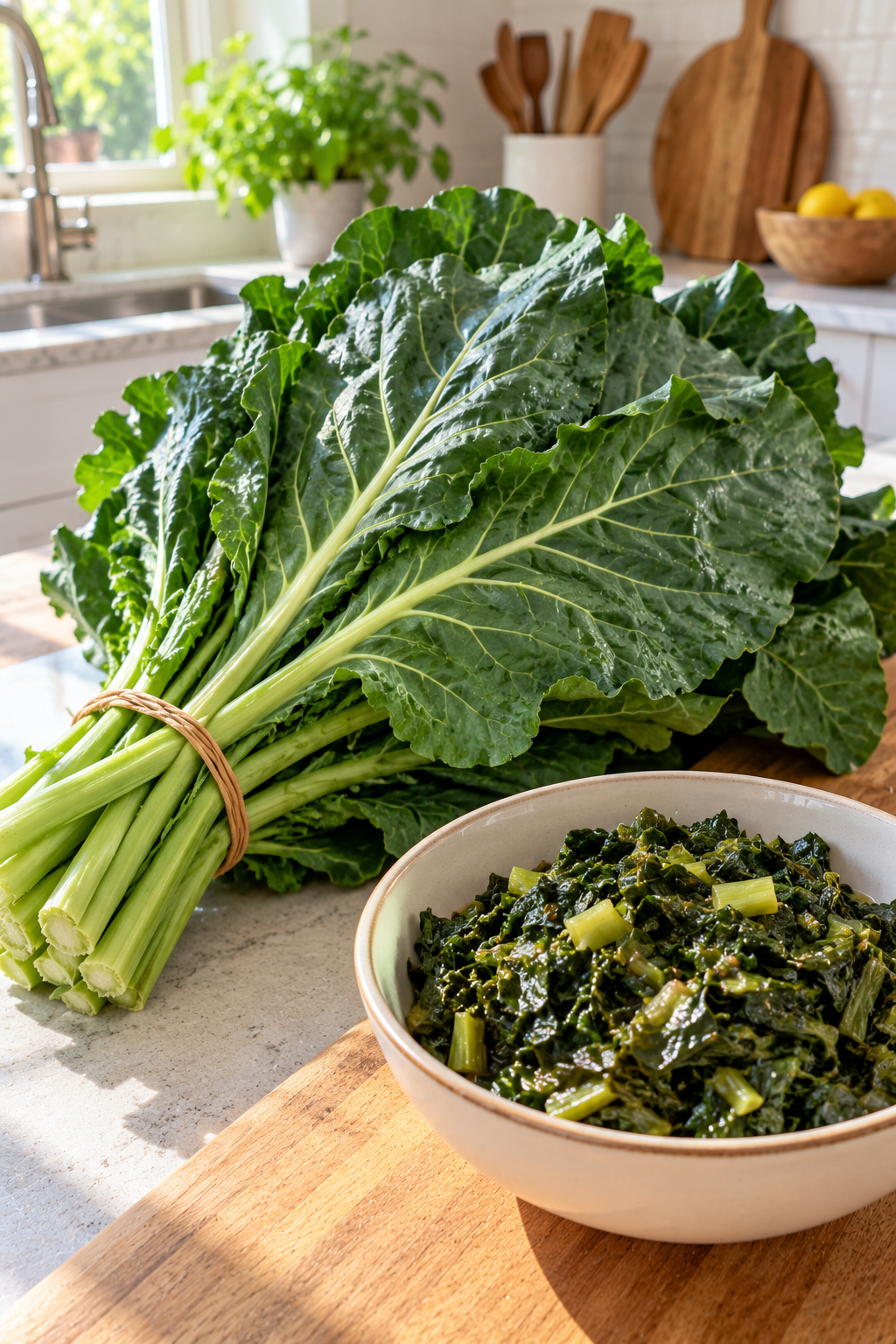
Can dogs eat collard greens? The short answer
Yes, most healthy adult dogs can eat small amounts of cooked, plain collard greens, provided you prepare them properly. Wash the leaves, remove the thick stems, cook them until soft, chop them into small pieces, and let them cool before serving. Skip the salt, butter, oil, garlic, onion, and other seasonings.
Collard greens are not toxic to dogs simply because they are leafy vegetables. However, they are fibrous, and too much can upset your dog’s stomach. They also contain minerals and naturally occurring compounds that may matter for dogs with certain dietary restrictions, including a history of calcium oxalate bladder stones.
Raw collards are best avoided as a regular treat, especially in large amounts. Their tough leaves and stems can be difficult to chew and digest. Cooking softens the leaves and makes them easier to portion into manageable bites.
Think of collard greens as an occasional vegetable addition, not a necessary part of your dog’s diet. A complete and balanced dog food should remain the foundation of daily meals.
How to prepare collard greens for dogs
The safest preparation method is simple: plain, thoroughly cooked greens without the ingredients commonly added to human recipes.
Follow these steps:
- Wash the leaves. Rinse them thoroughly under running water to remove soil and surface residue. Choose fresh leaves without obvious spoilage.
- Remove the thick stems. Separate the leafy portions from the firm central ribs. The stems are tougher and less convenient for dogs to chew.
- Cook until soft. Steam or boil the leaves until they are tender. You do not need to add oil, salt, broth, or seasoning.
- Chop into small pieces. Finely chop the cooked leaves to make them easier to eat and mix into regular food.
- Cool before serving. Let the greens reach room temperature before offering a small taste.
Keep your dog’s serving separate from the collards prepared for the family. Traditional Southern-style collard greens may contain bacon, ham, salt, onion, garlic, or rich cooking liquids. These additions can make a human recipe inappropriate for a dog.
Never add onion or garlic. Both can be harmful to dogs, including when incorporated into cooked dishes.
You can offer a small spoonful of plain, chopped collards by itself or mix it into your dog’s usual meal. Avoid sauces, creamy preparations, spicy seasonings, and heavily salted vegetables.
How much can a dog eat?
The right amount depends on your dog’s size, usual diet, digestive tolerance, and health history. Collard greens should be a small extra rather than a substantial portion of a meal.
The following amounts are conservative starting points for a first taste, not established veterinary maximums.
| Dog size | Approximate first serving |
|---|---|
| Extra-small or small, under 20 lb | ½–1 teaspoon |
| Medium, 20–50 lb | 1–2 teaspoons |
| Large, over 50 lb | About 1 tablespoon |
Use the lower end for a very small dog or one that rarely eats vegetables. These amounts refer to cooked, finely chopped leaves, not raw greens or thick stems.
Start with a small portion and observe your dog afterward. Introducing several unfamiliar foods at once makes it harder to identify what caused a digestive reaction. If you notice gas, loose stool, vomiting, or unusual discomfort after feeding collards, stop offering them and contact your veterinarian if symptoms are concerning or persist.
Also remember the 10% treat rule: treats and other extras should generally account for no more than 10% of a dog’s daily calories, with at least 90% coming from complete and balanced food. This guidance comes from veterinary nutrition recommendations, including the World Small Animal Veterinary Association’s treat-feeding guidance.
That 10% is a limit for all treats combined, not a target for collard greens alone. Plain greens should occupy only a small part of that allowance.
For broader age-based feeding guidance, see the puppy food chart.
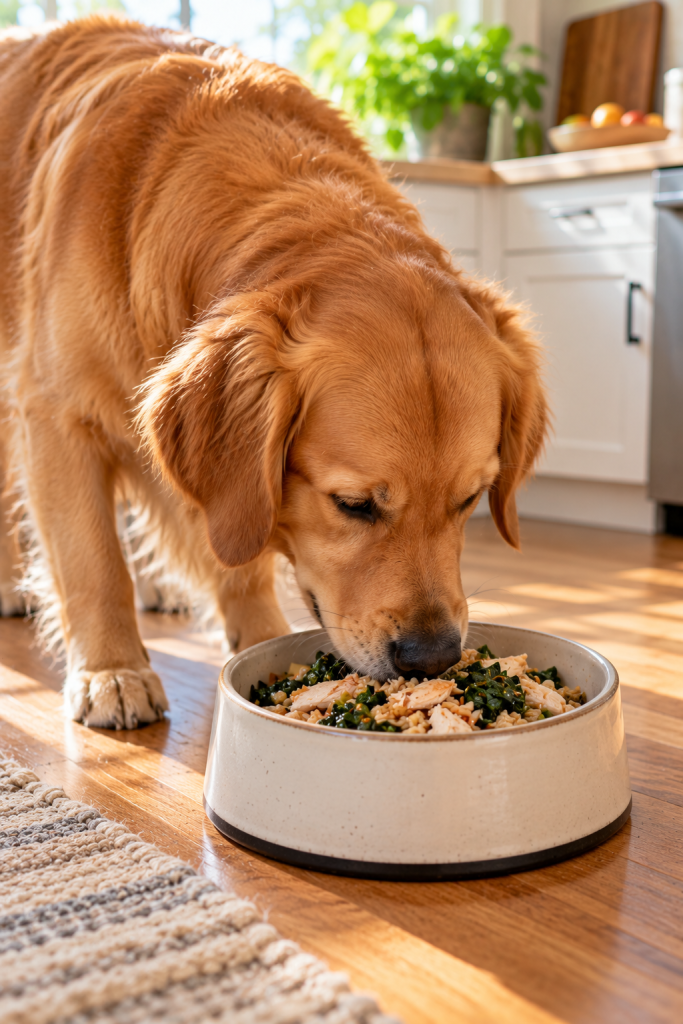
Collards vs kale vs spinach vs mustard greens
Collards are not the only leafy greens that might find their way into a dog’s bowl. Kale, spinach, and mustard greens each have different textures and nutritional profiles, so preparation and portion size matter.
| Green | Texture and general nutritional notes | Preparation and considerations |
|---|---|---|
| Collard greens | Thick, fibrous leaves; contain fiber, vitamins, calcium, and naturally occurring oxalates | Remove thick stems and cook until very soft. Use caution if your dog has a prescribed mineral restriction or a history of calcium oxalate stones. |
| Kale | Firm leaves with fiber and vitamins; contains naturally occurring compounds, including oxalates | Wash, remove tough stems, and cook plain. Large servings may cause digestive upset. |
| Spinach | Softer leaves that cook down quickly; notable for its oxalate content | Offer only with appropriate dietary consideration. Spinach is not a default choice for dogs that need to limit oxalates. |
| Mustard greens | Leafy greens with a stronger, more peppery flavor; contain fiber and vitamins | Cook until tender and serve plain. Start with a tiny portion to see whether your dog tolerates the flavor and texture. |
The oxalate and mineral content of greens differs, and published food-composition information does not always translate directly into feeding recommendations for individual dogs. The University of Minnesota Veterinary Medical Center’s Urolith Center specifically identifies collards among the foods requiring attention in dietary guidance for dogs with calcium oxalate stones.
Which green is easiest on a sensitive stomach? There is no universal winner. Thorough cooking and a very small serving may make a leafy vegetable easier to handle, but individual dogs differ. Collards and kale can be particularly fibrous, while spinach has a separate oxalate consideration. If your dog regularly has digestive sensitivity or follows a veterinary-prescribed diet, ask your veterinarian before introducing any of these greens.
Benefits and watch-outs
What collard greens offer
Collard greens contain fiber and several vitamins, including vitamins A, C, and K. They also provide minerals such as calcium. As part of a varied human diet, these nutrients make collards a nutritious vegetable.
For dogs, however, a few bites are best viewed as food variety rather than a meaningful nutritional supplement. Your dog’s regular complete and balanced food should provide the nutrients needed for daily maintenance and growth.
What to watch out for
Gas and digestive upset: Collards are fibrous. Large portions, especially when introduced suddenly, can contribute to gas, loose stool, or other digestive discomfort.
Calcium and oxalate considerations: Collard greens contain both calcium and naturally occurring oxalates. These food components can be relevant when a dog has a history of certain urinary stones or needs a specific dietary plan. The relationship between diet and stone formation is complex, so do not try to manage a urinary condition by choosing vegetables on your own. Ask your veterinarian whether collards are appropriate for your individual dog.
Pesticide and soil residue: Wash the leaves thoroughly before cooking. Washing reduces surface dirt and residue, although it does not guarantee the removal of every contaminant.
Choking and chewing difficulties: Avoid large pieces and tough stems, particularly for small dogs and dogs that tend to swallow food quickly.
Hidden seasonings: Salt, rich fats, sauces, onion, and garlic can turn a simple vegetable into an unsuitable table scrap. Plain preparation is the easiest way to control the ingredients.
Greens dogs should NOT eat
Not every dish containing greens is a suitable dog treat. Focus on the preparation and the identity of the plant.
- Seasoned or creamed greens: Avoid preparations loaded with salt, butter, cream, sauces, or spicy ingredients.
- Greens cooked with onion or garlic: These ingredients are harmful to dogs and should not be included in their food.
- Unidentified wild plants: Do not let your dog eat leaves gathered outdoors unless you can positively identify the plant and know it is suitable for dogs. Some plants are toxic.
- Greens that conflict with a prescribed diet: If your dog has a medical condition or eats therapeutic food, check with your veterinarian before adding leafy vegetables.
For a healthy dog, a tiny portion of properly cooked collards may be reasonable. That does not mean every leafy plant, recipe, or serving size is appropriate.
Frequently asked questions
Can dogs eat raw collard greens?
A tiny bite of raw collard leaf is not automatically a poisoning concern, but raw collards are tough and fibrous. Cooking the leaves until soft, removing the thick stems, and chopping them finely is the more practical option. Avoid feeding large quantities of raw greens.
Can dogs eat collard greens every day?
Daily feeding is not necessary. Small amounts may fit into some dogs’ diets, but occasional servings make it easier to keep their meals balanced and avoid overdoing fiber. Dogs with digestive sensitivities or dietary restrictions may need to avoid them.
Are collard greens better than kale for dogs?
Neither is automatically better. Both can be prepared plain and cooked, but both contain naturally occurring compounds that may matter for some dogs. Collards are often tougher, while kale can also be fibrous. Your dog’s tolerance and health history matter more than choosing one as universally superior.
Can puppies eat collard greens?
Puppies may be able to try a tiny amount of fully cooked, plain, finely chopped collards, but they do not need them. Their main nutritional priority is a complete and balanced puppy food formulated for growth. Introduce unfamiliar foods carefully, and check with your veterinarian if your puppy is very young, has digestive concerns, or follows a special diet.
What green vegetables can dogs not eat?
Onion- and garlic-containing vegetable dishes should be avoided because these ingredients can harm dogs. Unidentified wild plants should also be off-limits. Other vegetables, including leafy greens, may require individual consideration depending on preparation, quantity, and a dog’s health or prescribed diet.
Conclusion
Dogs can generally eat collard greens when the leaves are washed, cooked until soft, stripped of their thick stems, and served plain in small amounts. Avoid raw handfuls, rich seasonings, onion, and garlic, and introduce any new vegetable gradually.
Collards, kale, spinach, and mustard greens are not interchangeable for every dog. Fiber, mineral content, naturally occurring oxalates, and individual tolerance all matter. In particular, consult your veterinarian before adding collards to the diet of a dog with a history of calcium oxalate stones or other dietary restrictions.
A few carefully prepared bites can add variety, but collard greens should remain an optional extra rather than a replacement for balanced dog food.
About Jennifer: Jennifer is the founder and owner of CanineCalc, a dog owner and researcher who writes practical, research-informed guides to help people understand dog care and nutrition. She is not a veterinarian, breeder, or certified trainer.