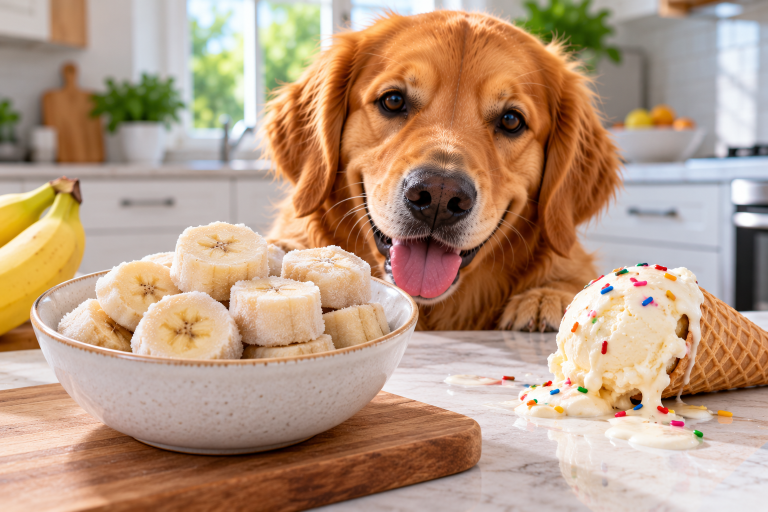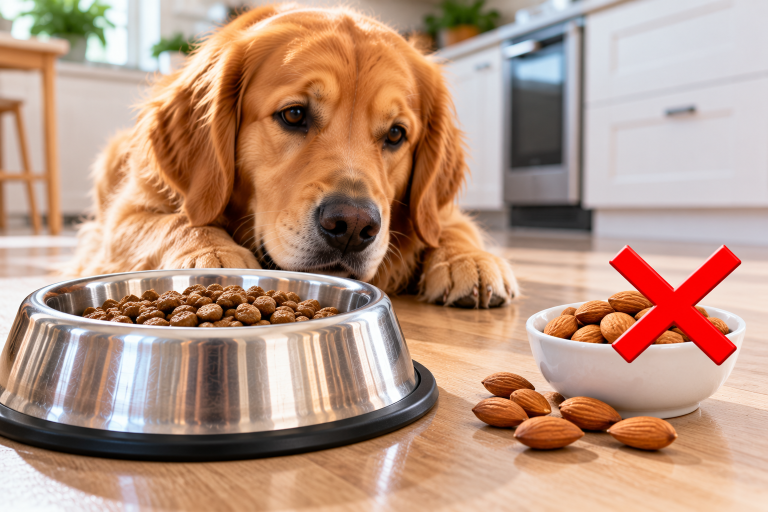
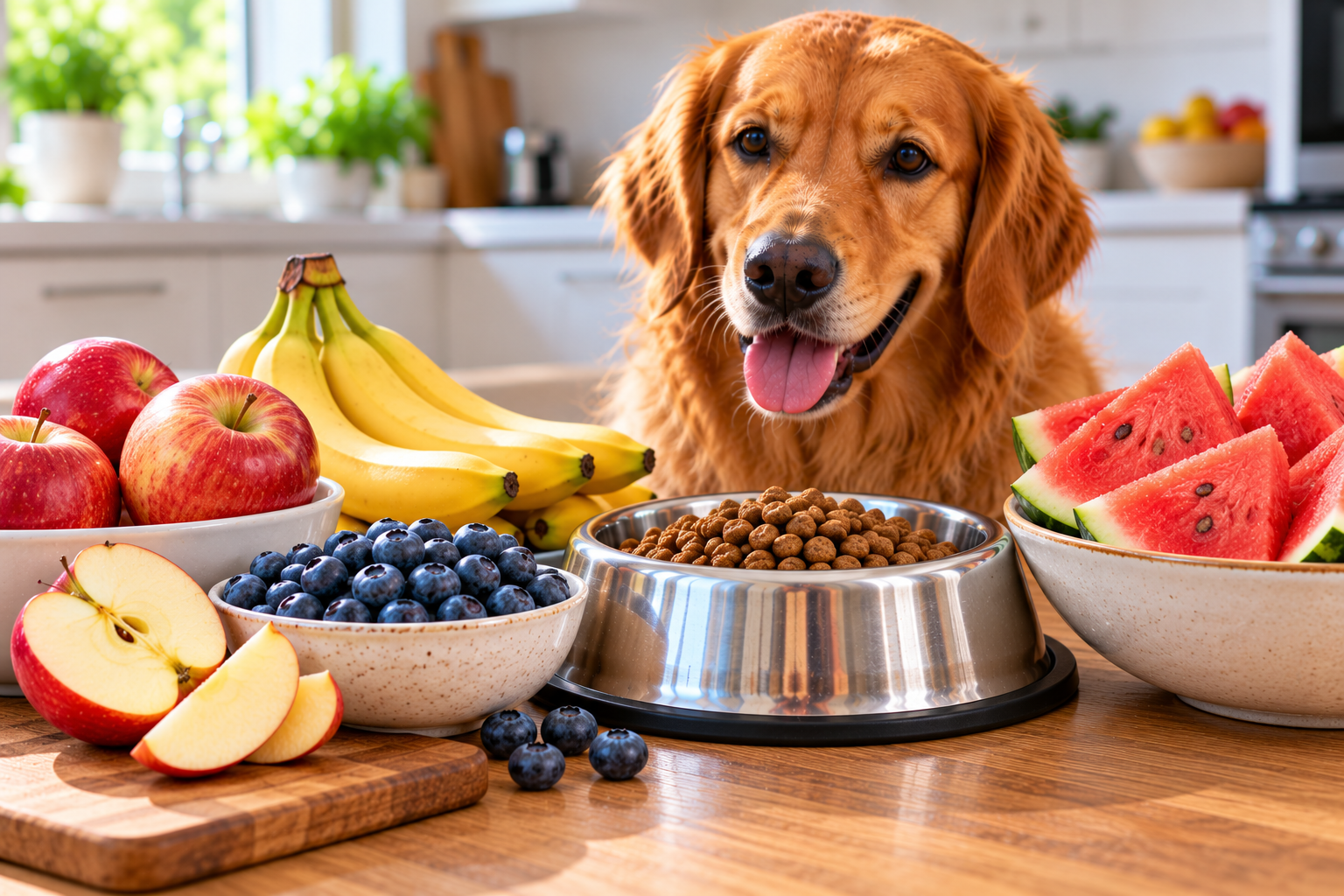
Fruit can be a refreshing treat for dogs, but the type of fruit, how you prepare it, and how much you serve all matter. Apples, blueberries, strawberries, bananas, and seedless watermelon are popular dog-friendly choices when served in small amounts. Grapes and raisins, on the other hand, can cause serious kidney injury and should never be fed to dogs.
This guide gives you a practical safe-versus-unsafe fruit chart, portion starting points by dog size, and preparation tips to help you share fruit more safely.
What fruit can dogs eat? The short answer
Dogs can eat several common fruits in moderation, provided you remove hazardous parts, wash the fruit, and cut it into appropriately sized pieces.
Fruits dogs can generally eat include:
- Apples, without the seeds and core
- Bananas, without the peel
- Blueberries and strawberries
- Watermelon, without seeds or rind
- Pineapple, with the skin and tough core removed
- Mango, without the skin and pit
- Oranges, peeled and seedless
- Pears, without the core and seeds
Fruits to avoid include grapes and raisins, including sultanas and Zante currants. These can cause acute kidney injury in dogs, and a reliably safe amount has not been established. If your dog eats any grapes or raisins, contact your veterinarian or a pet poison helpline immediately. Do not wait for symptoms. Cornell University College of Veterinary Medicine explains the risks and what to do after ingestion.
Cherries are best avoided because their pits, stems, and leaves can be hazardous, while avocado is a caution food because its parts can cause digestive problems and its pit can obstruct the digestive tract.
Remember that fruit is an optional treat, not a substitute for your dog’s complete and balanced food.
Safe vs unsafe fruit chart
Use this chart as a quick reference when preparing a snack. The portions are conservative starting points for a healthy dog, not fixed daily allowances.
| Fruit | Safe or unsafe? | Preparation note | Portion note |
|---|---|---|---|
| Apples | Generally safe | Wash, remove seeds, stem, and core; cut into small pieces. | Start with 1–2 small pieces. |
| Bananas | Generally safe | Remove the peel and slice the flesh. | Offer a couple of small slices. |
| Blueberries | Generally safe | Wash thoroughly; squash or cut them for very small dogs if needed. | Start with 1–3 berries for a tiny dog. |
| Strawberries | Generally safe | Wash, remove the leafy top, and slice. | Start with a small piece or two. |
| Watermelon | Generally safe | Remove all seeds and the rind; serve the flesh only. | Offer a few small cubes. |
| Pineapple | Generally safe | Remove the skin and tough core. Serve fresh flesh. | Try one or two small cubes. |
| Mango | Generally safe | Remove the skin and pit, then cut the flesh into bite-size pieces. | Start with a few small cubes. |
| Oranges | Safe in moderation | Remove the peel and seeds; offer only the flesh. | Try a small piece or part of a segment. |
| Pears | Generally safe | Remove the stem, core, and seeds; cut into small pieces. | Start with a few small cubes. |
| Grapes and raisins | Unsafe: never feed | Avoid fresh, dried, and mixed-food forms containing them. | No safe portion is established. Contact a vet immediately after ingestion. |
| Cherries | Best avoided | Pits, stems, and leaves are hazardous. Choose a safer fruit instead. | No recommended serving. |
| Avocado | Caution: best skipped | The pit, skin, and leaves pose risks; the flesh can also cause digestive upset. | Choose another fruit, particularly for dogs with dietary restrictions. |
Fruit safety depends on preparation as well as the fruit itself. A piece of apple without its core is different from a whole apple your dog might swallow too quickly. Similarly, watermelon flesh is a different risk from a tough rind or swallowed seeds.
For additional examples, see the American Kennel Club’s guide to fruits and vegetables dogs can and cannot eat.
Portions by dog size
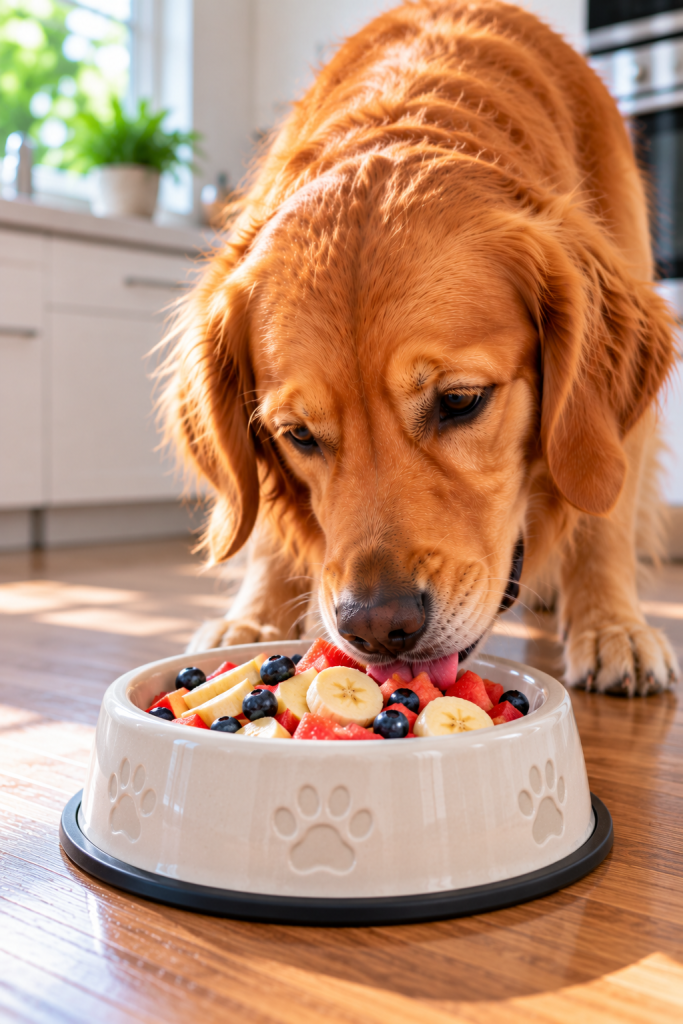
There is no single fruit serving that suits every dog. A dog’s weight, activity level, body condition, health, and the calories in its regular food all affect how many treats fit into its day.
The following table gives you a cautious place to start when offering a new fruit.
| Dog size | Approximate starting portion | Practical example |
|---|---|---|
| Toy or very small (under 10 lb) | 1–2 tiny pieces | One or two blueberries or a small apple cube |
| Small (10–25 lb) | 2–4 small pieces | A few blueberry-sized pieces or small strawberry slices |
| Medium (25–50 lb) | About 1 tablespoon of chopped fruit | A few apple cubes or watermelon pieces |
| Large (over 50 lb) | About 1–2 tablespoons of chopped fruit | A small serving of mixed dog-safe fruit |
These amounts are starting points for an individual snack, not guaranteed daily allowances. Softer fruit can be easier to portion, but all pieces should be small enough to reduce choking risk. Use less if your dog has a sensitive stomach or tends to swallow food without chewing.
Follow the 10% treat rule
Fruit, commercial treats, table scraps, and other extras should together account for no more than 10% of your dog’s daily calories. The other 90% or more should come from a complete and balanced diet.
This is the general treat guideline described by UC Davis School of Veterinary Medicine.
The 10% allowance is a ceiling, not a target. If your dog already gets training treats, dental chews, and food rewards, there may be little room left for fruit. Dogs with diabetes, weight concerns, food sensitivities, or a prescribed diet may need more specific advice from their veterinarian.
How to introduce a new fruit
Even a dog-safe fruit can cause digestive upset if your dog eats too much too quickly. A gradual introduction makes it easier to see how your dog responds.
- Choose one fruit at a time. Start with a familiar option, such as a blueberry or a small piece of apple prepared without seeds or core.
- Wash and prepare it carefully. Remove pits, seeds, tough rinds, stems, and other parts that may pose a hazard. Cut the flesh into small pieces.
- Offer a tiny amount first. Avoid giving your dog a full bowl of fruit just because it is considered safe.
- Watch for digestive changes. Vomiting, diarrhea, unusual gas, reduced appetite, or signs of abdominal discomfort can indicate that the food did not agree with your dog.
- Keep the rest of the diet consistent. Introducing one new food at a time helps you identify which item may have caused a reaction.
If your dog develops concerning symptoms, stop offering the new food and contact your veterinarian. Seek urgent veterinary advice for suspected toxic-food ingestion, especially grapes or raisins.
Puppies may be more prone to digestive upset when their diets change, so use particularly small portions and prioritize their regular puppy food. For age-appropriate feeding guidance, see our puppy food chart.
Fruit mistakes to avoid
Most preventable fruit-related problems come from the wrong food, unsafe preparation, or excessive portions.
Leaving seeds, pits, or cores in place: Apple seeds and cores should be removed, and cherry pits should never be offered. Pits and large pieces of fruit can also create choking or intestinal blockage risks.
Serving rinds and tough skins: Watermelon rind and pineapple skin are not suitable snacks. Remove the rind, skin, and tough core before offering the edible flesh.
Choosing fruit canned in syrup: Syrup adds unnecessary sugar. Fresh fruit is usually the better option. If using packaged fruit, check the ingredients and avoid added sweeteners or other unsuitable ingredients.
Offering sweetened dried fruit: Dried fruit is concentrated and easy to overfeed. Avoid sugary fruit snacks and products with added ingredients. Raisins and sultanas are dangerous to dogs even when mixed into cereal, baked goods, or trail mix.
Assuming all fruit is safe because it is natural: Grapes and raisins are the clearest examples of why that assumption can be dangerous. Keep them out of your dog’s reach, including when preparing food or cleaning up after a snack.
Forgetting the calories in other treats: A few pieces of fruit can fit into a balanced routine, but several snacks throughout the day can add up. If you regularly reward your dog with food, our guide to carrots for dogs offers another option to consider in appropriately sized portions.
Common questions about fruit for dogs
What fruit can dogs eat?
Dogs can generally eat small amounts of properly prepared apples, bananas, blueberries, strawberries, watermelon, pineapple, mango, oranges, and pears. Remove hazardous parts, cut fruit into bite-size pieces, and serve it as a treat rather than a meal replacement.
What fruit is toxic to dogs?
Grapes, raisins, sultanas, and Zante currants can cause serious kidney injury. No reliably safe amount has been established. If your dog eats any of these, contact your veterinarian or a pet poison helpline immediately. Cherries with pits and avocado also present avoidable risks.
Can dogs eat fruit every day?
Some healthy dogs can have a small amount of suitable fruit regularly, provided their overall diet remains balanced and all treats stay within the 10% calorie guideline. Daily fruit is not necessary, however. Dogs with medical conditions or prescribed diets may need individual feeding advice.
How much fruit can I give my dog?
Start with one or two small pieces for a tiny dog, a few bite-size pieces for a small dog, and a tablespoon or two of chopped fruit for larger dogs. These are cautious starting portions, not exact dietary requirements. Adjust for the dog’s needs and count all other treats toward the daily limit.
Can puppies eat fruit?
Yes, puppies can try small amounts of certain dog-safe fruits, such as a tiny piece of apple without the core or a squashed blueberry. Introduce only one new food at a time and watch for digestive upset. Fruit should remain an occasional treat while a complete puppy diet supplies their main nutrition.
Conclusion: Keep fruit simple and portions small
Knowing what fruit dogs can eat makes sharing an occasional snack easier. Stick to familiar choices such as apples, blueberries, strawberries, and seedless watermelon. Prepare every serving carefully, keep portions small, and remember that the 10% rule applies to all treats combined.
Most importantly, never feed grapes or raisins, and get veterinary advice immediately if your dog eats them. When you are unsure about a fruit or your dog’s dietary needs, choosing a simpler snack or asking your veterinarian is the safer option.
By Jennifer, Founder of CanineCalc
Jennifer is the founder and owner of CanineCalc, a dog owner and researcher who develops practical dog-care guides. She is not a veterinarian, breeder, or certified trainer. CanineCalc content is intended for general educational purposes and does not replace advice from your veterinary healthcare team.